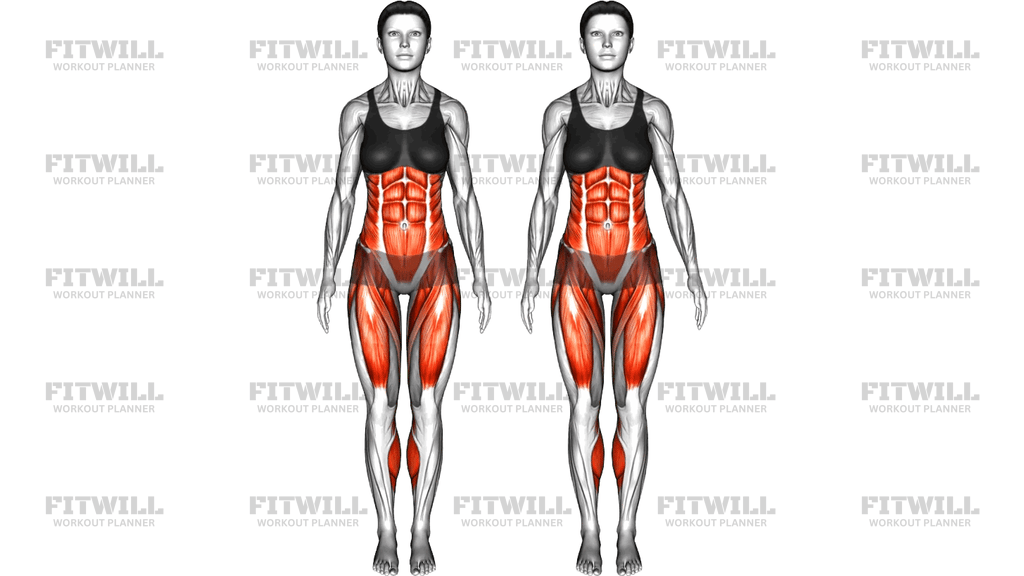
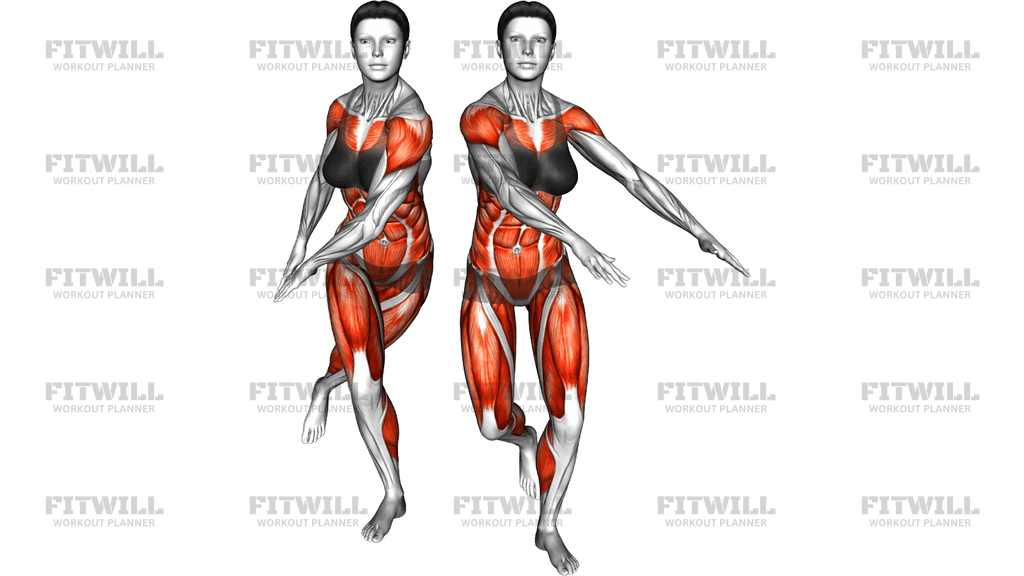
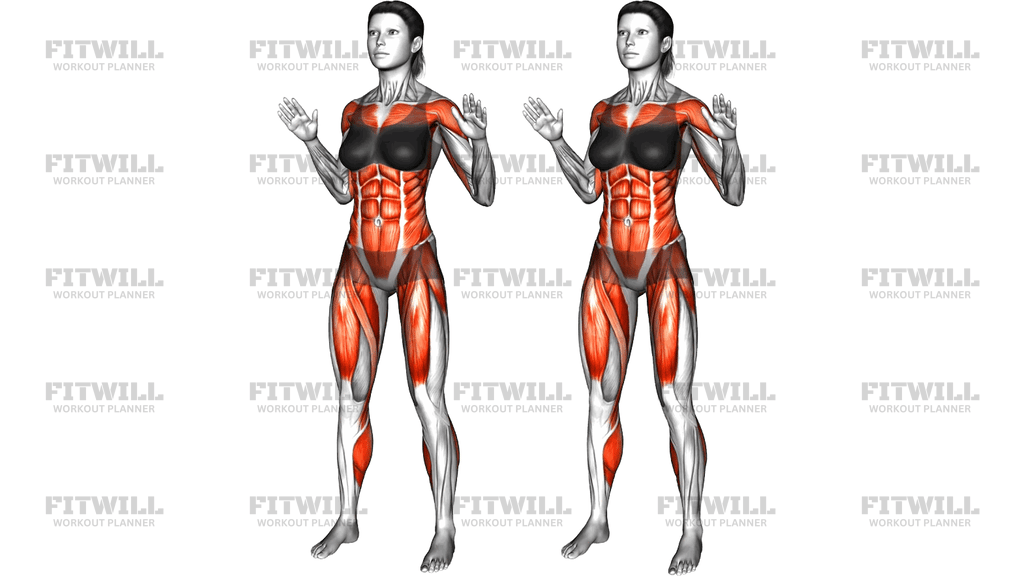
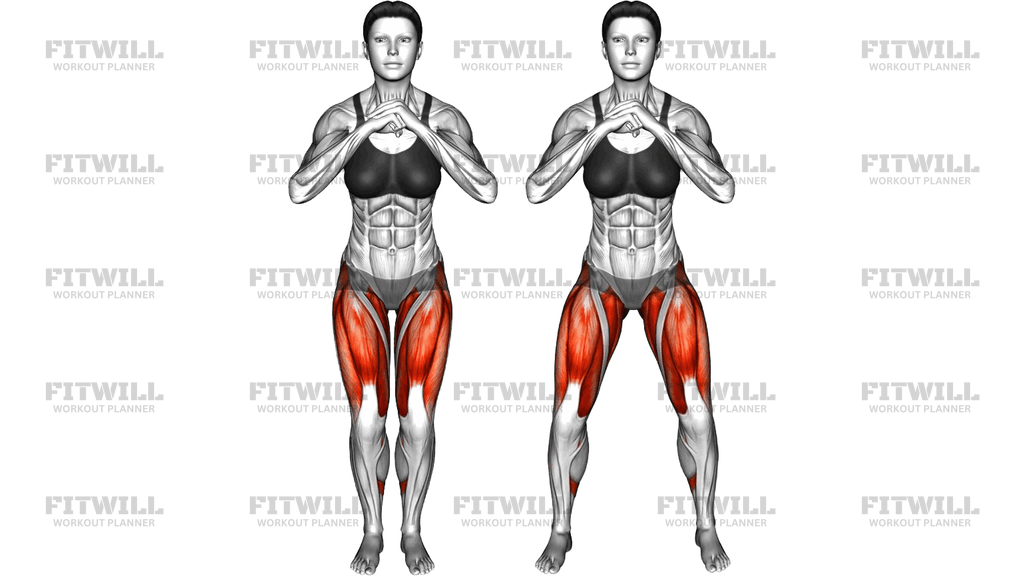
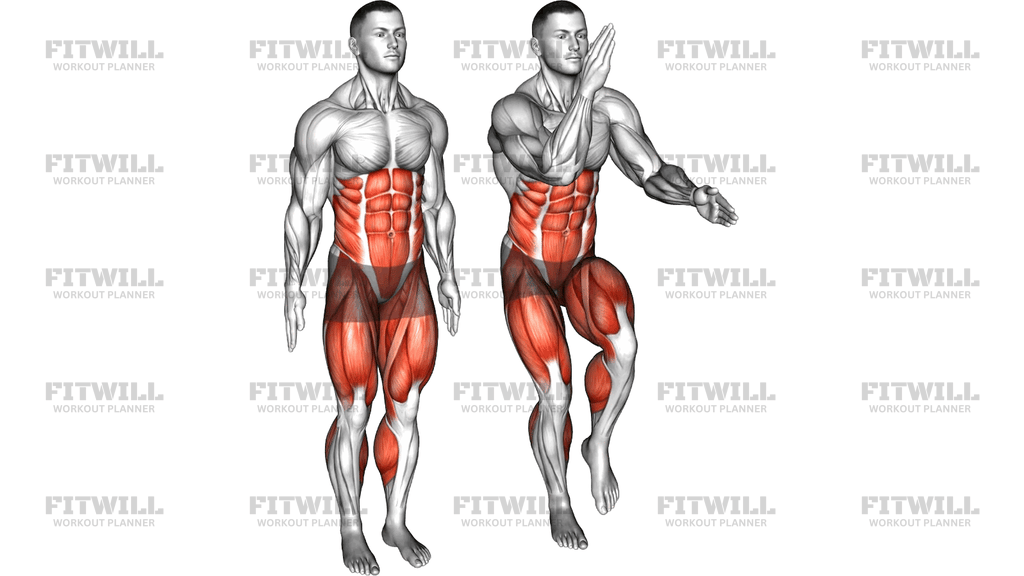
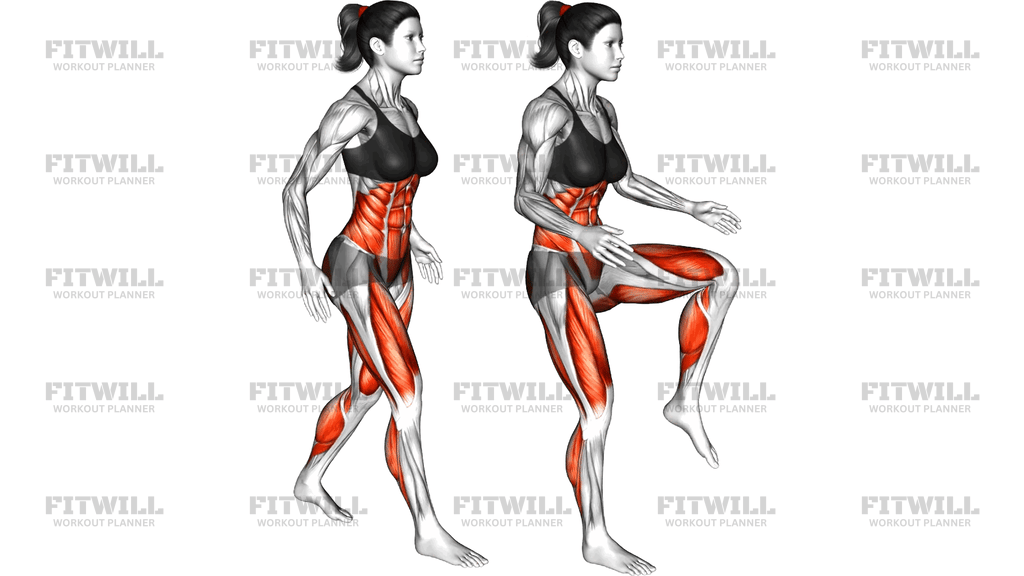
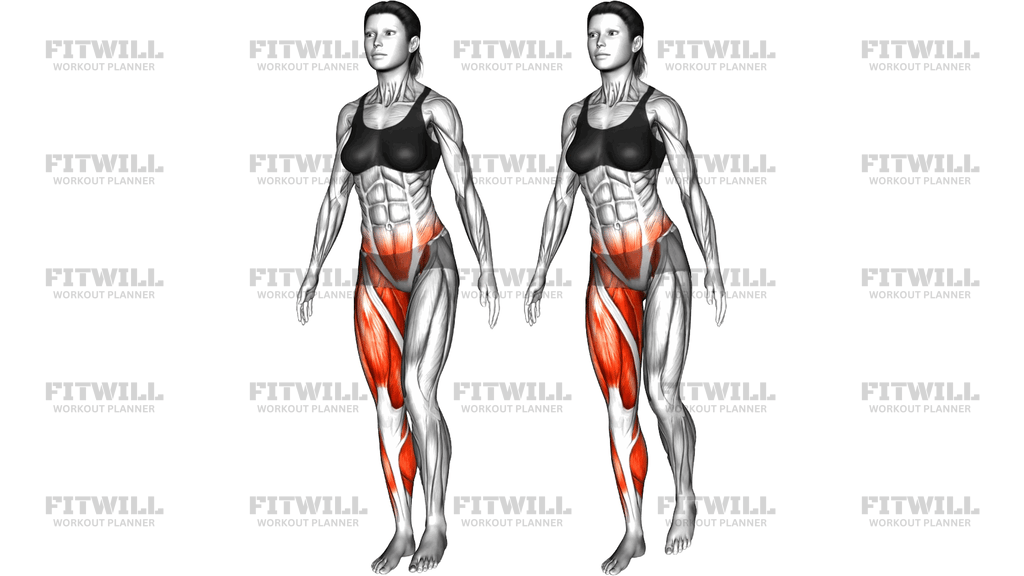
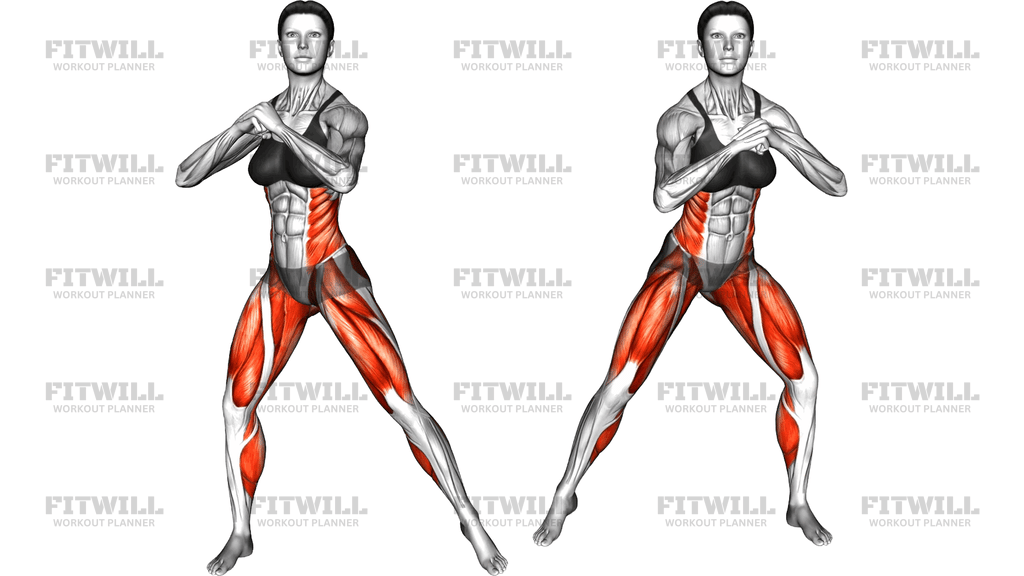
Walking Front Kick Hand Shake
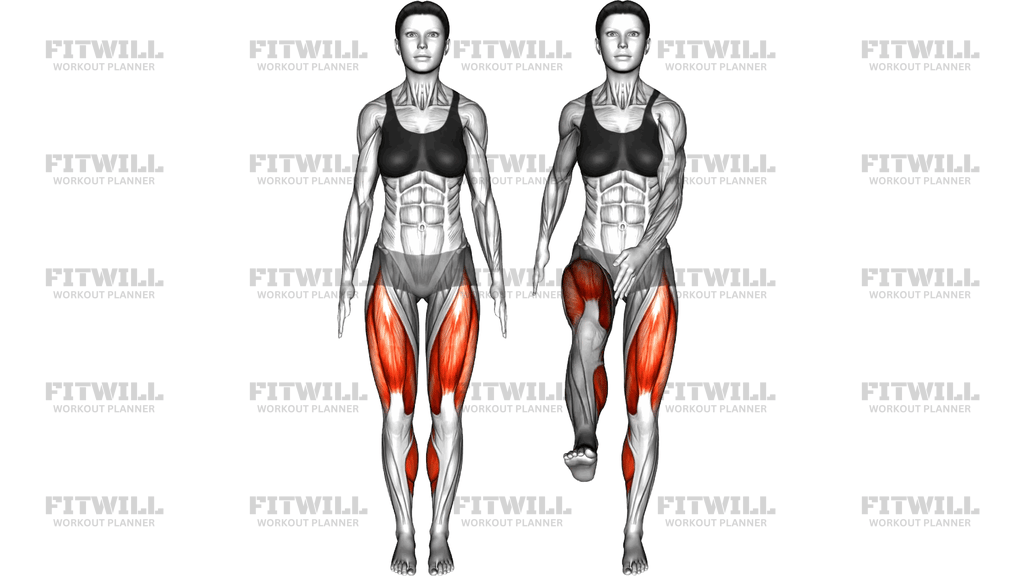
Walking Front Kick Hand Shake is a bodyweight coordination drill that combines a traveling front kick with a same-side hand reaching down to meet the raised foot. You stand tall, lift one knee, extend the foot forward into a controlled front kick, and tap or 'shake' the top of that foot or shin with your hand before stepping down and switching sides. The result is a smooth, alternating walking pattern that raises your heart rate while demanding balance and timing from head to toe.
This movement primarily works the quadriceps of the kicking leg, along with the hip flexors that drive the knee upward. The standing leg does quieter but equally important work: the glutes, calves, and ankle stabilizers keep you upright as your center of gravity shifts with every kick. Reaching the hand down engages the core, especially the lower abdominals and obliques, which control the slight torso lean without letting your back round.
Because it needs no equipment and only a few feet of space, this drill fits easily into warm-ups, dynamic mobility routines, and low-impact cardio circuits. It is especially useful for martial artists and combat sports athletes sharpening kick mechanics, for runners and field-sport athletes who want better single-leg control, and for anyone easing back into movement who needs a joint-friendly way to raise the pulse.
Setup matters more than it looks. Ground the standing foot firmly, keep the torso tall, and start with a modest kick height so you can reach the foot without collapsing your chest or hinging at the waist. If you chase height too early, the lower back rounds and the movement turns into a sloppy toe touch rather than a controlled kick-and-reach.
To execute it well, move deliberately: knee up first, foot extends forward, hand meets the foot at the top, then the leg lowers under control as you step forward onto it and repeat on the other side. Exhale on each kick, keep your eyes ahead rather than on your feet, and let the rhythm stay even from side to side.
A few practical points will keep this safe and productive. Keep the standing knee soft rather than locked, limit kick height to what your hamstrings and hips allow that day, and stay on a flat, non-slip surface. If balance wobbles, slow the tempo down instead of shrinking the movement — controlled reps build the stability this drill is meant to develop.
Fitwill
Log Workouts, Track Progress & Build Strength.
Achieve more with Fitwill: explore over 9600 exercises with images and videos, access built-in and custom workouts, perfect for both gym and home sessions, and see real results.
Start your journey. Download today!




Instructions
- Stand tall with feet hip-width apart, arms relaxed at your sides, and pick a clear path of a few meters to walk along.
- Shift your weight fully onto your right leg, keep that knee soft, and brace your abdominals before lifting the other foot.
- Drive your left knee up to roughly hip height, then extend the lower leg forward into a front kick with the toes pulled back.
- As the knee rises, reach your left hand down to meet the top of the raised foot or shin for a brief tap, like a handshake between hand and foot.
- Keep your chest lifted and spine long; allow only a small, controlled lean forward rather than rounding your lower back to reach the foot.
- Bend the knee and lower the left leg with control, placing the foot down a step ahead of the right.
- Repeat on the opposite side: right knee up, right hand down to meet the foot, then step through.
- Continue alternating kicks as you walk forward, exhaling on each kick and inhaling as you reset between steps.
- If you lose balance, pause on one leg, re-ground your standing foot, and resume at a slower tempo rather than rushing the next rep.
- Finish the set by standing on both feet for a moment to let your breathing and heart rate settle before your next exercise.
Tips & Tricks
- Knee height comes before kick height — if you lift the knee to hip level first, the foot extension stays controlled and the hand tap is easy.
- The most common mistake is slumping the chest to touch the foot. Shorten the kick instead and bring the foot slightly toward the hand rather than the whole torso down.
- Avoid locking the standing knee. A soft, slightly bent support leg protects the joint and keeps the glutes and calves actively balancing.
- Do not let the kicking leg swing down and slam into the floor. Lower it deliberately so each step lands quiet and controlled.
- Keep your gaze on a fixed point ahead of you, not on your feet — looking down makes balancing on one leg noticeably harder.
- If your hamstrings limit the kick, that is fine; work at shin or knee height. Forcing the foot to hand height rounds the back and teaches poor mechanics.
- Start in place without stepping forward, then add the walking element once the tap feels smooth on both sides.
- On soft or uneven ground, slow the tempo further — the balance demand increases sharply when the surface moves under your standing foot.
- Breathe in a steady rhythm rather than holding your breath; exhaling as the knee drives up helps the core brace naturally.
Frequently Asked Questions
What muscles does Walking Front Kick Hand Shake work?
The quadriceps and hip flexors of the kicking leg do the main work, while the glutes, calves, and ankle stabilizers of the standing leg control balance. The reach toward the foot also brings the abdominals and obliques in to keep the torso steady.
Should my hand tap the same-side foot or the opposite foot?
In Walking Front Kick Hand Shake, the hand on the same side as the kicking leg reaches down to meet that foot, which is how the movement is typically performed. If you have practiced opposite-hand variations, keep this drill consistent by matching hand to leg.
Is Walking Front Kick Hand Shake suitable for beginners?
Yes, as long as you start with low kicks at shin to knee height and a slow tempo. Balance is usually the limiting factor for beginners, not strength, so practicing in place before adding the walking component makes the first sessions much smoother.
How high should I kick during this exercise?
Kick only as high as you can while keeping your chest tall and your back straight. For most people that means knee to hip height at first; height can increase gradually as hip flexibility and single-leg control improve.
Why do I keep losing my balance when I reach for my foot?
Most often the torso is rounding forward to chase the foot, which shifts your weight off the standing leg. Keep the reach shorter, kick a little lower, and press the ground firmly through the standing foot's toes and heel to steady yourself.
Can Walking Front Kick Hand Shake count as cardio?
When performed continuously for a minute or more at a brisk but controlled tempo, it elevates the heart rate enough to serve as light cardio or an effective warm-up. Slower, deliberate reps shift it more toward a balance and coordination drill.
What can I substitute if the hand-to-foot reach is too difficult?
Try walking knee raises with the same-side hand reaching only to the knee, or slow standing front kicks without the hand tap. Both build the hip flexor strength and balance this drill requires, and you can add the reach back in once those feel solid.
Is this exercise hard on the knees?
When done with a soft standing knee and a controlled kick, it is generally well tolerated because no external load is involved. If you have an existing knee issue, keep the kick low, avoid snapping the leg out forcefully, and stop if the movement causes discomfort.
Do I need any equipment or a specific surface for Walking Front Kick Hand Shake?
No equipment is needed beyond comfortable training clothes and supportive shoes, though it can be done barefoot on a firm, non-slip surface. All you require is enough clear space to walk a few steps forward while swinging your leg freely.