Standing Cat Cow Stretch
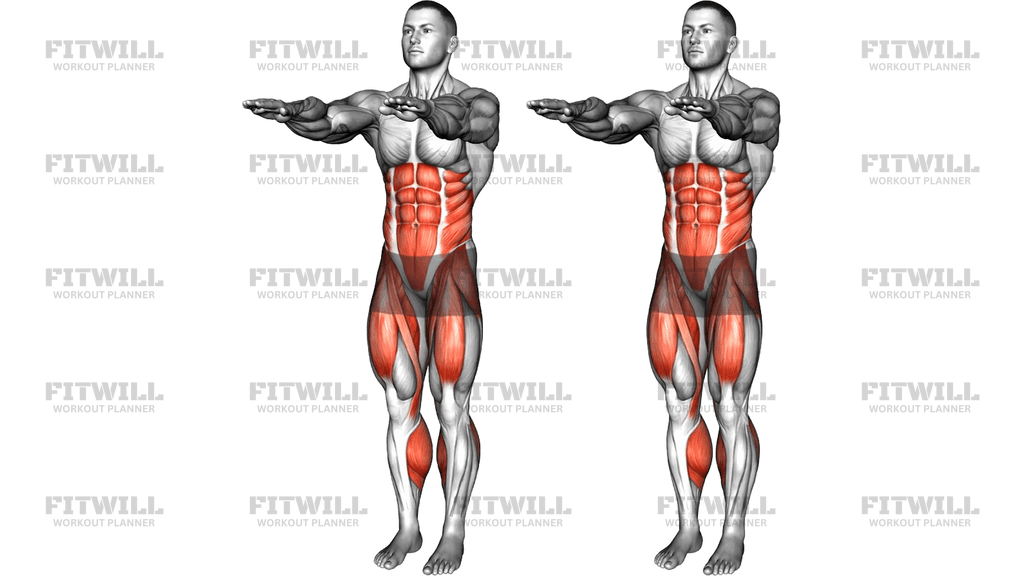
The Standing Cat Cow Stretch takes the familiar hands-and-knees cat cow from yoga and converts it into an upright, no-floor-needed mobility drill. You stand with your feet roughly hip-width apart, place both hands lightly behind your head, and rhythmically round and arch your entire spine. Because you're on your feet instead of on all fours, the movement travels through more of the spinal column and also asks your hips and legs to stay quietly involved in keeping you balanced.
This version works well for people who can't easily get down to the floor: office workers doing a mid-day reset, older adults warming up, anyone in a crowded gym, or travelers who want spinal movement without a mat. It's also a smart addition before squats, deadlifts, or running, since it takes the spine through flexion and extension under no load and reminds the trunk of its full range.
As a stretch, it targets the whole trunk rather than one muscle. Rounding forward lengthens the erector spinae along the back of the spine; arching back opens the abdominals, particularly the rectus abdominis, and the front of the neck and chest if you let the head travel. The obliques get some lengthening when you add a slight rotational lean, and the hips stabilize throughout.
Setup matters more than it looks. Hands belong behind the head for support, not pulling on the neck, and your weight should sit evenly over both feet. When the base is stable, the spine is free to articulate segment by segment; when you sway or hinge at the hips, the movement collapses into a simple lean and loses most of its value.
To execute it well, think of the motion as a slow wave starting at the pelvis. Exhale as you curl the tailbone under, draw the ribs down, and let the head drop; inhale as you tip the pelvis forward, lift the chest, and look gently upward. Smooth, unhurried reps of five to ten cycles are usually enough to feel the spine loosen. Never force the end ranges; the stretch should feel like relief, not strain.
If you have acute low back pain, a spinal condition, or you're recovering from abdominal surgery, check with a qualified professional before adding loaded-feel spinal flexion and extension, and keep every rep small and pain-free.
Fitwill
Log Workouts, Track Progress & Build Strength.
Achieve more with Fitwill: explore over 9600 exercises with images and videos, access built-in and custom workouts, perfect for both gym and home sessions, and see real results.
Start your journey. Download today!




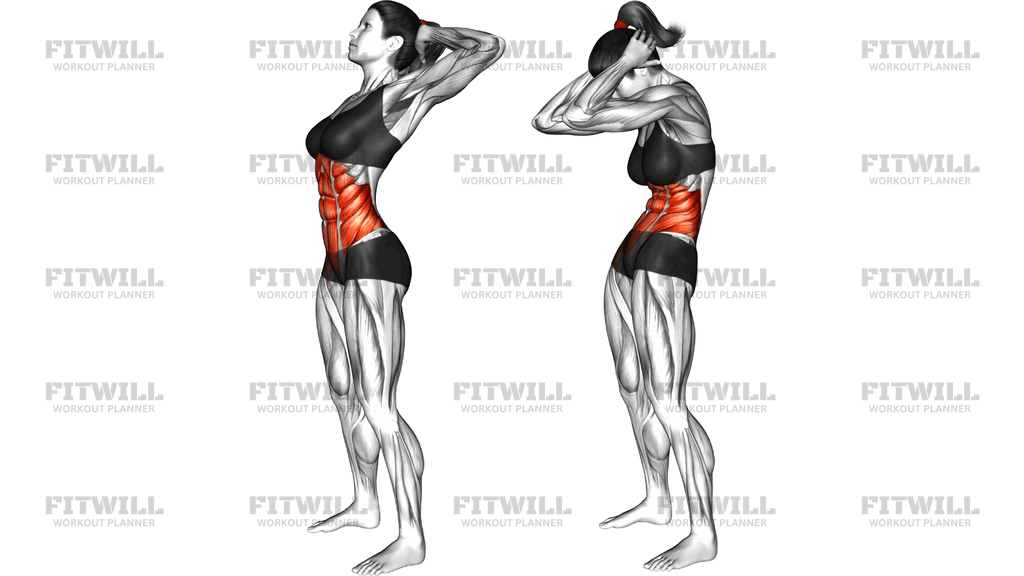
Instructions
- Stand tall with your feet about hip-width apart, knees soft but not bent, and your weight spread evenly across both feet.
- Place both hands lightly on the back of your head with your elbows pointing out to the sides; the hands are there for support, so keep your neck relaxed.
- Engage your core lightly and find a neutral spine, gazing forward with your shoulders stacked over your hips.
- Exhale and start the cow phase: tip your pelvis forward, let your chest and ribs lift, arch your lower and mid back, and let your head drift gently back so your eyes turn toward the ceiling.
- Pause briefly at the arched position, feeling a stretch across the front of your abdomen.
- Inhale and flow into the cat phase: tuck your tailbone under, round your entire spine backward, draw your ribs down toward your hips, and let your head drop so your chin moves toward your chest.
- Pause briefly in the rounded position, feeling the muscles along your spine lengthen.
- Continue alternating between the two shapes for 5-10 slow cycles, letting your elbows open wider as you arch and draw slightly inward as you round.
- Keep breathing continuously with each phase, one breath per direction, rather than holding your air.
- On your final rep, glide back to a neutral standing spine, lower your hands, and shake out your shoulders before your next exercise.
Tips & Tricks
- The most common error is turning this into a hip hinge. Your torso angle barely changes; the shape change happens inside the spine, so keep your hips stacked over your heels the whole time.
- Never pull on your head with your hands. If your neck strains during the arch, interlace your fingers more loosely or move your hands slightly down toward the base of the skull.
- Initiate each direction from the pelvis, not the head. Tucking or tipping the hips first creates a true spinal wave instead of a neck-and-shoulder nod.
- Slow down if you find yourself bouncing. This stretch works through rhythm and control, and fast reps let momentum mask tight segments of the spine.
- Keep a soft knee bend. Locked knees while arching back can pull you off balance and compress the low back at the end range.
- If arching back pinches your lower spine, reduce the range rather than pushing harder; a smaller, smoother arch still trains the segment.
- Exhale on the round, inhale on the arch. Matching breath to movement helps the ribs move and makes the flexion phase feel noticeably deeper.
- Perform this barefoot or in flat shoes if you wobble; feeling the floor through your feet makes balancing the rocking torso much easier.
- Use it as a warm-up before hinging or squatting patterns, not as a static hold; the value comes from repeated motion, not from parking at one end.
Frequently Asked Questions
What muscles does the Standing Cat Cow Stretch target?
It primarily mobilizes and lengthens the abdominals and the erector spinae along the spine, with the obliques assisting. The hips and legs work quietly to keep you balanced while standing.
How is the Standing Cat Cow Stretch different from the floor version?
On all fours, the movement is limited mostly to the mid spine; standing, your whole column from pelvis to head participates. It also requires more balance and needs no floor space, making it practical anywhere.
Why do I put my hands behind my head for the Standing Cat Cow Stretch?
The hands support the weight of the head as it travels back and forward, which keeps your neck relaxed. They should rest there lightly; pulling on your head changes the stretch and can strain the neck.
How many reps of the Standing Cat Cow Stretch should I do?
Five to ten slow cycles, one breath per direction, is plenty for a warm-up or desk break. If you're stiff from sitting all day, a second round often feels better than fewer, faster reps.
Can beginners do the Standing Cat Cow Stretch?
Yes, it's one of the most beginner-friendly mobility drills because it's bodyweight and self-paced. Start with a smaller range and grow the arch and round only as your control improves.
My hips keep rocking when I round and arch. Is that wrong?
Some pelvic movement is part of the drill, since the tailbone leads each phase, but your whole torso shouldn't swing forward and back. Plant your weight evenly over both feet and let the pelvis tilt rather than translate.
Is the Standing Cat Cow Stretch safe for lower back pain?
Gentle, pain-free spinal flexion and extension is commonly used for general back comfort, but if you have a diagnosed spinal condition or sharp, radiating, or persistent pain, get clearance from a qualified professional first and keep every rep small.
What can I use instead if standing balance is difficult?
Stand with your back near a wall or hold a sturdy chair or rack with one hand while keeping the other hand behind your head. The supported version still moves the spine through the same wave.
Should I do the Standing Cat Cow Stretch before or after training?
It fits best before training as a dynamic warm-up for the trunk, and it also works well after long sitting. After heavy lifting, keep the reps slow and modest rather than pushing deep end ranges.
How far back should my head go during the arch phase?
Only as far as feels comfortable while your eyes drift toward the ceiling. The arch should come from the spine; if your neck does most of the work, reduce the head travel and focus on lifting the chest instead.