Close Stance Squat
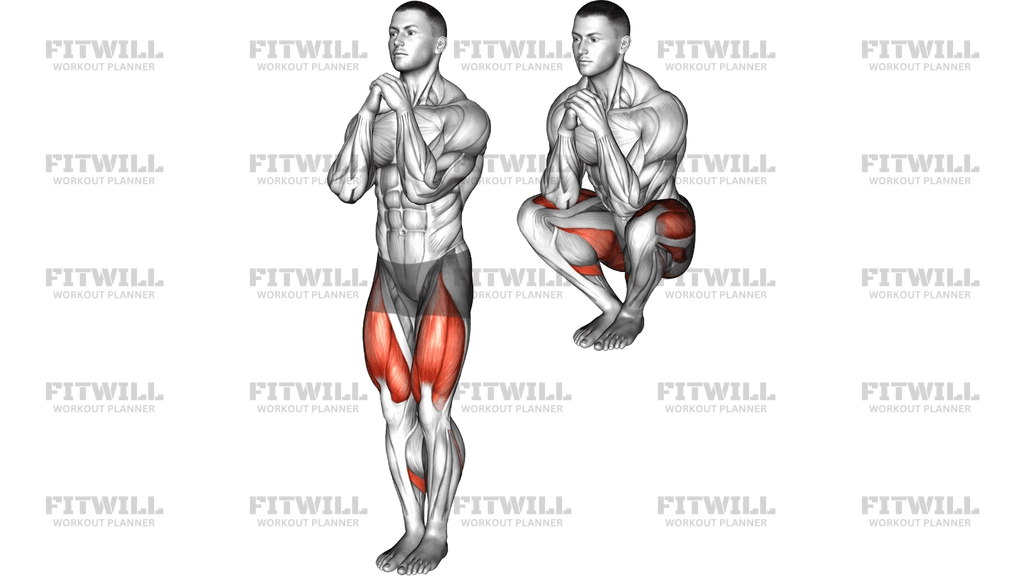
The Close Stance Squat is a bodyweight squat variation performed with your feet positioned directly under your hips or nearly touching, and your hands clasped together in front of your chest. Narrowing the feet changes the demands of the squat considerably compared to a conventional shoulder-width stance: your quadriceps take on more of the workload, your adductors work hard to keep your knees tracking over your feet, and your ankles and hips need noticeably more mobility to let you sit down between your legs without losing balance.
Because no barbell, dumbbells, or machine are involved, this is one of the most accessible ways to train a squat pattern. It works well as a warm-up before heavier lower body lifting, as a standalone leg exercise for home training or travel, and as a teaching tool for lifters who want to develop the mobility and control required for narrow-stance barbell squats later on. The hands-clasped position at the chest also acts as a natural counterweight, helping you lean slightly forward and keep your balance as you descend.
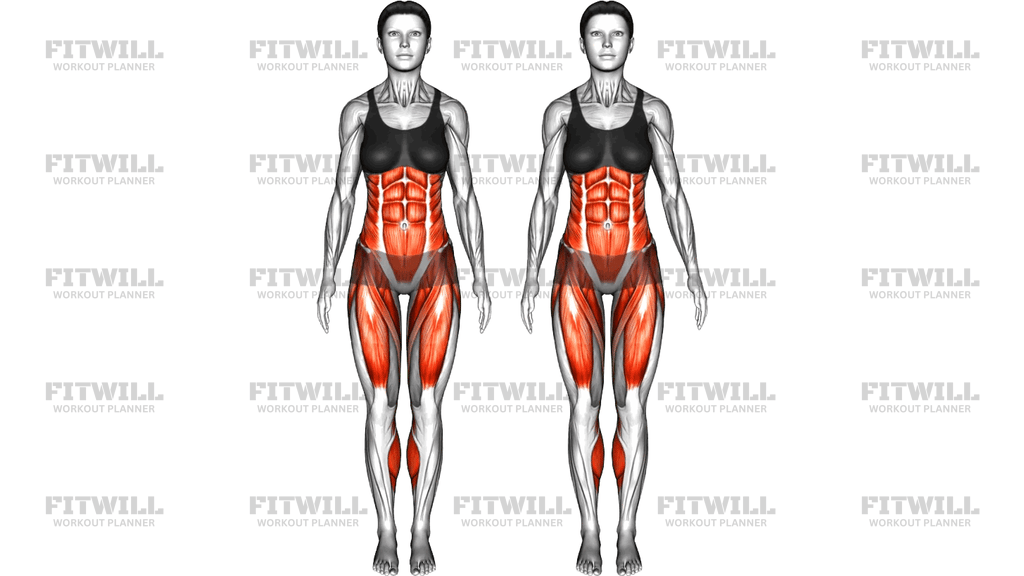
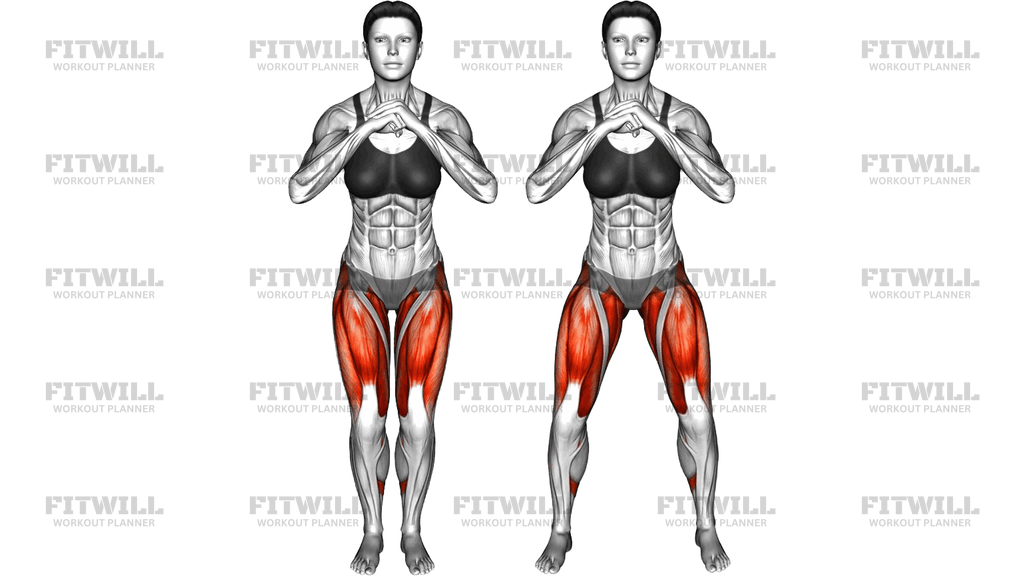
The main muscles working are the quadriceps, which extend the knees as you stand back up, along with the glutes, which drive the hips forward at the top. The adductors on the inner thigh stabilize the legs throughout, the calves and ankle stabilizers control the forward travel of your knees, and your core stays engaged to keep your torso upright and your spine neutral from top to bottom.
Setup matters more here than in a wider squat. With your feet close together, your base is narrow, so small errors in balance become obvious quickly. Keep your weight spread across the whole foot rather than dumping it onto your toes, and let your knees travel forward over your toes as you descend. If your heels lift or your knees cave inward, that is a sign to work on ankle mobility or reduce your depth for now.
Executed well, the Close Stance Squat builds strength through a long range of motion, improves knee and hip control, and exposes weaknesses that a wider stance can hide. Go down as deep as you can while keeping your heels down and your chest tall, pause briefly at the bottom if you want extra demand on the quads, and drive back up under control.
[ Workout Log & Planner ]
Put your next workout in Fitwill
Keep your plan and training log ready when you are.


Instructions
- Stand tall with your feet directly under your hips, a few inches apart or nearly touching, toes pointing forward or turned out very slightly.
- Clasp your hands together and raise them in front of your chest with your elbows tucked down, so your arms act as a counterweight.
- Brace your core, lift your chest, and shift your weight evenly across both feet with your whole foot in contact with the floor.
- Push your hips back slightly and bend your knees, letting them travel forward over your toes as your torso leans a little forward.
- Descend until your thighs are at least parallel to the floor, or as deep as you can go while keeping your heels down and knees tracking over your feet.
- Pause briefly at the bottom without bouncing or letting your knees collapse inward.
- Drive through your midfoot and push the floor away to stand back up, extending your hips and knees together.
- Exhale as you descend and inhale as you rise, or take a breath at the top and hold a light brace through each rep.
- Stand fully tall at the top without locking your knees hard, reset your position, and begin the next repetition.
Tips & Tricks
- If your heels keep lifting, your ankles are likely the limiting factor — try turning your toes out a few degrees, placing a thin book or small plate under your heels temporarily, and working on calf flexibility over time.
- Knees caving inward is the most common fault with a narrow stance. Think about spreading the floor with your feet and keeping your kneecaps pointed the same direction as your toes.
- Do not rush the bottom position. A narrow base makes bouncing out of the hole risky for your balance, so lower with control for two to three seconds.
- Keep your clasped hands high at chest level through the whole rep. Letting them drop forward pulls your chest down and turns the squat into a good-morning.
- Start with a moderate depth and earn full depth gradually — this variation demands more ankle and hip mobility than a shoulder-width squat, and forcing depth usually costs you form.
- Look at a fixed point a few feet ahead of you on the floor or wall. With such a narrow base, head movement can throw your balance off more than in a regular squat.
- If you want more challenge without adding weight, slow the descent, add a two-second pause at the bottom, or perform the movement with only one foot a few inches behind the other.
- Spread your toes inside your shoes and grip the floor lightly with them — this improves stability and keeps your arches from collapsing inward.
Frequently Asked Questions
What muscles does the Close Stance Squat work?
The quadriceps are the primary movers, with strong support from the glutes and the adductors of the inner thigh. The calves, ankle stabilizers, and core also work to keep you balanced over a narrow base.
How close should my feet be in the Close Stance Squat?
Start with your feet directly under your hips, a few inches apart, and only bring them closer if you can keep your heels down and your knees tracking over your toes. Fully touching feet is a progression, not a requirement.
Is the Close Stance Squat good for beginners?
Yes, since it uses only bodyweight and can be scaled by adjusting depth. Beginners with tight ankles may find it harder than a shoulder-width squat, so starting at partial depth and working lower over time is a sensible approach.
Why do my knees feel stressed when my feet are close together?
A narrow stance concentrates load on the front of the legs, and if your knees collapse inward or your weight shifts to your toes, the joint takes extra strain. Slow down, keep your knees over your toes, and reduce depth until the movement feels controlled.
Can I add weight to the Close Stance Squat?
Yes. Once bodyweight reps feel easy, you can hold a dumbbell or kettlebell at your chest in a goblet position, or wear a weighted vest, while keeping the same narrow stance and upright torso.
What is the difference between the Close Stance Squat and a normal squat?
The narrow foot position shifts more work to the quadriceps and demands greater ankle mobility and balance, while a wider stance involves more glute and adductor contribution and is generally easier to stabilize.
How deep should I go in the Close Stance Squat?
Descend until your thighs are parallel or lower if you can do so with your heels flat, chest tall, and knees tracking over your feet. Depth you cannot control is not worth chasing.
What can I use instead of the Close Stance Squat?
A standard bodyweight squat with shoulder-width feet, a goblet squat, or a sissy squat progression all train similar patterns. The closest substitute is a narrow-stance goblet squat, which adds a counterweight for balance.
Should my heels lift at the bottom of the Close Stance Squat?
No. Heels rising means your ankles lack the mobility for that depth or your weight has drifted onto your toes. Shorten the range, check that your weight stays over your midfoot, and address ankle mobility separately.