Standing Double Crunch
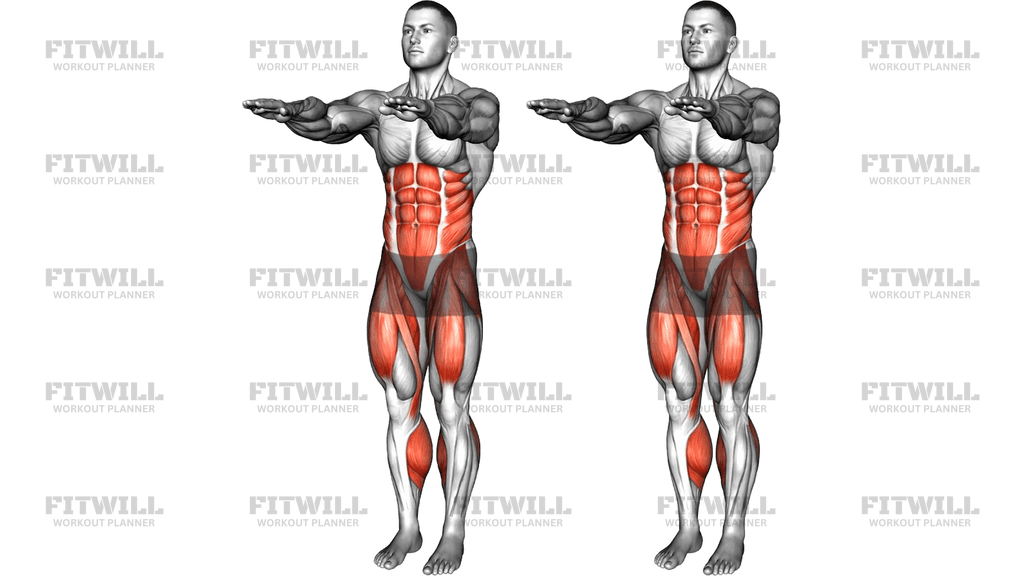
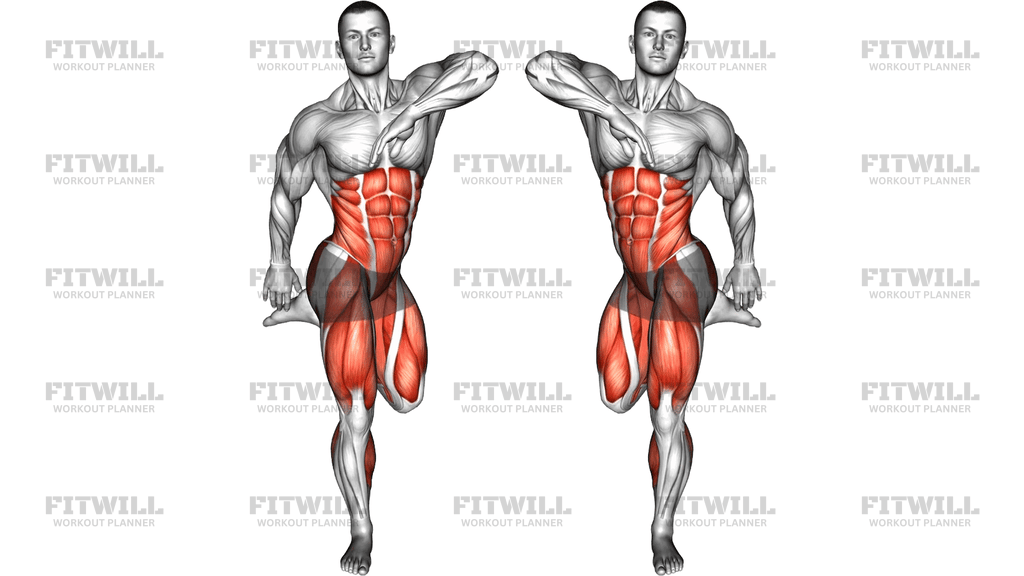
The Standing Double Crunch is a body weight core exercise that combines two crunching actions into one coordinated movement: your upper body folds down from overhead while one knee drives up from below, so the abdominals shorten from both ends at the same time. You start tall with feet wider than shoulder width and both arms reaching straight overhead, then crunch the ribcage down toward the pelvis as you raise one knee to meet your elbows or hands near mid-body. Because you are upright rather than lying on the floor, your trunk has to work against gravity in a way that also challenges balance and control.
This movement suits anyone who wants an effective abdominal workout without getting down on the ground. It fits well into home routines, hotel-room workouts, warm-ups, and circuit training, and it is a useful option for people who find floor crunches uncomfortable on the neck or who want to add variety to a standing core series. More advanced trainees can slow the tempo, add a pause at the top, or hold a light weight to increase the demand.
The primary muscles worked are the abs, especially the rectus abdominis running down the front of your torso. The obliques assist as your torso curls and slightly rotates toward the lifting knee, and the hip flexors work hard to raise the thigh. Your shoulders and upper back also stay engaged isometrically to control the arms as they sweep down and back up, and the standing leg, along with the stabilizers of the hips and ankles, keeps you steady throughout.
Setup matters more than it might seem. A stance about shoulder width or slightly wider gives you a stable base, and bracing your midsection before you start protects your lower back from arching as the arms go overhead. The crunch should come from your spine curling, not from simply swinging your arms or yanking your neck forward. Think about pulling your ribs toward your pelvis and exhaling forcefully at the top of the rep.
To execute it well, keep the movement deliberate rather than bouncy. Drive one knee up while your elbows and hands reach down toward it, squeeze the abs hard for a beat, then lower the foot and raise the arms under control. Alternate sides rep by rep, or complete all reps on one side before switching. Keep your neck neutral, your weight balanced over the standing leg, and your torso tall between reps so each crunch starts from a full range.
The most common faults are rushing, leaning the whole torso forward instead of crunching the spine, and letting the lower back overarch when the arms are overhead. If you find the coordination tricky at first, slow the movement down and focus on matching the knee and the hands at the same point in time. As with any core exercise, quality of the squeeze beats the number of reps, and you should stop if you feel anything more than muscular effort in your lower back.
[ Workout Log & Planner ]
Put your next workout in Fitwill
Keep your plan and training log ready when you are.


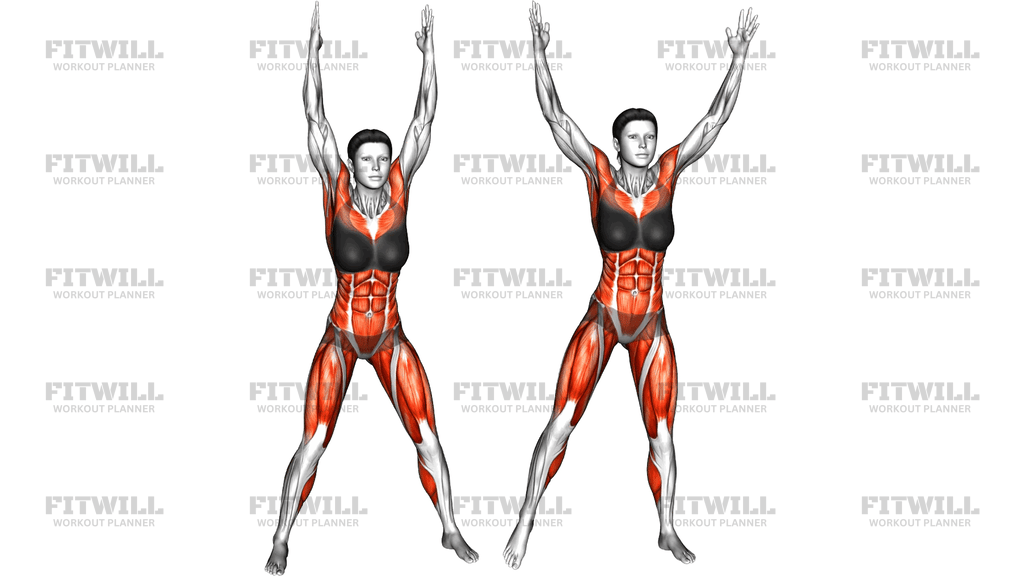
Instructions
- Stand tall with your feet about shoulder width apart or slightly wider, toes pointing forward, and your weight evenly distributed.
- Extend both arms straight overhead with your hands open or lightly clasped, keeping your shoulders relaxed rather than shrugging toward your ears.
- Brace your abdominal muscles gently and breathe in, setting your spine in a tall, neutral position before you move.
- Exhale and crunch your ribcage down toward your pelvis while simultaneously driving one knee up toward waist height.
- Sweep your elbows and hands down and slightly inward so they meet or pass close to the raised knee, curling your upper spine as you go.
- Squeeze your abs hard at the top for one to two seconds, keeping your neck long and your eyes forward instead of dropping your chin.
- Lower the foot back to the floor with control and raise your arms back overhead as your torso returns to tall.
- Reset your brace, inhale, and repeat on the opposite leg, alternating sides for the desired number of repetitions.
- Keep the tempo smooth throughout, aiming for two seconds up, a brief hold, and two seconds down on every rep.
Tips & Tricks
- Curl your spine instead of hinging at the hips; if your chest stays flat and simply tips forward, the abs stop doing the crunching and your hip flexors take over.
- Match the timing of the knee and the hands. Many people lift the knee first and then chase it with the arms, which turns the rep into a sloppy knee strike.
- Exhale sharply as you crunch. The breath helps the abs shorten fully and keeps you from holding tension in your face and neck.
- Keep your standing knee soft rather than locked. A slightly bent knee lets you absorb the movement and stay balanced on one leg.
- Avoid jerking your head forward. If your chin pokes toward your chest at the top, cue yourself to keep a fist-sized space between chin and chest.
- If balance is shaky, widen your stance or place the toes of the non-working foot lightly on the floor between reps until you build control.
- Do not let your lower back arch heavily when the arms go overhead. If you feel a pinching sensation, reduce how far back the arms travel and keep the ribs stacked over the pelvis.
- Slow the eccentric phase down. Lowering the arms and leg over a full two seconds does more for abdominal control than adding extra fast reps.
- To progress, pause for a full squeeze at the top of every crunch or hold a light dumbbell or plate in your hands, keeping the load modest so form stays clean.
Frequently Asked Questions
What muscles does the Standing Double Crunch work?
The primary muscles are the abs, particularly the rectus abdominis, which shortens as your ribs and pelvis move toward each other. The obliques assist the curling motion, the hip flexors raise the knee, and your shoulders and standing-leg stabilizers work to keep you controlled and balanced.
Is the Standing Double Crunch good for beginners?
Yes, it is beginner friendly because it requires no equipment and the range can be scaled easily. New lifters should start with a smaller knee lift and a partial arm sweep, focusing on feeling the abs curl rather than moving fast.
How is the Standing Double Crunch different from a floor crunch?
A floor crunch shortens the abs from the top down while your hips stay fixed, whereas the standing version closes the angle from both ends because your knee rises as your torso curls. Being upright also adds a balance and coordination element that floor work does not have.
Should I alternate legs or do all reps on one side?
Either works. Alternating sides each rep keeps the effort even and adds a natural rhythm, while completing all reps on one side before switching makes it easier to focus on the feeling of the crunch on each individual rep.
Why do I feel my hip flexors working during this exercise?
The hip flexors lift your thigh toward your torso, so some effort there is completely normal. If they dominate instead of your abs, reduce the knee height slightly and emphasize curling your ribcage down before the knee comes up.
How many reps of the Standing Double Crunch should I do?
Aim for 10 to 20 controlled reps per side, or 30 to 60 seconds of continuous alternating reps in a circuit. Choose a range where you can keep the crunch crisp on every rep rather than letting the movement become a fast knee-and-arm swing.
My lower back aches when my arms go overhead. What should I change?
The ache often comes from arching the lower back as the arms travel back. Keep your ribs stacked over your pelvis, tighten your abs before raising the arms, and reduce the overhead range slightly so your spine stays neutral.
Can I add weight to the Standing Double Crunch?
Yes, holding a light dumbbell, plate, or medicine ball in your hands increases the load on the abs as they curl down. Start with a modest weight and only add load once you can keep the timing between knee and hands consistent.
Is it safe for people who dislike floor exercises or have neck discomfort with crunches?
For many people it is a comfortable alternative because your head stays supported in an upright position and there is no repeated neck flexion against the floor. Keep your chin level and eyes forward, and if you have a history of back problems, check with a qualified professional before adding any new core movement.
Where does the Standing Double Crunch fit in a workout?
It works well as a core finisher after lower body or full body training, as a station in a circuit, or as part of a dynamic warm-up once you have learned the pattern. Because it also raises the heart rate slightly, it pairs nicely with other standing core moves in a short superset.