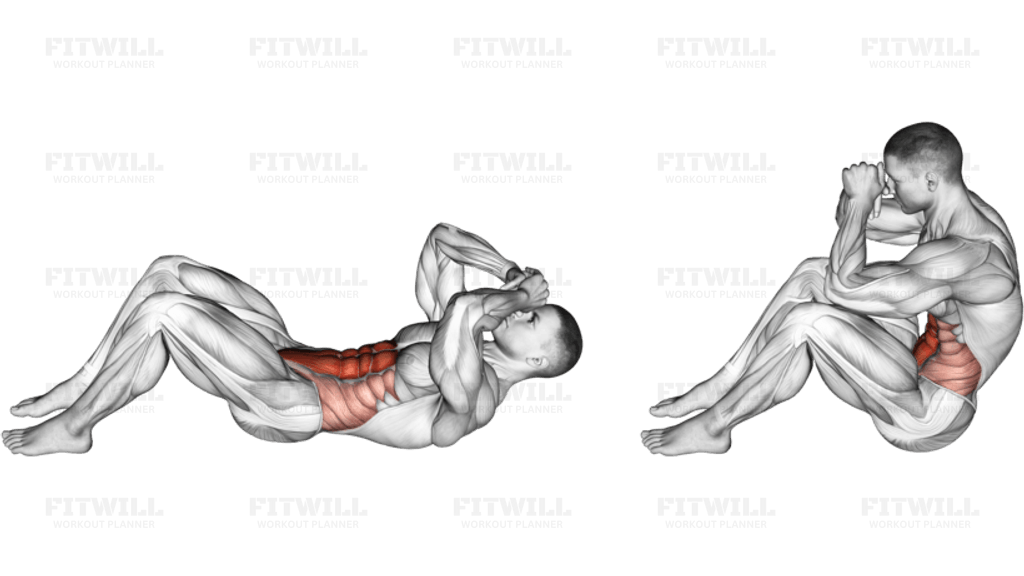
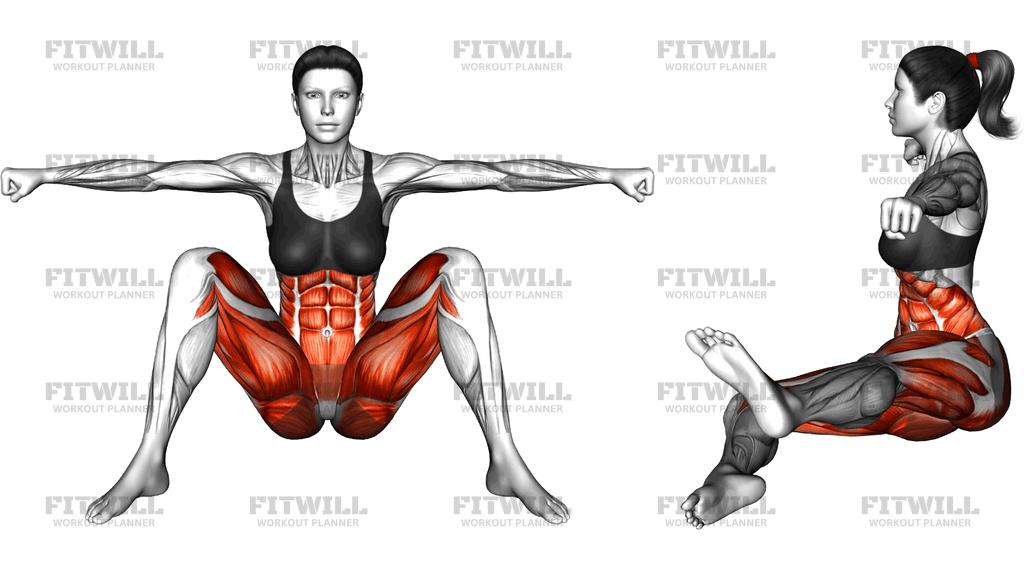
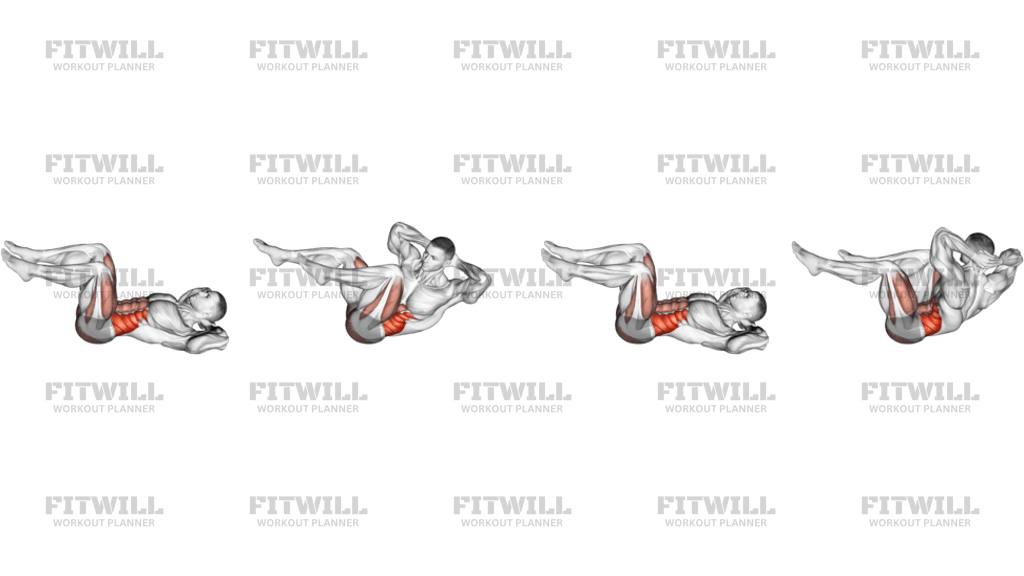
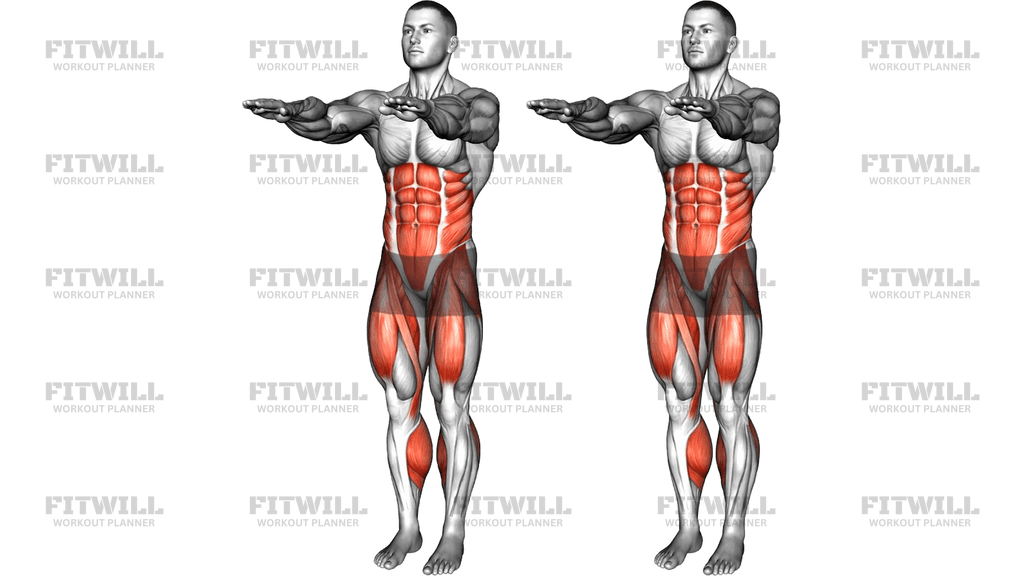
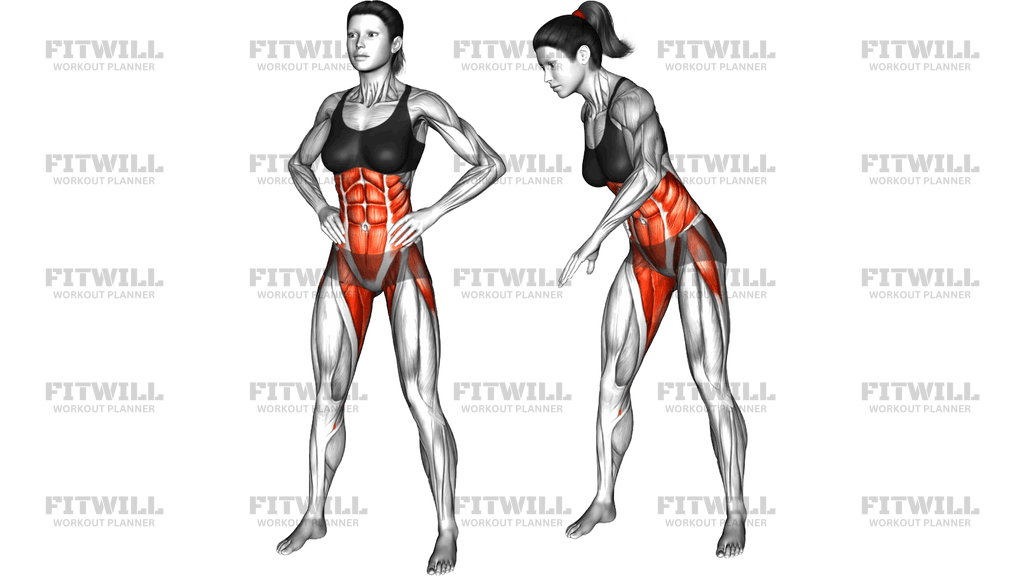
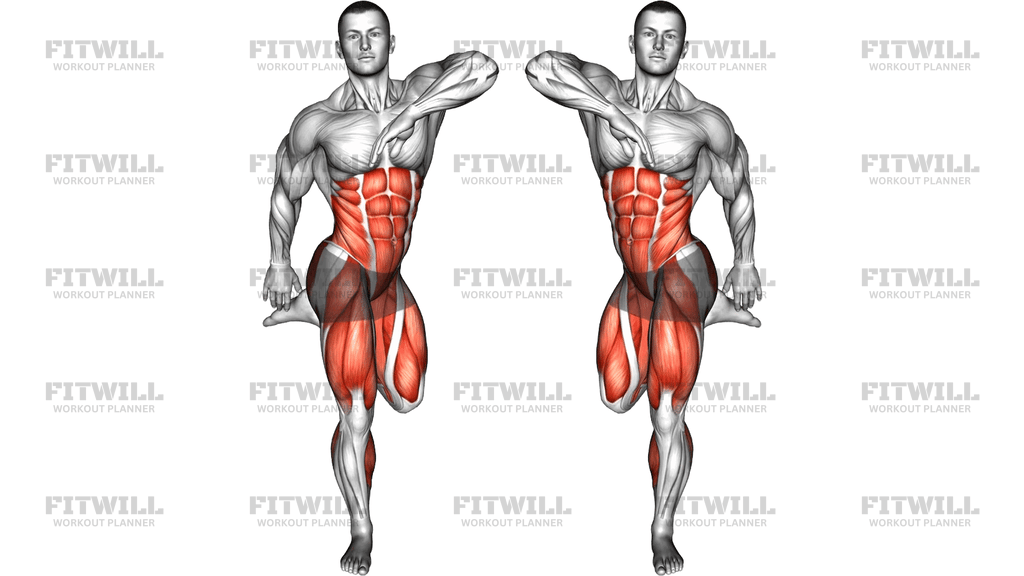
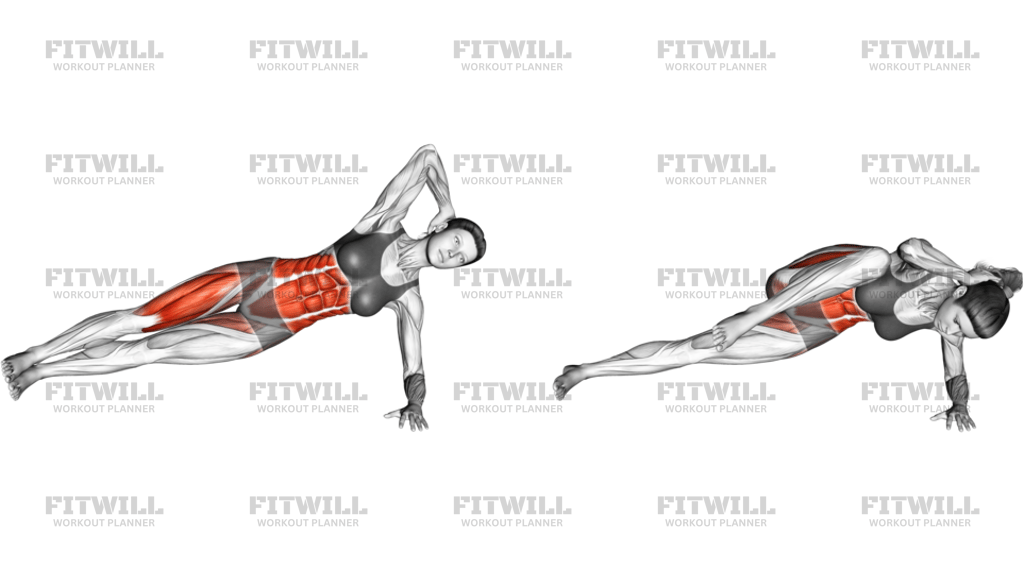
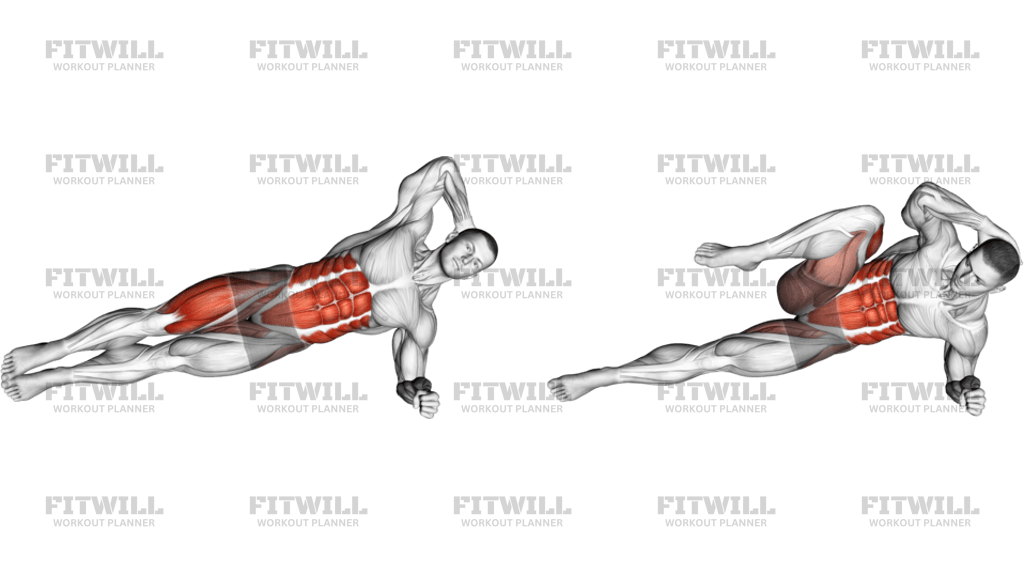
Side Hands Standing Crunch
The Side Hands Standing Crunch is a body weight abdominal exercise performed from an upright stance with your arms relaxed at your sides. Instead of lying on the floor, you create the crunch by deliberately flexing the spine, drawing the ribs down toward the pelvis while letting your hands slide along the outside of your thighs toward your knees. Adding a slight bend to one side at a time shifts extra emphasis onto the obliques, which is what gives this variation its name.
Because there is no equipment involved, this movement fits easily into warm-ups, hotel-room workouts, or as a burnout finisher after heavier core work. It suits beginners who find floor crunches awkward on the neck, as well as more experienced lifters who want a way to train the abs with high reps and a strong mind-muscle focus. Older adults and people rehabbing general trunk control also tend to like the standing position because getting down to and up from the floor is removed from the equation.
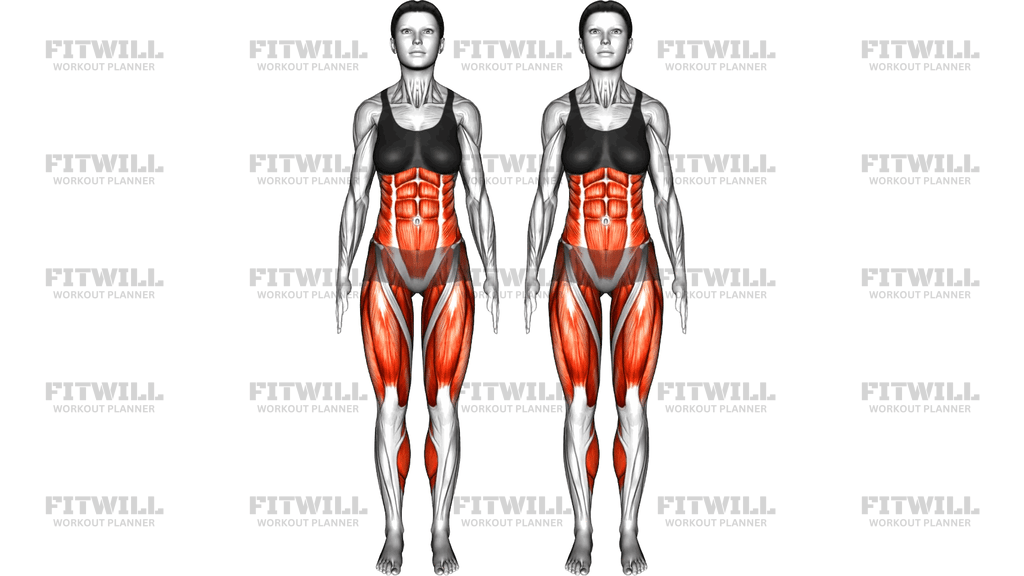
The main muscles at work are the rectus abdominis, the front wall of the abs, with the internal and external obliques assisting as you rotate or side-bend slightly through the crunch. The hip flexors contribute a small amount as the thighs and trunk approximate, but the goal is to make the abdominal wall do the curling rather than simply hinging at the hips. Standing tall also means the deep core and stabilizers of the lower body work to keep you balanced on your feet.
Setup matters more than it looks. With no bench or mat to lock you in place, your stance, posture, and hand position define the entire range of motion. Feet about hip-width apart, knees soft but not bent deeply, shoulders back, and arms hanging loose give your abs a clean job to do. The crunch itself should be a short, controlled curl of the ribcage toward the hips, not a big bend at the waist or a forward slump of the whole torso. Move slowly, exhale hard as you shorten the abs, and return tall under control. If you feel it in your neck, low back, or hip crease rather than your stomach, reduce the range and slow the tempo until the abs take over again.
[ Workout Log & Planner ]
Put your next workout in Fitwill
Keep your plan and training log ready when you are.


Instructions
- Stand with your feet about hip-width apart, weight evenly spread across both feet, and a soft, unlocked bend in the knees.
- Let your arms hang straight down at your sides with your palms facing your thighs and your shoulders relaxed away from your ears.
- Tighten your stomach and gently draw your belly button in to brace your core before you start moving.
- Curl your upper body down and slightly to one side, sliding the hand on that side down the outside of your thigh toward your knee as your ribs move toward your hip.
- Squeeze your abs hard at the bottom of the crunch, exhaling fully as you shorten the distance between your ribs and pelvis.
- Hold the contracted position for a brief moment, keeping the movement in your trunk rather than hinging forward at the hips.
- Slowly uncurl back up to a tall standing position, inhaling as your spine lengthens and your hand returns to your thigh.
- Repeat the crunch on the same side for your target reps, then switch and work the opposite side, or alternate sides rep by rep if that feels more natural.
- Between sets, shake out your shoulders and reset your stance so each rep starts from the same tall, braced position.
Tips & Tricks
- The most common mistake is bending at the hips so your whole torso tips forward like a bow. Your chest should move down only a few inches; the curl comes from the ribs drawing toward the pelvis, not from folding at the waist.
- Keep your hands relaxed. Pressing or pulling on your thigh with your hand turns this into an arm exercise, so let the fingers lightly trace the leg instead of pushing off it.
- If you are performing the side emphasis version, think about bringing your ribs toward the same-side hip rather than reaching your shoulder down. This keeps the contraction in the obliques instead of straining the side of your low back.
- Exhale sharply on the way down into the crunch. The exhale naturally helps the abs shorten, and many people find they feel the contraction much more clearly when the breath is timed this way.
- Avoid craning your chin forward to look at the floor. Pick a spot on the wall in front of you at eye level and keep your neck long throughout the rep.
- Do not rush. This is a short-range movement, so a slow two-second curl with a one-second squeeze and a slow return produces far more tension than fast bobbing reps.
- If your hip flexors take over and you feel a pinch at the front of the hip, reduce how far you curl and focus purely on rounding the upper spine rather than driving the chest toward the thighs.
- Because the range is small, it is easy to add reps mindlessly. Stop the set when you can no longer feel the abs doing the work, not when you simply run out of breath.
Frequently Asked Questions
Which muscles does the Side Hands Standing Crunch work?
The rectus abdominis, the front sheet of the abs, is the primary mover, with the internal and external obliques assisting, especially when you add the sideways curl toward one hip. The hip flexors play a minor supporting role if you curl deeply.
Why are the hands kept at the sides instead of behind the head?
With the arms hanging at your sides, there is nothing to pull on, so the abs have to create the entire curl themselves. This removes the common habit of yanking on the neck that happens in hands-behind-the-head crunches.
Is the Side Hands Standing Crunch good for beginners?
Yes. The standing position, short range, and lack of equipment make it a low-barrier way to learn what an abdominal contraction actually feels like before progressing to floor or loaded variations.
How is this different from a regular standing crunch?
In a standard standing crunch you curl straight down, while the Side Hands version sends the ribs down toward one hip at a time with the hand sliding along that leg. That slight side-bend brings the obliques into the movement much more.
Should I alternate sides or complete all reps on one side?
Both work. Alternating sides rep by rep keeps the effort even and helps you feel the difference between sides, while finishing one side first gives a stronger burn before you switch.
How many reps should I do?
Because the movement is short and unweighted, higher volumes tend to work best, typically 15 to 25 controlled reps per side. Focus on feeling each squeeze rather than racing to a number.
I feel this in my lower back instead of my abs. What should I fix?
You are most likely bending at the waist or arching back up too aggressively. Shrink the range, keep the hips stacked under the shoulders, and make the motion a small rib-to-pelvis curl with a slow return to standing.
Can I make the Side Hands Standing Crunch harder?
Yes. Slow the lowering phase to three or four seconds, add a pause at the top of the standing position, or hold a light dumbbell in each hand so the arms add gentle resistance as they slide down the thighs.
Is it safe to do this exercise every day?
For most people, a body weight ab curl performed with sensible volume is fine on consecutive days. If you notice persistent soreness in your low back or hips, scale back the reps and give the area a day to recover.
What can I use if I want a substitute for this movement?
Floor crunches, standing oblique crunches with hands behind the head, or cable side crunches all train similar tissue. The Side Hands Standing Crunch remains the simplest option since it requires no equipment or floor space beyond room to stand.