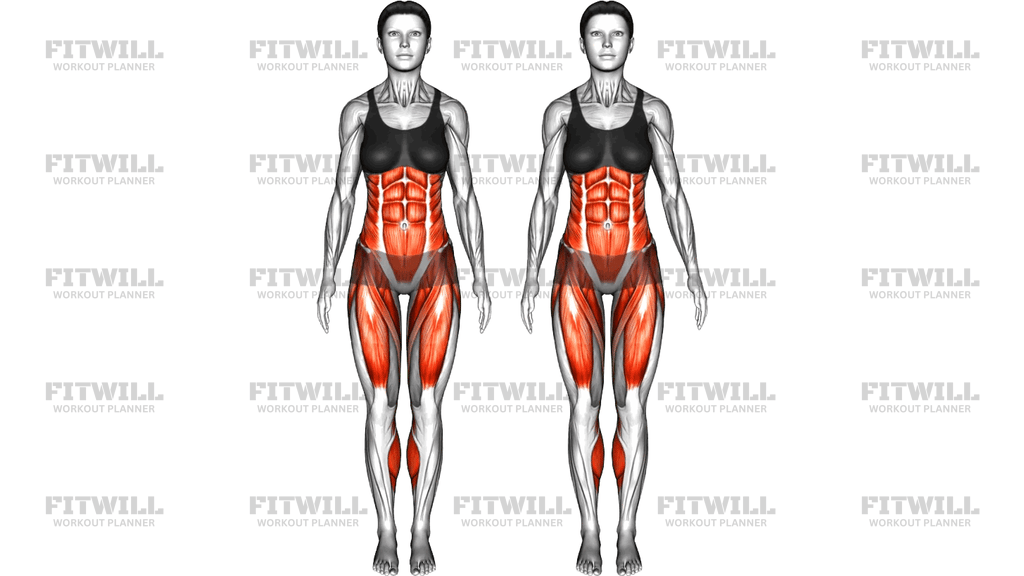
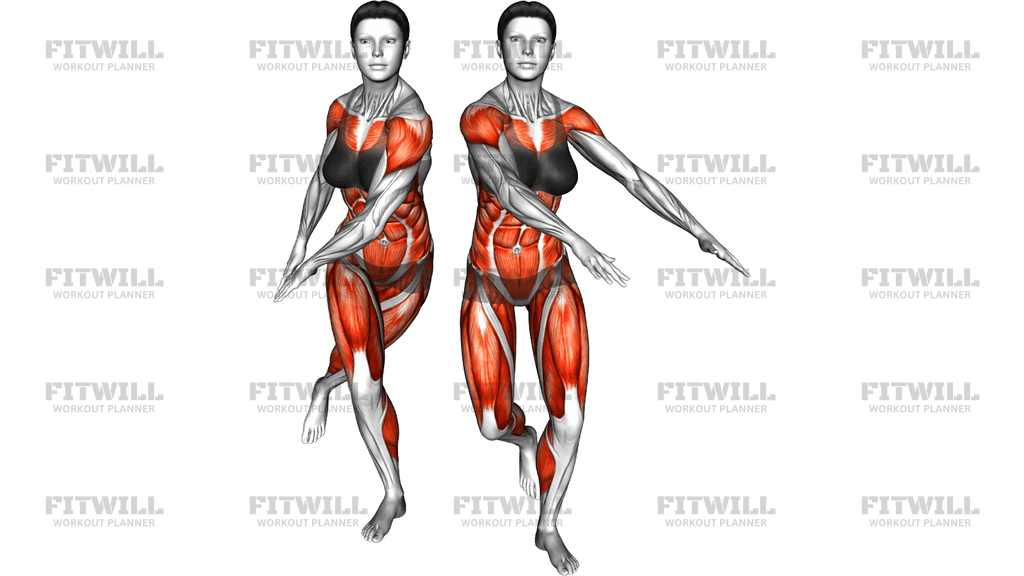
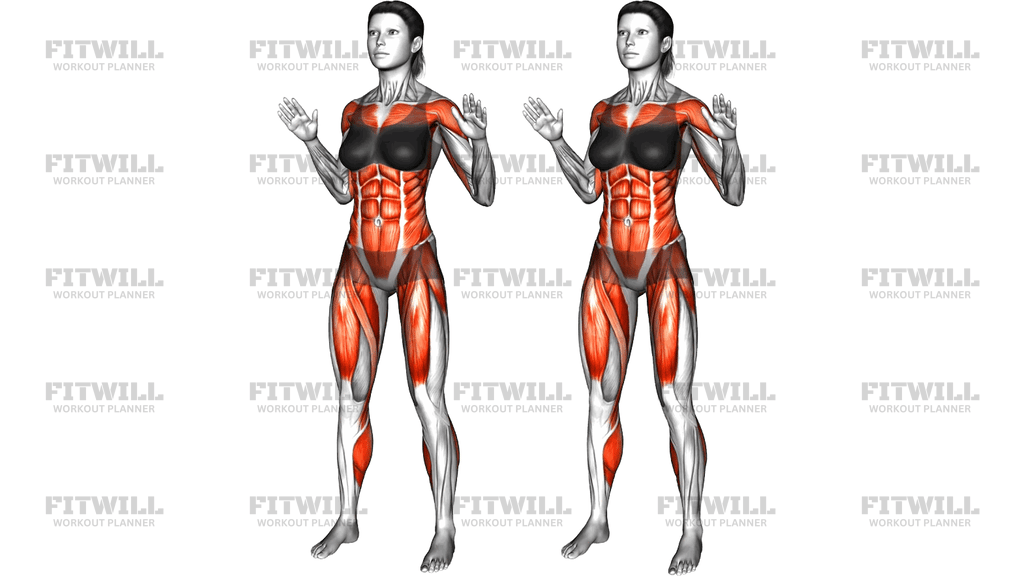
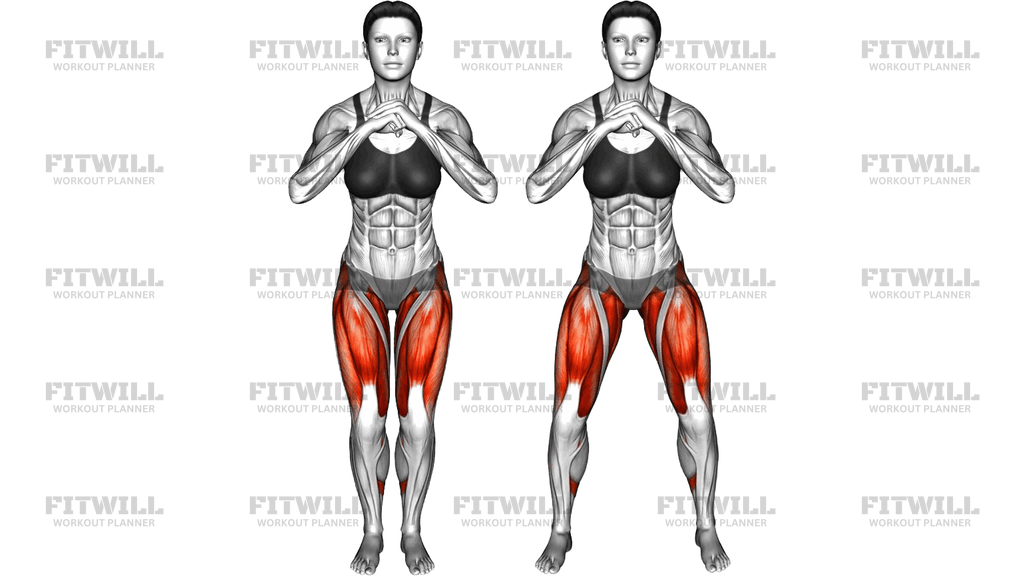
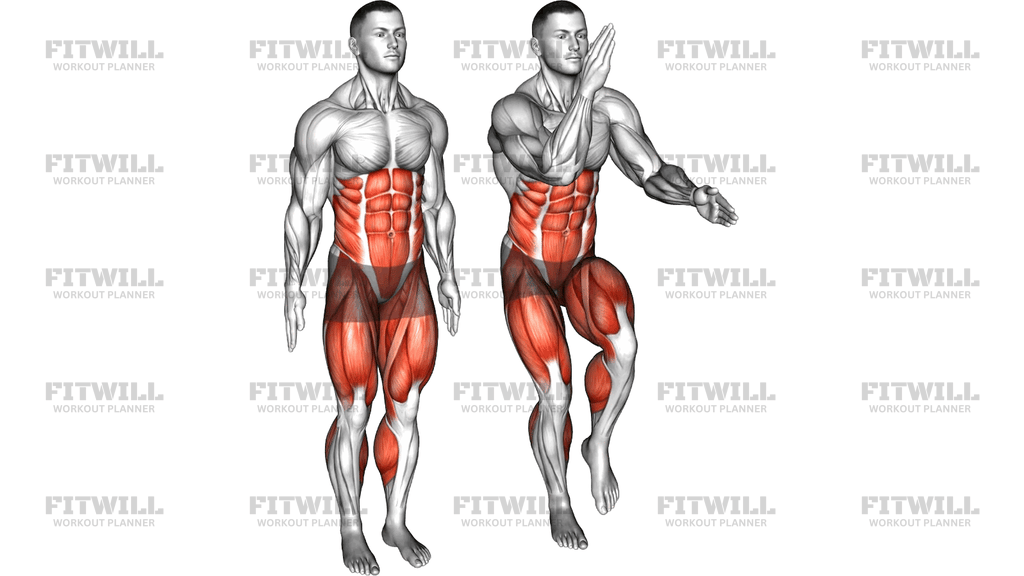
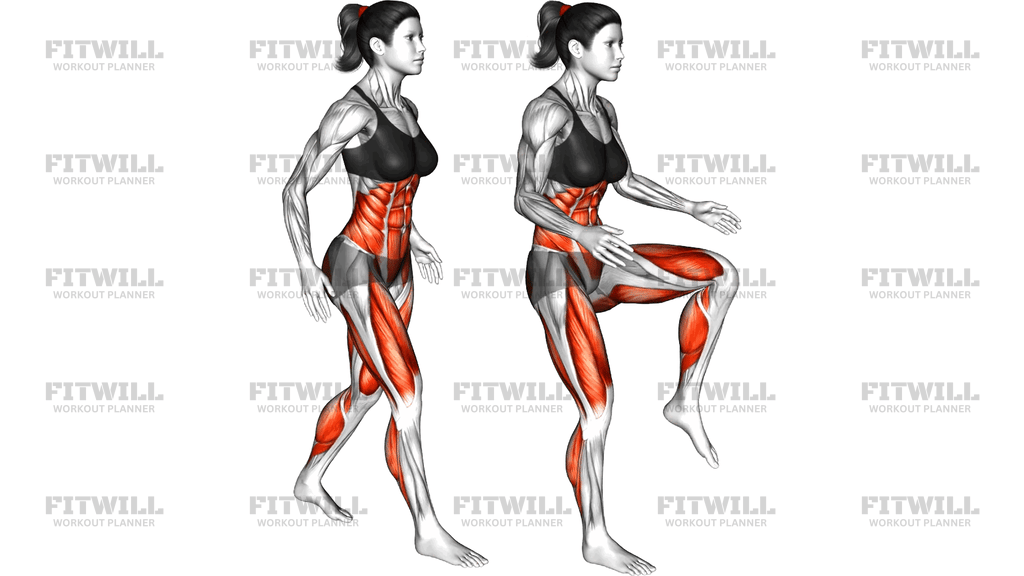
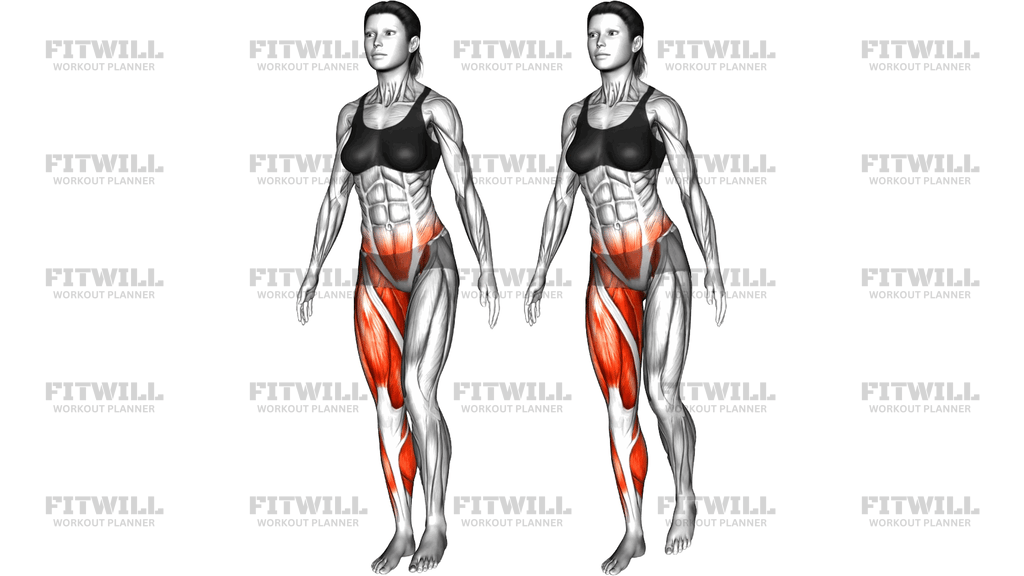
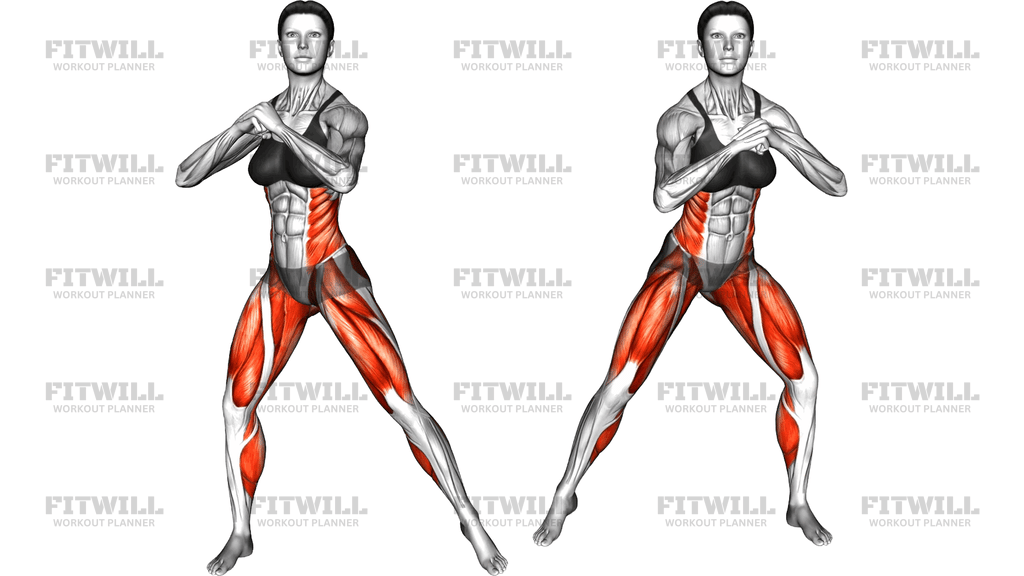
Single Leg Squat With Wall Support (Pistol)
The Single Leg Squat With Wall Support (Pistol) is a supported version of the pistol squat, one of the most demanding single-leg strength exercises in bodyweight training. Instead of free-balancing on one leg, you stand beside a wall and place your palm flat against it at about shoulder height. That hand contact gives you just enough balance and lateral assistance to squat down on one leg while the other leg stays extended straight in front of you, then drive back up without losing your footing.
This variation exists because a true pistol squat requires three things at once: strong quads and glutes, good ankle and hip mobility, and serious balance. Most people who can squat their bodyweight comfortably for reps still fail their first pistol simply because they topple sideways or backward. The wall removes the balance bottleneck so you can load the working leg through a deep range and build the strength that a freestanding pistol demands later.
The working leg does nearly all of the effort. The quadriceps, especially the rectus femoris running down the front of the thigh, work hard through the deep knee bend, while the glutes and hamstrings control the descent and power the drive back up. The straight, lifted leg acts as a counterweight, and keeping it extended also recruits the hip flexors and the muscles around the ankle of the squatting leg. The hand on the wall should guide you, not lift you, so the leg still does the actual work.
Setup matters more than most people expect. Stand close enough to the wall that your arm reaches it with a soft bend in the elbow, and position your feet so the squatting leg can bend fully without the heel lifting. If you stand too far away, you will lean and drag yourself sideways; too close, and your arm blocks your own descent. Take a moment to plant the squatting foot flat, with the whole foot gripping the floor, before you start each rep.
This exercise suits intermediate trainees working toward their first freestanding pistol, lifters who want unilateral leg strength without heavy barbells, and anyone rehabilitating balance and control after their squat pattern has been cleared for loading. Common use cases include pistol squat progressions at home, warm-up contrast work for advanced lifters, and single-leg strength circuits where equipment is limited.
Move slowly and own the bottom position. Descend under control until the hamstring meets the calf or as deep as your ankle allows, keep the lifted leg off the floor the entire time, and push the floor away rather than pulling on the wall. If your heel rises or your knee caves inward, that is the signal to shorten the range and rebuild from a shallower depth rather than forcing the full squat.
[ Workout Log & Planner ]
Put your next workout in Fitwill
Keep your plan and training log ready when you are.


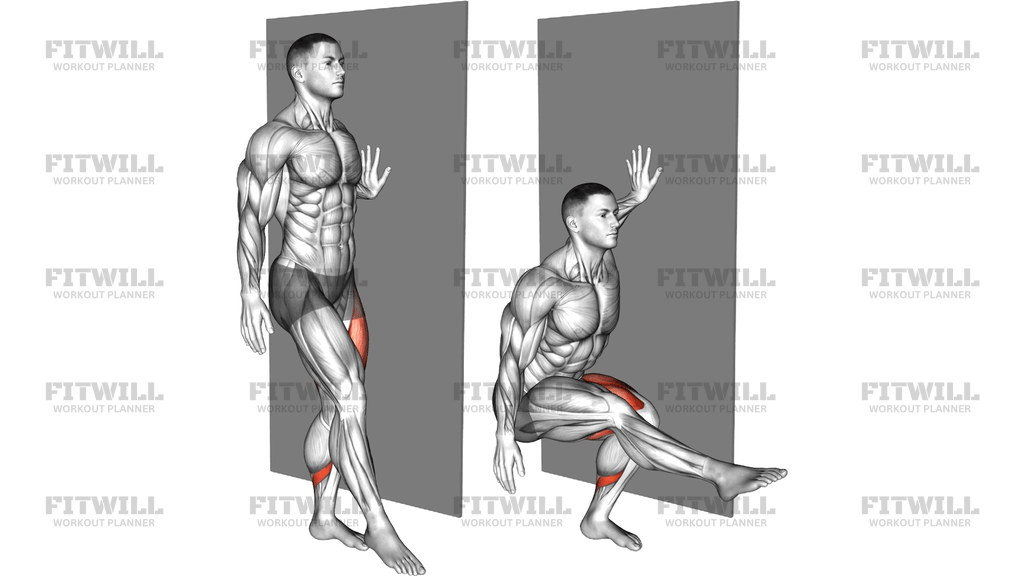
Instructions
- Stand sideways next to a wall with the arm closest to the wall extended out at roughly shoulder height and your palm flat against the wall, fingers pointing up.
- Shift your weight onto the leg nearest the wall so it becomes the working leg, and extend the other leg straight forward with the foot flexed and hovering just above the floor.
- Set the working foot flat with your weight spread across the whole foot, and squeeze your core to keep your torso upright.
- Inhale, then bend the working knee and hip together to lower yourself, letting the hand on the wall slide or press lightly for balance as you descend.
- Keep the lifted leg extended straight ahead and off the floor, using it as a counterweight as your hips travel back and down.
- Lower until your thigh is at or below parallel, or as deep as you can go while keeping the heel glued to the floor and the knee tracking over the foot.
- Exhale and drive through the working heel to stand back up, pressing lightly into the wall with the hand only as much as needed to stay centered.
- Finish the rep with the working leg fully straight and the lifted leg still extended and off the floor.
- Reset your foot position and brace before each rep rather than rushing reps together, then complete all reps on one side before switching legs and hands.
Tips & Tricks
- Press into the wall, do not pull on it. If you feel your lat and arm doing the work, you are dragging yourself up instead of squatting, so lighten the hand contact and slow the tempo.
- A rising heel is the most common failure point on this movement. Elevating the heels slightly on a thin board or folded mat lets you reach depth while you build ankle mobility.
- If you keep tipping away from the wall, your working foot is probably too far from it. Move a few inches closer so the arm stays nearly straight and acts as a pivot rather than a lever.
- Keep the lifted leg high and tight. As you fatigue, it tends to drop toward the floor, which shifts your center of mass backward and turns the rep into a struggle.
- Fight knee cave. The squatting knee should track over your second toe; cue yourself to spread the floor with your foot as you descend.
- Own a pause at the bottom for two or three seconds per rep if depth is easy but control is not. Paused wall-supported pistols transfer far better to freestanding ones than fast reps.
- Do not let the wall hand drift behind your shoulder line. Keep it at or slightly in front of shoulder height so it supports balance instead of yanking your torso into rotation.
- Start with the leg closest to the wall and match reps on the other side by turning around, since most people have a noticeably stronger side on single-leg work.
- If your hip cramps on the extended leg, that is the hip flexors working as a counterweight for the first time. Shorten the sets and build tolerance gradually.
Frequently Asked Questions
Which muscles does the Single Leg Squat With Wall Support (Pistol) work hardest?
The quadriceps of the working leg do most of the effort, with strong contributions from the glutes and hamstrings to control the descent and stand back up. The hip flexors of the extended leg and the ankle stabilizers of the squatting leg also work continuously to hold the position.
Is this a good progression toward a freestanding pistol squat?
Yes, it is one of the most practical ones. The wall hand removes the balance problem so you can train the deep single-leg strength and mobility the pistol requires, then gradually reduce how much you press into the wall until you no longer need it.
Can beginners do the Single Leg Squat With Wall Support (Pistol)?
Beginners can attempt it, but most should first be comfortable with bodyweight split squats and rear-foot-elevated split squats. If a full-depth rep is not possible, squat to a box or only to the depth where your heel stays down and progress from there.
How much should I actually push on the wall during the rep?
Use the lightest pressure that keeps you centered, think of it as a guide rail rather than a handle. If your arm and lat feel tired after a set, you are pulling yourself through the reps instead of squatting with your leg.
Why does my heel lift off the floor at the bottom of the squat?
That usually points to limited ankle dorsiflexion, though sitting too far back on the heel can cause it too. Elevate the heels slightly on a thin wedge or board, and work on calf and ankle mobility separately so you can eventually squat flat-footed.
Should the extended leg stay completely straight?
Yes, keep it straight and held high in front of you. Bending the lifted leg mid-rep changes your counterweight and balance point, which is one of the main reasons people lose position at the bottom.
What can I use instead of a wall for support?
A sturdy door frame, squat rack upright, or suspension trainer works the same way, and a TRX-style handle lets you adjust support continuously. A counterweight held in front of you is a different but complementary option once the wall version feels solid.
How many reps and sets should I do per side?
Start with 3 to 5 controlled reps per leg for 2 to 3 sets, doing your weaker side first. Single-leg work responds better to crisp, controlled reps than to grinding out extra volume with sloppy positions.
Is it safe for my knees?
For healthy knees, controlled deep single-leg squatting is generally well tolerated, but the load per knee is high, so progress depth gradually and stop if you feel sharp pain rather than muscular effort. Anyone with a knee injury or recent surgery should clear the movement with a professional first.