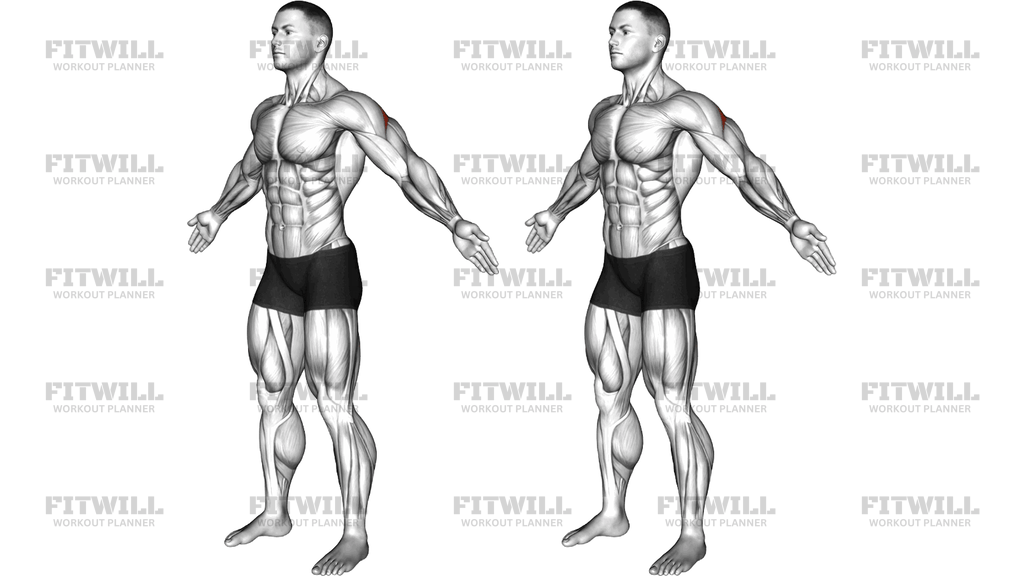
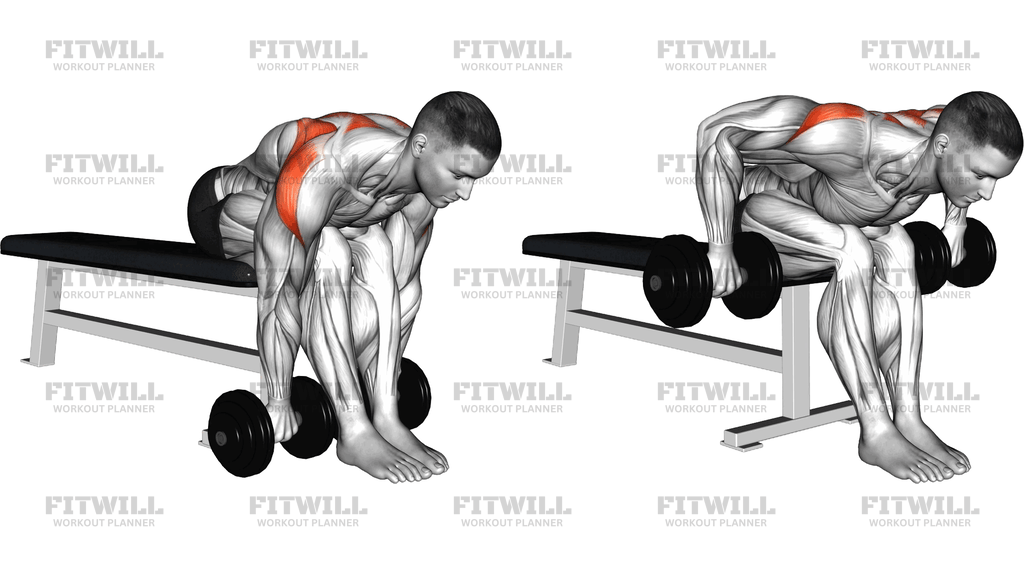
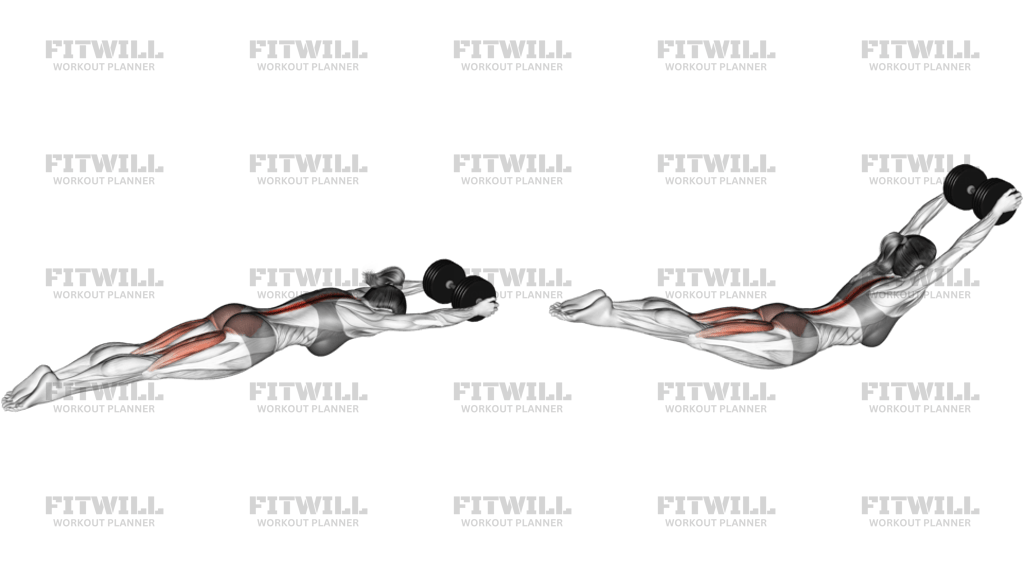
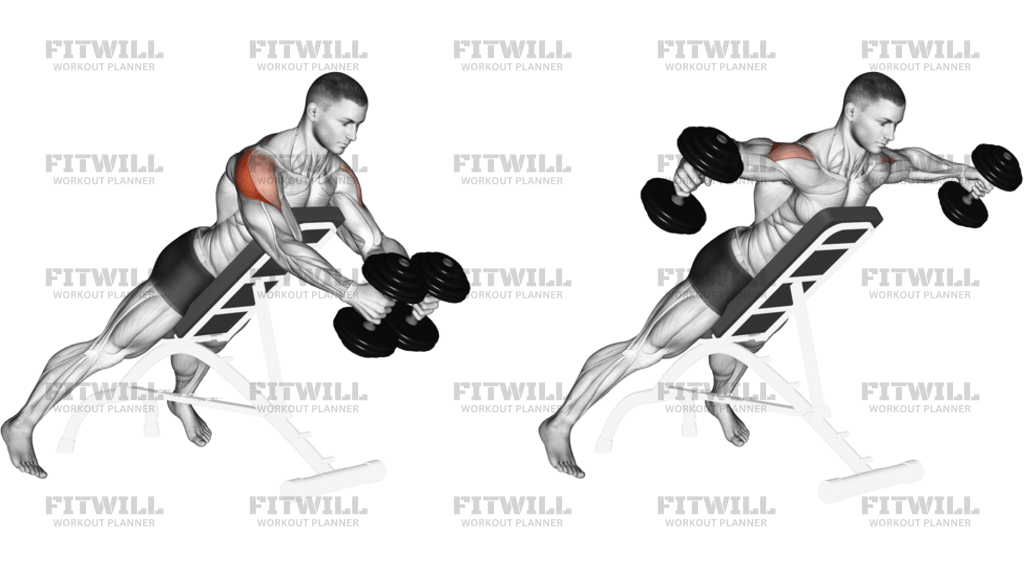
Dumbbell Standing Reverse Butterfly
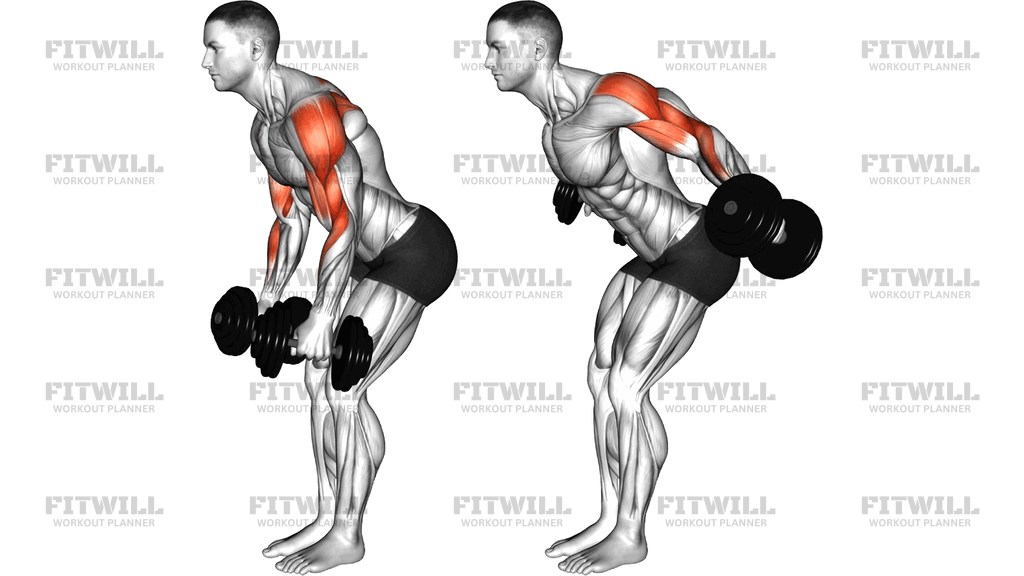
The Dumbbell Standing Reverse Butterfly is a rear-shoulder isolation exercise performed with a light pair of dumbbells and a slight forward lean. Unlike a standard reverse fly where the arms stay nearly straight, this version keeps the elbows bent at roughly 90 degrees throughout. You start with your upper arms raised forward at shoulder height, then sweep the dumbbells out to the sides and back until they finish level with or slightly behind your head, before rotating them forward again. The bent-elbow position shortens the lever, so the shoulders themselves do the work instead of momentum.
This movement is especially useful for people whose training is press-heavy. If you bench press, do push-ups, or work at a desk with rounded shoulders, the rear deltoids and the muscles between your shoulder blades are often undertrained. The reverse butterfly targets exactly that area and helps balance the shoulder girdle, which supports better posture and healthier shoulder mechanics over time.
The main muscle at work is the posterior deltoid, the rear head of the shoulder. As the arms sweep back, the rhomboids and middle trapezius assist by drawing the shoulder blades together, and the small rotator cuff muscles stabilize the shoulder joint through the rotation. Because you stand with a modest hip hinge and soft knees, your lower back and legs work quietly to hold your position, but the load should stay light enough that this support role never becomes the limiting factor.
Setup matters more here than in many shoulder exercises. A slight forward lean from the hips positions the arms so they can travel horizontally across the body rather than fighting gravity in a vertical arc. Stand with feet about hip-width apart, knees gently bent, and torso tipped forward roughly 20 degrees. Hold a dumbbell in each hand with a firm but relaxed grip, and raise your upper arms to shoulder height in front of you with elbows bent at a right angle. If your elbows drift below shoulder level, the rear delts lose tension and the movement turns into a shrug.
Execution is a smooth rotation, not a swing. Keep the elbow angle fixed and the elbows at shoulder height while your forearms sweep from pointing forward to pointing outward and back. Move at a deliberate pace, pause briefly at the back of the arc to feel the shoulder blades draw together, then take two to three seconds to return forward. Breathing should follow the effort: exhale as the arms sweep back, inhale on the return.
This exercise fits well as a finishing movement on shoulder or upper-body days, typically for two to four sets of twelve to twenty repetitions. Choose dumbbells far lighter than what you would press with. If you have to jerk your torso or drop your elbows to complete a rep, the weight is too heavy, and the set will train momentum instead of the rear delts it is meant to target.
[ Workout Log & Planner ]
Put your next workout in Fitwill
Keep your plan and training log ready when you are.


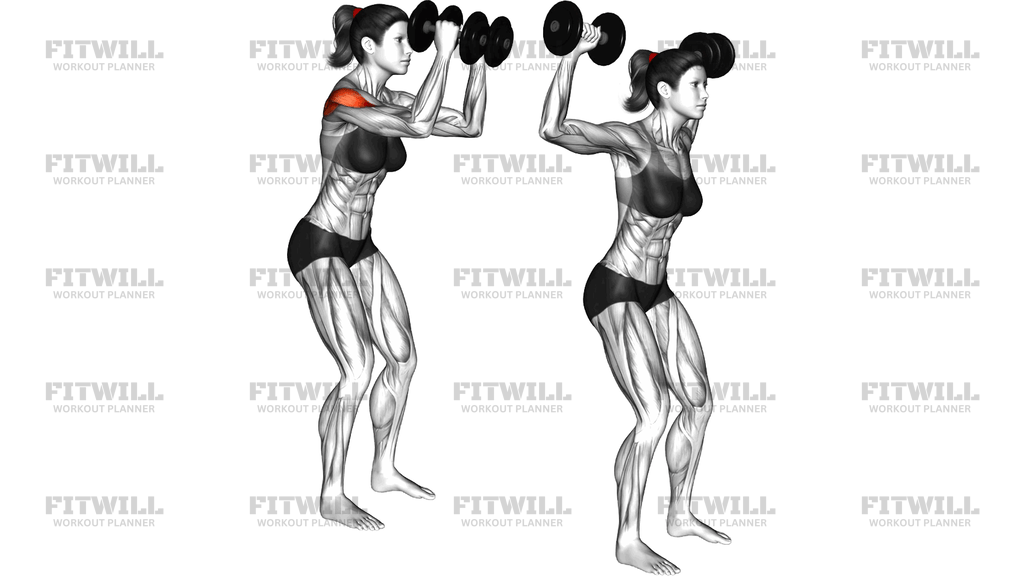
Instructions
- Stand with your feet hip-width apart and hold a dumbbell in each hand with a neutral, comfortable grip.
- Hinge forward slightly from the hips, about 20 degrees, with your knees softly bent and your core braced so your torso stays still.
- Raise your upper arms forward until they are level with your shoulders, then bend both elbows to roughly 90 degrees so the dumbbells hang in front of you near head height.
- Fix your elbow angle and keep your elbows at shoulder height for the entire set; they are the hinge the arms rotate around.
- Exhale and rotate your arms out to the sides and back, sweeping the dumbbells in a smooth arc until they end up beside or slightly behind your head.
- Squeeze your shoulder blades together at the back of the arc and hold that position for a short pause.
- Inhale and rotate the dumbbells slowly back along the same path until your forearms point forward again and the dumbbells meet near head height.
- Keep your shoulders down away from your ears throughout; if you feel yourself shrugging, stop the set and lighten the weight.
- Complete your repetitions, then lower the dumbbells with control and stand fully upright to reset before the next set.
Tips & Tricks
- Choose dumbbells you could lift for thirty or more reps. This exercise works through a long rotational arc, and even a small jump in weight usually causes swinging before strength does.
- The most common breakdown is the elbows dropping toward your ribs as fatigue sets in. When the elbows sink, the middle traps take over and the rear deltoid loses tension, so check elbow height on every rep.
- If your lower back starts to ache, you are probably leaning too far forward or letting the hinge collapse as you tire. Reduce the lean slightly, re-brace your abs, or split the set into two shorter ones.
- Do not let the dumbbells travel past the point where your torso starts to arch backward. The arc should end with the weights roughly beside your head, not cranked far behind your shoulders.
- Keep your wrists straight and in line with your forearms. Cocking the wrists back to 'help' the dumbbells around shifts stress into the forearm and wrist instead of the shoulder.
- A two-second sweep back, one-second squeeze, and two-to-three-second return gives far better rear delt feedback than fast, bouncy reps with heavier dumbbells.
- Because the rear deltoids recover quickly and respond to volume, this movement works well right after pressing exercises or as the last exercise of an upper-body session.
- Your head should stay neutral, looking at a point on the floor a meter or so in front of you. Craning your neck up to watch the dumbbells travel strains the upper traps.
- If one side fatigues noticeably faster, the stronger arm may be doing extra work. Slow the tempo down so both arms are forced to contribute equally through the arc.
Frequently Asked Questions
Which muscles does the Dumbbell Standing Reverse Butterfly work?
The rear shoulders are the primary movers, with the rhomboids and middle traps assisting as the shoulder blades draw together. The rotator cuff muscles stabilize the shoulder joint throughout the rotating arc.
How is the Dumbbell Standing Reverse Butterfly different from a regular dumbbell reverse fly?
The elbows stay bent at about 90 degrees instead of nearly straight, which shortens the lever and removes strain from the elbows and wrists. The bent position also lets the arms sweep through a fuller rotation back past the shoulder line.
How heavy should the dumbbells be for this exercise?
Start with very light dumbbells, often just a few kilograms per hand, and only add weight when you can complete all reps with elbows fixed at shoulder height. Because the movement is rotational, anything heavy almost always turns into a swing.
Why do my elbows keep dropping during the set?
Dropping elbows usually means the dumbbells are too heavy or the rear delts are fatigued, so the body recruits the lats and traps instead. Lighten the load and focus on holding the elbows level with your shoulders from the first rep to the last.
I feel my lower back working during the Dumbbell Standing Reverse Butterfly. Is that normal?
A mild stabilizing effort is expected because the slight hip hinge makes your torso hold an isometric position. Sharp or growing discomfort is a sign to reduce the forward lean, brace your core harder, or use lighter dumbbells.
Where should I put the Dumbbell Standing Reverse Butterfly in my workout?
It works well as an accessory after pressing movements or at the end of a shoulder or upper-body day, for two to four sets of twelve to twenty reps. Placing it last keeps fatigue out of the stabilizers you need for heavy pressing.
Can beginners do the Dumbbell Standing Reverse Butterfly?
Yes, and it is actually a good early shoulder exercise because the light load and bent-elbow position teach control of the rear delts. Practice in front of a mirror to confirm the elbows stay at shoulder height.
Should I straighten my arms at the end of the movement to get a bigger stretch?
No, extending the elbows changes the exercise into a reverse fly and shifts the load differently onto the shoulder. If you want a straight-arm variation, treat it as a separate movement with its own lighter weight.
Can I do this exercise seated instead of standing?
A seated version on the end of a bench with a forward lean is a reasonable substitute, but the standing position shown here makes it easier to set the hip angle consistently and repeat it from set to set.
Is the Dumbbell Standing Reverse Butterfly safe for shoulder joints?
For most people it is a joint-friendly option because the load is light and the elbows stay bent, which reduces leverage stress. Keep the arc within a comfortable range, avoid forcing the dumbbells far behind your head, and stop if you feel pinching.