Yoga Squat Dives
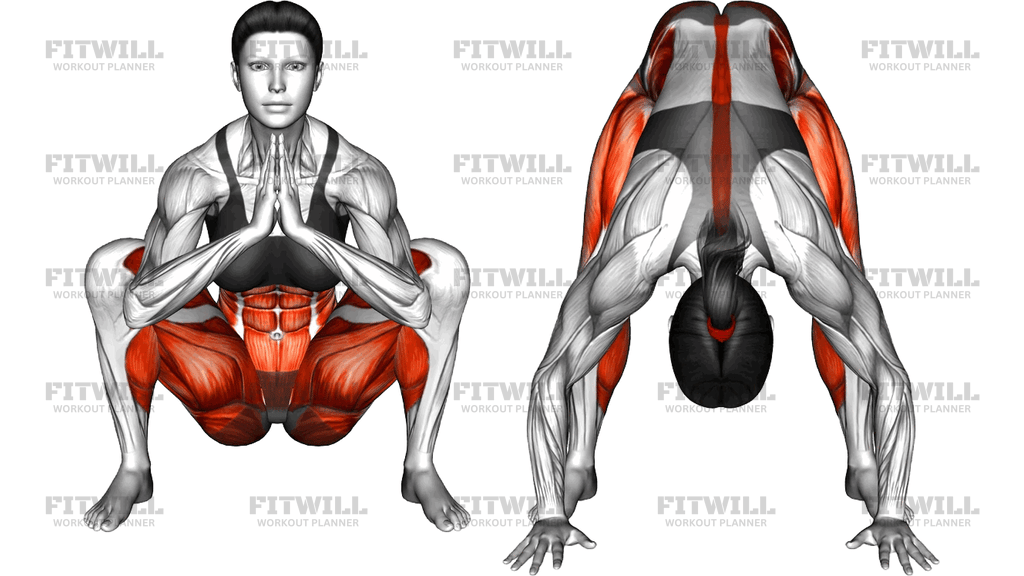
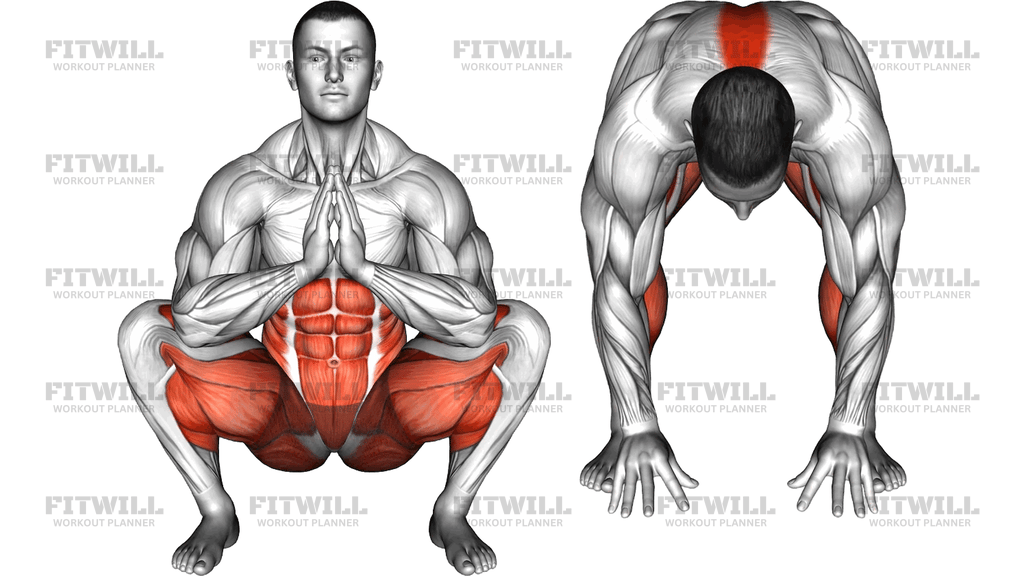
Yoga Squat Dives are a flowing bodyweight movement that takes you from a deep yoga squat (malasana) into a standing forward fold and back again, in one continuous dive-like motion. You start seated low between your heels with your elbows pressing your knees outward and palms together at your chest, then pour your weight forward, plant your hands on the floor, and lift your hips up and back into a fold. The return leg of the movement reverses that path, lowering you right back into the squat. Done for reps, it becomes a mobility drill, a hip opener, and a light conditioning tool all in one.
This movement earns its place in warm-ups and cooldowns because it covers a lot of ground in a short time. The squat portion loads the quads and glutes while demanding serious ankle dorsiflexion and openness through the inner thighs and groin. The fold portion stretches the hamstrings and pulls gently on the entire back line of the body, from the calves up through the lower back. Because you transition between the two shapes repeatedly, you also train the hip hinge and deep-squat patterns to work together, which carries over to deadlifts, cleans, and everyday floor-to-standing movement.
Setup matters more than it looks like it would for a bodyweight drill. Your feet need to be set roughly shoulder-width or slightly wider with the toes turned out enough that your knees can track over them comfortably in the bottom position. If your stance is too narrow or your heels lift, the squat collapses and you end up compensating through your lower back. Practicing on a firm but forgiving surface such as a mat helps, and a slight heel elevation is a fair compromise if tight ankles limit your depth.
Execution is about rhythm and weight shift, not speed. Let your hands lead the dive down toward the floor while your hips rise, then let your hips sink first on the way back so your hands can press the floor away as you settle into the squat. Breathing should match the flow: inhale as you fold and lengthen, exhale as you sink back into the squat. Four to eight smooth repetitions are usually enough to feel the hips and hamstrings open up without fatigue setting in.
Yoga Squat Dives suit a wide range of people. Lifters use them to prepare the hips and ankles before leg days, desk workers use them to restore squat comfort lost to long sitting, and yoga practitioners use them as a transition drill between standing and floor sequences. Beginners can modify by widening the feet or supporting the heels, while more experienced movers can hold the bottom position for an extra breath to deepen the stretch. Move within a range you can keep smooth and pain-free, and treat any sharp pinching in the knees or hips as a signal to adjust the stance rather than push through.
[ Workout Log & Planner ]
Put your next workout in Fitwill
Keep your plan and training log ready when you are.


Instructions
- Stand with your feet about shoulder-width apart or slightly wider, toes turned out at a comfortable angle, on a mat or other stable surface.
- Lower into a full deep squat, sitting down between your heels with your chest lifted and your knees pushed gently outward by your elbows.
- Press your palms together at your chest in a prayer position, using the elbows to keep the knees from caving inward.
- Keep your weight distributed across the whole foot; if your heels lift, widen your stance slightly or shift a little more weight back.
- Exhale and dive forward: plant both hands on the floor in front of you and let your hips rise up and back into a standing forward fold, letting the head hang heavy.
- Hold the fold for one full breath, feeling the hamstrings and lower back lengthen while your fingertips stay grounded.
- Bend the knees generously and sink the hips straight back down, sliding back into the deep squat as your hands leave the floor.
- Re-establish the prayer position at your chest and press the knees open again before beginning the next repetition.
- Inhale as you rise into the fold and exhale as you lower into the squat, keeping one smooth breath per transition.
- Finish your final rep by standing up out of the squat under control rather than collapsing forward.
Tips & Tricks
- If your heels lift in the bottom of the squat, roll the back of a mat or towel under them; the depth stays the same but your ankles stop fighting for range.
- Let the elbows do real work in the squat. If the knees drift inward, the groin stretch disappears and the knees take stress they don't need.
- In the fold, bend the knees as much as needed to get your palms flat; locking the knees just to touch the floor turns the dive into a strain on the lower back.
- Avoid dropping into the squat at speed. The landing phase is where most people lose their balance, so lower the last few inches deliberately.
- Keep your gaze down in the fold and slightly forward in the squat. Looking up from the deep squat tends to tip the chest back and unload the heels.
- If sitting fully between your heels pinches the front of your knees, widen the stance an inch or two before reducing depth.
- Shift your weight onto one side briefly while in the squat to give each ankle and hip a slightly deeper stretch, then settle back to center.
- Do these early in a session when the joints are still cool for gentle mobility, or after training when the tissues are warm for a deeper stretch; just expect the range to differ.
- Count reps by breaths instead of movements. If your breathing turns choppy, you are rushing the dive and shortening both positions.
Frequently Asked Questions
What muscles do Yoga Squat Dives work?
The deep squat loads the quads and glutes while stretching the inner thighs, and the fold targets the hamstrings and lower back. The abs work steadily to control the transitions between the two shapes.
Is Yoga Squat Dives a strength exercise or a stretch?
It is primarily a mobility and stretching drill, though the repeated squat-to-fold transitions add a mild conditioning element. Think of it as a flow that prepares the hips for training or restores them afterward.
I can't get my heels down in the squat position. Is that a problem?
Tight ankles are the usual culprit and it is very common. Elevate the heels slightly on a rolled mat or widen your stance, and the depth will usually come without forcing anything.
How deep should the forward fold be in Yoga Squat Dives?
Deep enough that your fingertips or palms reach the floor comfortably, which may require soft knees. The goal is lengthening through the hamstrings and back, not touching the floor with locked legs.
Can beginners do Yoga Squat Dives?
Yes, and they are one of the better drills for building deep-squat comfort from scratch. Beginners should use a wider stance, bend the knees more in the fold, and reduce the number of repetitions until the flow feels natural.
Why do my knees cave inward during the squat part?
The inner thighs are tight and the deep-squat position is unfamiliar. Keep the elbows pressing against the inner knees the whole time, which physically holds the knees out and doubles the groin stretch.
How many reps of Yoga Squat Dives should I do?
Four to eight smooth repetitions work well as a warm-up opener, and two to three rounds of that is plenty. Quality of the two positions matters far more than total rep count.
What can I use instead of Yoga Squat Dives if the squat is uncomfortable?
A supported deep squat holding a doorframe or upright, alternating with a separate standing forward fold, gives you the same two positions with less coordination demand. You can combine them into the dive flow once the pieces feel secure.
Is it safe to do Yoga Squat Dives with knee issues?
Deep knee flexion is not suitable for every knee, so reduce the depth, widen the stance, and stay well short of any pinching or pain. If discomfort persists even at a comfortable range, choose a less flexed alternative and consult a qualified professional.