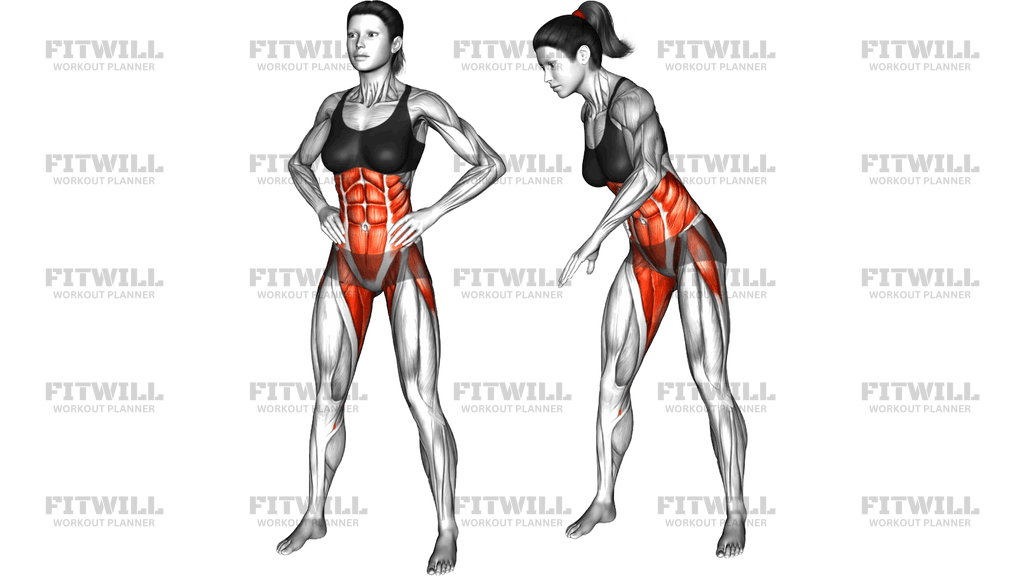
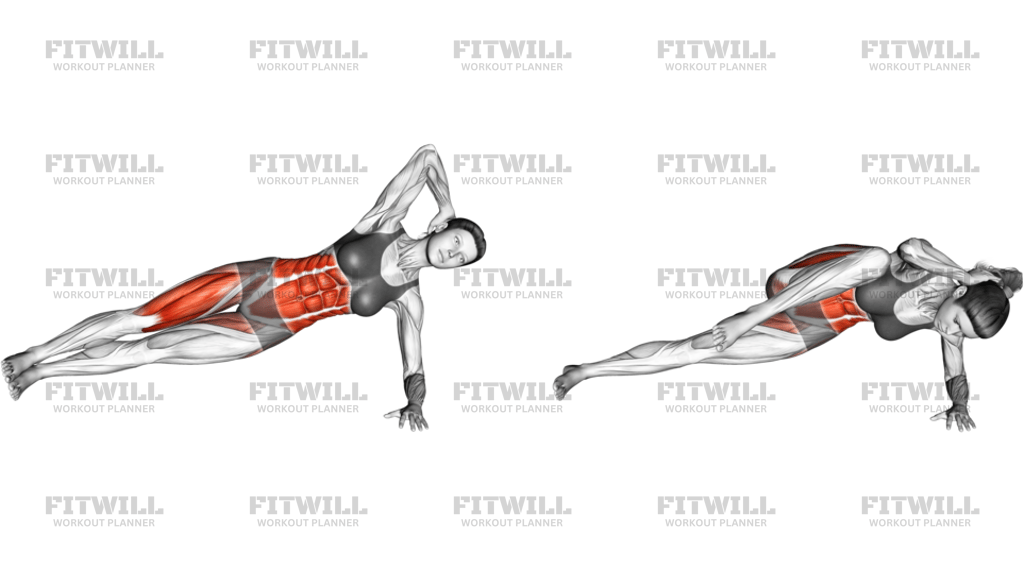
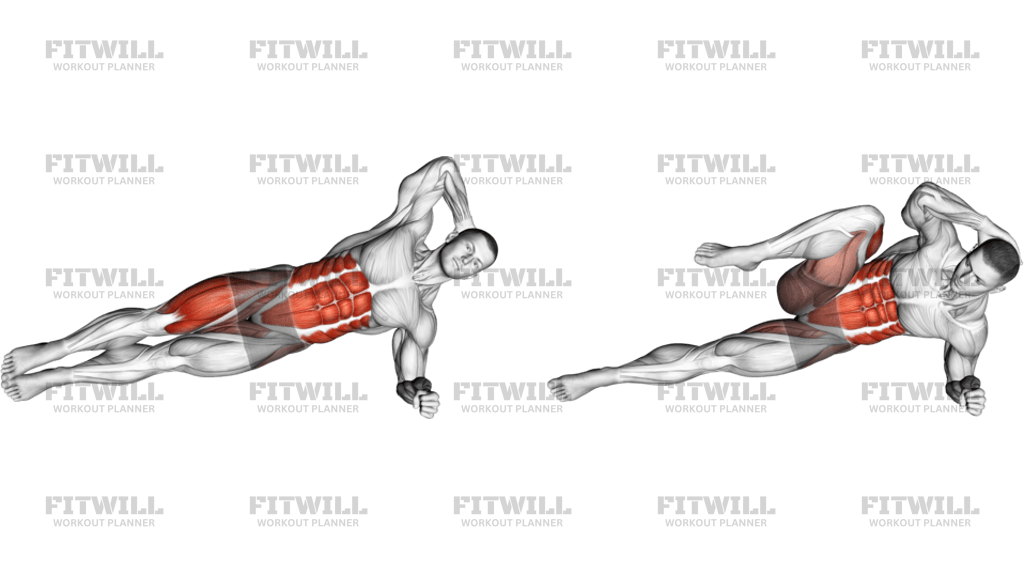
Standing Alternate Leg Lift
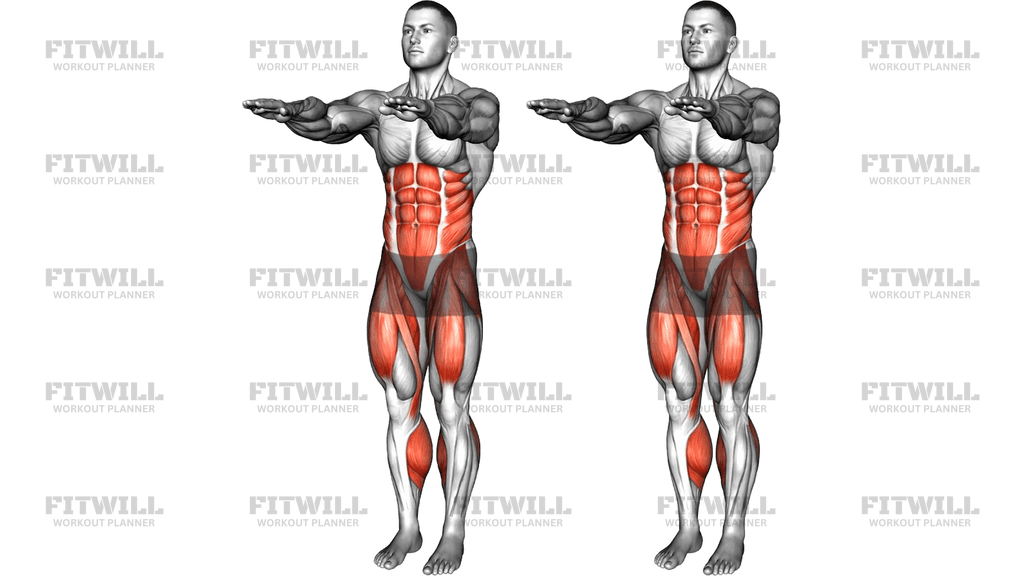
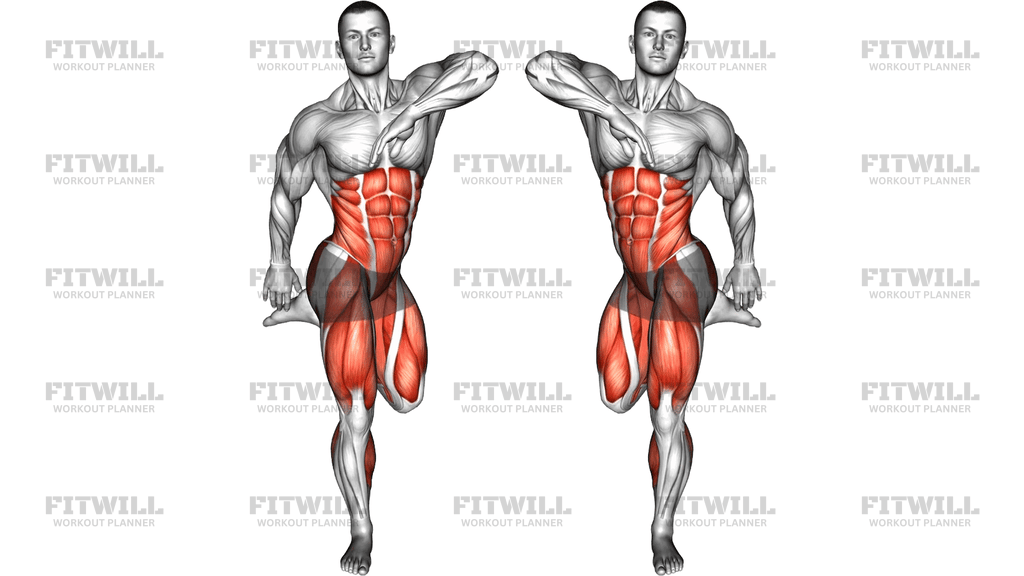
The Standing Alternate Leg Lift is a body weight core exercise performed from an upright stance with the hands placed lightly behind the head. From that position, you lift one leg at a time — driving the knee up toward waist or chest height — while keeping your torso tall and your balance steady. Because each rep is done on one leg, the movement doubles as a balance drill, forcing the standing foot, ankle, and hip stabilizers to work the entire time.
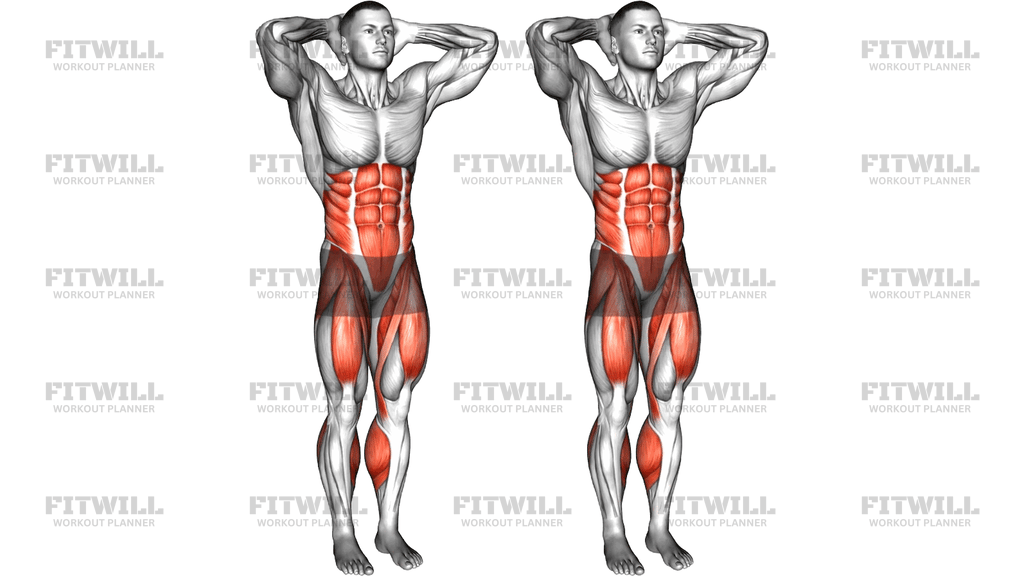
The main work comes from the hip flexors lifting the thigh and the abdominals holding the trunk still as the leg rises. The quadriceps help raise the knee, the obliques resist rotation as one side of the body loads and unloads, and the calves and small stabilizers of the standing leg keep you from swaying. It is a simple movement on paper, but done slowly and with control, it challenges the core in a way crunches on the floor do not.
This exercise suits a wide range of people. Beginners can use it to learn how to brace the trunk while a limb moves, which carries over to walking, running, climbing stairs, and lifting. More advanced trainees use it as a high-rep finisher, a warm-up activation drill, or a low-equipment option when traveling. It is also a practical alternative for anyone who finds floor work uncomfortable or has no mat available.
Setup matters more than it looks. Standing with the feet about hip-width apart, chest lifted, and hands behind the head gives you a stable base and makes cheating obvious: if you start leaning back, dropping the shoulders, or yanking on the neck, the core is no longer doing the job. Keep the hands resting against the head rather than pulling it forward, and keep the ribs stacked over the pelvis throughout each rep.
To execute it well, shift your weight onto one leg, brace the abdominals as if bracing for a light punch, then lift the opposite knee up and slightly across until the thigh is roughly parallel to the floor. Pause briefly at the top, lower the foot back to the floor under control, and repeat on the other side. The tempo should feel slow enough that you could stop the leg at any height — if momentum is swinging the leg up, the core is being shortchanged.
Common use cases include home workouts, dynamic warm-ups, core circuits, and rehab-style training where balance and trunk control are priorities. From a safety standpoint, the main concerns are losing balance and straining the neck by pulling on the head. If balance is an issue, stand near a wall or keep a fingertip on a sturdy surface until the standing-leg strength improves, and always move the leg within a height you can lift without rocking the torso.
[ Workout Log & Planner ]
Put your next workout in Fitwill
Keep your plan and training log ready when you are.


Instructions
- Stand upright with your feet hip-width apart and your weight distributed evenly across both feet.
- Place your hands lightly behind your head with elbows flared out to the sides, fingers resting at the base of the skull without pulling on the neck.
- Draw your shoulders back, lift your chest, and brace your abdominal muscles to stack your ribs over your pelvis.
- Shift your body weight onto one leg and find your balance before moving.
- Exhale as you drive the opposite knee up in front of you until the thigh is roughly parallel to the floor, keeping your torso tall.
- Pause for a beat at the top without letting your lower back round or your shoulders collapse forward.
- Inhale as you lower the foot back to the floor slowly, placing it down rather than letting it drop.
- Immediately repeat the lift on the other leg, alternating left and right for the desired number of repetitions.
- Reset your stance and brace between reps if you feel yourself wobbling or leaning.
Tips & Tricks
- Do not interlock your fingers behind the head or pull the chin forward — the hands should only guide head position, or your neck will take over work that belongs to the abdominals.
- If you find yourself leaning backward as the knee rises, your hip flexors are doing the lift without core support; reduce the knee height and re-brace your abs.
- Keep the standing knee soft, not locked — a locked knee makes balance harder and reduces the stabilizing work in the leg.
- Watch for torso rotation: as one knee lifts, the same-side hip tends to swing forward. Picture your belt line staying level throughout.
- Slow the lowering phase deliberately; most people rush it, and the controlled descent is where the lower abdominals get the most benefit.
- Aim the knee slightly toward the opposite elbow if you want extra oblique involvement, but only as long as your hips stay square and you are not twisting from the lower back.
- Start near a wall and keep one fingertip on it if balance fails before your core fatigues — the wall should assist, not carry you.
- Barefoot or in flat shoes makes the standing foot grip the floor better than thick, cushioned running shoes.
- If your hip pinch or lower back arches at the top of the lift, stop lower — going above parallel with a compensated pelvis trains nothing useful.
Frequently Asked Questions
What muscles does the Standing Alternate Leg Lift work?
The hip flexors lift the thigh while the abdominals, especially the lower portion of the rectus abdominis, stabilize the trunk. The quads, obliques, calves, and standing-leg stabilizers assist throughout.
Is the Standing Alternate Leg Lift good for beginners?
Yes. It requires no equipment, and the height of the knee lift can be scaled to your ability. Beginners should start with a modest knee height and, if needed, stand near a wall for light support.
Should I lift my knee to chest height or stop at hip height?
Stop at whatever height you can reach while keeping your torso tall and your ribs stacked over your pelvis. For most people that is thigh parallel to the floor; going higher at the cost of leaning back defeats the purpose.
Why do I lose my balance during the Standing Alternate Leg Lift?
Single-leg balance depends on the standing foot, ankle, and hip stabilizers, which fatigue quickly if you rush or lock the standing knee. Slow the tempo, keep a slight bend in the standing knee, and rehearse near a wall until the stabilizers adapt.
Can I do the Standing Alternate Leg Lift instead of floor leg raises?
It can substitute well when you have no mat or floor work is uncomfortable. It shifts some demand to balance and the standing leg, so it is not an identical stimulus, but the hip flexors and abdominals still do the primary work.
How many repetitions should I perform?
Eight to twelve lifts per side is a solid starting range for strength-endurance. For a warm-up or finisher, two to three sets of 15 to 20 controlled reps per side work well.
Is it normal to feel this in the front of my hip?
Some sensation in the hip flexors is expected since they lift the thigh. If you feel a sharp pinch at the top of the lift, lower the knee height and make sure you are not arching your lower back as the leg rises.
How do I keep from pulling on my neck with my hands behind my head?
Place the fingertips at the base of the skull rather than behind the neck, keep the elbows wide, and avoid interlacing the fingers. If your head moves forward during the lift, your hands are working instead of your core.
Can I add resistance to the Standing Alternate Leg Lift?
Yes, once your form is solid. Ankle weights are the most natural option, and they increase the demand on the hip flexors and abdominals without changing the movement pattern.
Is the Standing Alternate Leg Lift safe for people with lower back issues?
Many people with sensitive lower backs tolerate it better than floor leg raises because the spine stays unloaded and upright, but individual tolerance varies. Keep the knee lift moderate, brace firmly, and stop if you feel pain rather than muscular effort.