Step On Spot
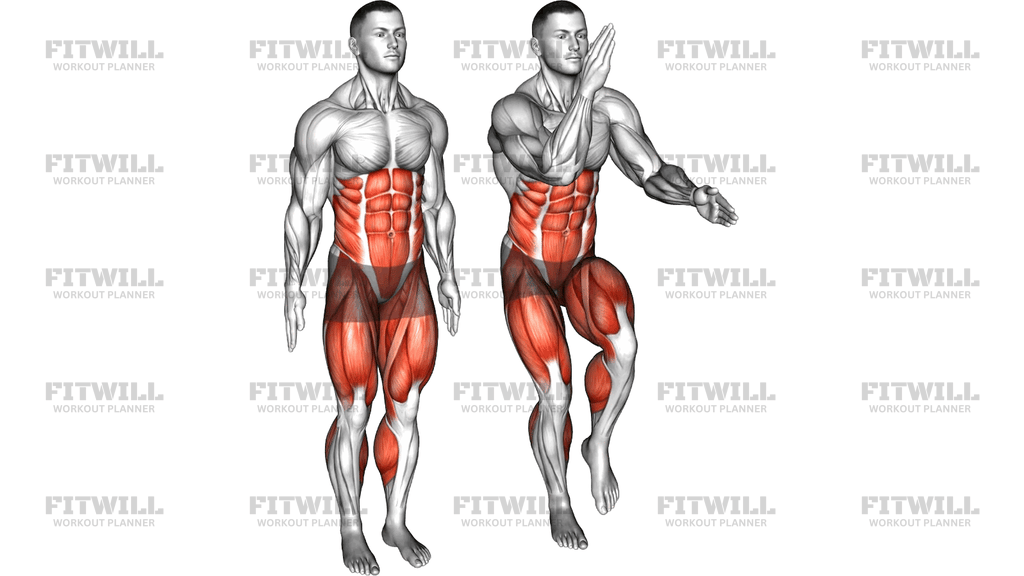
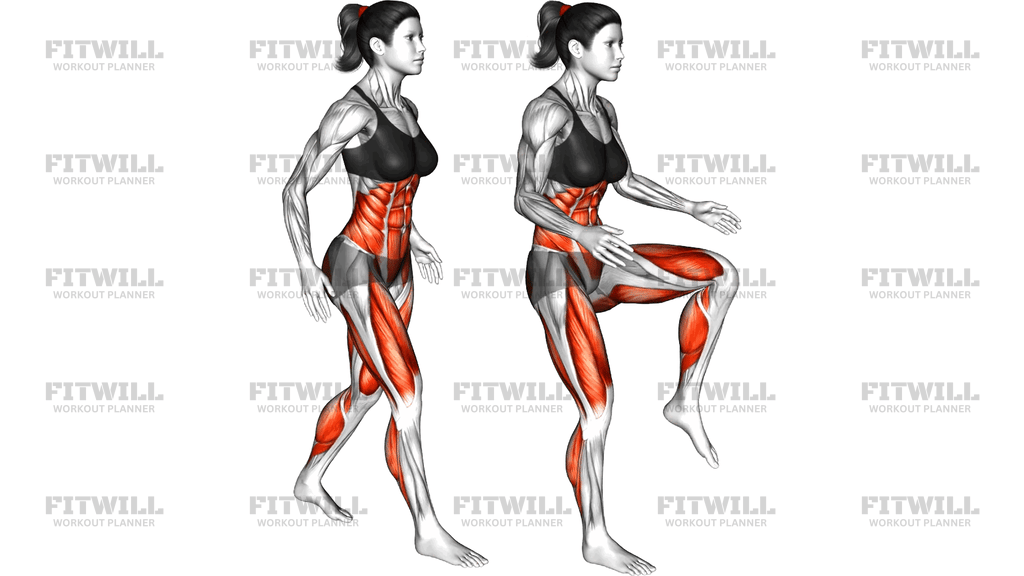
Step On Spot is a simple standing movement where you alternately lift one knee at a time to roughly hip height, then place the foot back down in the same spot, creating a controlled marching rhythm without traveling anywhere. The hands rest lightly on the hips or hang relaxed at the sides, and the torso stays upright throughout. Because it requires no equipment and no space, it is one of the most accessible ways to raise your heart rate and wake up the legs.
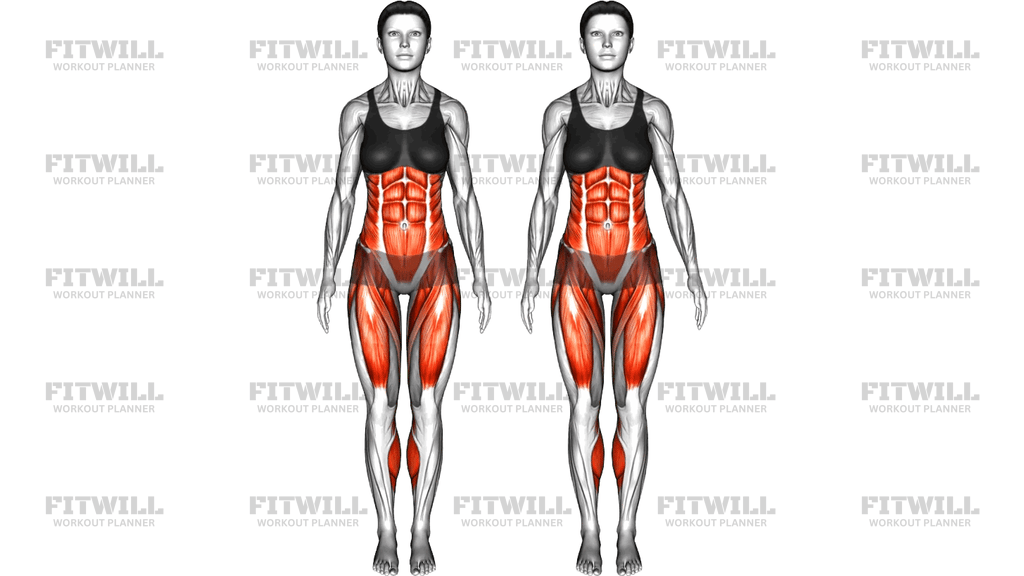
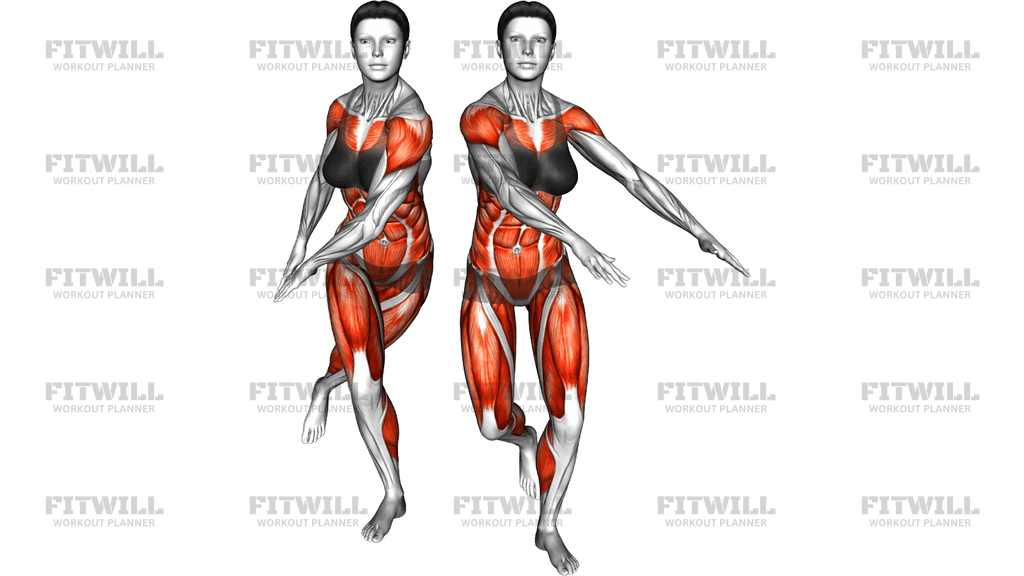
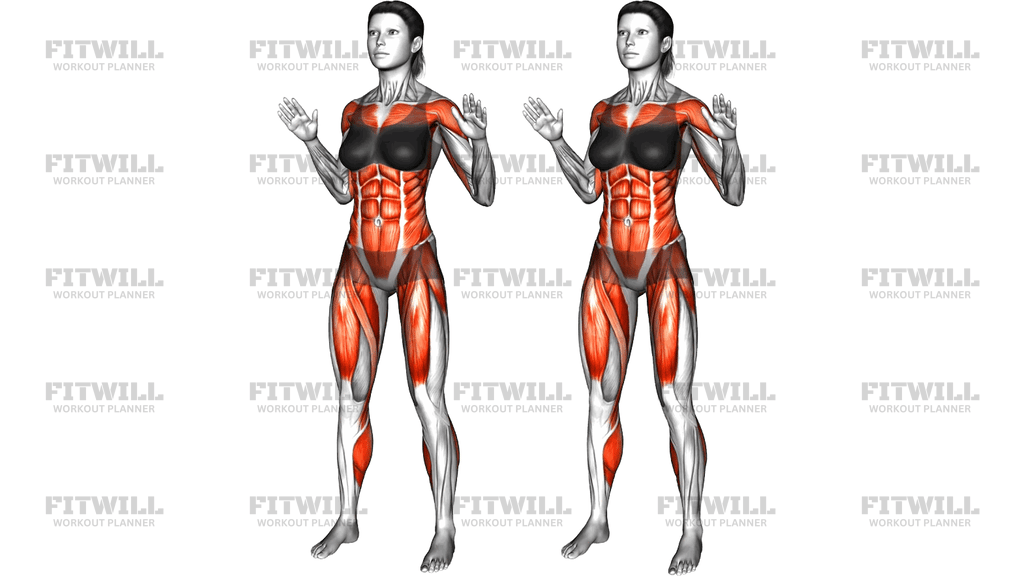
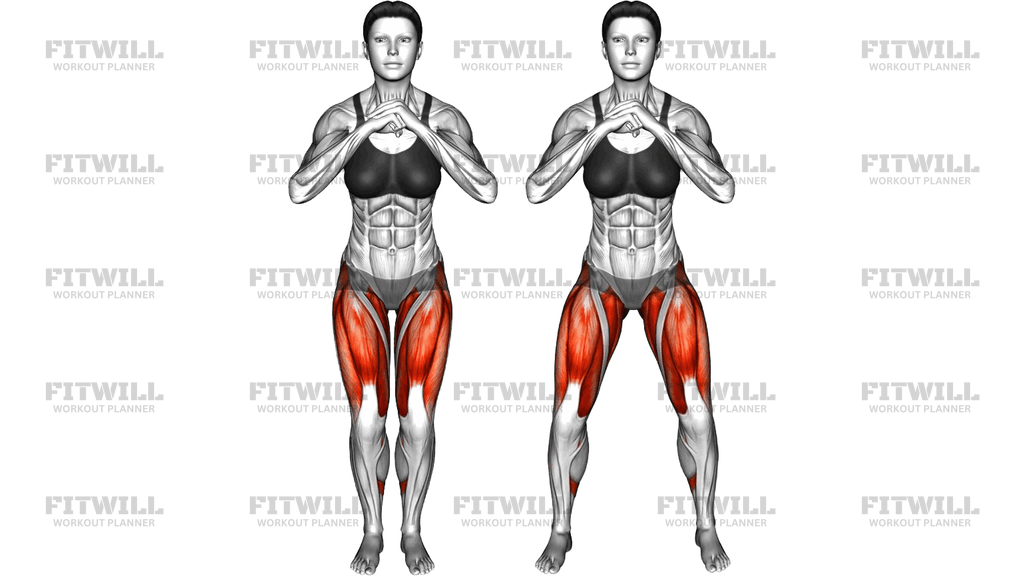
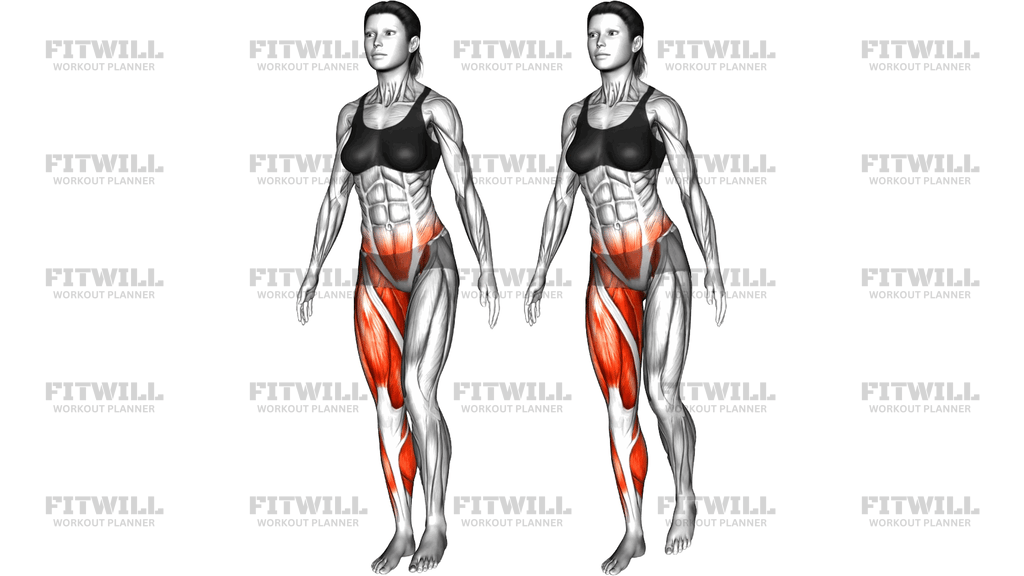
The main work comes from the quads, which drive each knee lift, while the calves and ankle stabilizers handle the landing and push-off with every step. The hip flexors pull the thigh upward, and the glutes and hamstrings control the leg as it lowers back to the floor. Your core stays quietly busy the whole time, keeping the ribs stacked over the pelvis as you shift from one leg to the other.
This movement suits a wide range of people: beginners building a fitness base, older adults who want a joint-friendly way to stay active, anyone warming up before squats or running, and people who need a low-impact option they can do at home between other tasks. Because the intensity is controlled entirely by how high you lift the knee and how fast you step, the same drill works as a gentle activation or a genuine cardio challenge.
Setup matters more than it looks. Stand tall with your feet hip-width apart, weight balanced over the whole foot, and your gaze forward rather than down at your feet. A tall posture keeps your breathing open and prevents the hips from tilting forward as the knees rise. If balance feels shaky at first, standing near a wall or chair with one hand hovering nearby is a reasonable option until the rhythm feels natural.
To execute well, lift one knee until the thigh is close to parallel with the floor, pause briefly at the top, then lower the foot under control rather than letting it drop. Immediately switch legs and keep the cadence steady. Push the ground away slightly through the ball of the supporting foot so each step has a small, springy quality instead of a heavy stomp.
Use Step On Spot as a warm-up, an active recovery between harder sets, or as a standalone cardio block of one to five minutes. If you feel it only in your shins or lower back, you are likely stomping your feet or leaning back, so slow down and shorten the knee lift until the movement feels smooth and quiet.
Fitwill
Log Workouts, Track Progress & Build Strength.
Achieve more with Fitwill: explore over 9600 exercises with images and videos, access built-in and custom workouts, perfect for both gym and home sessions, and see real results.
Start your journey. Download today!




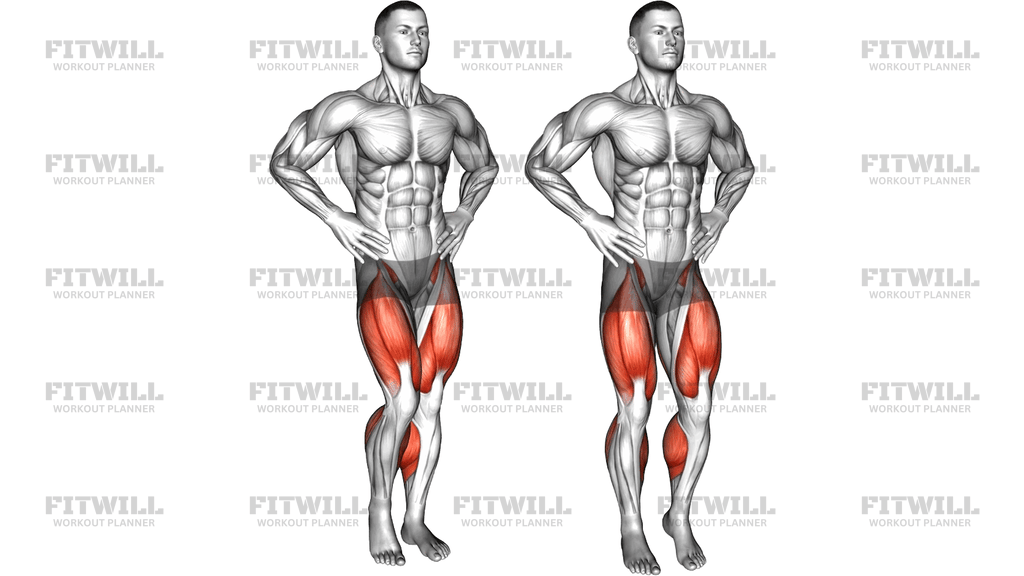
Instructions
- Stand upright with your feet hip-width apart and place your hands lightly on your hips or let your arms hang relaxed at your sides.
- Shift your weight so it sits evenly over the whole foot, keep your chest tall, and look straight ahead at a fixed point.
- Brace your core lightly, as if preparing for a gentle nudge to the stomach, and keep your shoulders down and back.
- Lift your right knee up until your thigh is roughly parallel to the floor, keeping your torso upright as the knee rises.
- Lower your right foot back to the floor under control, placing it in the same spot it started from.
- Immediately lift your left knee to the same height and continue alternating legs at a steady, even rhythm.
- Land softly through the ball of each foot and let the calf absorb the step rather than stomping down with a flat foot.
- Breathe steadily in a natural rhythm, inhaling and exhaling continuously instead of holding your breath as the pace builds.
- Keep the cadence consistent for your target time, then step both feet together, stand still for a moment, and let your breathing settle before moving on.
Tips & Tricks
- If your lower back arches as the knee comes up, your hips are tilting forward — reduce the knee height slightly and tighten the core before lifting higher again.
- A heavy slapping sound with each step means you are dropping the foot instead of lowering it; place the foot down quietly as if stepping onto a scale.
- Keep the hands on the hips for balance feedback, but avoid pressing hard into the thighs to help lift the knee, which takes work away from the hip flexors and quads.
- Look at a spot on the wall at eye level rather than down at your feet — watching your feet makes the head drift forward and rounds the upper back.
- To raise the intensity, increase the knee height or step tempo rather than adding a bounce, which keeps the drill low-impact for the knees and ankles.
- If you wobble on the supporting leg, widen your base slightly and slow the transition between steps; balance usually settles within the first twenty seconds.
- Count steps rather than watching a clock — aiming for sets of 50 or 100 steps keeps the rhythm even and makes progress easy to track.
- Swing the arms naturally at the sides once the leg pattern feels automatic, which raises the heart rate and makes the march feel more like walking.
- Stop and reset your posture if you notice yourself leaning back as fatigue sets in — a common compensation when the hip flexors tire.
Frequently Asked Questions
What muscles does Step On Spot work?
The quads do most of the visible work with each knee lift, while the calves and ankle stabilizers control the landing and push-off. The hip flexors raise the thigh, and the glutes and hamstrings lower the leg under control.
How high should I lift my knee during Step On Spot?
Aim for a thigh that comes close to parallel with the floor, which is roughly hip height for most people. If your back arches or your rhythm breaks, lift slightly lower and build up over time.
Is Step On Spot a good exercise for beginners?
Yes, it is one of the best starting points because it needs no equipment, is low-impact, and the pace is entirely under your control. Beginners can start with 30-second intervals and extend from there.
How is Step On Spot different from high knees?
Step On Spot uses a controlled, deliberate march where each foot is placed down fully before the next lift, while high knees run at a faster tempo with a slight bounce. Step On Spot is the calmer, lower-impact version.
Can I use Step On Spot as a warm-up?
Absolutely. One to two minutes of steady stepping raises your heart rate, lubricates the hips and knees, and prepares the quads and calves for squats, lunges, or running.
Why do my shins ache when I do Step On Spot?
This usually comes from stomping the feet down or landing flat-footed with stiff ankles. Focus on landing softly through the ball of the foot and letting the calf absorb each step, and slow the tempo if it persists.
How long should I perform Step On Spot?
For a warm-up, 1-2 minutes is enough; as a standalone cardio block, aim for 1-5 minutes per round and repeat as needed. Adjust the knee height and tempo to match your fitness level.
Can I do Step On Spot if I have balance issues?
Yes, but stand next to a wall, countertop, or sturdy chair and keep one hand lightly touching it for support. Reduce the knee height until the single-leg balance phase feels secure.
Does Step On Spot burn calories or mainly build muscle?
Its main value is cardiovascular — it raises your heart rate and adds daily movement — while the muscular demand on the quads and calves is moderate. It is best treated as light cardio and activation rather than a strength builder.
What can I substitute if stepping in place bothers my knees?
Try reducing the knee lift so the thigh only rises partway, which shortens the range at the hip and knee. If stepping still feels uncomfortable, a seated march or gentle ankle pumps keep the legs moving with even less joint load.