Sitting Cat Cow Pose
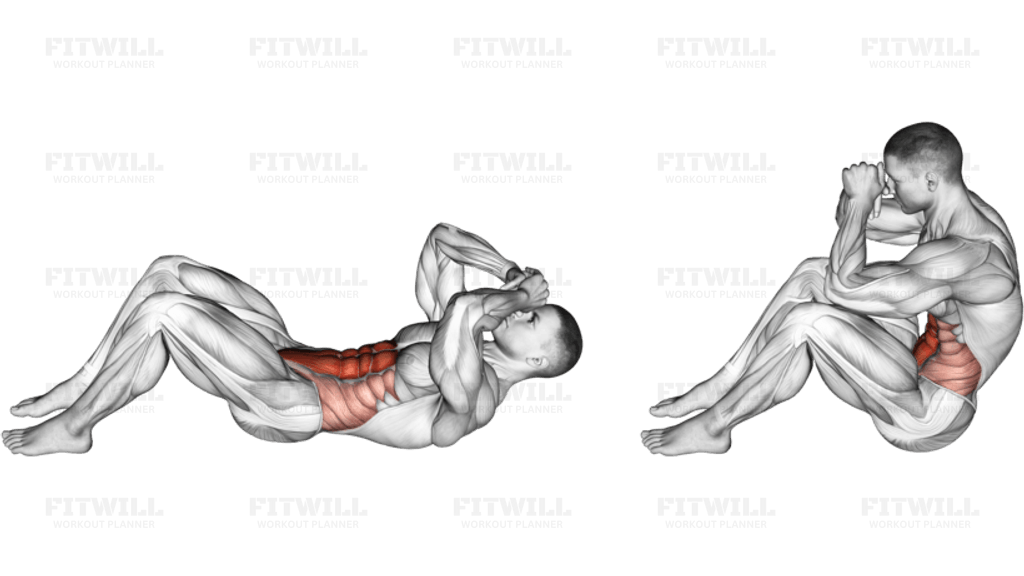
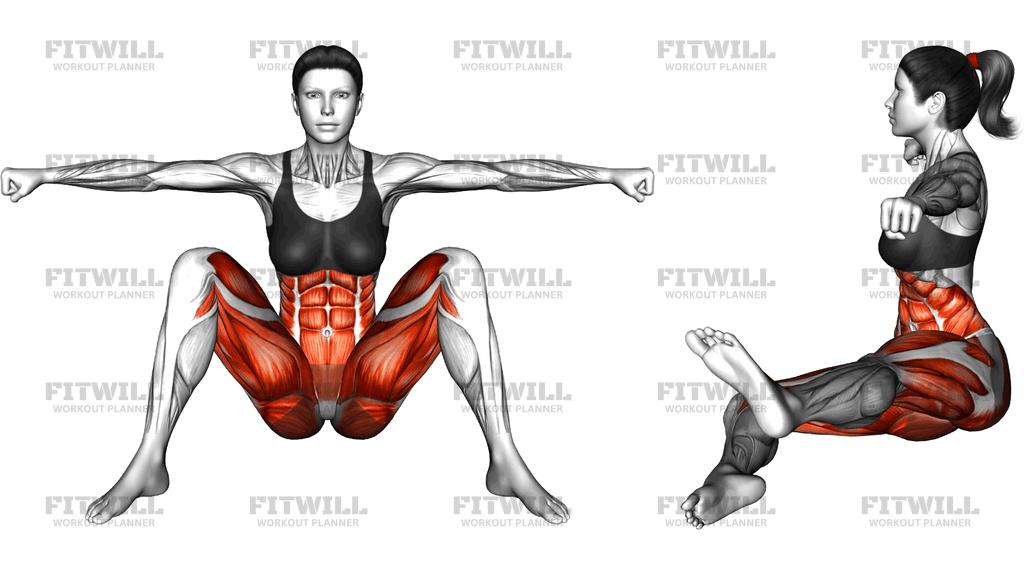
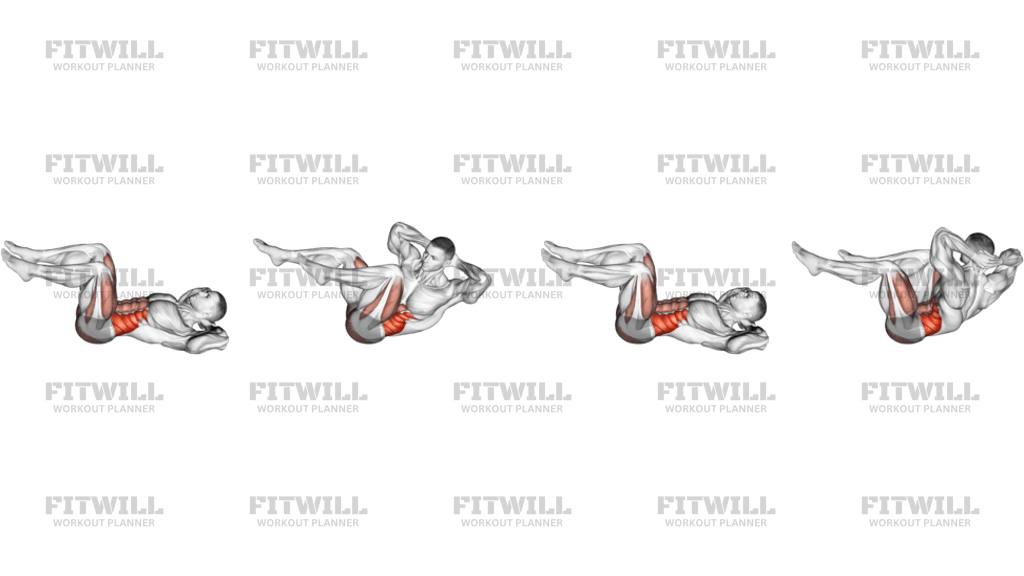
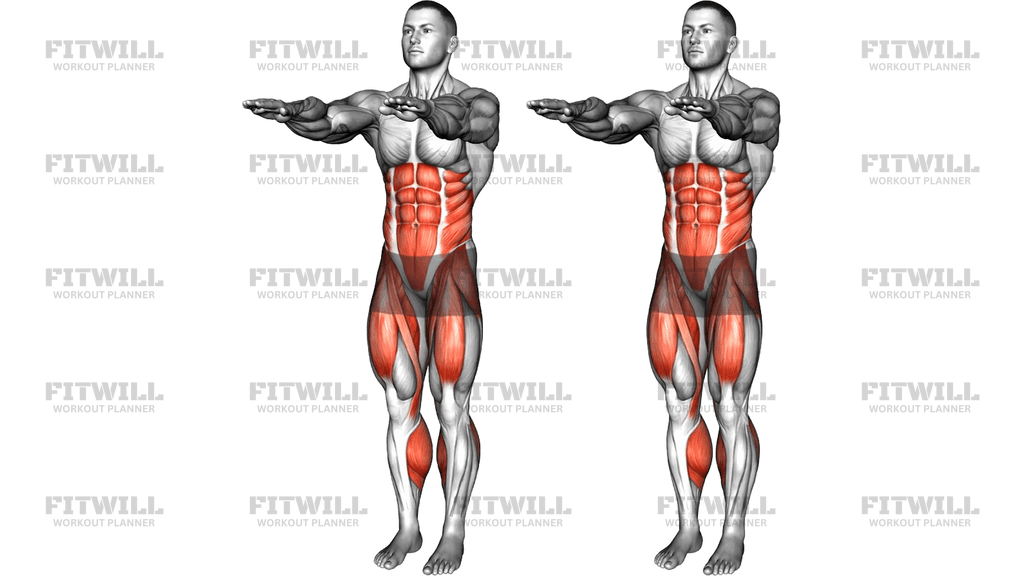
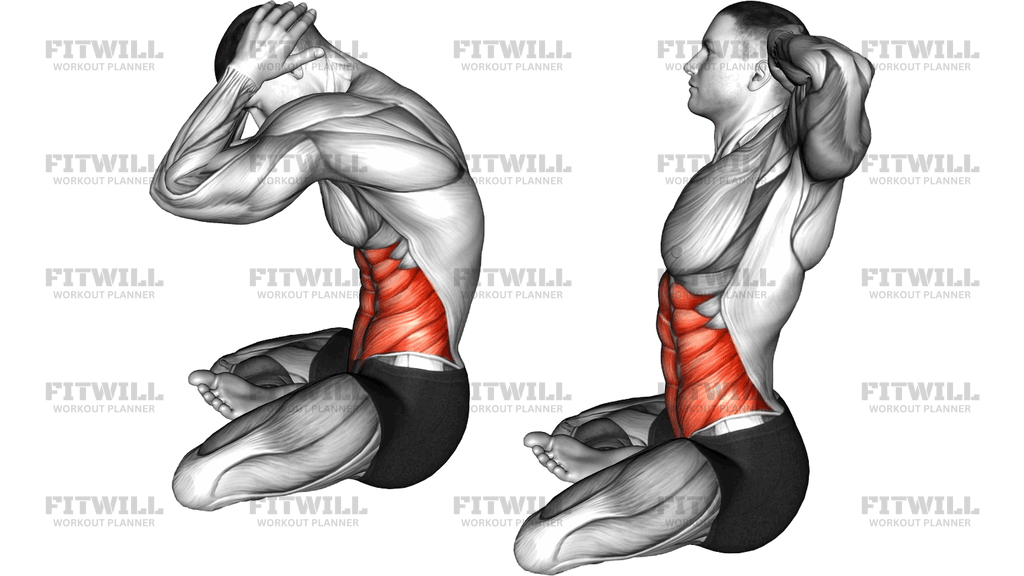
The Sitting Cat Cow Pose is a seated version of the classic cat cow movement, performed from a cross-legged position on the floor with the hands placed behind the head. Instead of moving on all fours, you stay upright with the hips grounded and alternate between rounding the upper back forward and arching the chest open. The image shows the two ends of this range: a flexed position where the spine curls forward and the elbows draw in toward each other, and an extended position where the chest lifts, the shoulders open, and the elbows flare back.
This variation is especially useful for people who spend long hours sitting at a desk, since it targets exactly the segments of the spine that stiffen in a chair — the mid and upper back. It also works well for anyone who finds the traditional floor-based cat cow uncomfortable on the wrists or knees. Because you are seated, all of the attention shifts to the thoracic spine and abdominal wall rather than being shared with the shoulders and hips in a weight-bearing position.
The movement rhythmically contracts and lengthens the abs, highlighted in red in the anatomy view, while the muscles along the spine lengthen and shorten in the opposite phase. The deep core works to control each transition, and the hip flexors and lower back assist as the pelvis subtly tilts forward and back. It is less a strength exercise and more a mobility and control drill, so the goal is smooth, noticeable spinal movement rather than effort or speed.
Setup matters more than it looks. Sitting cross-legged with a tall, neutral spine at the start gives you a clear reference point for both directions of movement. If you begin slouched, the rounding phase loses its range; if you begin over-arched, the extension phase becomes just more arching on top of arching. Hands behind the head should support the skull lightly, never pull on the neck.
To execute it well, exhale as you curl forward, drawing the ribs down and letting the elbows drift toward one another, then inhale as you lift the chest and let the elbows widen. Move segment by segment through the spine rather than hinging only at the hips or craning the neck. A slow pace of one phase per breath keeps the movement controlled and lets you feel exactly where the back resists.
Common use cases include warming up before lifting or yoga, breaking up long sitting periods at work, easing morning stiffness, and cooling down after training. Keep the effort gentle — you should feel a stretch and a mild muscular working sensation through the trunk, never sharp pain, tingling, or pinching in the back or neck. If sitting cross-legged bothers your knees or hips, sit on a folded blanket or the edge of a cushion so the pelvis can stay neutral.
[ Workout Log & Planner ]
Put your next workout in Fitwill
Keep your plan and training log ready when you are.


Instructions
- Sit on the floor with your legs crossed comfortably and your sit bones grounded, resting on a folded mat or thin cushion if the floor feels hard.
- Place both hands lightly behind your head with the elbows pointing outward, and stack your rib cage over your pelvis so your spine starts tall and neutral.
- Soften your shoulders away from your ears and take one steady breath to settle before moving.
- Exhale and round your upper back forward, curling the ribs down toward the belly and letting your elbows drift in toward each other while the head follows the curve of the spine.
- Pause briefly at the rounded position and feel the abs shorten and the mid back widen.
- Inhale and reverse the arc: lift the chest, tilt the pelvis slightly forward, and let the elbows flare back as the front of the trunk lengthens.
- Pause again in the open position, feeling the chest expand and the spine extend through the mid back.
- Continue flowing between the two positions, one phase per breath, keeping the hips and legs still so the movement comes from the spine.
- After your final repetition, return to the tall neutral starting posture, release your hands, and shake out the shoulders before standing.
Tips & Tricks
- Move the elbows, not just the head: in the rounded phase they drift inward, in the arched phase they widen. If they stay frozen, the movement is coming from the neck instead of the spine.
- Support the skull with the fingertips rather than lacing the fingers and pulling — pulling the head forward is the most common way people strain the neck in this variation.
- Isolate the mid back. If you notice your whole torso rocking from the hips, brace the legs lightly and let the pelvis move only a small amount.
- Exaggerate the exhale on the rounding phase; the abs naturally engage harder as the air leaves, which deepens the curl without forcing it.
- If your lower back aches in the arched phase, reduce how far you tilt the pelvis forward and focus the extension on the chest and upper back.
- Do not chase range at the expense of pace — a slower, smaller arc through the spine beats a big floppy swing every time.
- Sitting on a folded blanket or low cushion raises the hips above the knees, which makes it much easier to keep the pelvis neutral and the spine free to move.
- Keep the eyes on a soft forward gaze during the transition; dropping the head early in the rounding phase shortens the neck instead of curling the spine.
Frequently Asked Questions
What muscles does the Sitting Cat Cow Pose work?
The abs, especially the rectus abdominis, contract on the rounding phase and lengthen on the arching phase, while the lower back muscles, obliques, and the muscles between the shoulder blades control the movement in both directions.
How is the Sitting Cat Cow Pose different from the regular cat cow on all fours?
The seated version removes the load from the wrists, knees, and shoulders, so the movement isolates the spine and trunk. It is a good option if the floor version causes wrist discomfort or if you need a discreet mobility break at a desk-adjacent setting.
Can beginners do the Sitting Cat Cow Pose?
Yes, it is one of the most accessible spinal mobility drills. Beginners should start with a small range, keep the hands resting lightly behind the head, and let the breath set the pace rather than forcing depth.
Why do I cross my legs instead of kneeling or sitting on a bench?
Cross-legged sitting gives the pelvis a stable base and lets the legs stay relaxed, so attention stays on the spine. If cross-legged sitting strains your knees or hips, sit on a cushion so the hips sit higher than the knees.
How many repetitions of the Sitting Cat Cow Pose should I do?
Six to ten slow cycles, one phase per breath, is enough for most people as a warm-up or desk break. You can repeat the set two or three times a day if you sit for long stretches.
Should my hands pull my head forward during the rounding phase?
No. The hands should only cradle the back of the skull; pulling the head forward loads the neck and takes the work away from the spine. Let the head travel as a continuation of the spinal curve.
Is it normal to feel my lower back during this exercise?
A gentle movement sensation in the lower back is normal because the pelvis tilts slightly with each phase. Sharp pain, pinching, or tingling is not — reduce the range, focus the arch into the upper back, and ease off if it persists.
Can I use the Sitting Cat Cow Pose as a warm-up before lifting?
Yes, it works well as a first movement to wake up spinal mobility before squats, deadlifts, or overhead pressing. Follow it with a few shoulder and hip drills and you are ready to load the bar.
What is the most common mistake in this exercise?
Rushing through the positions and hinging from the hips instead of moving the spine. Keep the legs quiet, slow the tempo down to one phase per breath, and let each vertebra contribute to the curve.