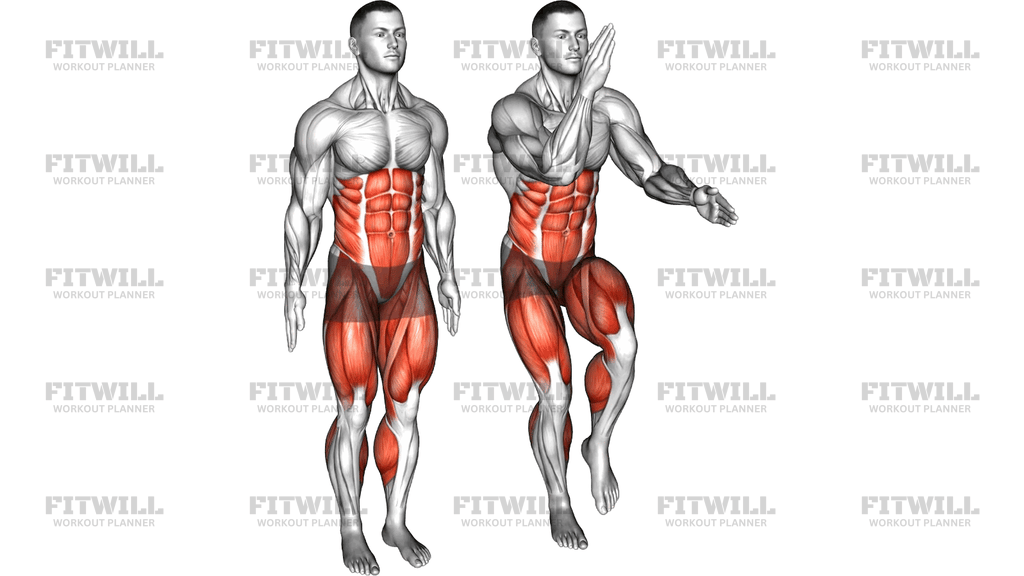
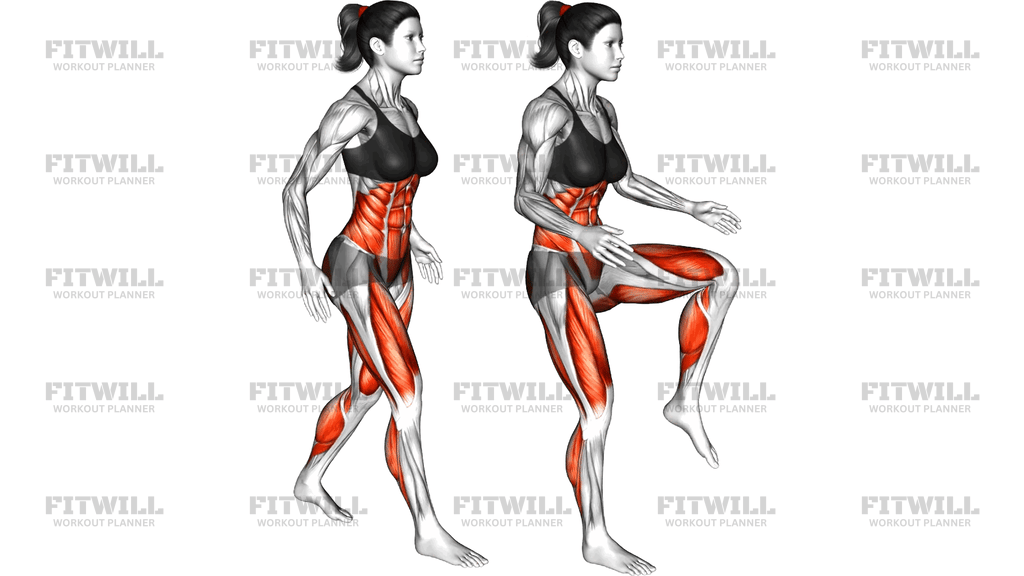
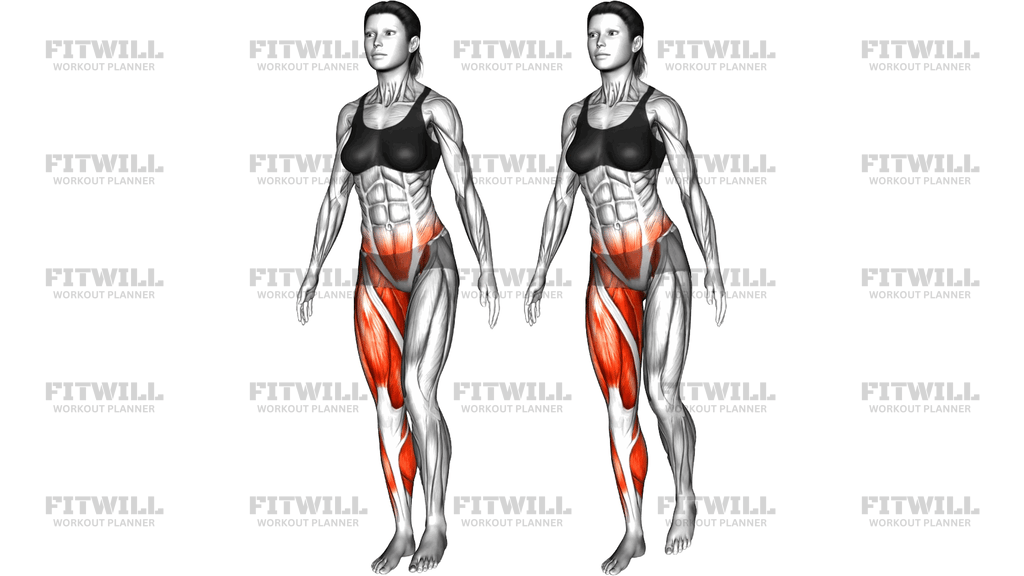
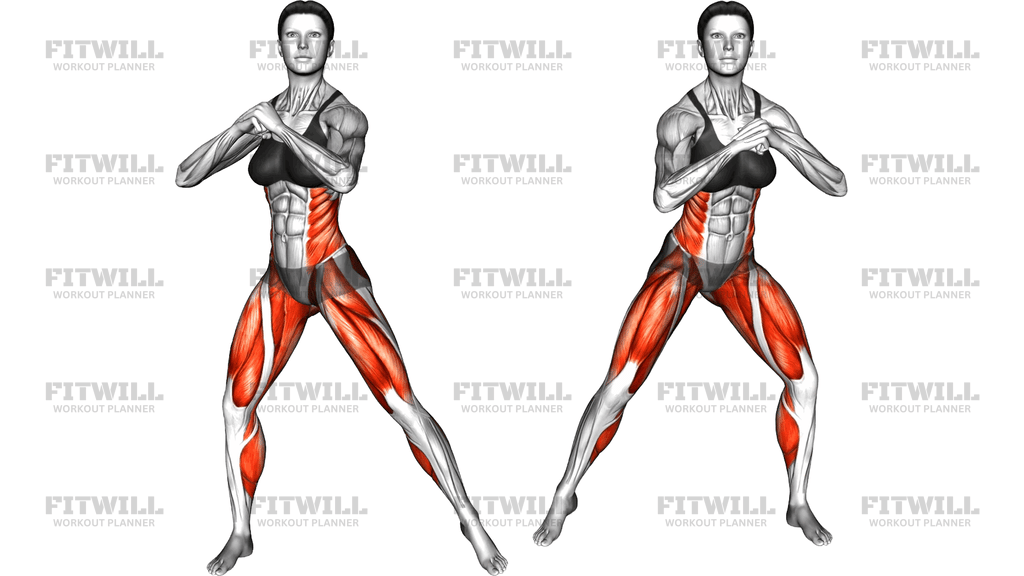
Forward Backward Shuffle
The Forward Backward Shuffle is a bodyweight footwork drill where you move across a set distance with quick, short steps facing one direction, then turn around and repeat the same pattern on the way back. It is a staple in warm-ups, agility sessions, and conditioning circuits because it combines continuous leg work with constant changes of direction. Unlike a sprint, every step stays low to the ground, so the emphasis is on foot speed and control rather than raw top-end speed.
This drill suits almost everyone. Beginners can use it as a low-impact way to raise the heart rate and wake up the legs before training, while athletes in sports like tennis, basketball, soccer, and volleyball rely on it to build the exact footwork pattern they use to close distance and recover position on the court or field. Because there is no equipment involved, it fits anywhere from a gym floor to a hallway or backyard.
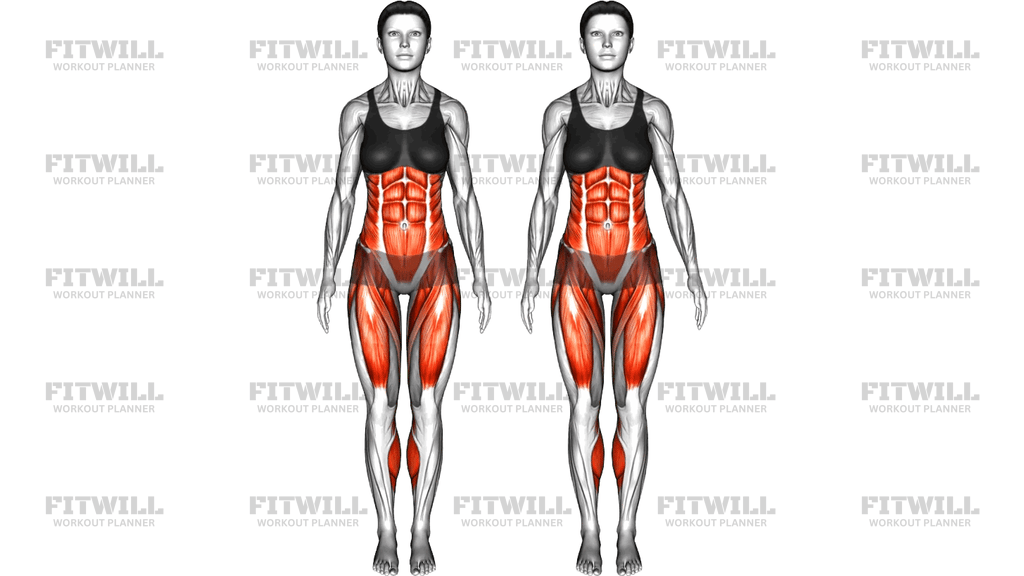
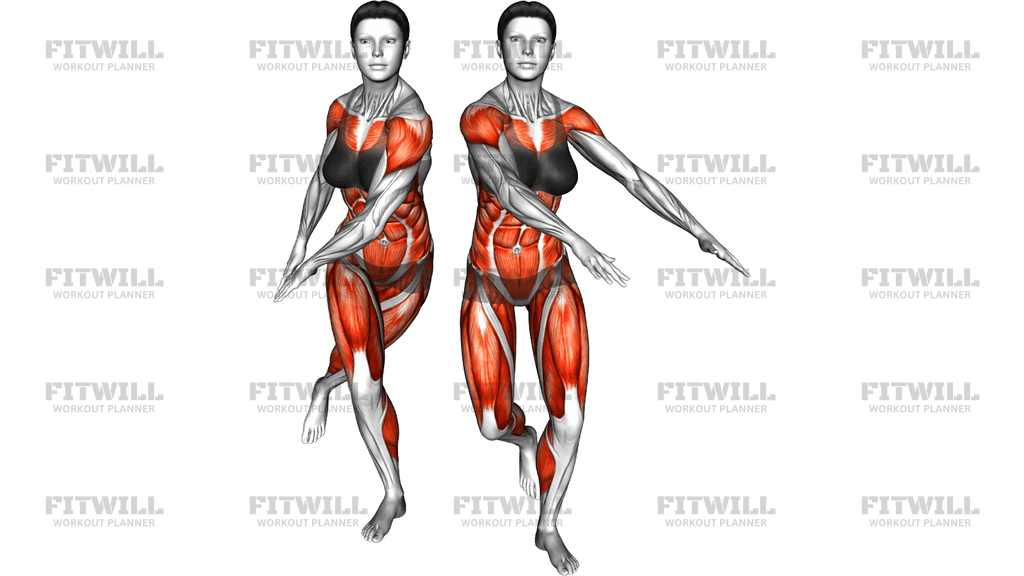
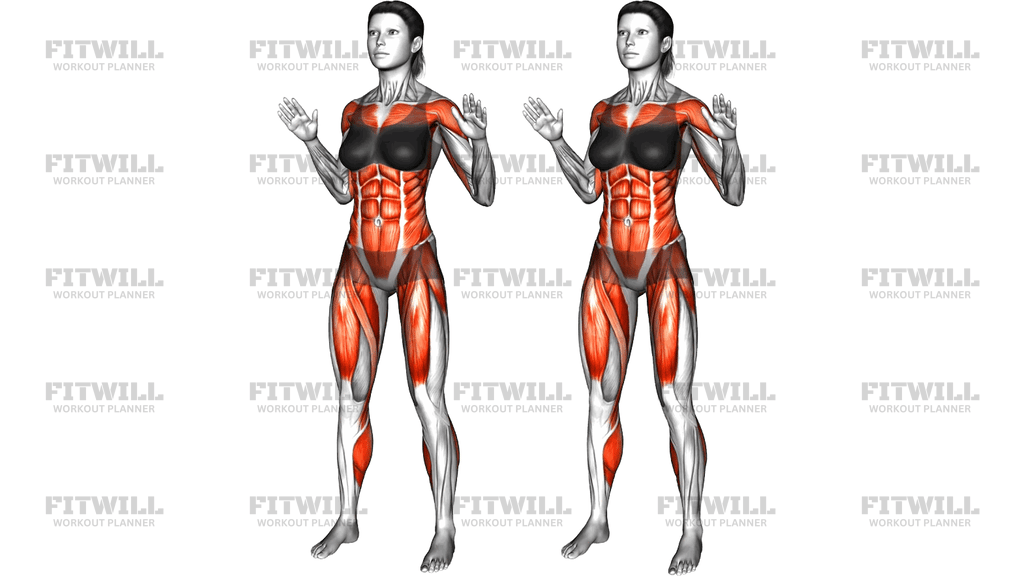
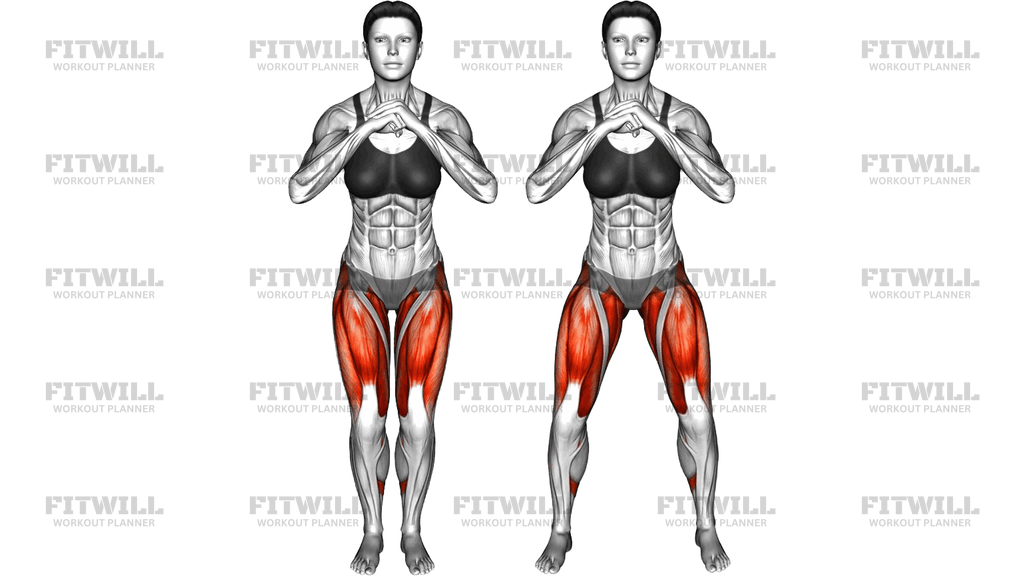
The main work comes from the quads and calves, which drive each push-off and absorb each landing, with the glutes and hamstrings supporting hip extension as you decelerate and turn. Your hip stabilizers work continuously to control side-to-side wobble, and your core keeps the torso tall and steady through every change of direction. Over longer distances or more rounds, it also doubles as a solid aerobic effort.
Setup matters more than most people expect. A slight forward lean from the ankles, soft knees, and arms bent at your sides let your legs do quick, controlled work. If you stand too upright or take long reaching steps, the drill turns choppy and the knees take extra stress. A smooth, low, rolling gait is the goal, with your feet landing under your hips rather than out in front.
To execute well, pick a marked distance of roughly ten to twenty yards. Shuffle forward with short, quick steps and a light bounce, then turn and repeat heading back. Keep the pace brisk but never so fast that you lose clean foot contact. One lap down and back counts as a round; two to four rounds work well as a warm-up, while six to ten rounds with short rests builds conditioning.
Stay mindful of your knees and ankles throughout. Land on the whole foot with weight spread across the midfoot, avoid letting the knees collapse inward, and slow the drill down before you speed it up. Stop if you feel sharp joint pain, and keep the surface flat and free of obstacles so quick changes of direction stay safe.
[ Workout Log & Planner ]
Put your next workout in Fitwill
Keep your plan and training log ready when you are.


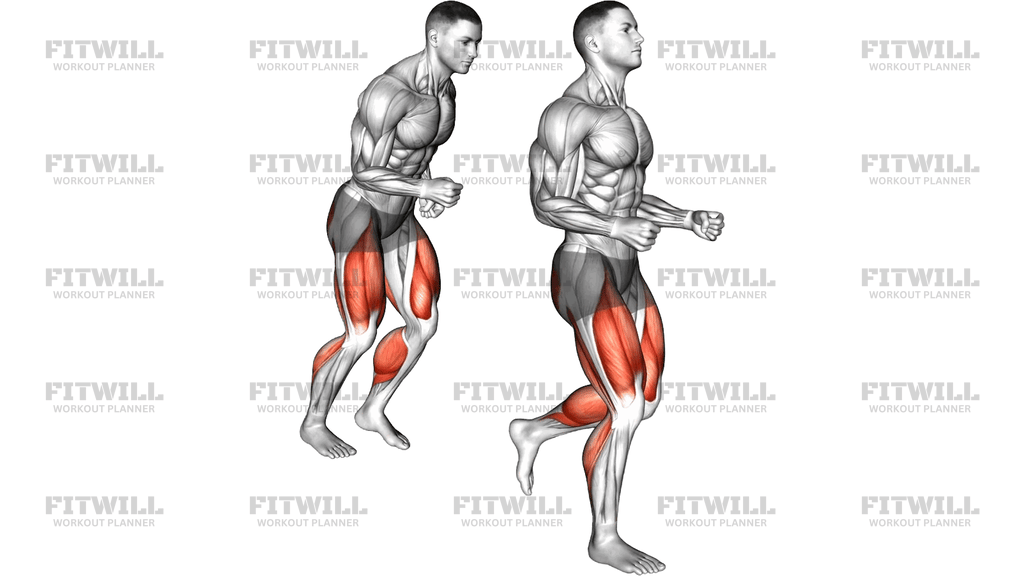
Instructions
- Find a flat, open space and mark a distance of about 10 to 20 yards, using cones, lines on the floor, or any visible landmarks.
- Stand at one end with your feet hip-width apart, knees slightly bent, and a small forward lean coming from the ankles rather than the waist.
- Bend your arms to about 90 degrees and hold them loosely at your sides, ready to swing in rhythm with your legs.
- Brace your core lightly and keep your chest lifted with your gaze forward, staying tall through the upper body.
- Shuffle forward with short, quick steps, letting each foot land under your hips and pushing off through the midfoot.
- Keep the movement low and rolling, with a slight bounce at the ankles and no exaggerated knee lift or long reaching strides.
- When you reach the end marker, decelerate over one or two steps, turn around under control, and shuffle back the same way.
- Breathe in a steady rhythm through the nose and mouth, avoiding held breath as the pace increases.
- After the return trip, reset your stance, shake out the legs briefly if needed, and start the next round with the same lean and foot speed.
Tips & Tricks
- Keep steps short on purpose; overstriding in the Forward Backward Shuffle makes your heel slam down in front of the knee and robs you of the quick rhythm this drill is built around.
- Lean from the ankles, not the hips. If your chest drops forward and your low back rounds, stand taller and reset the lean so the hinge happens at the ankle joint.
- Watch for knees caving inward on the push-off, especially when tired; cue yourself to press the knee out over the pinky toe with every step.
- Stay on the balls of your feet but do not tiptoe; letting the heel kiss the ground on each contact absorbs impact and spares the calves on longer rounds.
- If you hear heavy, slapping landings, slow down. Quiet, quick foot contacts are the sign of a clean shuffle, and volume can increase once the sound goes away.
- Keep your arm swing compact and matched to the legs. Flailing arms usually mean the torso is twisting, which leaks energy and throws off your line.
- Turn under control at the far marker rather than pivoting hard on a straight leg; rounding the turn with small steps protects the knees and ankles.
- Use this drill early in a session as a warm-up, since doing it after heavy leg work fatigues the calves and makes clean foot contact much harder.
Frequently Asked Questions
Which muscles does the Forward Backward Shuffle work the most?
The quads and calves handle most of the push-off and landing work, while the glutes and hamstrings assist with hip extension and deceleration. The hip stabilizers and core stay active the entire time to control your balance through each change of direction.
Is the Forward Backward Shuffle good for beginners?
Yes, it is one of the easiest footwork drills to learn because the pattern is just walking-speed stepping with quicker feet. Beginners should start with a shorter distance of ten yards and one or two rounds before adding pace.
How far should I shuffle forward and backward?
Ten to twenty yards is a practical range for most setups. Shorter distances emphasize quick changes of direction, while longer distances lean more toward conditioning.
How is the Forward Backward Shuffle different from a lateral shuffle?
In a lateral shuffle you face one direction and step side to side, which loads the outer hips and inner thighs more heavily. The Forward Backward Shuffle uses a front-facing gait, so it trains the quads and calves in a straight-line pattern closer to running and sprint mechanics.
Why do my calves burn so quickly during this drill?
Quick, low steps keep constant tension on the calves and place extra demand on the ankle stabilizers, especially if you stay high on the toes. Let the heel briefly kiss the ground on each contact and shorten your rounds until the burn becomes manageable.
Can I use the Forward Backward Shuffle as a warm-up?
It works very well as a warm-up because it raises the heart rate and lubricates the knees and ankles without heavy loading. Do two to four easy rounds before lower-body training or any sport session that involves running and changing direction.
What is the most common mistake in this exercise?
Taking long, reaching strides instead of short, quick steps. Overstriding makes each heel land far in front of the body, slows the rhythm, and puts unnecessary stress on the knees.
What can I substitute if I do not have space to shuffle?
High knees, marching in place, or stationary quick feet all train a similar pattern in a small area. If space allows only a few yards, simply add more turns at each end to keep the same change-of-direction demand.
Is the Forward Backward Shuffle safe for the knees?
It is generally knee-friendly when steps stay short, landings are soft, and the knees track over the toes. If you have a current knee issue, reduce the speed first and stop if you feel sharp pain rather than normal muscle fatigue.
How many rounds should I do for conditioning instead of a warm-up?
For a conditioning effect, aim for six to ten laps down and back with 30 to 60 seconds of rest between rounds. Adjust the total so the last two rounds still allow clean, quick foot contacts.