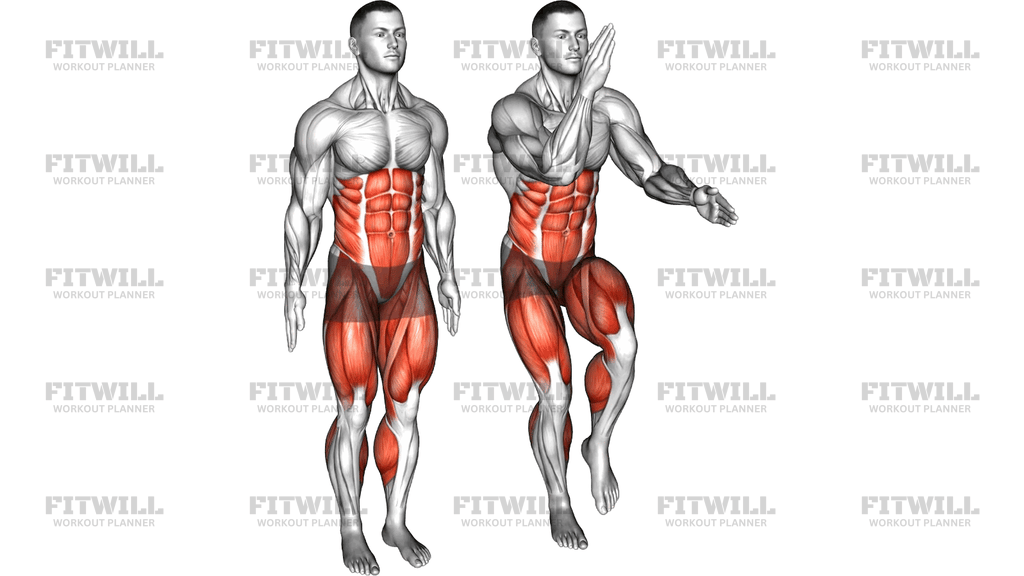
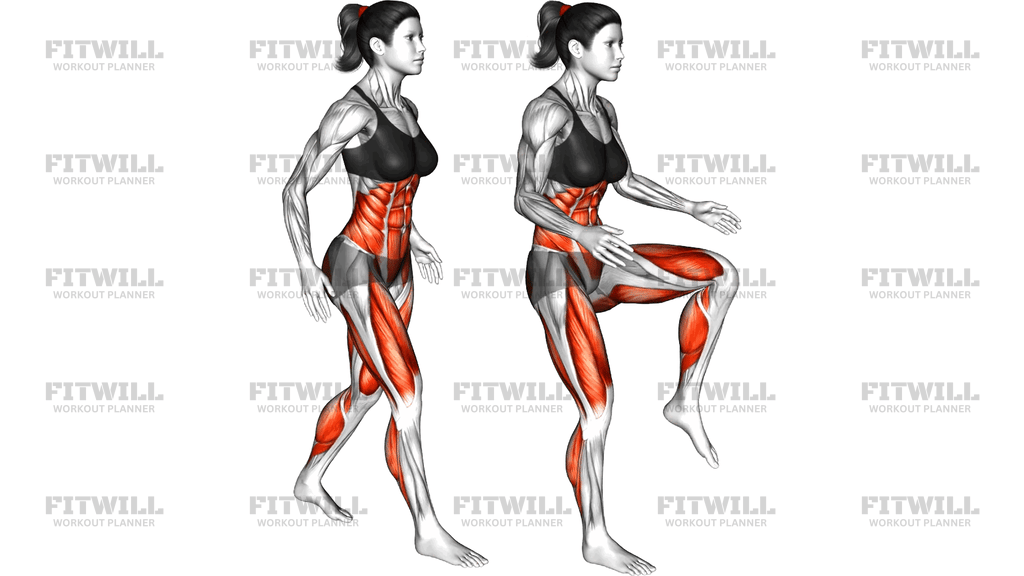
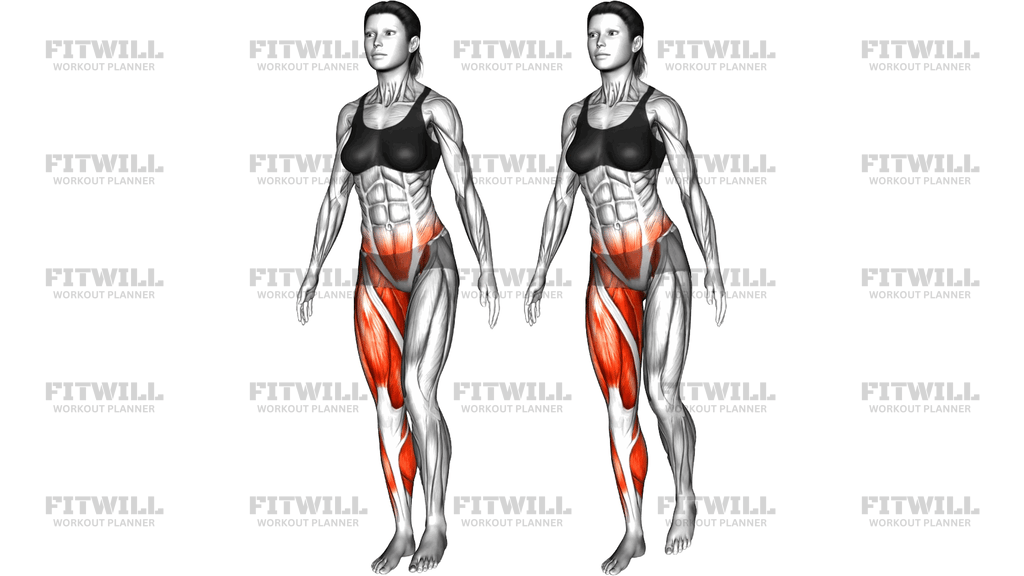
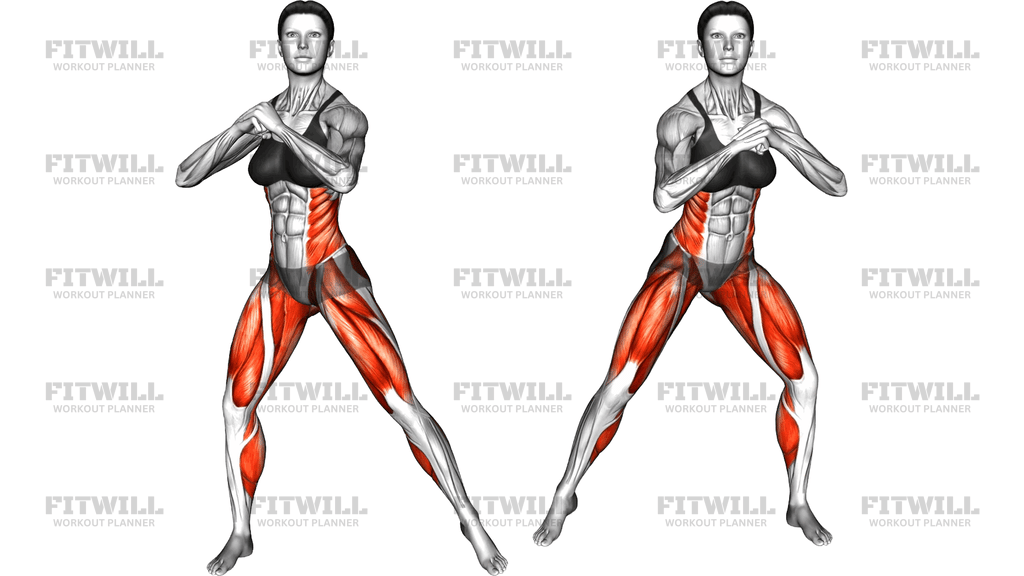
Wide Walking On Spot
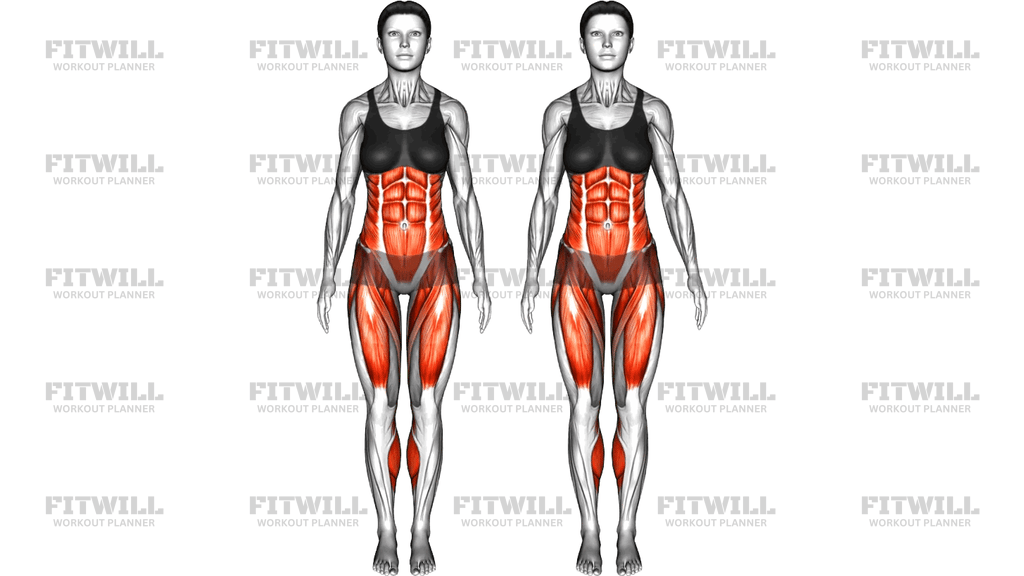
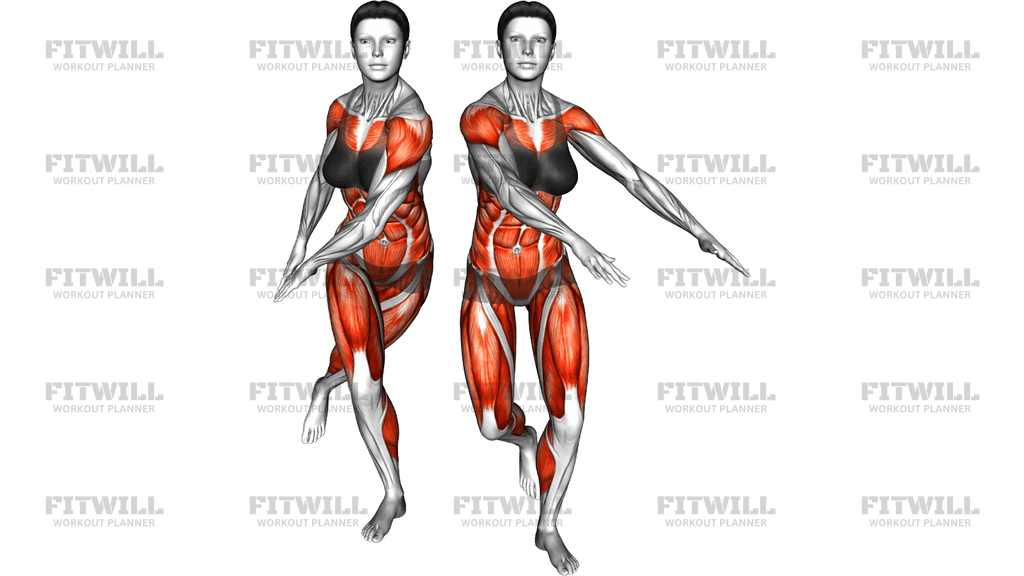
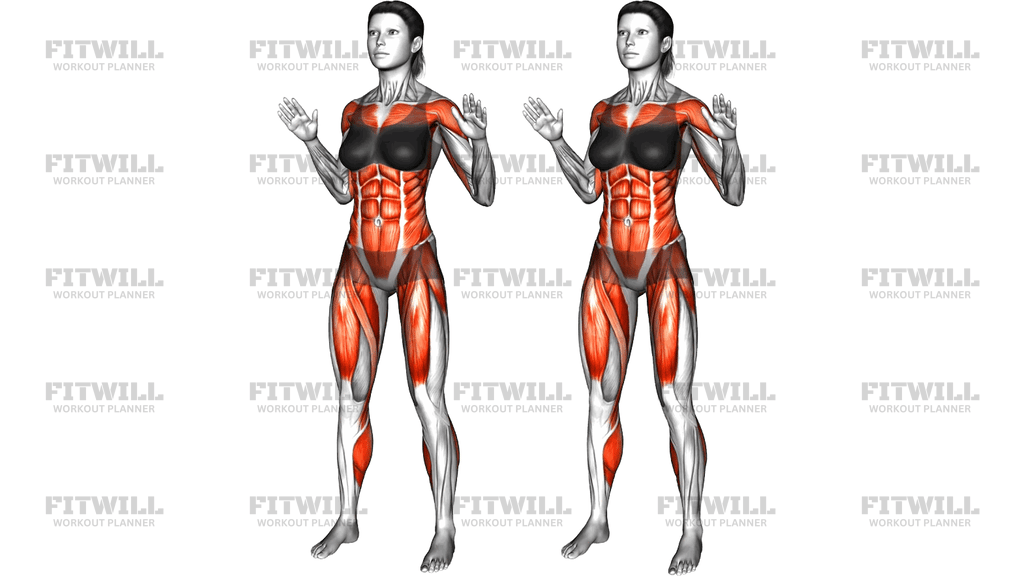
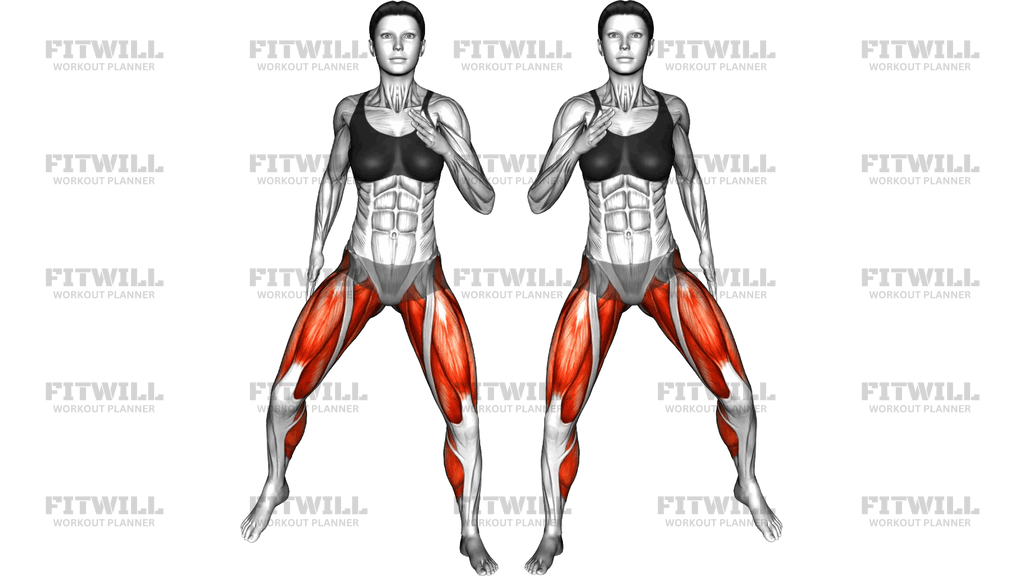
Wide Walking On Spot is a low-impact, body-weight rhythm drill where you stand in a wide stance and walk in place by shifting your weight from one leg to the other. Instead of traveling sideways, each repetition steps your hips over the working leg while the opposite leg stays long and anchored to the floor. One knee bends as it accepts your body weight, the opposite arm swings up naturally across the body, and then everything switches sides in a smooth, continuous walking rhythm.
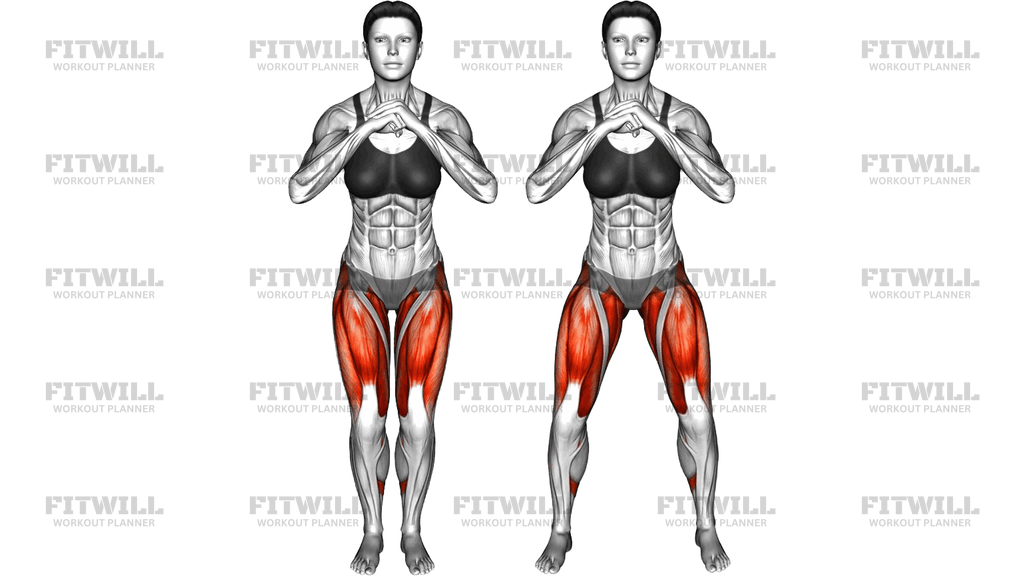
Because the feet stay planted wider than shoulder width, this variation puts a noticeable emphasis on the inner thighs and the quadriceps of the bending leg, while the straight leg works to control the stretch along its inner thigh and hamstring line. The calves and ankle stabilizers handle the constant side-to-side weight transfers, and the core stays busy keeping your torso tall as your center of gravity swings left and right.
This movement is especially useful as a warm-up before squats, lunges, or any lower-body session, since it gradually raises your heart rate while taking the hips, knees, and ankles through the exact ranges those exercises demand. It also works well as a standalone low-impact cardio option for home training, active recovery days, or for anyone who needs joint-friendly conditioning without jumping or stepping off a platform.
The wide setup is what separates this from ordinary marching in place. With a broad base, your hips have to travel a real distance on every shift, which is what wakes up the adductors and challenges balance in the frontal plane. Keep the stance comfortably wide — roughly one and a half shoulder widths — with the toes turned out slightly so the knees can track over the feet without twisting.
To execute it well, think of pouring your weight from one leg into the other rather than bouncing up and down. The bending knee should stay stacked over the foot, the heel of the straight leg can lift slightly as it releases, and the arm swing should feel relaxed and opposite to the working leg, just like natural walking. Smoothness matters more than depth, especially in the first week or two.
The most common mistake is letting the working knee dive inward toward the big toe as the load increases on that side. Correct it by actively driving the knee toward the pinky side of the foot. Another frequent error is shortening the stance to make the movement easier, which strips out most of the inner-thigh benefit. If your hips feel tight, reduce the depth of each shift first and let the range grow over time instead of narrowing the feet.
[ Workout Log & Planner ]
Put your next workout in Fitwill
Keep your plan and training log ready when you are.


Instructions
- Stand with your feet roughly one and a half shoulder-widths apart, toes turned out about 15 to 30 degrees, arms relaxed and bent at your sides.
- Brace your core lightly and keep your chest lifted and shoulders back so your torso stays tall throughout the set.
- Shift your weight onto your right leg by sitting your hips to the right and bending the right knee until it stacks over the middle of your foot.
- As the right knee bends, let the left leg straighten with the left foot remaining flat or peeling slightly onto its inner edge, and swing your left hand up toward chest height in a natural walking motion.
- Press through the whole right foot and pour your weight across to the left leg, bending the left knee over the left foot while the right leg straightens.
- Let the right arm swing up across your chest as the left leg accepts your weight, keeping the arm movement loose and opposite to the working side.
- Continue alternating side to side at a steady walking tempo, each shift counting as one repetition.
- Exhale on each weight shift and inhale during the brief pass through the middle.
- Keep the movement smooth and low-impact rather than bouncing between legs, adjusting depth so you stay in control.
- To finish, walk your feet back in to shoulder width, stand tall, and let your breathing settle before moving on.
Tips & Tricks
- Watch your front knee on the bending side — if it drifts inward toward your big toe, cue it outward over the pinky toe to protect the joint and load the inner thighs properly.
- Keep the heel of the working foot glued down; lifting it early turns the movement into a wobbly side lunge and shifts stress to the knee.
- Do not shorten the stance when you tire. If the wide position becomes hard to control, reduce how deeply you bend instead of pulling the feet closer together.
- Avoid dropping the straight leg completely limp — keeping light tension down that leg is what trains the inner-thigh stretch and the ankle stabilizers.
- Let the arm swing come from the shoulder in a relaxed arc across the chest; stiff, pinned arms rob the drill of its walking rhythm and coordination benefit.
- Stay upright rather than leaning your torso heavily toward the bending side. A small tilt is fine, but a big lean usually means the hips are not traveling far enough.
- Start with a shallow range for the first 20 to 30 seconds as a mini warm-up, then gradually deepen each shift as the hips loosen.
- If balance feels shaky, place the movement near a wall and let one hand hover nearby for reassurance rather than gripping it.
- Think of the motion as your hips walking sideways over each foot, not as two separate mini-squats, to keep the rhythm continuous.
Frequently Asked Questions
Which muscles does Wide Walking On Spot work the most?
The quadriceps of the bending leg do the main pushing work, while the inner thighs of both legs handle the wide stance and the side-to-side weight transfer. The glutes, calves, and core contribute as stabilizers throughout.
Is Wide Walking On Spot a strength exercise or a cardio exercise?
It sits between the two. With body weight only it acts mainly as low-impact aerobic work and a dynamic warm-up, but a slower tempo and deeper knee bend turn it into a genuine conditioning drill for the thighs and hips.
How wide should my stance be for Wide Walking On Spot?
Aim for roughly one and a half shoulder widths so each knee can bend while the opposite leg stays reasonably straight. If you feel pinching in the hips or your knees cannot track over your feet, narrow the stance slightly.
Why does one arm swing up during Wide Walking On Spot?
The opposite arm swing mirrors natural gait, which trains coordination between the upper and lower body and keeps the movement rhythmic. It also gently rotates the torso, encouraging the core to stay engaged.
Can beginners do Wide Walking On Spot?
Yes, and it is actually a great early exercise because the feet never leave the floor. Beginners should use a shallower knee bend and a slightly narrower stance, then widen and deepen as balance and hip mobility improve.
My knees cave inward when I shift side to side — how do I fix that?
That is the most common fault with this drill. Slow the tempo down and actively guide each bending knee toward the pinky side of its foot, and make sure the arch of that foot does not collapse flat.
How long should a set of Wide Walking On Spot last?
As a warm-up, 30 to 60 seconds of continuous shifting works well. For conditioning, accumulate one to three minutes per round, keeping the pace steady enough that you could still breathe through your nose.
What can I substitute if the wide stance bothers my hips?
Try a narrower stance with a slightly longer hold on each side, or switch to slow alternating side steps that travel a few inches instead of staying planted. Both keep the lateral weight-transfer pattern with less adductor stretch.
Should my whole foot stay flat during the weight shift?
The working foot stays fully planted, but the straightening foot may roll slightly onto its inner edge as it releases — that is natural. Avoid forcing the heel of the straight leg up high, which turns it into an exaggerated side lunge.
Is Wide Walking On Spot safe for people with knee sensitivity?
Because it is low impact and self-loaded, many people with sensitive knees tolerate it well, but depth and tempo should stay modest. Keep the bending knee stacked over the foot, stay within a comfortable range, and stop if sharp discomfort appears.