Double Side Step Walk
The Double Side Step Walk is a bodyweight lateral movement where you drop into a partial squat, step your feet wide apart to one side, bring them back together, and continue traveling sideways across the floor. It blends a low squat hold with repeated side steps, so your legs never fully rest between reps. Because you move in the frontal plane rather than straight ahead, it challenges the thighs, hips, and inner thighs in a way that forward exercises like squats and lunges do not.
This exercise is especially useful for anyone who wants stronger, more stable legs without equipment. Runners and field-sport athletes benefit from the lateral hip control it builds, since most daily life and training happen in a forward-only pattern. It also works well as a warm-up before squats or leg day, or as a finisher when the legs are already fatigued and you want to squeeze out extra work without loading the spine.
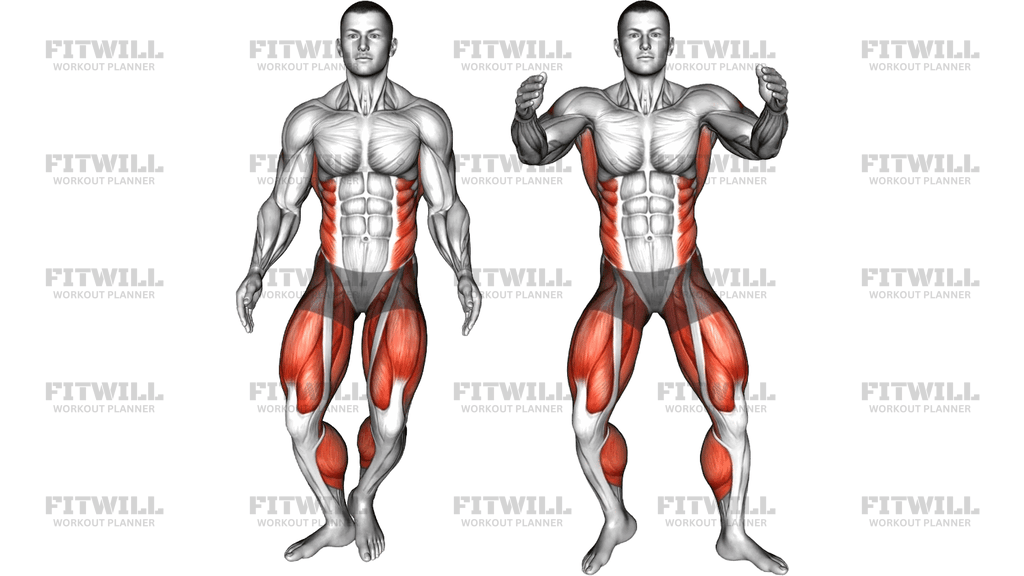
The main effort comes from the quads holding a semi-squat position through every step, with strong support from the glutes and adductors as you push the floor away and control the width of your stance. The calves and ankle stabilizers work continuously to keep you balanced as your base of support shifts, and the core stays engaged to keep your torso upright while your legs move underneath you.
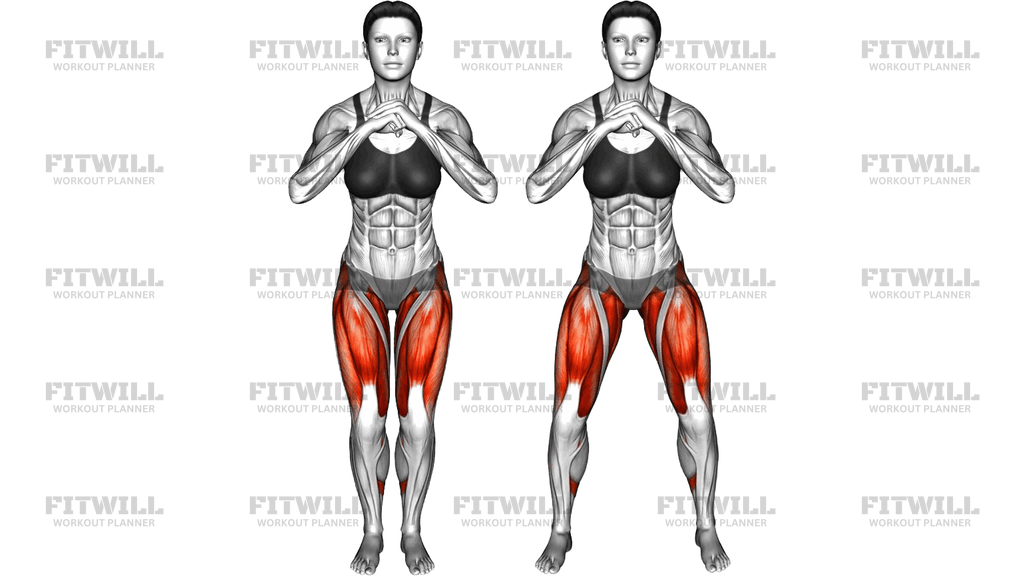
Setup matters more than people expect. Your posture at the top — hands clasped at the chest, chest lifted, hips back — sets the quality of every step that follows. If you start upright with soft knees, the movement turns into a shuffle; if you settle into a genuine half-squat with weight in your heels, the thighs do real work from the first step.
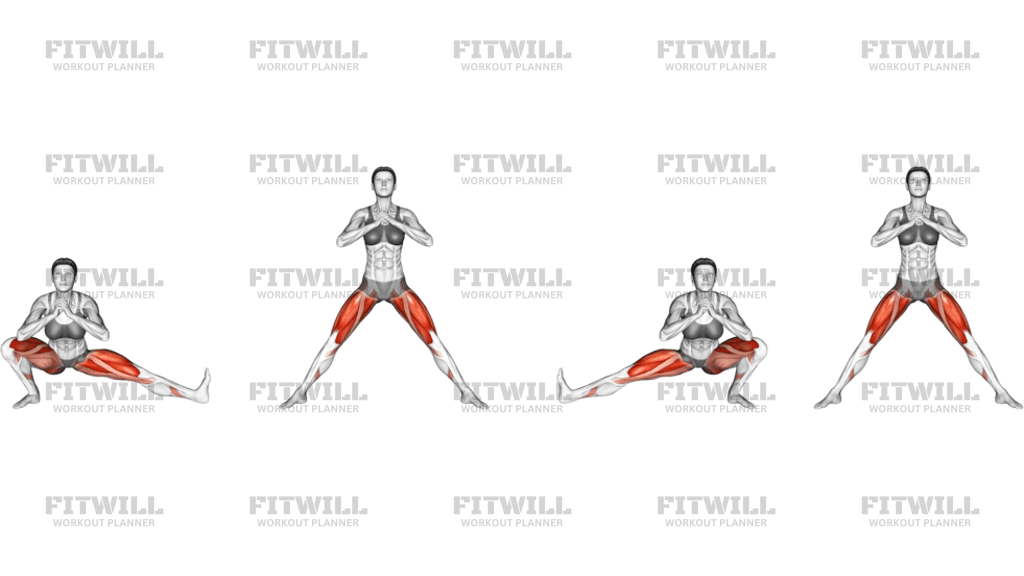
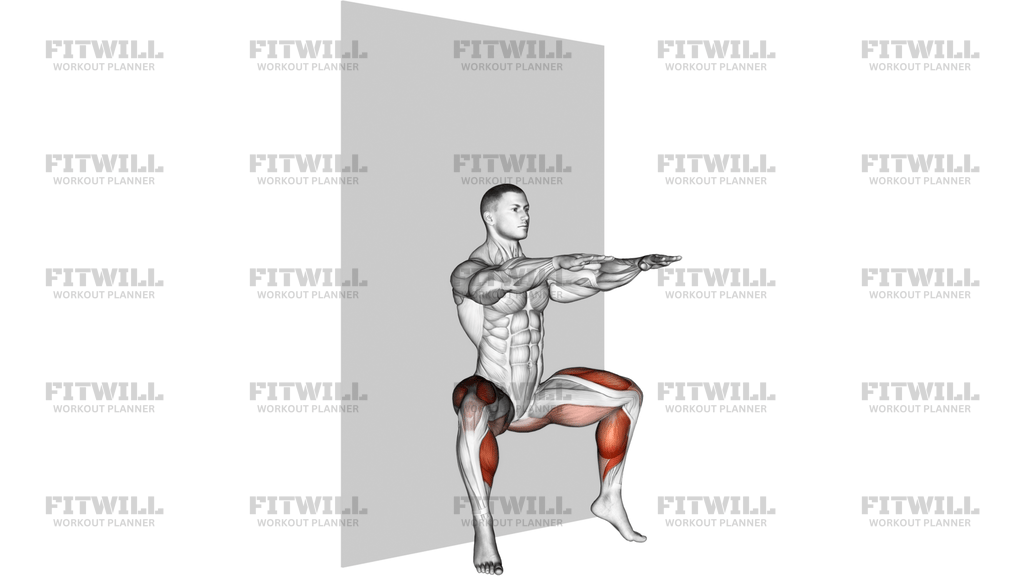
To perform it well, sit your hips back and down until your knees are bent roughly halfway to a full squat, then hold that depth for the entire set. Step one foot out wide to the side, follow with the other foot until your feet come back together, and keep repeating in the same direction for the target number of steps before switching sides. Stay low the whole time, keep your knees tracking over your toes, and avoid letting your torso lean far forward or your heels lift.
Common use cases include home leg circuits, warm-up sequences, and low-impact conditioning blocks. A practical safety note: keep the range within what your knees and hips can handle comfortably, step rather than slide your feet, and choose a floor with enough grip so your feet do not slip outward as you plant them wide.
[ Workout Log & Planner ]
Put your next workout in Fitwill
Keep your plan and training log ready when you are.


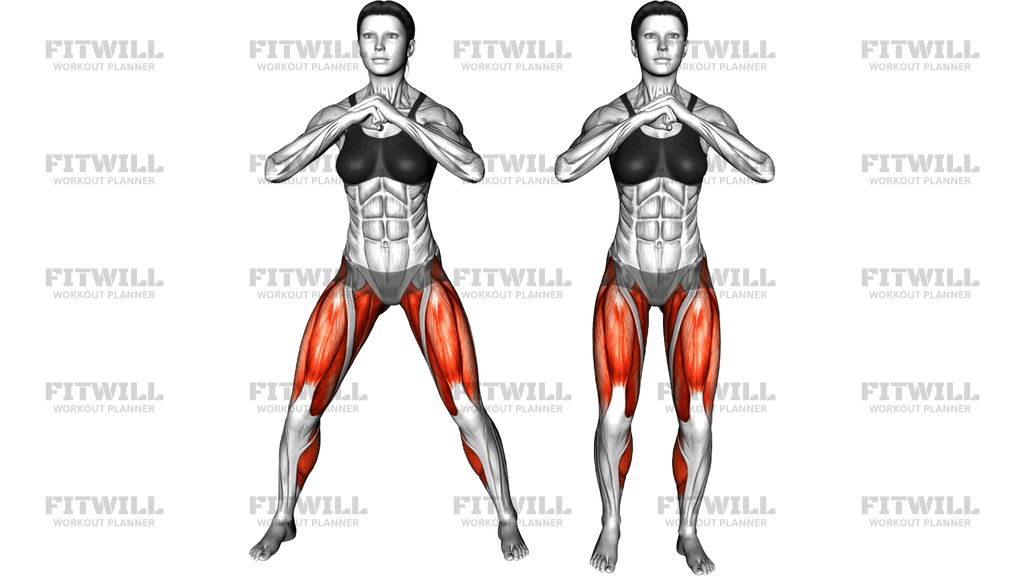
Instructions
- Stand tall with your feet together and your hands clasped together in front of your chest.
- Sit your hips back and bend both knees to lower into a comfortable half squat, keeping your chest up and your weight spread across your heels and midfoot.
- Brace your core lightly and hold this squat depth for the entire set — this is your working height.
- Step one foot out wide to the side, landing with your knee bent and tracking in line with your toes.
- Bring the opposite foot in to meet it, returning your feet to a together stance while staying low in the squat.
- Continue stepping sideways for the planned number of double steps, keeping the same squat depth with each step.
- Breathe steadily throughout — inhale through the nose as you step out, exhale as the feet come together; avoid holding your breath.
- When you reach your endpoint, reverse direction or turn around and walk back the other way to train both sides evenly.
- Once the set is finished, stand up fully out of the squat, reset your posture, and shake out your legs before the next round.
Tips & Tricks
- The most common mistake is standing up between steps. Pick a wall or mirror reference and check that your hip height stays constant from the first step to the last.
- If your knees cave inward as you step wide, think about spreading the floor apart with your feet and driving your knees slightly outward over your little toes.
- Keep your heels down. If your heels lift, your weight has drifted too far forward — push your hips back a bit more before continuing.
- Hands clasped at chest height acts as a counterbalance; resist letting them drop, which usually pulls the chest forward and rounds the upper back.
- Take a full, deliberate step out wide rather than a short shuffle. A wider plant forces the glutes and adductors to control the landing instead of the quads doing everything.
- If your inner thighs cramp, shorten the step width slightly and warm up with a few standing leg swings first.
- Look ahead at a fixed point rather than down at your feet — this keeps your neck neutral and helps you balance as your base shifts.
- Start with 8-10 double steps per direction and add distance or rounds over time rather than rushing the tempo.
- On slippery floors, wear shoes with grip or place the movement on a mat; a sliding foot at wide stance is the main risk in this exercise.
Frequently Asked Questions
What muscles does the Double Side Step Walk work?
The quads are the primary mover since they hold a half squat through every step. The glutes, inner thighs, calves, and core support each step by controlling the wide stance and keeping you balanced.
Is the Double Side Step Walk suitable for beginners?
Yes, it requires no equipment and the depth can be adjusted. Beginners can use a shallower squat and fewer steps per set, then deepen the hold as strength and balance improve.
Why do I stay in a squat the whole time instead of standing between steps?
The constant squat hold is what makes this exercise effective — it keeps continuous tension on the thighs and turns a simple side step into a demanding strength and endurance movement. Standing up between steps removes most of the workload.
How wide should each step be in the Double Side Step Walk?
Step wide enough that you feel your hips and inner thighs working on the landing, but not so wide that your heels lift or your knees pinch. Roughly one and a half to two shoulder widths between the feet at the wide point is a good target.
Why do my knees drift inward when I step out?
This usually means the glutes are not doing their share of the stabilization. Cue yourself to press your knees out over your toes on each landing, and if it persists, reduce the step width until you can control it.
Can I use the Double Side Step Walk as a warm-up?
Yes, it works well before squats, lunges, or any leg session because it raises the heart rate and activates the quads, glutes, and hips without fatigue. Use a shallow squat hold and fewer steps when using it as a warm-up.
What can I substitute if I do not have space to walk sideways?
You can perform stationary side steps, stepping out and back in from a fixed point, or lateral squat step-outs. Both train the same pattern in a small area.
How many steps should I do per set?
A practical starting point is 8-10 double steps in each direction, resting briefly between sides. As your endurance builds, increase the distance traveled or add rounds rather than hurrying the tempo.
Is it safe for my knees?
For healthy knees, keeping the knees tracking over the toes and the heels down makes this a generally knee-friendly movement. If you have a current knee issue, use a shallower squat depth and stop if you feel sharp pain rather than muscular effort.