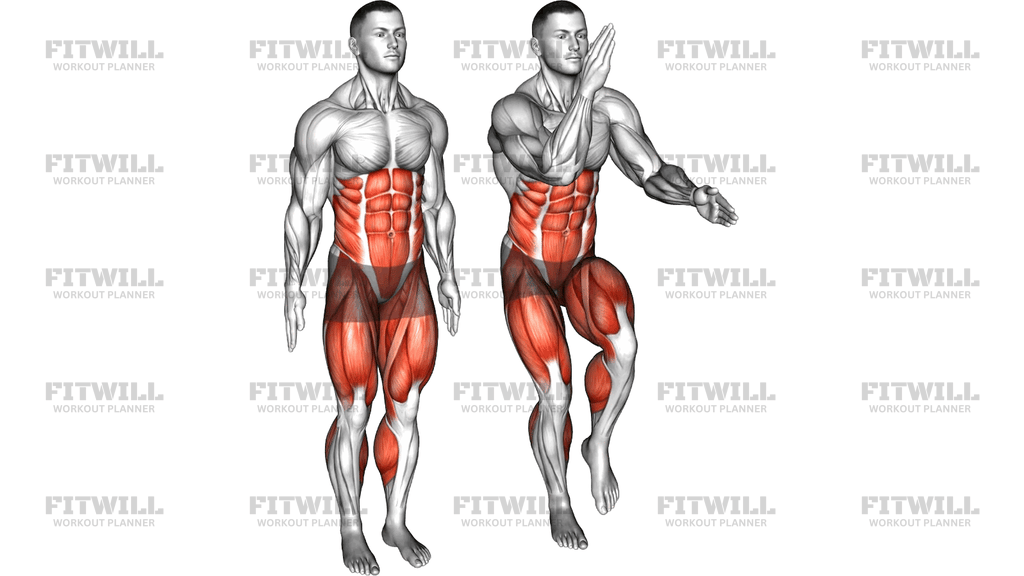
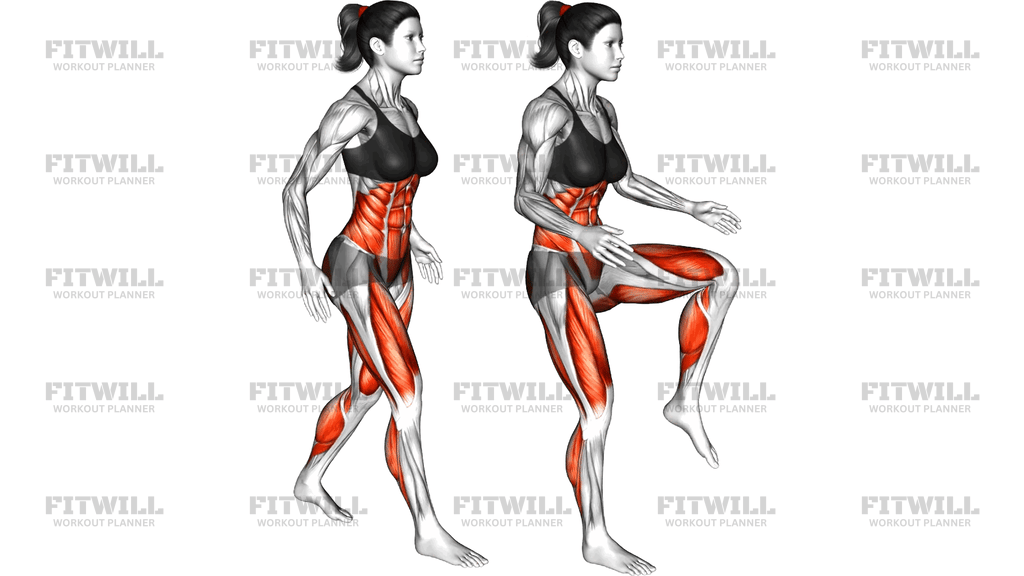
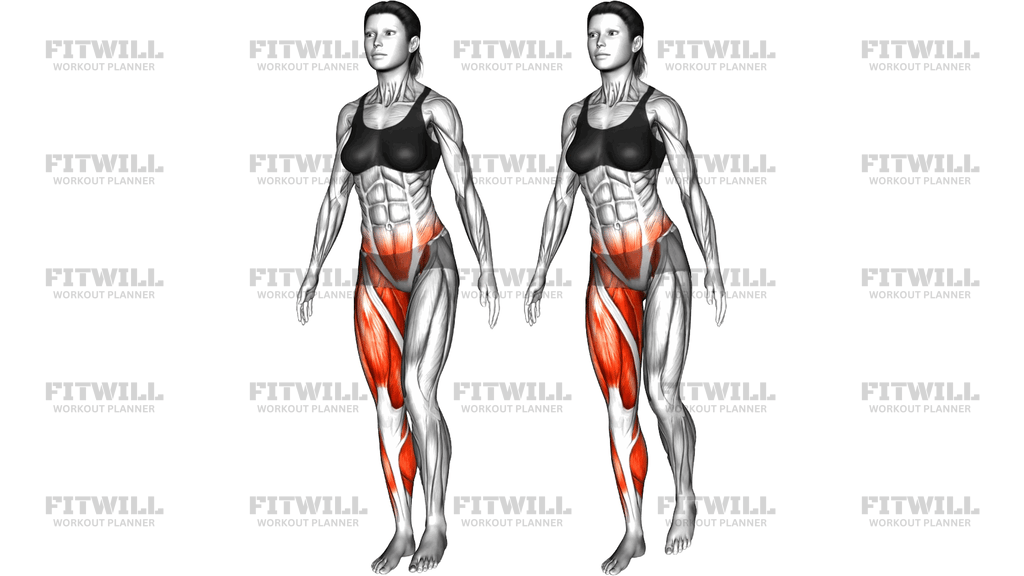
Walk Forward And Backward
Walk Forward And Backward is a simple bodyweight locomotion drill where you travel across the floor with a normal walking gait, then reverse and retrace your steps in the opposite direction. It looks almost too plain to be an exercise, but that is exactly its value: it strips movement back to the most fundamental human pattern and lets you train it deliberately. Because it needs no equipment and only a few meters of clear floor, it fits easily into warm-ups, rehab-style conditioning, active recovery, or low-impact cardio blocks.
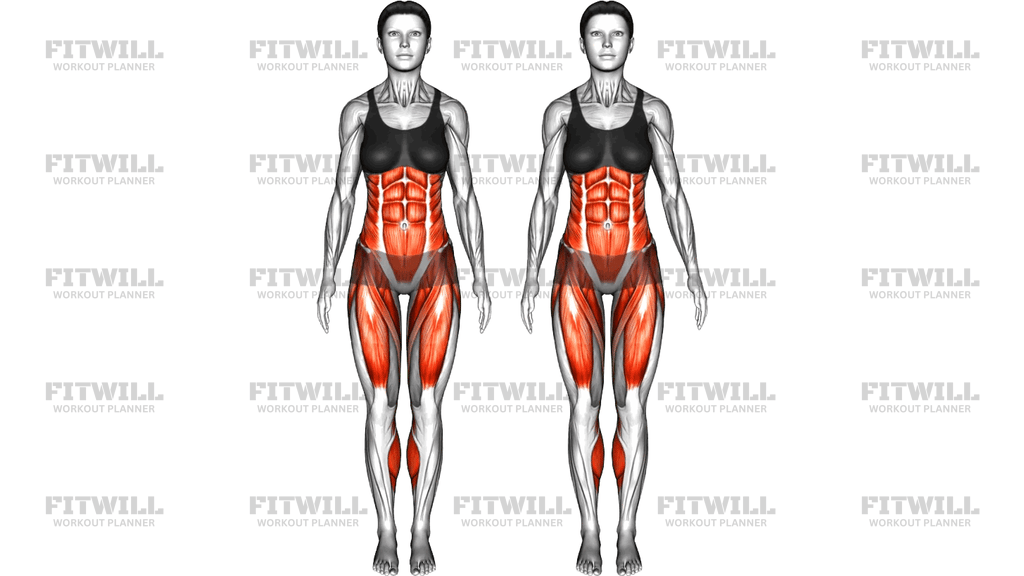
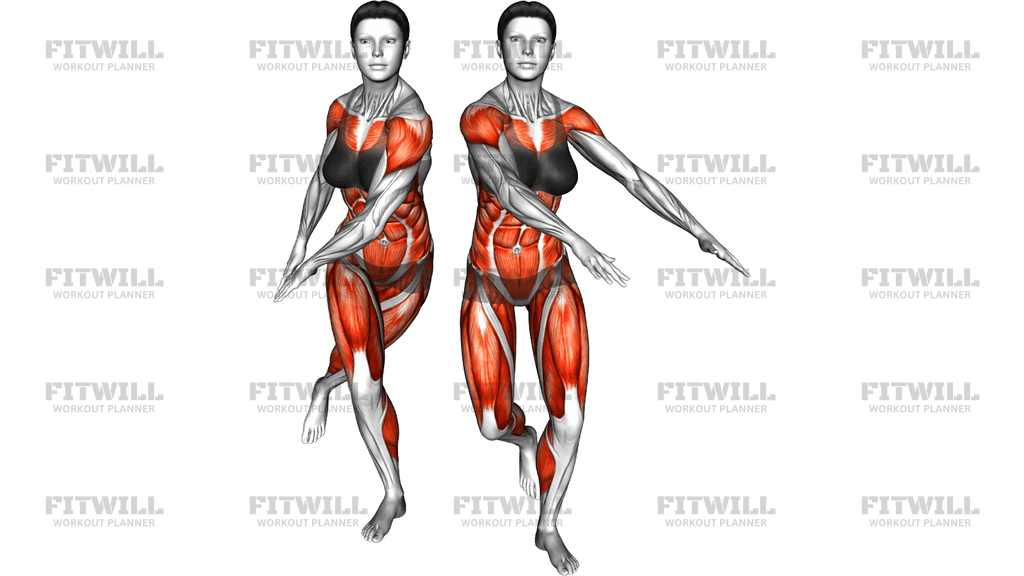
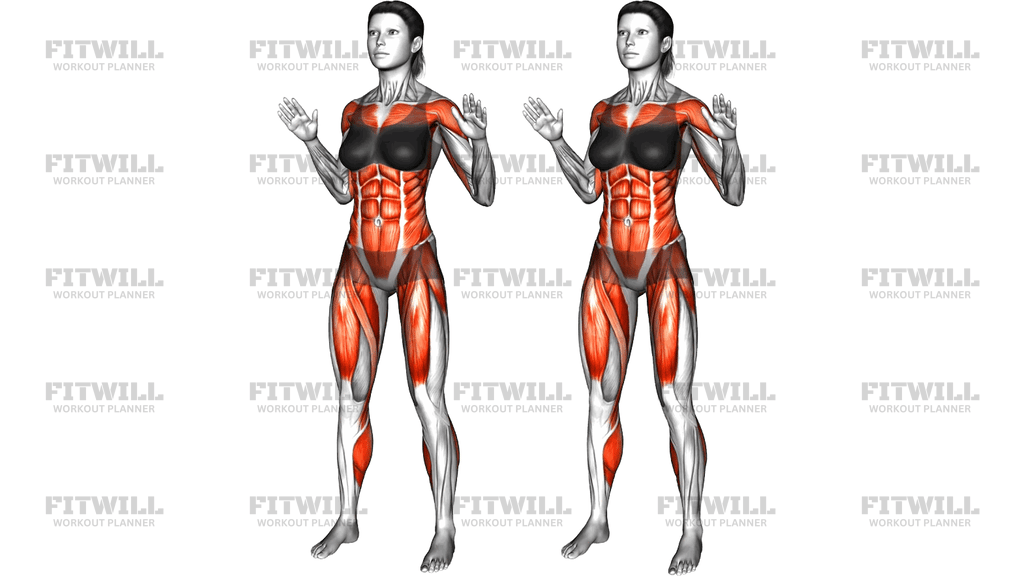
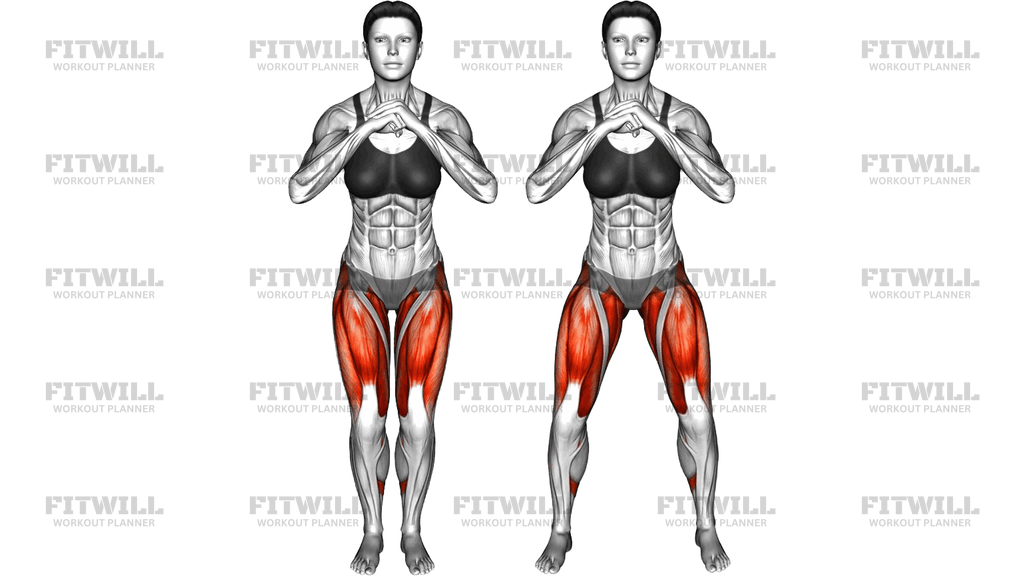
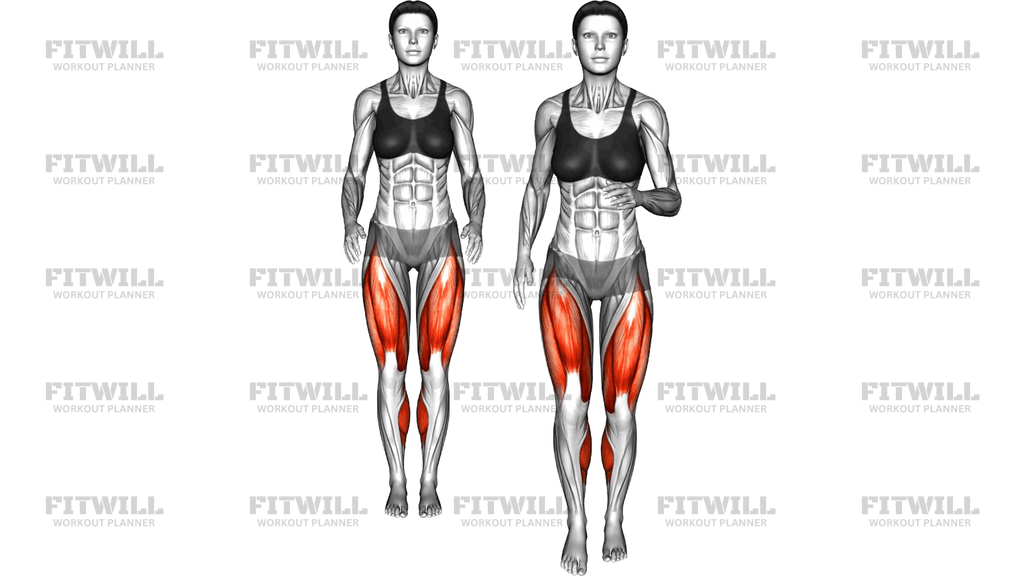
The exercise primarily works the quadriceps, which straighten the knee and control your leg as it swings through and accepts your bodyweight with every step. The calves push you off the ground at the back of each stride, while the glutes and hip stabilizers keep your pelvis level as you shift from one leg to the other. Walking backward doubles the demand on coordination, because you cannot see where your feet are landing and your legs have to work in an unfamiliar sequence.
Setup matters more than most people expect. You want a straight, unobstructed path so you are not glancing down or sidestepping obstacles mid-drill. An upright torso, relaxed shoulders, and eyes on the horizon set the tone for the whole movement. If you slouch or stare at your feet, your gait shortens, your breathing gets shallow, and the drill turns into a shuffle.
To execute it well, walk with purpose: heel lands first going forward, roll through the foot, push the floor away behind you, and let your arms swing naturally at your sides. Keep your steps full but not exaggerated. When you reach the end of your path, turn carefully and walk back the same way, matching your stride length and rhythm to the outward trip. The return leg is where most people get sloppy, so treat the backward portion as the real work.
This drill is especially useful for older adults rebuilding confidence in gait and balance, for athletes as a low-load warm-up that wakes up the ankles, knees, and hips, and for anyone who sits a lot and needs gentle, frequent leg movement. Backward walking in particular is a common coaching tool for challenging the quadriceps and calves in a new pattern without adding load.
From a safety standpoint, the biggest risks are environmental, not physical: tripping hazards, slick floors, and tight turnarounds. Clear your path first, start slowly, and if backward walking feels unsteady, do it near a wall or railing you can touch for reassurance until your confidence catches up.
Fitwill
Log Workouts, Track Progress & Build Strength.
Achieve more with Fitwill: explore over 9600 exercises with images and videos, access built-in and custom workouts, perfect for both gym and home sessions, and see real results.
Start your journey. Download today!




Instructions
- Find a clear, straight path of floor roughly five to ten meters long with nothing to trip over at either end.
- Stand tall at one end with your feet hip-width apart, arms relaxed at your sides, and your gaze level toward the far end of the path.
- Brace your core lightly so your torso stays upright without stiffening your shoulders or neck.
- Step forward with your lead leg, letting your heel land first, then roll through the foot as your body passes over it.
- Push the floor away behind you with the trail leg and let your arms swing naturally opposite to your legs.
- Keep your steps full and steady, landing each foot under or slightly ahead of your hips rather than reaching far out.
- When you reach the end of the path, stop, plant both feet, and turn around carefully before reversing direction.
- Walk backward by reaching one foot behind you, landing on the ball of the foot, then rolling back toward the heel as your weight shifts over it.
- Breathe in a steady rhythm through your nose and mouth, exhaling naturally with each few steps rather than holding your breath.
- Complete your set distance or time going each direction, then finish standing still for a moment to reset before the next round.
Tips & Tricks
- The most common mistake is shrinking into a shuffle, especially on the backward leg; deliberately match your stride length in both directions so the quads and calves actually do work.
- Going backward, resist the urge to crane your neck around to see your feet; keep your head facing forward and trust the reach of your back foot.
- If you drift sideways without realizing it, pick a fixed point at the far end of the room and keep your eyes on it the whole trip.
- Exaggerating the backward reach feels productive but usually just breaks your balance; a modest step behind you with a controlled landing is more effective.
- Let your arms swing on the forward trip; holding them rigid at your sides changes your rhythm and makes the walk feel stilted.
- On turns, take small steps and pivot rather than whipping around, which is where most stumbles happen in this drill.
- If your calves cramp during backward walking, shorten the stride and slow down; the calf works harder on the backpedal than most people expect at first.
- Start without shoes grip issues in mind: avoid slick socks on hard floors, since the landing foot on the backward step needs reliable traction.
- Use the forward trip as your rhythm-setter and the backward trip as your focus-setter; if you can walk back at the same speed as forward, your control is where it should be.
Frequently Asked Questions
What muscles does Walk Forward And Backward work?
The quadriceps do most of the visible work controlling each step, with the calves driving push-off and the glutes stabilizing the hips. Walking backward shifts a bit more demand onto the calves and quads because the landing pattern is unfamiliar.
Is Walk Forward And Backward good for beginners?
Yes, it is one of the most beginner-friendly drills there is, since it uses a movement you already do every day. The main adjustment is walking with attention: tall posture, full steps, and a controlled backward portion.
Why does the backward portion feel so much harder in Walk Forward And Backward?
You cannot see your landing spot, so your ankles, knees, and hips have to control the step without visual feedback. That unfamiliar pattern also loads the quads and calves differently than forward walking.
How far should I walk on each trip?
Five to ten meters of clear floor is plenty for most purposes. Consistency of stride and posture matters far more than covering distance.
Can I use Walk Forward And Backward as a warm-up?
Absolutely; it is a classic warm-up drill because it raises your heart rate gently while lubricating the ankles, knees, and hips. Do a slow forward trip first, then add backward trips once you feel coordinated.
Should I look at my feet when walking backward?
No, keep your head facing forward and your eyes level. Checking your feet repeatedly throws off your balance and posture, which is exactly what the drill is meant to train.
What is a good substitute if I do not have space to walk?
Marching in place covers the forward pattern, and slow, deliberate reverse steps in a small area cover the backward pattern. You lose the travel component, but the leg work and coordination remain.
Is Walk Forward And Backward safe for someone with balance concerns?
Forward walking is generally very safe on a clear path, but backward walking warrants caution. Do it alongside a wall or sturdy railing at first, and keep the steps short until it feels automatic.
How can I make Walk Forward And Backward more challenging?
Increase the total distance or time, add more backward trips relative to forward ones, or pick up the pace while keeping your stride full. You can also transition each end point into another drill, like a few squats, to build a small circuit.