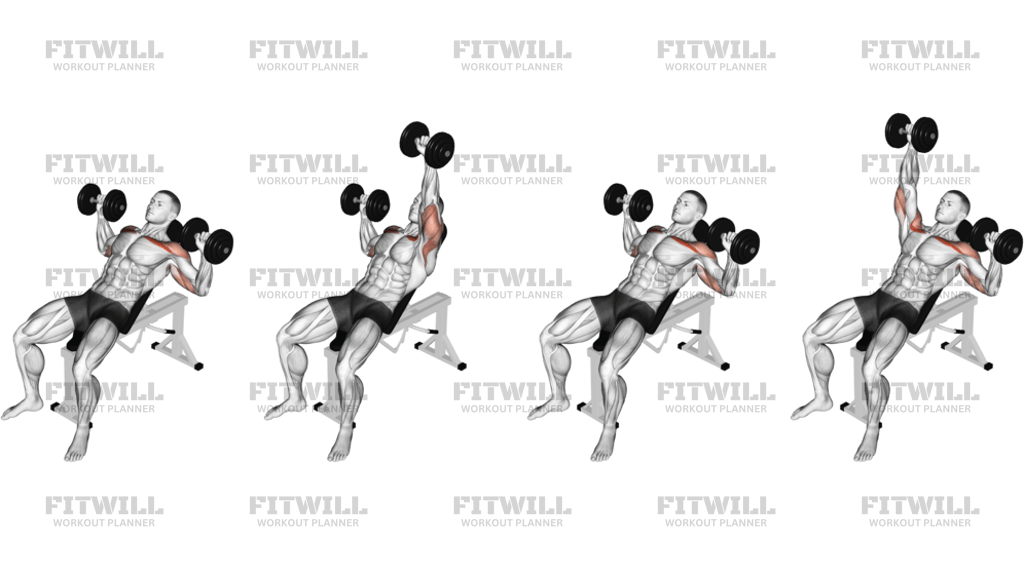
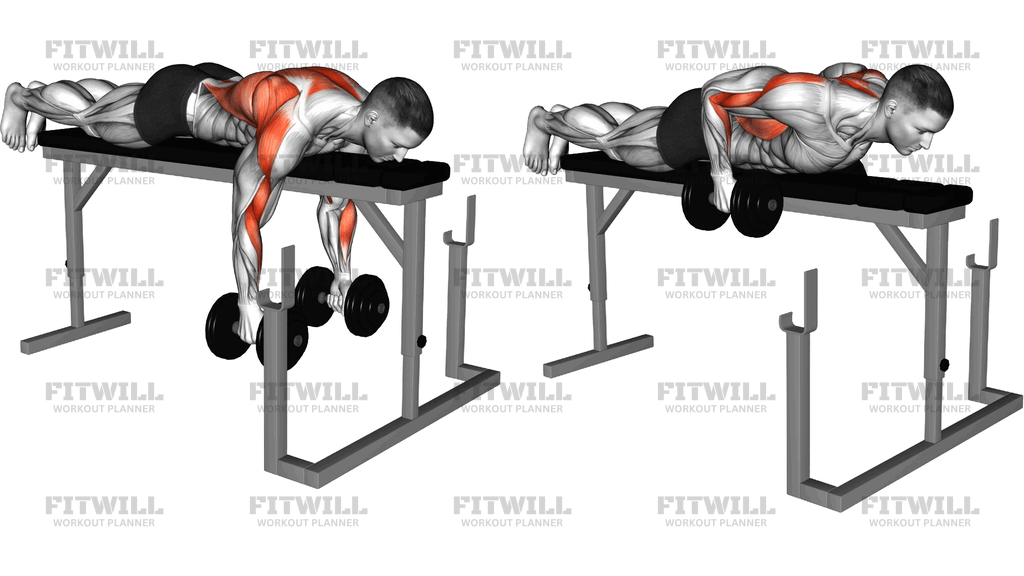
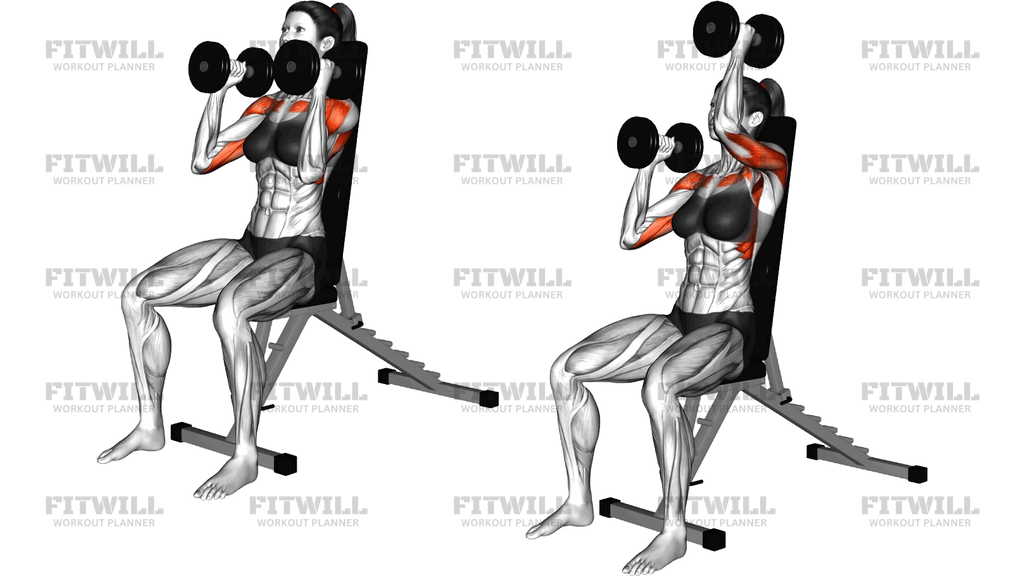
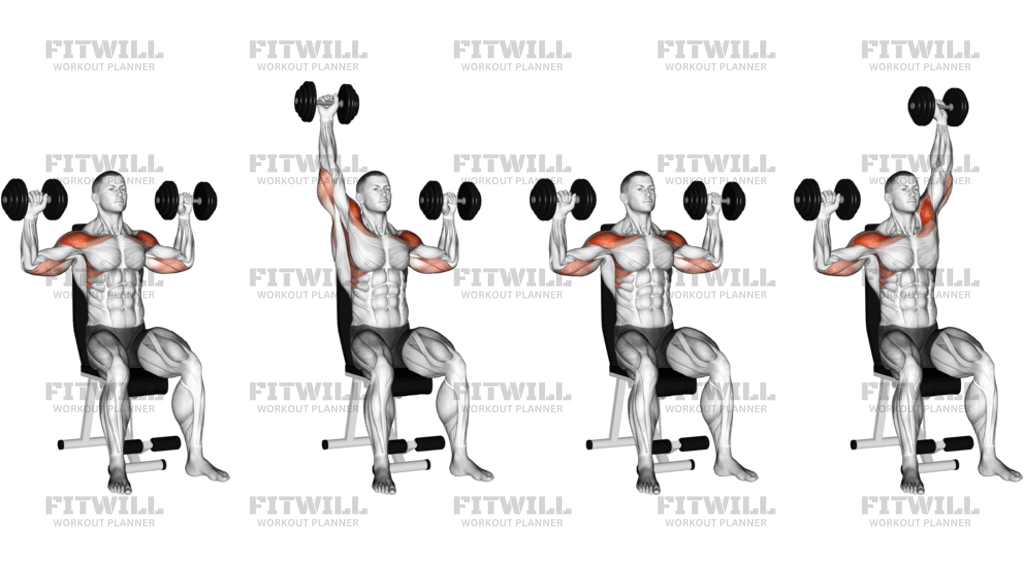
Dumbbell Standing Arnold Press
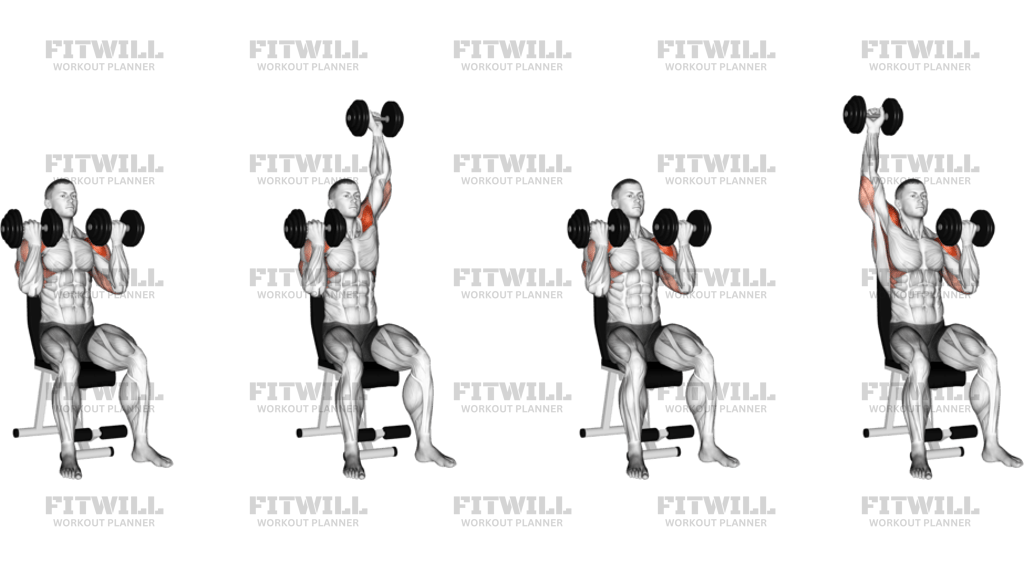
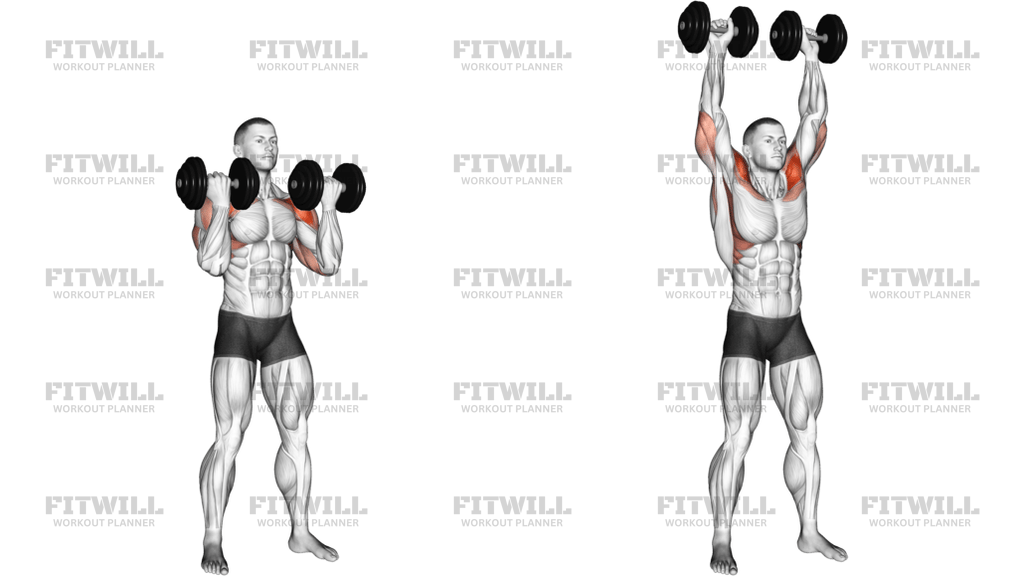
Dumbbell Standing Arnold Press is a standing shoulder exercise that combines a press with a rotating dumbbell path. It emphasizes the front and side delts while the triceps, upper back, and core help steady the body through the rotation and overhead finish. The movement starts with the dumbbells at shoulder height and palms facing you, then turns the hands outward as you press overhead.
That rotation is what makes the exercise different from a standard standing dumbbell press. It asks the shoulders to control the load through a longer, more coordinated path, so the setup matters. If the elbows drift too far out, the ribs flare, or the torso leans back, the work shifts away from the shoulders and the rep turns into a loose whole-body heave.
A good rep begins with stacked posture: feet planted, glutes and abs lightly braced, and the dumbbells held close to the front of the shoulders. From there, press the weights up while rotating the palms outward so the elbows travel under control and finish with the arms extended overhead. Lower the dumbbells by reversing the rotation and bringing them back to shoulder height without dropping into the bottom.
Dumbbell Standing Arnold Press is useful when you want shoulder development with a little more coordination demand than a basic press. It fits well in strength sessions, upper-body hypertrophy work, or accessory training for lifters who can keep the torso still while the arms move freely. Because the path is more technical, the exercise usually rewards moderate loads and crisp repetition quality more than heavy grinding.
Use a range of motion that stays smooth and pain-free, especially at the top of the press and on the way back down. If the front of the shoulder pinches, reduce the load, shorten the range slightly, or switch to a simpler neutral-grip press. Clean rotation, steady breathing, and a quiet torso are the signs that the shoulders are doing the work the exercise is meant to train.
[ Workout Log & Planner ]
Put your next workout in Fitwill
Keep your plan and training log ready when you are.


Instructions
- Stand tall with your feet about hip-width apart and hold a dumbbell in each hand at shoulder height.
- Turn your palms toward your face and keep your elbows slightly in front of your torso, not flared straight out to the sides.
- Brace your abs and keep your ribs stacked over your pelvis before the first press.
- Press both dumbbells upward while rotating the palms away from you as the weights travel past eye level.
- Keep the dumbbells moving close to your face, then finish with the arms straight overhead and the biceps near your ears.
- Do not shrug hard at the top; keep the shoulders controlled and the neck long.
- Lower the dumbbells by reversing the rotation so the palms come back toward you as you return to shoulder height.
- Pause briefly in the bottom position with control before starting the next rep.
- Breathe out as you press and breathe in as you lower, keeping the torso steady throughout the set.
Tips & Tricks
- Choose lighter dumbbells than you would for a standard standing press; the rotation makes the movement less forgiving.
- Keep the dumbbells just in front of the shoulders at the start instead of letting the elbows drift behind the ribs.
- If your lower back arches to get the weights up, lower the load and keep the ribs down through the whole rep.
- Rotate the palms gradually as you press instead of trying to flip them all at once at the top.
- Track the dumbbells in a smooth arc close to the face so the shoulders, not momentum, drive the lift.
- At the top, finish with the biceps near the ears and the wrists stacked over the elbows, not bent back.
- If one shoulder moves ahead of the other, slow the tempo and match both dumbbells rep for rep.
- Stop the set when the lowering phase gets sloppy, because the descent is where shoulder control is easiest to lose.
Frequently Asked Questions
What muscles does Dumbbell Standing Arnold Press train?
It primarily trains the shoulders, especially the front and side delts, with the triceps, upper back, and core helping stabilize the movement.
Why do my palms rotate during Dumbbell Standing Arnold Press?
The rotation is part of the lift and helps move the dumbbells from the front of the shoulders to the overhead finish in one continuous path.
How should I start each rep?
Begin with the dumbbells at shoulder height, palms facing you, elbows slightly in front of your torso, and your feet planted under a braced body.
Should I lean back when I press the dumbbells up?
No. A small amount of torso movement can happen, but if you are leaning back to finish the rep, the load is too heavy or your core brace is failing.
Can beginners do this exercise?
Yes, but they should start light and focus on the rotation path first. A basic standing dumbbell press may be easier until shoulder control improves.
What is the most common form mistake?
Common mistakes are flaring the elbows too early, arching the lower back, and dropping the dumbbells too fast on the way down.
What if the top of the press feels uncomfortable?
Shorten the range slightly, use a lighter load, or switch to a neutral-grip shoulder press if the rotation irritates the front of the shoulder.
What should I focus on during the lowering phase?
Reverse the rotation under control and bring the dumbbells back to shoulder height without letting them crash into the bottom position.