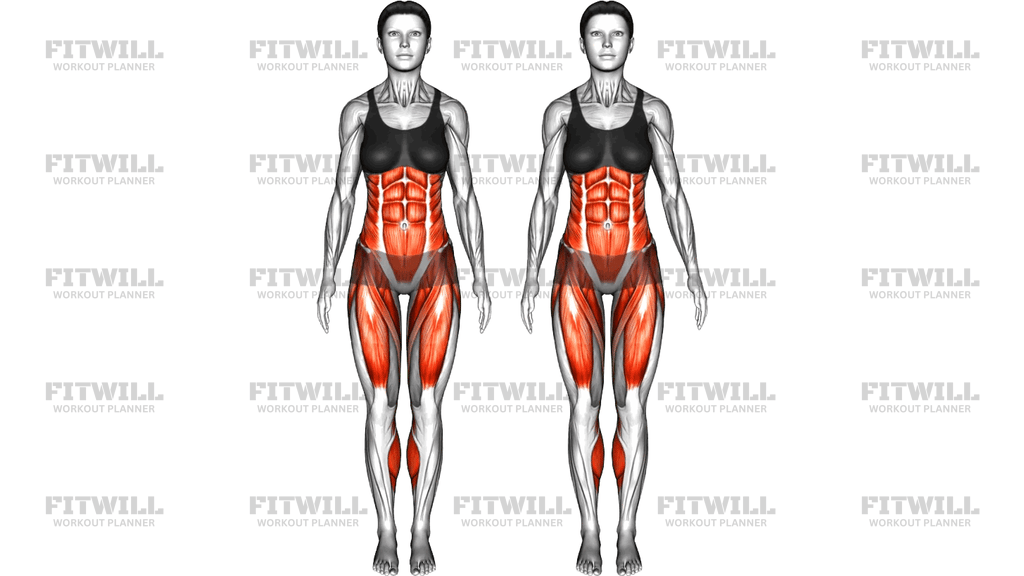
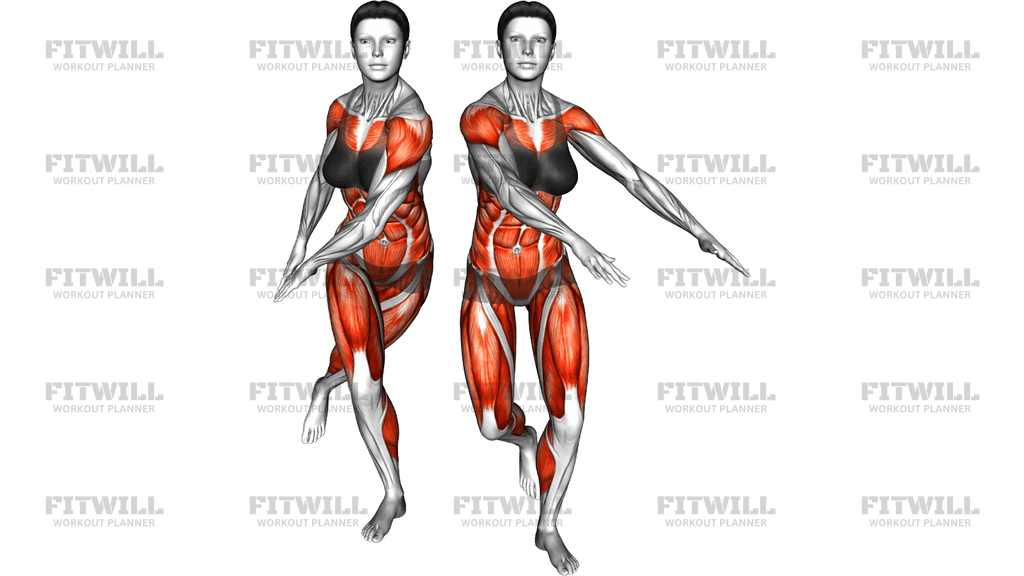
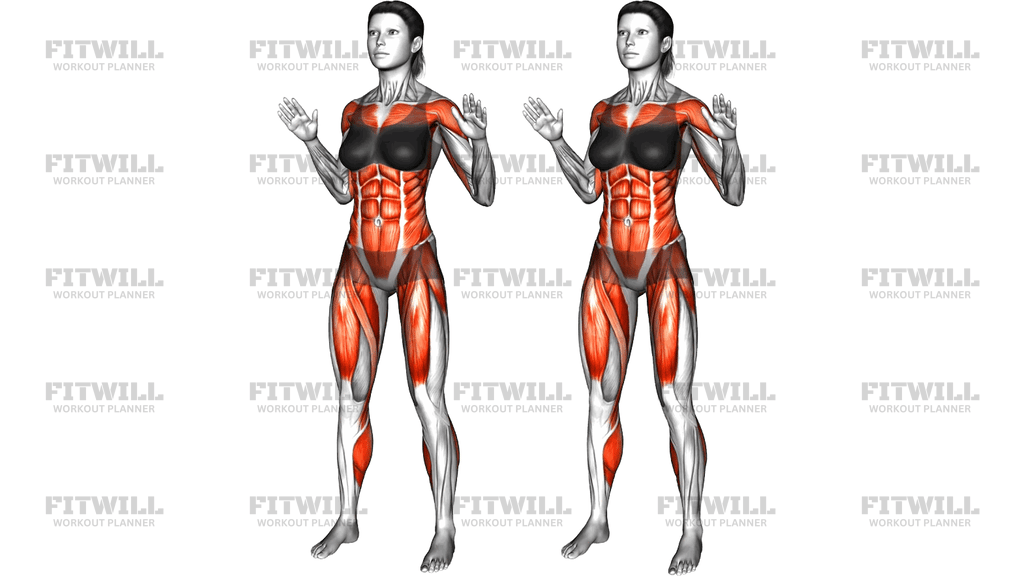
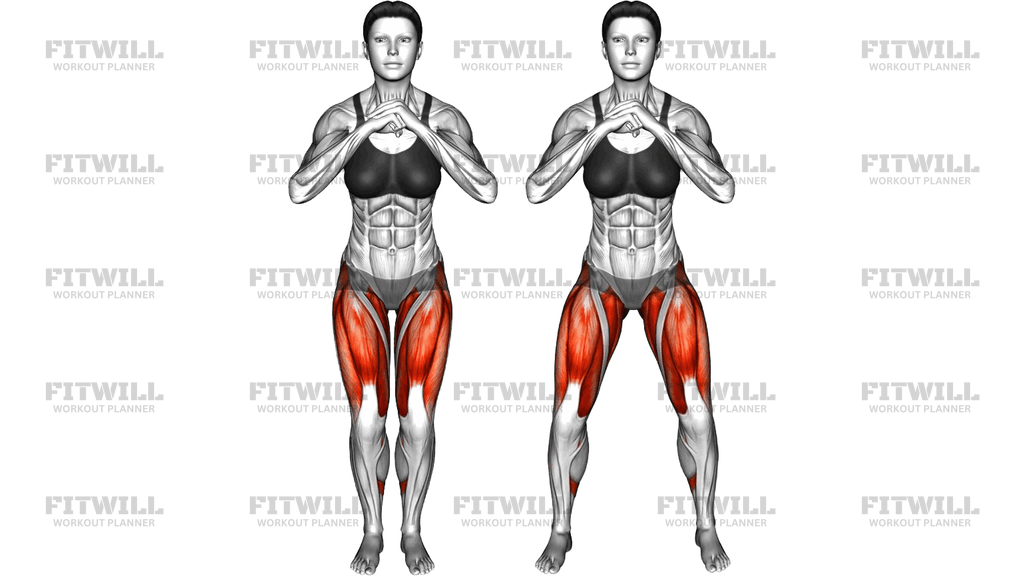
Walking Front Kick Reach Front
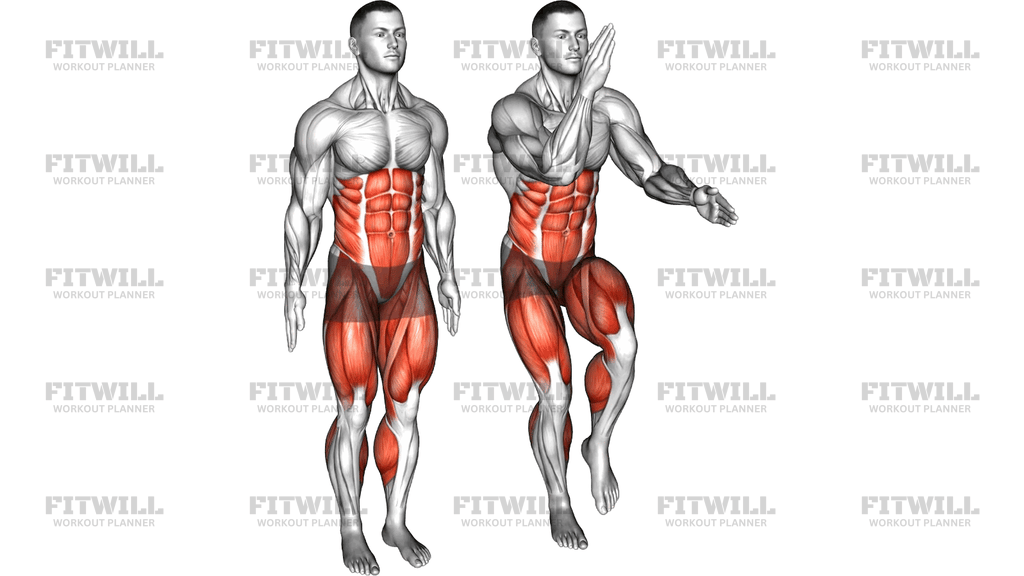
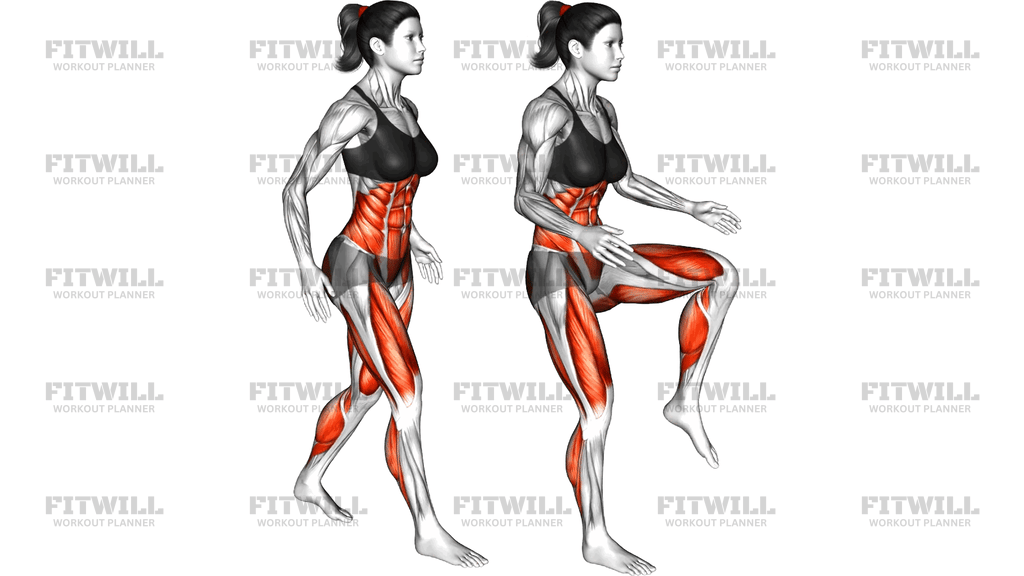
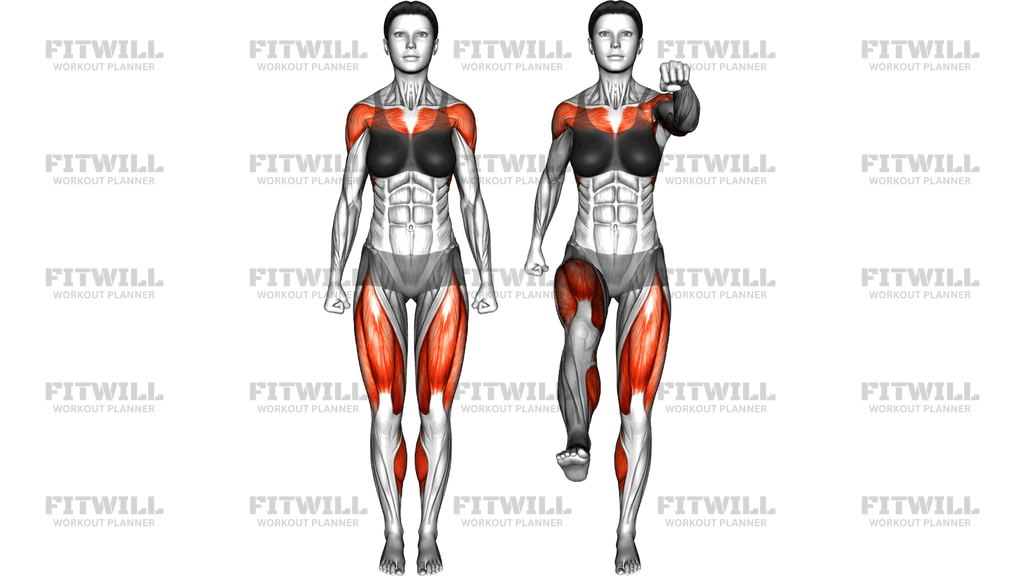
Walking Front Kick Reach Front is a standing bodyweight movement that combines a marching front kick with an opposite-arm reach forward. You travel forward one step at a time: as each knee drives up and the lower leg extends into a controlled front kick, the arm on the opposite side reaches straight ahead at roughly shoulder height. The result is a cross-body pattern that trains the hip and shoulder together while your single-leg stance does quiet work the whole time.
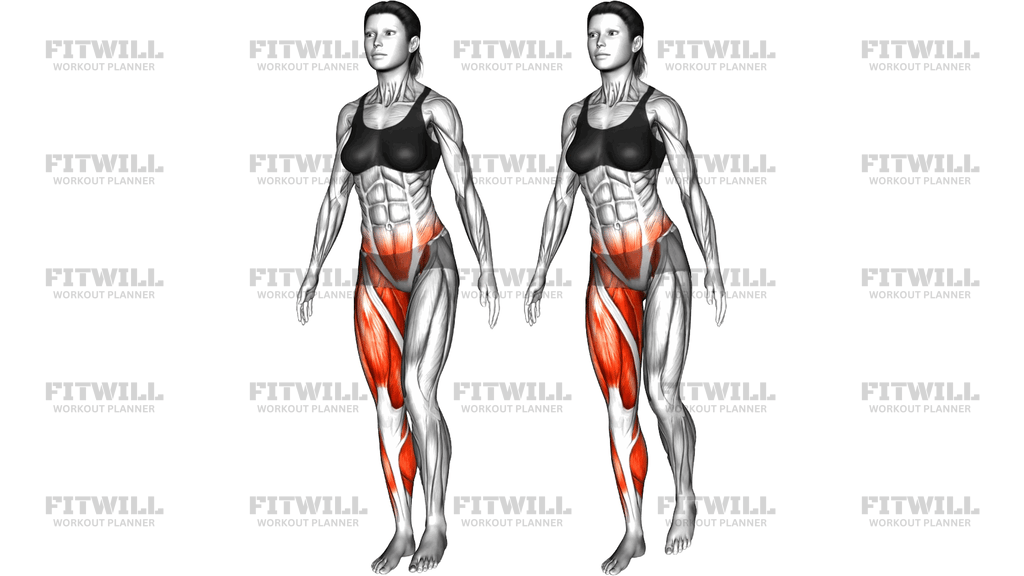
This is a go-to movement for warm-ups, martial arts conditioning, and kickboxing-style circuits, but it earns its place in any general program. The kicking leg works the hip flexors and quads to lift and extend, the reaching arm wakes up the front of the shoulder, and the torso has to stay organized between the two, which pulls the abs and obliques into the job of resisting rotation. Meanwhile, the support leg's glutes and calf are constantly adjusting to keep you balanced as you move.
Setup matters more than it looks. Because nothing external is guiding the pattern, your own alignment is the only thing keeping the kick honest. Stand tall with a braced midsection, eyes forward, and let the kick come from a deliberate knee lift rather than a loose leg swing. If the torso leans back or the ribs flare to buy height, the movement stops training the hip flexors the way it should and starts loading the lower back instead.
Execution should feel rhythmic but controlled. Drive the knee up to at least hip height, extend the lower leg forward with the toes pulled back, reach the opposite hand toward the foot or straight ahead, then fold the leg back down under control and step through with the other side. The reach is part of the drill, not decoration — it lengthens the working side of the torso, ties the shoulder into the pattern, and gives you a natural target for coordination.
Because it is low-load and repeatable, Walking Front Kick Reach Front scales well. Beginners can keep kicks low and move slowly to groove the pattern; more advanced trainees can add height, speed, or use it as a heart-rate raiser between strength sets. Whoever is doing it, the standard stays the same: an upright chest, a stable support leg, and a kick that finishes as crisply as it retracts.
Fitwill
Log Workouts, Track Progress & Build Strength.
Achieve more with Fitwill: explore over 9600 exercises with images and videos, access built-in and custom workouts, perfect for both gym and home sessions, and see real results.
Start your journey. Download today!




Instructions
- Stand tall with your feet hip-width apart, arms relaxed at your sides or held lightly in front of your chest, and your gaze fixed on a point ahead of you.
- Brace your midsection so your ribs stay stacked over your pelvis, and shift your weight onto one leg to prepare for the step.
- Step forward and drive your back knee up in front of you to about hip height, keeping the foot flexed with toes pulled back.
- As the knee rises, extend the lower leg forward into a front kick, reaching roughly knee-to-hip height, and simultaneously reach your opposite arm straight forward at shoulder height.
- Pause briefly at the top of the kick with the leg extended and the arm reaching, keeping your chest upright rather than leaning back.
- Bend the knee and lower the kicking leg back to the floor under control, stepping through so the other foot takes the next step.
- Exhale as you drive the knee and kick; inhale as the leg lowers back to the ground.
- Repeat on the opposite side, kicking with the other leg and reaching with the other arm, and continue alternating as you walk forward.
- Reset your posture between reps if you feel your torso swaying or your balance drifting; slow the tempo rather than dropping the knee lift.
Tips & Tricks
- The most common mistake is snapping the lower leg out before the knee reaches its highest point — the kick should extend from a finished knee lift, not replace it.
- If you lean backward as the leg rises, your hip flexors are losing the fight; reduce the kick height until you can keep your chest tall and ribs down.
- Keep the reaching arm at shoulder height and straight ahead — letting it drift outward or swing low turns the drill into a loose torso rotation instead of a cross-body pattern.
- Point the support foot slightly outward and keep a soft knee on that leg; a locked support knee makes balance on every step noticeably harder.
- Think about reaching the opposite hand toward the toes of the kicking foot rather than just punching the air — this keeps the shoulder, core, and hip working as one coordinated line.
- Pull the toes of the kicking foot back toward the shin; a floppy foot is a sign the leg is swinging instead of being actively controlled.
- If you wobble on the landing, shorten your steps — walking forward with a narrower stride keeps your center of mass over the support leg.
- Start with 8-10 kicks per side at a slow tempo to groove the pattern before speeding it up for a cardio effect.
- Keep the kick at knee height if your hamstrings or hips feel tight; height is the last thing to add, not the first.
Frequently Asked Questions
Which muscles does Walking Front Kick Reach Front work the most?
The quads and hip flexors of the kicking leg do the main lifting and extending work, while the front of the shoulder drives the reaching arm. The abs and obliques stabilize your torso between the two, and the support leg's glutes and calves keep you balanced.
Why does the arm reach on the opposite side of the kicking leg?
The cross-body reach mirrors natural walking and striking patterns, where opposite arm and leg move together. It also links the shoulder into the hip extension pattern and challenges your core to control the rotation between them.
Is Walking Front Kick Reach Front suitable for beginners?
Yes, as long as the kick starts at knee height and the tempo stays slow. The movement is low-load, so beginners can focus on balance and coordination before adding height or speed.
How high should I kick?
Kick only as high as you can while keeping your chest upright and your support knee soft. Knee-to-hip height is plenty for most people; going higher usually costs you posture.
Can I use this as a warm-up exercise?
Absolutely — it raises your heart rate, mobilizes the hips and shoulders, and rehearses single-leg balance, which makes it a strong opener before lower-body or kickboxing sessions.
What should I do if I keep losing my balance on each step?
Shorten your stride, slow the kick down, and keep your eyes on a fixed point ahead rather than looking at your foot. Lowering the kick height a few inches also shrinks the balance demand immediately.
Can Walking Front Kick Reach Front replace a dedicated hip flexor exercise?
It trains the hip flexors dynamically but with no external resistance, so it works best as a movement prep or conditioning tool. If your goal is building hip flexor strength, pair it with resisted knee raises or hanging leg raises.
Is this exercise safe for people with knee problems?
Because the kick is unsupported and bodyweight-only, most people can perform it comfortably at low height with a controlled tempo. Anyone with a recent knee injury should start with a simple standing knee lift and progress to the kick only when it feels stable.
How can I make Walking Front Kick Reach Front more challenging?
Increase the kick height toward waist level, speed up the alternation for a cardio effect, or pause for a full second at the top of each kick to demand more balance. Adding a light ankle weight on the kicking leg is another simple progression.