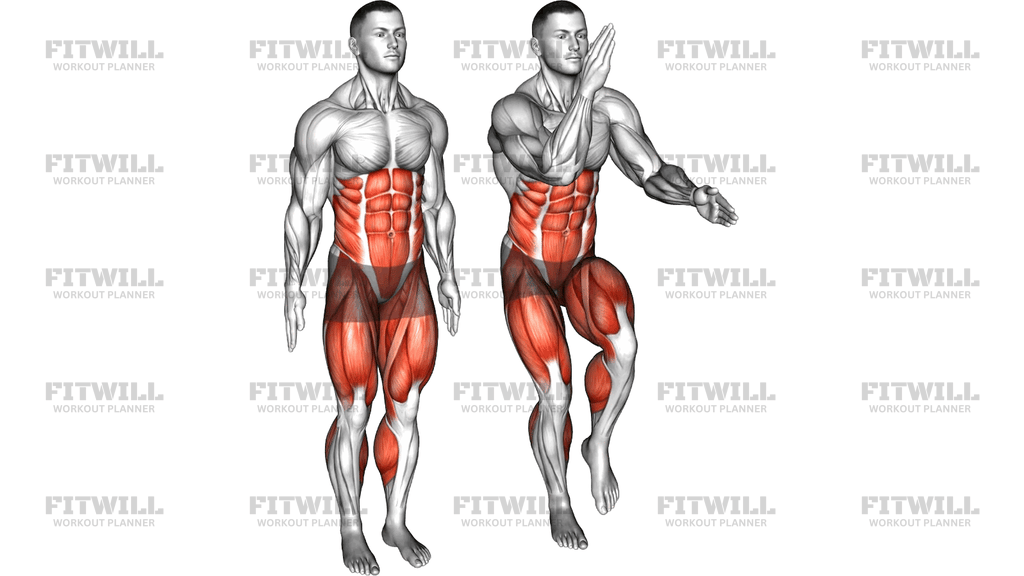
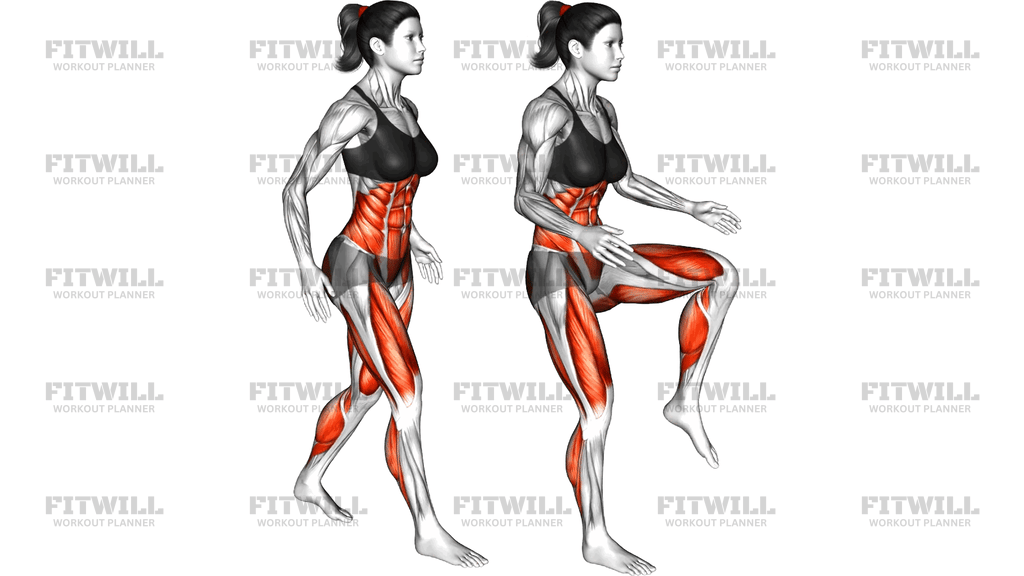
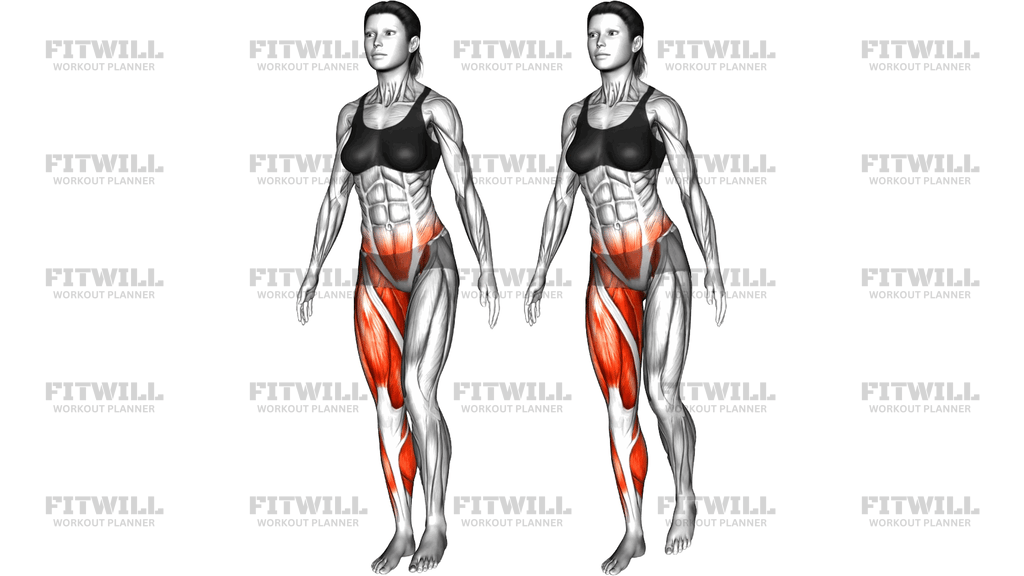
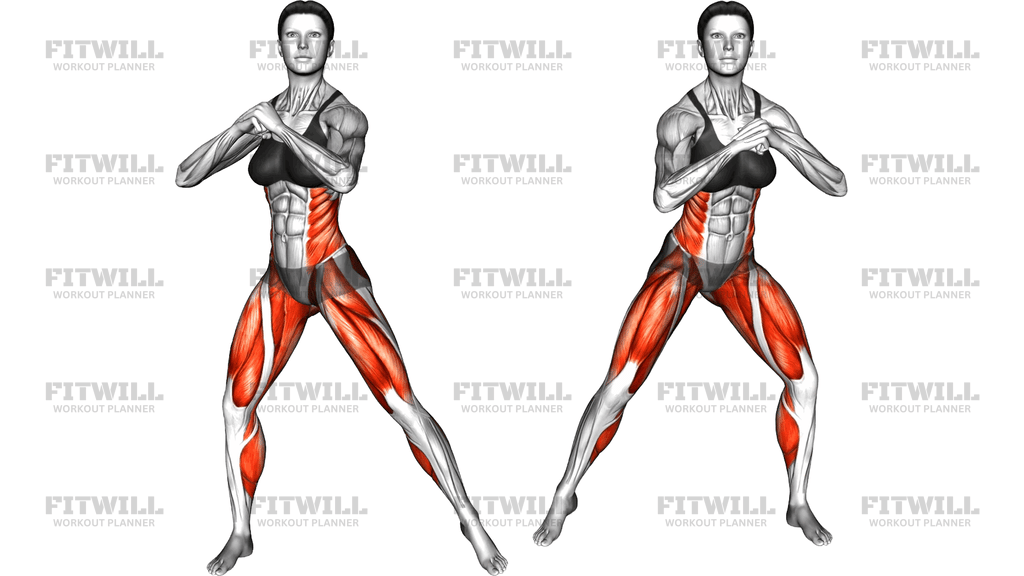
Standing Front Heel Tap
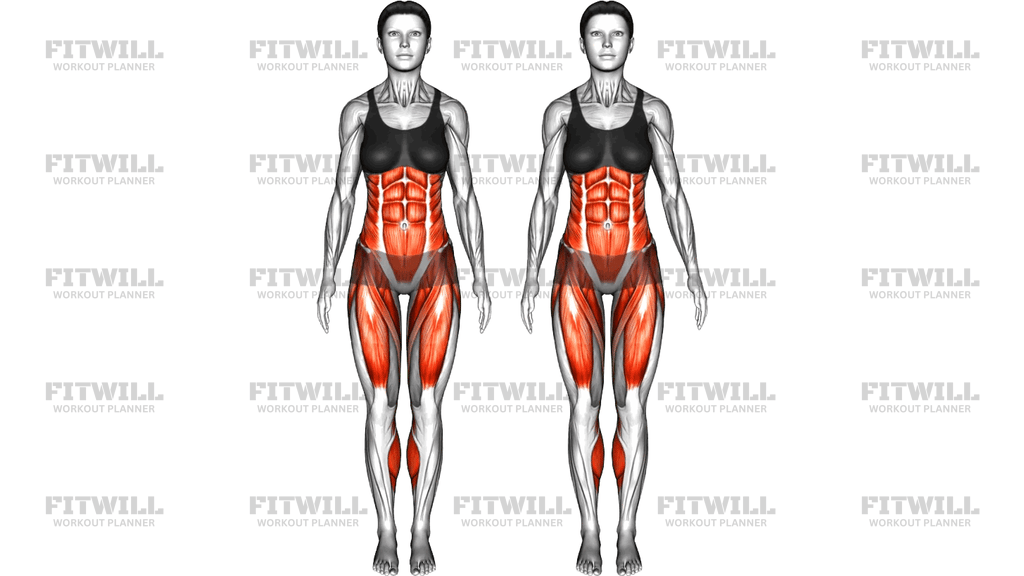
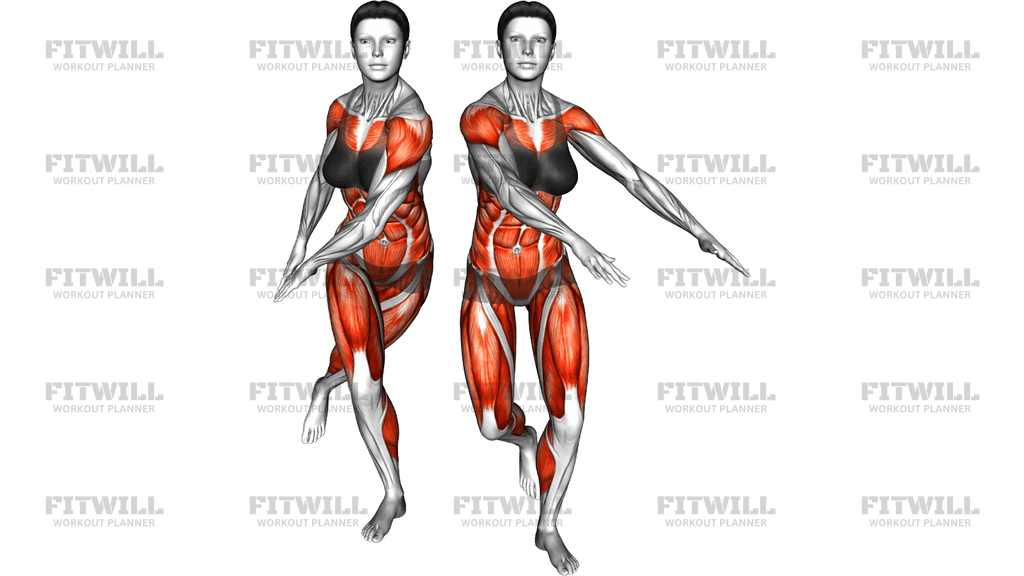
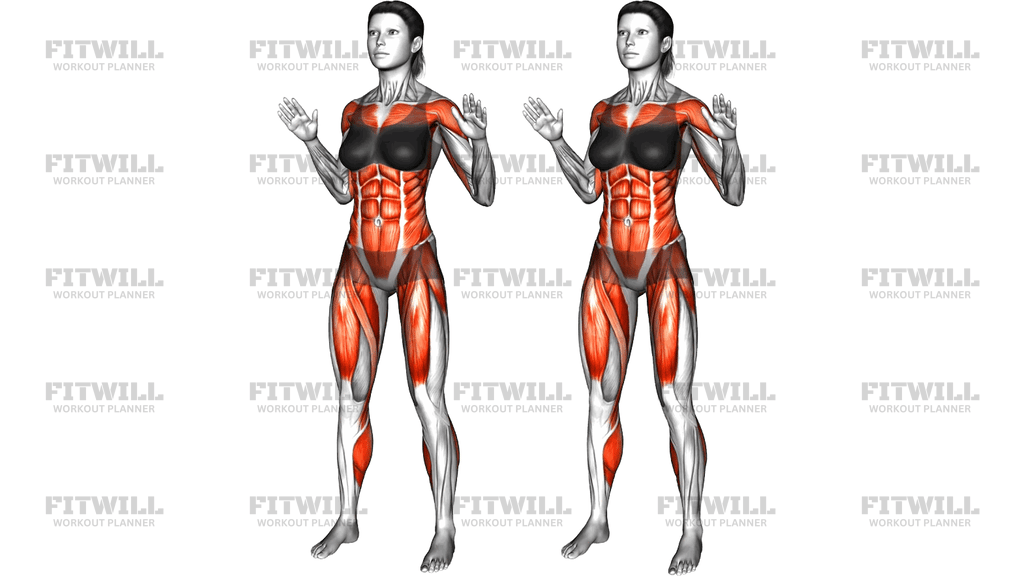
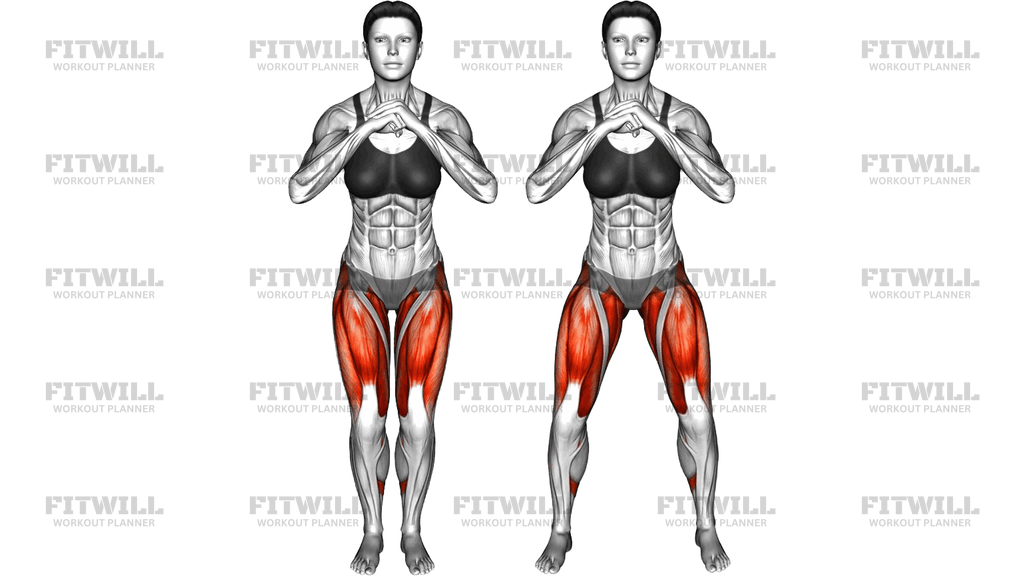
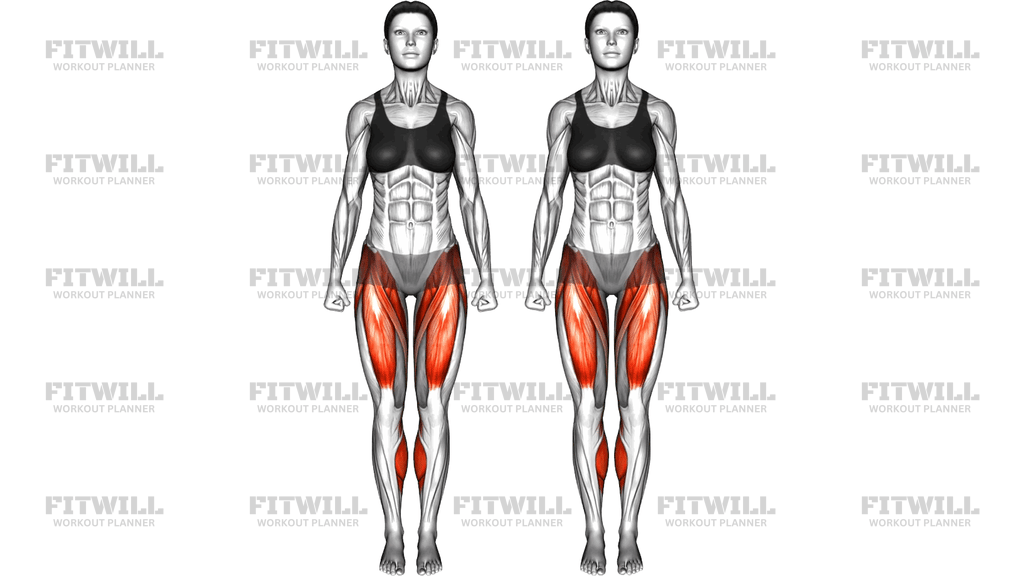
The Standing Front Heel Tap is a simple body weight drill performed from an upright stance, where you lift one foot and tap your heel on the floor a short distance in front of your body, then return it to standing before repeating on the other side. It looks almost too easy, but that small forward reach forces the standing leg to support your full weight on one foot while the moving leg controls a deliberate swing and touch. The highlighted working areas are the quadriceps of the supporting leg and the calves, which stabilize every second you spend balanced.
This movement is a staple in warm-ups, balance progressions, and lower body rehabilitation settings precisely because the load is low but the demands are real. Beginners use it to build single-leg confidence before progressing to more demanding options like single-leg stands on unstable surfaces or step-ups. Older adults benefit from the fall-prevention quality of the drill, since tapping forward mimics the exact foot placement needed to catch yourself during daily walking. Athletes also use it as a low-fatigue activation exercise before running or lifting sessions.
The main muscles at work are the quadriceps on the standing leg, which lock the knee into a stable, extended position, and the calf complex, which makes constant small corrections at the ankle to keep you centered over your foot. The hip flexors of the moving leg lift and place the heel, while the glutes on the standing side brace the pelvis so your hips stay level. Your core contributes quietly the whole time to hold your torso tall and stop you from swaying.
Setup matters more than it seems. Because this is a single-leg exercise with no external support, where you place your weight and how tall you stand determine whether the tap is controlled or just a fast touch-and-grab for balance. Keep the weight firmly over the whole standing foot, especially the mid-foot and heel, and resist the urge to lean your torso backward as the heel reaches forward. The tap itself should be light, almost like testing thin ice, not a stamp.
To execute the Standing Front Heel Tap well, stand tall with feet hip-width apart, shift your weight onto one leg, and lift the opposite foot slightly off the floor. Extend that leg forward from the hip, reaching the heel toward the floor a comfortable stride length in front of you, keep the knee nearly straight, and gently touch the ground with the heel. Pause for a beat with the toe up, then draw the foot back to its starting spot beside the standing foot before switching sides. Breathe steadily throughout and let the standing leg, not your arms or torso, do the stabilizing.
A few practical points will keep the exercise productive. Use a wall, counter, or chair nearby for a fingertip touch only if your balance is genuinely shaky, but aim to wean off it. Keep the movement slow enough that you could stop at any point, because speed turns a balance drill into momentum practice. If the front tap length causes your standing knee to bend inward or your hips to tilt, shorten the reach until you can tap cleanly, then gradually extend the distance as your control improves.
Fitwill
Log Workouts, Track Progress & Build Strength.
Achieve more with Fitwill: explore over 9600 exercises with images and videos, access built-in and custom workouts, perfect for both gym and home sessions, and see real results.
Start your journey. Download today!




Instructions
- Stand upright with your feet about hip-width apart, arms relaxed at your sides, and your gaze fixed on a point straight ahead at eye level.
- Shift your body weight fully onto your right foot, pressing evenly through the heel and mid-foot so the knee is straight but not locked.
- Lift your left foot an inch or two off the floor, keeping the knee soft and the toes pointing forward.
- Brace your abdominal muscles lightly and keep your torso tall, as if a string were pulling the crown of your head toward the ceiling.
- Extend your left leg forward from the hip, reaching the heel toward the floor a comfortable stride length in front of you with the toe pulled up.
- Gently tap your left heel on the ground, letting only the back of the heel make light contact while the toes stay lifted.
- Hold the tap for one to two seconds, feeling the standing leg and calf work to keep you steady.
- Slowly draw the left foot back through the air and lower it to the floor beside the right foot without letting it crash down.
- Exhale as the heel reaches forward, inhale as you return, and keep the breathing rhythm smooth.
- Complete the desired number of taps on the left side, then switch your weight to the left foot and repeat on the right.
Tips & Tricks
- Keep your weight over the middle of the standing foot; rocking onto the toes or outer edge of the foot is the most common breakdown and a sign the reach is too long.
- Resist leaning your torso backward as the heel reaches forward. If you catch yourself arching back, shorten the tap distance until your shoulders stay stacked over your hips.
- Keep the tapping knee almost straight. A heavily bent knee turns the drill into a marching motion and removes the heel-tap character of the exercise.
- Make the tap light and quiet. A loud contact means you are dropping the foot instead of placing it, which cheats the moving leg of its control work.
- Do not rush the return. Lifting the foot back down under control trains the hip flexors far more than letting gravity pull it home.
- Watch your standing knee in a mirror: it should track over the middle of your foot, not cave inward. Squeeze the glute on the standing side if it drifts.
- Keep your arms relaxed or hold them out slightly to the sides for balance rather than swinging them, which introduces sideways momentum.
- If you wobble at first, stand near a wall and touch it with fingertips only for support, keeping the weight out of that arm.
- Progress by lengthening the pause at the tap, increasing the reach, or closing your eyes once you can complete all reps without stepping out of position.
Frequently Asked Questions
Which muscles does the Standing Front Heel Tap work?
The quadriceps and calves of the standing leg do most of the stabilizing work, while the hip flexors lift and place the moving leg. The glutes and core support balance and keep the pelvis level.
Is the Standing Front Heel Tap good for beginners?
Yes, it is one of the gentlest single-leg balance drills available. Beginners can shorten the tap distance or stand near a wall for light support until control improves.
How far in front of me should my heel tap?
Start with a reach of roughly half a normal walking stride so you can tap without shifting your weight forward or bending the standing knee. Extend the distance gradually as your balance improves.
Why do my calves burn during this exercise?
The calf complex makes continuous small corrections at the ankle to keep you centered over one foot. Sustained single-leg stance loads the calves even though the foot never leaves the ground on that side.
Should my standing knee stay straight?
Keep it straight but not rigidly locked. A soft, extended knee lets the quadriceps hold you steady, while a deeply bent knee changes the exercise into a different movement pattern.
Can I use the Standing Front Heel Tap as a warm-up?
Absolutely. It is a low-fatigue way to wake up the legs, ankles, and balance systems before running, lifting, or any single-leg training.
What is the most common mistake with this exercise?
Letting the body lean back and the weight shift onto the toes as the heel reaches forward. Fix it by keeping your shoulders over your hips and shortening the tap distance until you stay centered.
What can I substitute if I need an easier version?
Try tapping the toe instead of the heel, shortening the reach, or performing the drill while lightly touching a wall or chair. These all reduce the balance demand while keeping the same pattern.
How many reps should I do?
Start with 8 to 12 controlled taps per leg for one to three rounds. Slow, precise reps matter far more than total volume with a balance-focused drill like this.
Is the Standing Front Heel Tap safe for people with knee issues?
The load on the knee is light because there is no external weight and the joint stays nearly straight. Still, if a knee injury is present, get clearance from a qualified professional and keep the tap distance short and pain-free.