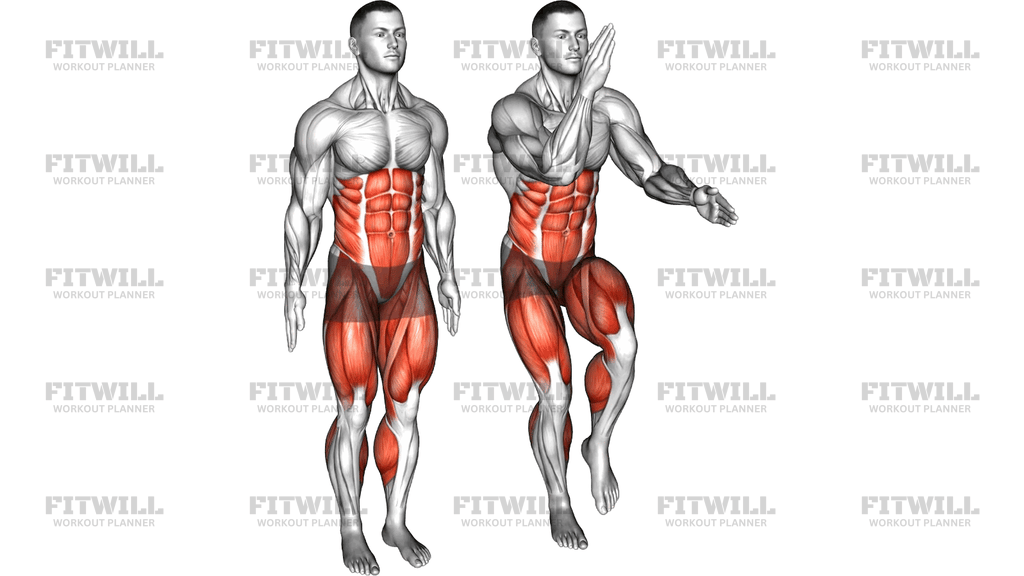
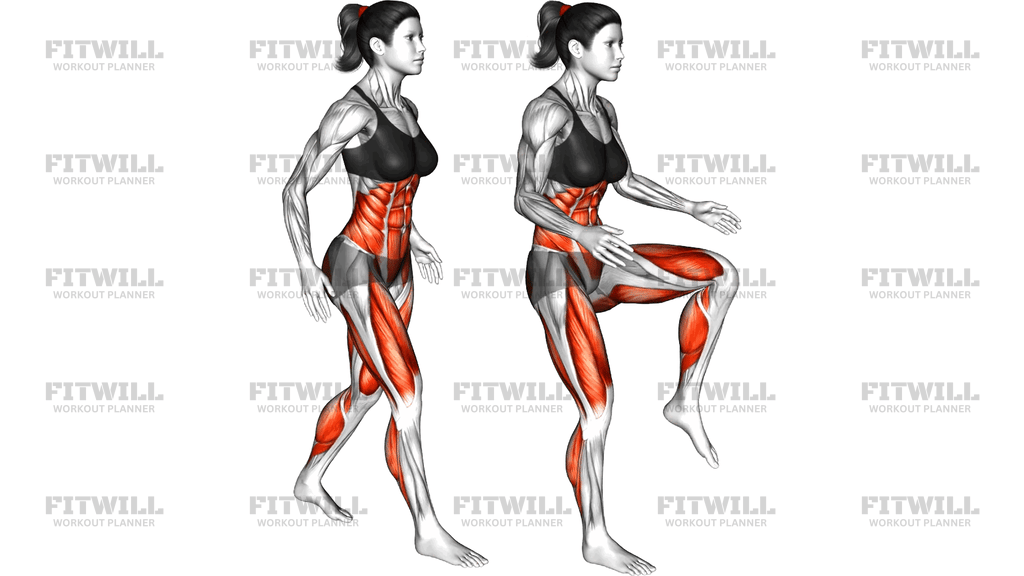
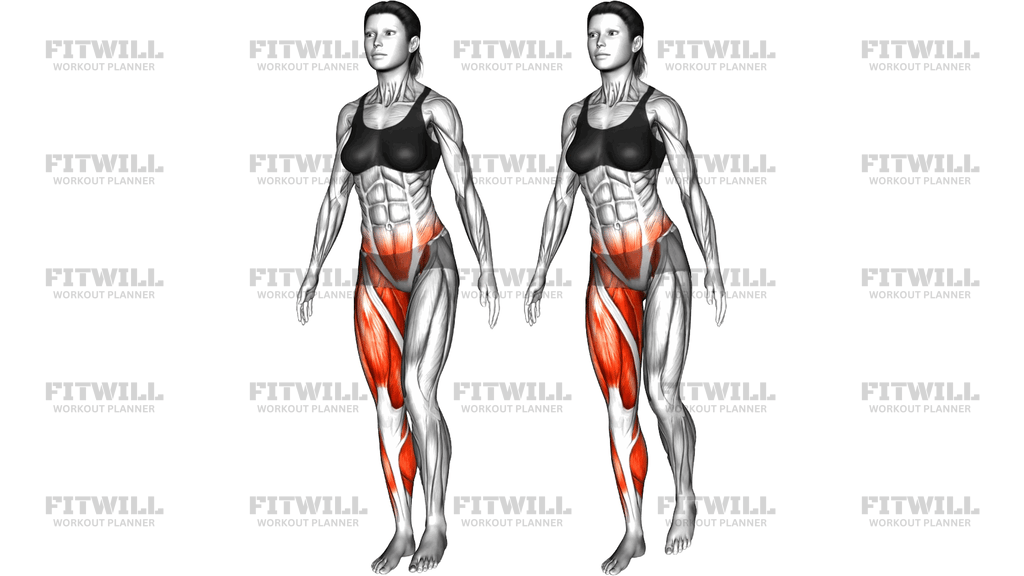
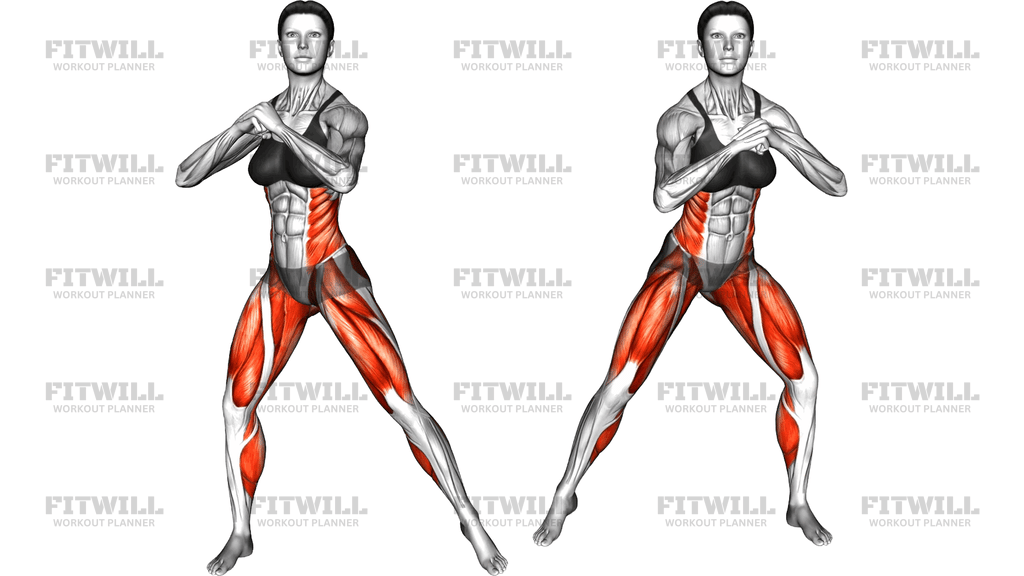
Standing Stepback
The Standing Stepback is a simple body weight movement where you stand tall, take one leg back into a controlled rear step, and return it to the starting position, either repeating on the same side or alternating. It looks almost too easy, but because you perform it from a narrow standing stance with one foot leaving the floor entirely, it challenges your balance, hip control, and single-leg strength at the same time.
This movement is especially useful for beginners, people returning from time off training, older adults working on stability, and anyone using it as a warm-up before squats or lunges. Because the rear foot only lightly touches down rather than loading into a deep lunge, the demand on the knees stays modest while the thighs, hips, and stabilizing muscles still get genuine work.
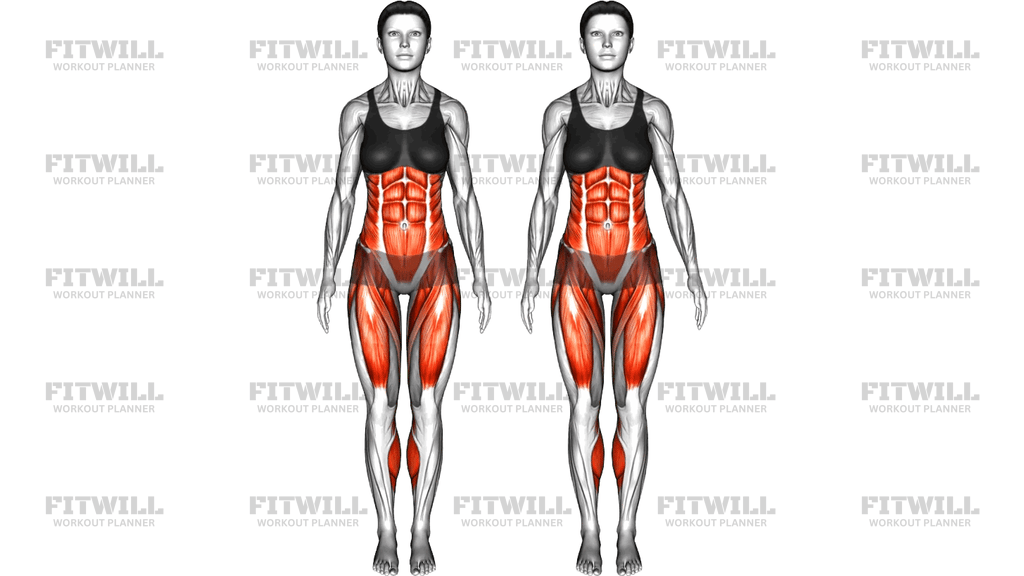
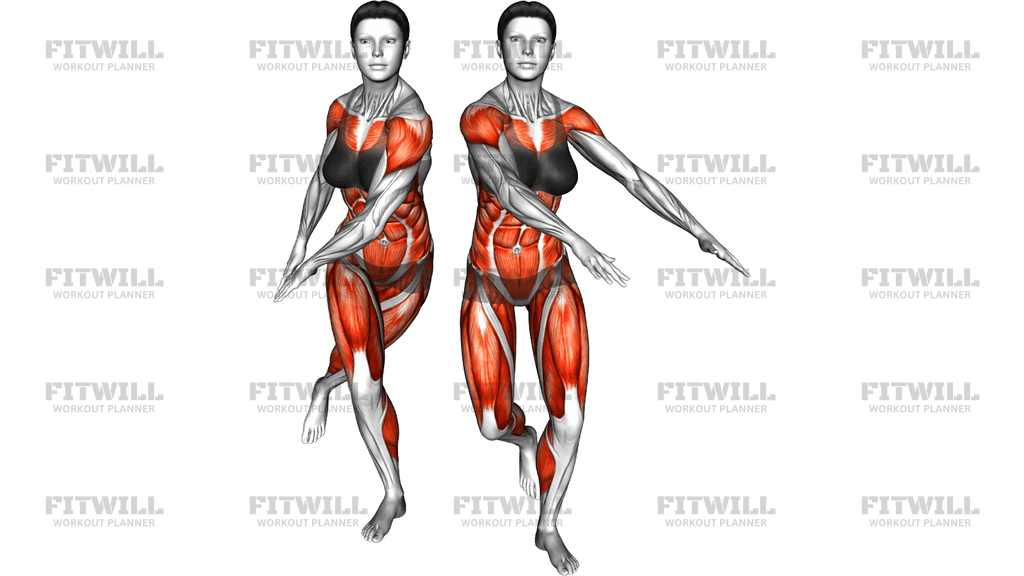
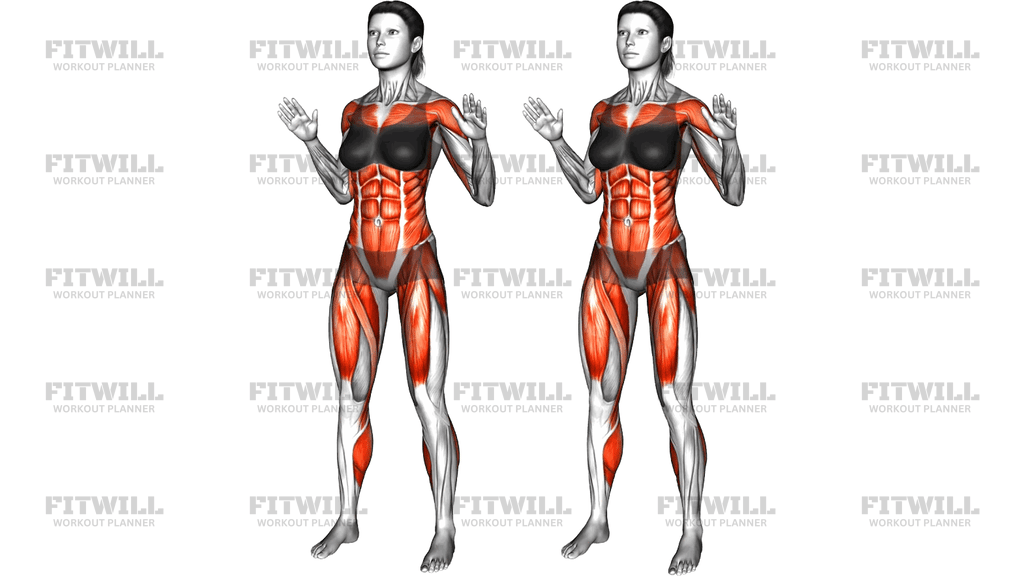
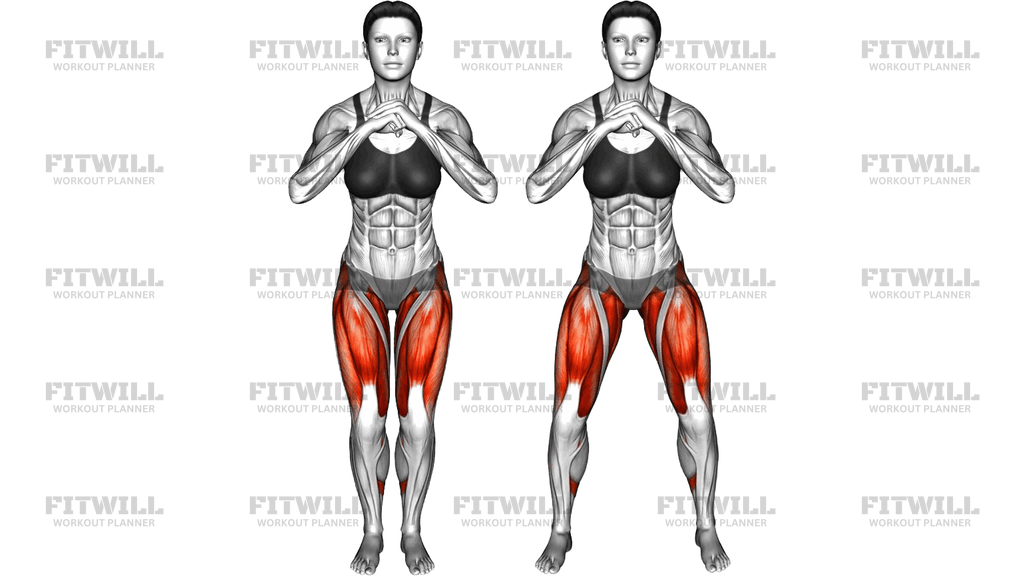
The main muscles working are the quadriceps of the standing leg, which control your torso height as you step back and press you back up. The glutes and hamstrings of the stepping leg help absorb the reach behind you and pull the foot forward again. Your calves and ankle stabilizers work constantly to keep you centered over the support foot, and the core stays engaged to hold your ribcage and pelvis steady.
Setup matters more than it appears. Hands rest lightly on the hips, as shown, which gives you a physical reference point: if your hands drift or your torso starts tilting, you feel it immediately. Keep the torso upright, eyes forward, and feet hip-width apart before you begin. A tall spine and level hips are what separate a clean stepback from a wobbly stumble.
To execute it well, shift your weight fully onto one leg before the other foot moves. Step the free leg straight back, touching the ball of the foot down behind you with a soft knee, then push through the standing heel to bring the foot forward again. Move slowly enough that you never have to catch yourself; the control is the point, not the speed.
Common use cases include balance circuits, low-impact leg warm-ups, active recovery days, and early-stage lower body programs where lunges are still too demanding. If you want more challenge, slow the tempo, pause with the foot hovering just above the floor, or hold a light weight at your chest once the balance portion feels effortless.
Fitwill
Log Workouts, Track Progress & Build Strength.
Achieve more with Fitwill: explore over 9600 exercises with images and videos, access built-in and custom workouts, perfect for both gym and home sessions, and see real results.
Start your journey. Download today!




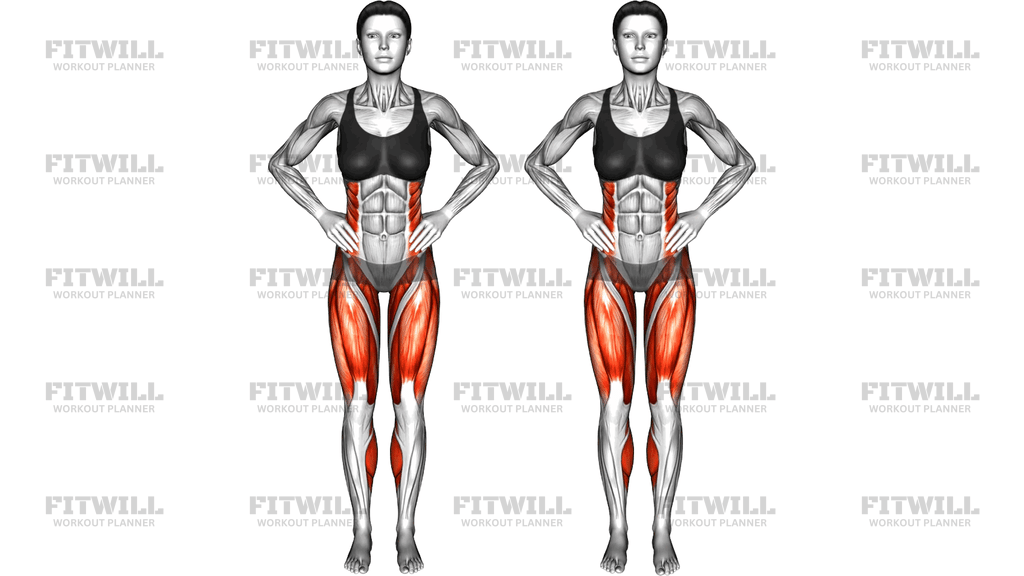
Instructions
- Stand tall with your feet hip-width apart and place your hands lightly on your hips, elbows pointing out to the sides.
- Brace your abs lightly, lift your chest, and fix your gaze on a spot straight ahead at eye level.
- Shift your weight completely onto one leg so the opposite foot is free to move.
- Step the free leg straight back, reaching the ball of the foot toward the floor behind you.
- Lower until the rear toes lightly touch down with a soft knee, keeping your torso upright and hips level.
- Press through the heel of the standing leg to lift the rear foot and step it forward again.
- Bring the foot back to the hip-width stance and pause until you feel fully balanced.
- Exhale as you step back and forward, breathing steadily without holding your breath.
- Repeat on the same leg or alternate sides, completing all reps with slow, controlled tempo.
Tips & Tricks
- The most common mistake is rushing the step, which turns the exercise into a balance scramble. Take two to three seconds to reach the foot back.
- If your torso leans forward as you step back, imagine standing against a wall with your shoulder blades touching it and keep that upright chest position.
- Watch that the hips do not swing sideways toward the standing leg. Your hands on your hips will let you feel any tilt right away.
- Touch the floor with the ball of the rear foot, not a flat heavy stomp. A light toe contact keeps the load on the standing leg.
- Keep the soft bend in the standing knee rather than locking it out; a locked knee makes balancing harder and stresses the joint.
- If you wobble, widen your step-back slightly diagonally rather than straight behind you. A slightly wider base is more stable.
- Progress by pausing with the rear foot hovering an inch off the floor for two seconds before returning it, instead of letting it rest.
- Do this barefoot or in flat shoes; thick cushioned running shoes make the ankle work harder to find balance.
- Start with a shorter step-back range and gradually lengthen it as your control improves.
Frequently Asked Questions
What muscles does the Standing Stepback work?
The quadriceps of the standing leg do most of the work as you lower and lift your torso, supported by the glutes and hamstrings. The calves and core work continuously to keep you balanced on one leg.
Is the Standing Stepback good for beginners?
Yes, it is one of the best first steps toward lunges. Because the rear foot only lightly touches down instead of bearing a deep loaded position, it builds single-leg balance and strength with very low knee stress.
How is the Standing Stepback different from a reverse lunge?
In a reverse lunge both knees bend deeply and the rear leg carries part of your weight. In the Standing Stepback the torso stays tall, the rear foot just taps down, and the standing leg handles nearly all the work.
Why do I put my hands on my hips for this exercise?
Hands on the hips give you instant feedback. If your torso tilts or your hips sway, you feel it through your hands, which helps you correct balance errors before they turn into stumbles.
Should I alternate legs or do all reps on one side?
Both work. Alternating keeps you balanced in terms of fatigue, while doing all reps on one side first makes it easier to notice and fix side-to-side differences in stability.
How many reps should I do?
Start with 8 to 12 controlled steps per leg. Since the emphasis is on control and balance rather than load, focus on quality of each step before adding volume.
I lose my balance halfway through each rep. What should I change?
Slow down and shorten the step-back range first. Also check that your weight is fully shifted onto the standing leg before the other foot lifts; trying to step back while still centered between both feet is a common cause of wobbling.
Can I hold weights while doing the Standing Stepback?
Yes, once your balance is solid, holding a light dumbbell at your chest adds load to the standing leg. Keep the torso upright and avoid letting the weight pull you forward.
Is the Standing Stepback safe for my knees?
It is generally knee-friendly because the range is shallow and the rear foot is not heavily loaded. Keep the standing knee softly bent rather than locked, and step back only as far as you can control without the knee twisting inward.
What can I use instead if I need an easier version?
Stand next to a wall or the back of a chair with one fingertip for support, or simply tap the rear toe down closer to your standing foot. Both reduce the balance demand while keeping the same movement pattern.