Hands Up Butt Kick
The Hands Up Butt Kick is a dynamic, bodyweight drill where you jog in place while kicking your heels up toward your glutes, all with both arms held straight overhead. Unlike a standard butt kick where the arms swing naturally at your sides, keeping the hands raised changes the entire demand of the movement: your shoulders, midline, and trunk stabilizers have to work overtime to hold you tall while your legs cycle quickly underneath you. The result is a deceptively simple drill that doubles as a warm-up and a light conditioning exercise.
This movement is especially useful as part of a general warm-up before running, lifting, or sport sessions. The heel-to-glute kick actively lengthens and warms the quadriceps through range of motion, while the rapid foot contacts prepare the calves, ankles, and hips for more intense work. Because the arms stay overhead, it also opens up the shoulder line and trains the core to resist the urge to lean back as fatigue sets in.
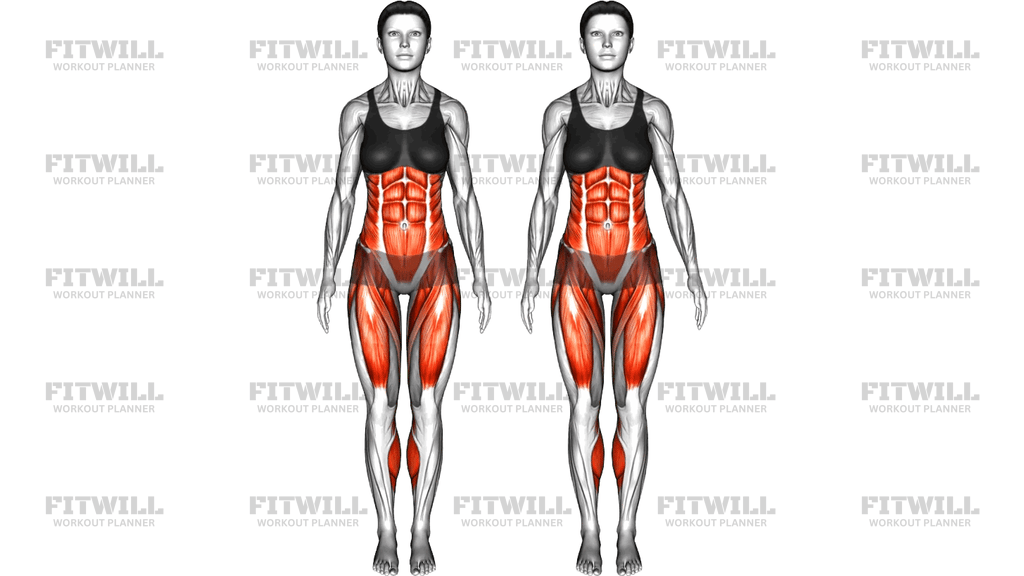
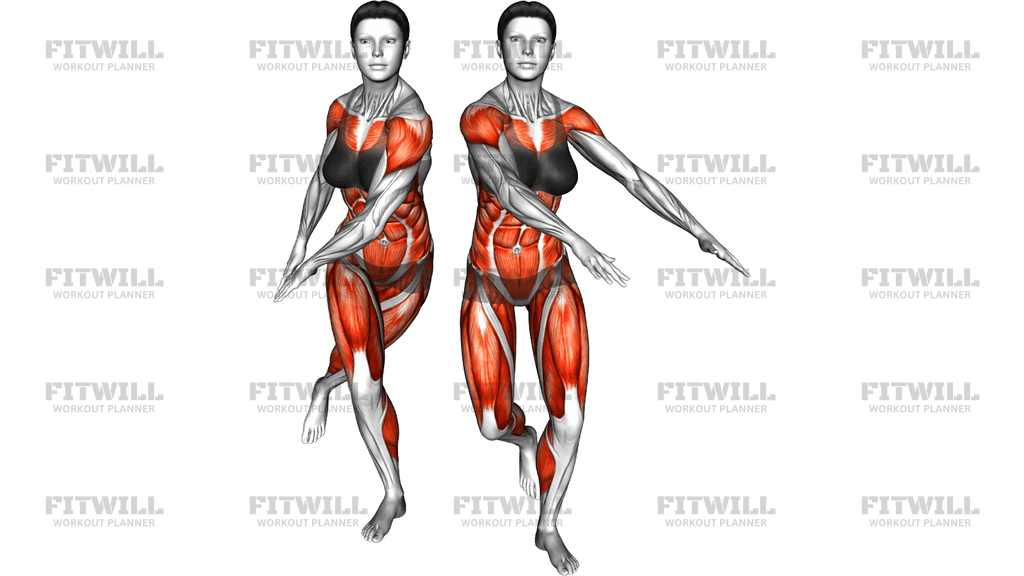
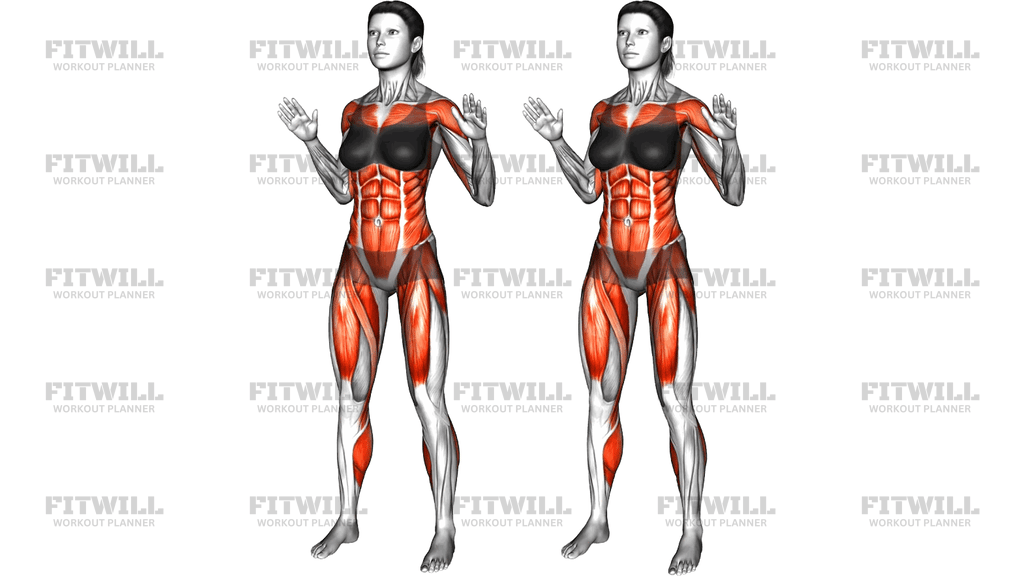
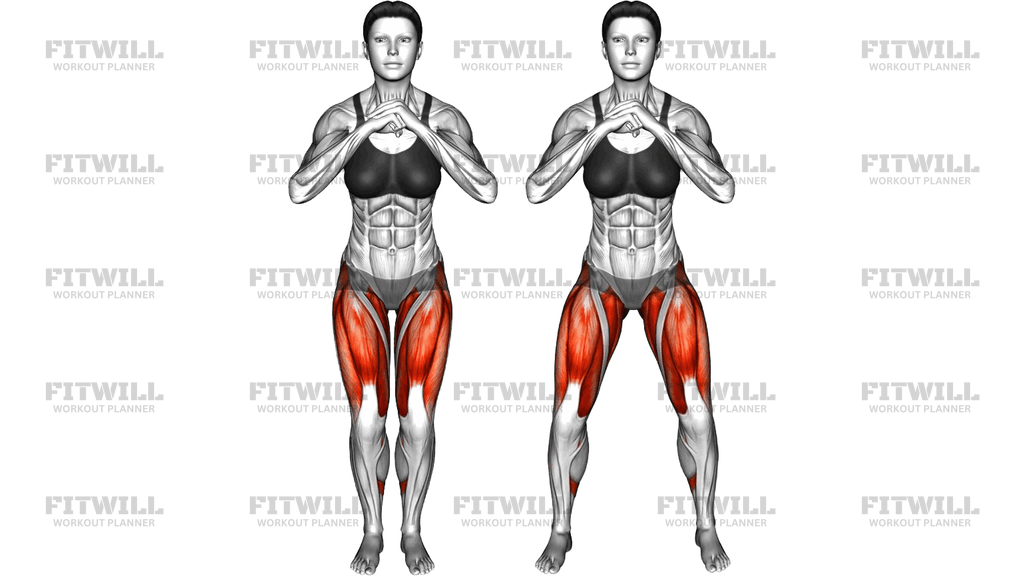
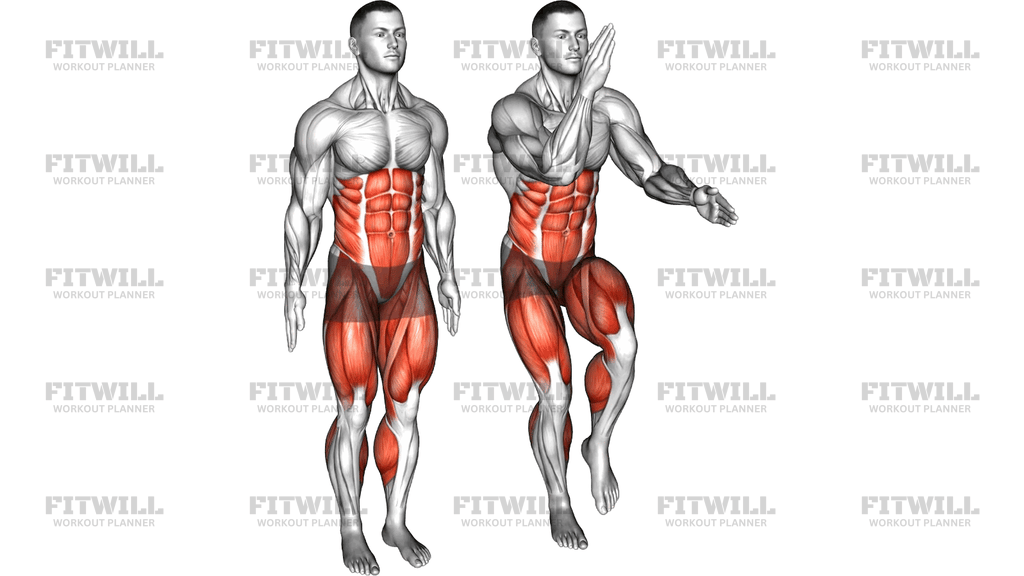
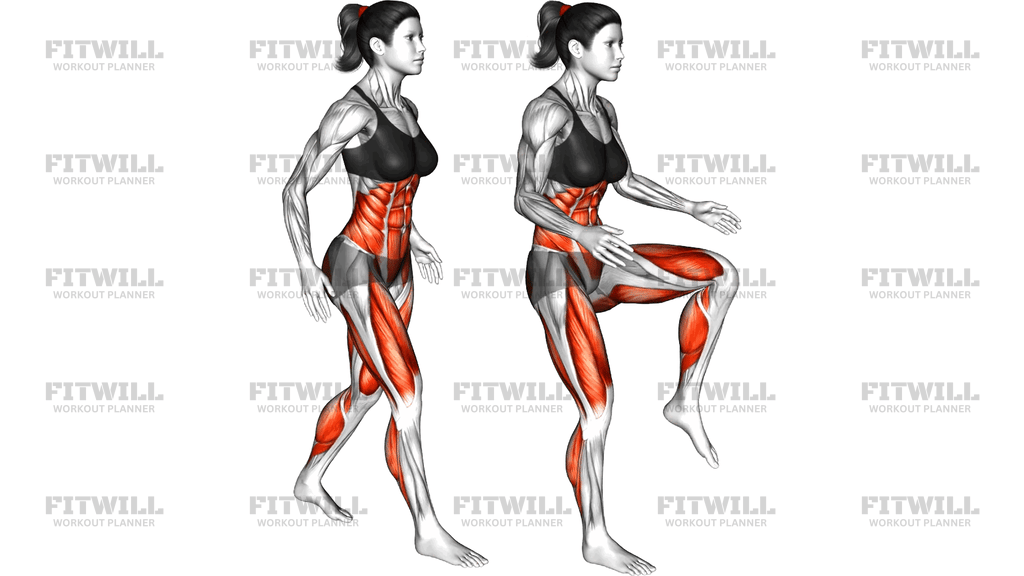
Muscularly, the quads and hip flexors drive each kick, the hamstrings and glutes control the leg as it returns to the floor, and the calves handle the quick, springy foot contacts. Holding the arms up keeps tension on the shoulders and deep core, which is why many people feel this drill in their midsection even though it looks like a leg exercise. Emphasis stays on coordination and rhythm rather than maximal muscle contraction.
Setup matters more than it might seem. Stand tall with feet about hip-width apart, arms fully extended overhead with fingers spread, and ribs stacked over the pelvis. A common error is letting the lower back arch and the belly push forward once the arms go up; brace the trunk lightly and keep the pelvis neutral from the first rep to the last. If you cannot keep the arms straight overhead without arching, widen the hands slightly or lower them a few inches rather than compromising your spine position.
To execute well, stay on the balls of your feet and kick one heel up toward your glute, then switch legs in a fast, alternating rhythm, much like jogging in place. Keep the knees roughly under the hips rather than driving them forward, and aim for quick, light contacts instead of heavy stomping. The drill is typically performed for time — anywhere from 15 to 45 seconds per set — or incorporated into a dynamic warm-up circuit.
Use the Hands Up Butt Kick when you need an efficient full-body raise in core temperature, a quad-focused dynamic stretch, or a low-skill cardio interval between strength exercises. Because it requires no equipment and very little space, it travels well: hotel rooms, small home gyms, and field-side warm-ups all work. Keep the pace honest but controlled — this drill rewards crisp rhythm, not frantic flailing.
[ Workout Log & Planner ]
Put your next workout in Fitwill
Keep your plan and training log ready when you are.


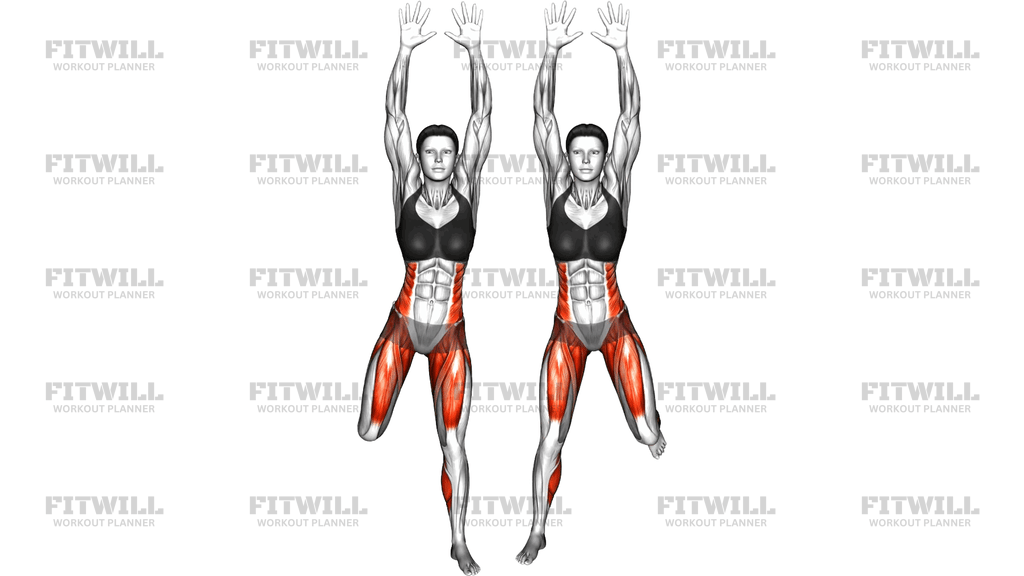
Instructions
- Stand with your feet hip-width apart, weight distributed over the balls of both feet, and your arms extended straight overhead with fingers spread wide.
- Draw your shoulders down away from your ears, brace your trunk lightly, and stack your ribs over your pelvis so your lower back stays neutral.
- Shift your weight onto the ball of one foot and kick that heel up behind you toward your glute, keeping the knee pointing down toward the floor rather than forward.
- As soon as that foot returns to the floor, kick the opposite heel up, establishing a fast alternating rhythm like jogging in place.
- Keep both arms locked out overhead for the entire set; resist letting them drift forward, out to the sides, or down as you tire.
- Stay tall through the trunk — if you feel yourself leaning back or arching, tighten the brace and shorten the kick slightly.
- Land softly and quietly on the balls of your feet with each contact, keeping the contacts springy rather than heavy.
- Breathe steadily throughout, inhaling and exhaling in a consistent rhythm rather than holding your breath.
- Continue for your target time, typically 15 to 45 seconds, then stop, lower the arms slowly, and shake out the shoulders and legs before the next set.
Tips & Tricks
- If your lower back starts to arch when the arms go overhead, slightly reduce the height of the kick before you reduce the speed — the arch usually comes from losing trunk tension, not from the legs.
- Aim the heel at your glute, not at the ceiling behind you; over-kicking with a straightened knee turns the drill into a sloppy leg swing and stresses the knee.
- Keep the knee of the kicking leg under or slightly behind the hip. If the knee drifts forward, the drill becomes a front-knee slam instead of a quad warm-up.
- Quiet feet are a quality signal. If your contacts are loud, you are stomping — think 'hot floor' and pick the feet up faster with less force.
- Spread the fingers and press the palms up actively. This small cue keeps the shoulders engaged and prevents the arms from wobbling as the legs speed up.
- If your shoulders fatigue before your legs, that is normal at first — lower the arms to a 'goalpost' bent-arm position for a few reps rather than dropping them completely.
- Progress by extending the work interval (from 15 up to 45 seconds) or by increasing kick speed, not by adding height or leaning back for range.
- On a hard floor, a thin mat or good training shoes make the repeated foot contacts friendlier to the calves and ankles during longer sets.
- Use this drill early in a warm-up when you are fresh; doing it after heavy leg work tends to turn the crisp rhythm into shuffling.
Frequently Asked Questions
What muscles does the Hands Up Butt Kick work?
The quads and hip flexors drive each kick, while the hamstrings and glutes control the leg on the way down and the calves handle the quick foot contacts. Holding the arms overhead keeps continuous tension on the shoulders and forces the core to stabilize the trunk.
Why do my arms have to stay overhead the whole time?
The raised arms are what separate this drill from a regular butt kick. They add a balance and trunk-stabilization demand, keep the shoulder and upper back engaged, and make it much harder to lean back or slouch as you fatigue.
Is the Hands Up Butt Kick suitable for beginners?
Yes. The pattern is simple and requires no equipment, so beginners can start with slow, controlled kicks for 15 seconds. If the overhead arm position is uncomfortable, keep the hands slightly lower or wider until shoulder mobility improves.
Should I kick my heel all the way to my glute?
Aim for the glute, but do not force it. A slightly shorter kick performed with a tall trunk and quick rhythm is more effective than a maximal kick that makes you arch your lower back or swing your knee forward.
How long should I perform each set?
Fifteen to forty-five seconds per set works well for warm-ups and conditioning intervals. Stop the set when your rhythm gets sloppy — quality of the kick and foot contacts matters more than squeezing out extra seconds.
What is the most common mistake with this drill?
Leaning the torso back and arching the lower back as the arms stay overhead. Fix it by bracing the trunk, stacking the ribs over the pelvis, and slightly reducing kick height until you can stay tall.
Can I use the Hands Up Butt Kick as a warm-up before running or lifting?
Absolutely. It raises your heart rate, dynamically lengthens the quads, and primes the calves and ankles for impact, which makes it a good early drill in a running or lower-body warm-up.
What can I substitute if the overhead position bothers my shoulders?
Keep the same alternating heel-to-glute kick but hold the arms in a bent 'goalpost' position or hands behind the head. You lose some trunk and shoulder demand but keep the leg pattern intact.
Is it safe for my knees?
When performed with the knee pointing down and the heel drawn back toward the glute, the drill is gentle on the knees. Avoid driving the knee forward or snapping the leg straight behind you, and keep the foot contacts light.
How is this different from a regular butt kick run?
In a regular butt kick the arms swing freely at your sides, but in the Hands Up Butt Kick they stay locked overhead, which shifts part of the work to the shoulders, upper back, and core and makes balance noticeably harder.