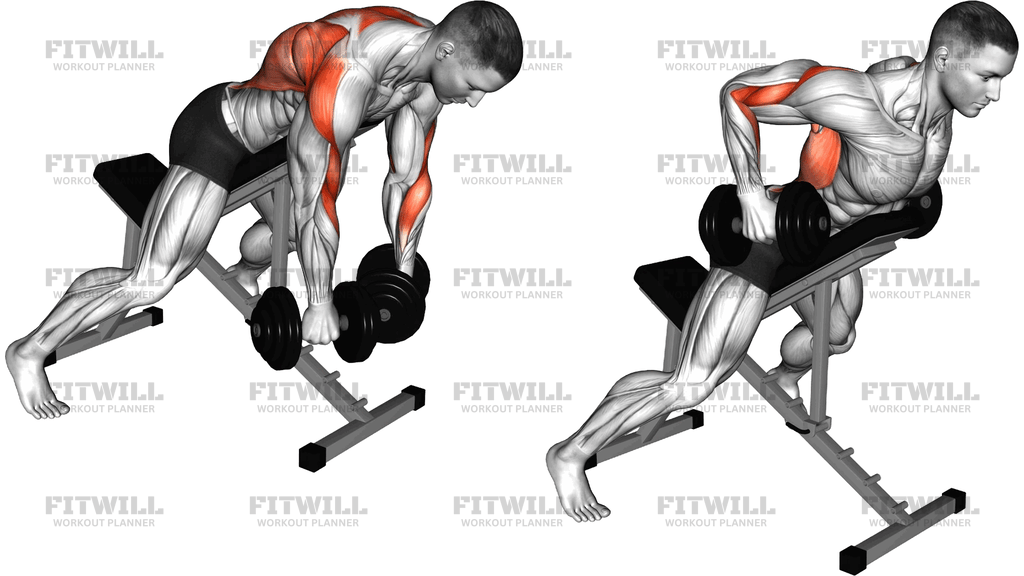
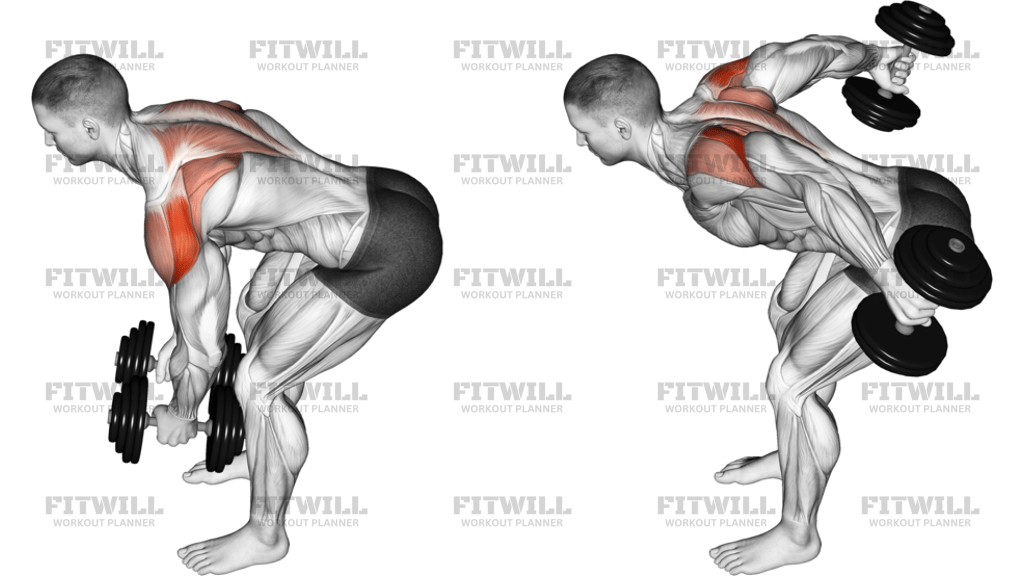
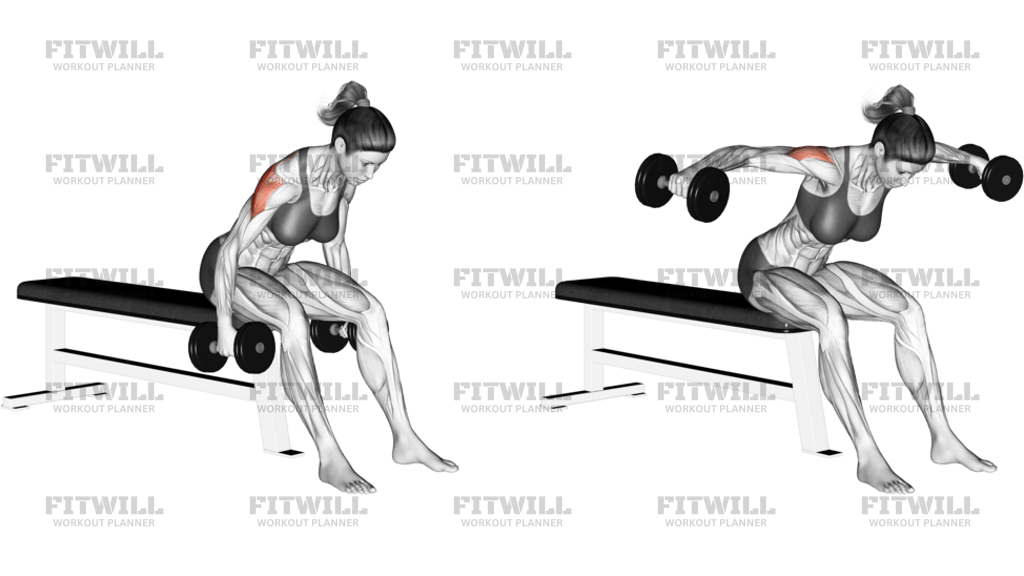
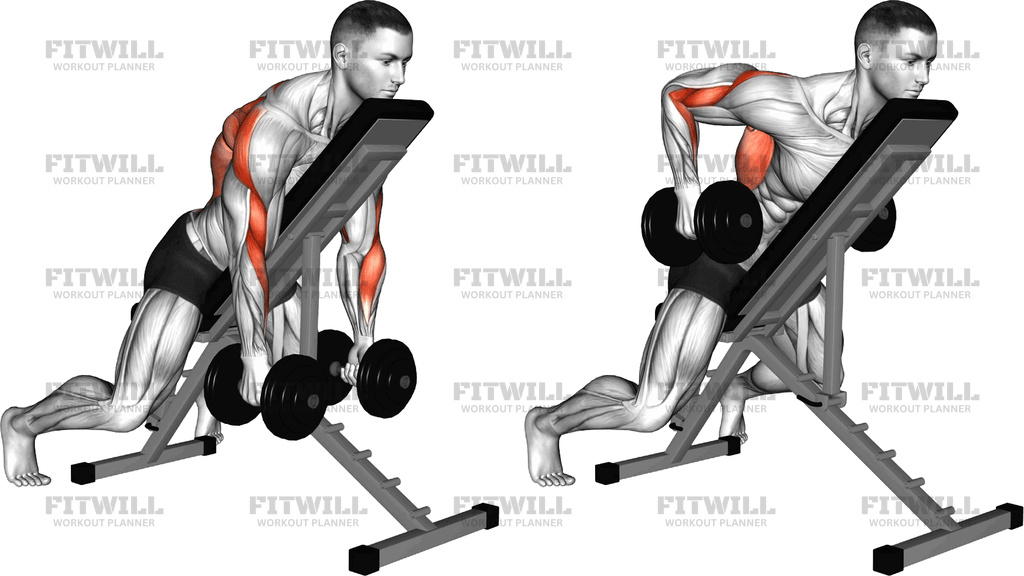
Dumbbell Bent Over Wide Row
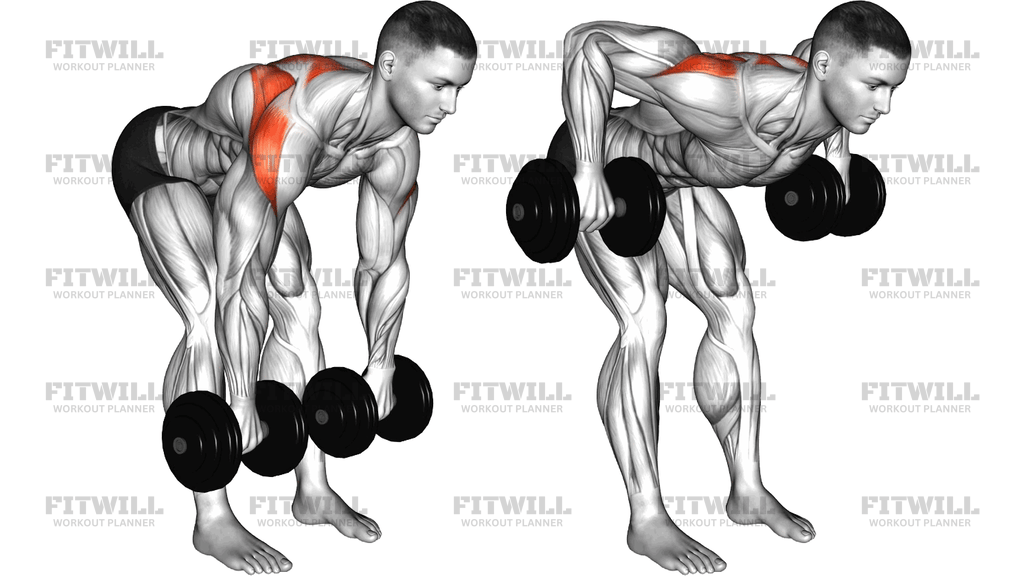
The Dumbbell Bent Over Wide Row is a free-weight rowing variation performed standing, hinged forward at the hips with a dumbbell in each hand, pulling the weights up and out to the sides with the elbows flared wide. Unlike a close-grip bent over row that tucks the elbows toward the ribs, this version deliberately opens the elbow angle so the dumbbells travel toward the upper abdomen and lower chest on a wide arc. That path shifts emphasis toward the rhomboids, mid traps, and rear shoulders, making it one of the most direct ways to train the entire upper back with nothing but a pair of dumbbells.
This movement suits lifters who want to build back thickness, improve shoulder blade control, or balance out pressing work. If your bench press and overhead press volume is high, your rear delts and scapular retractors are usually the weak link, and wide rows attack exactly those areas. It is also a practical choice for home training, since it requires no bench, rack, or anchor point.
The setup matters more here than in most rows because the wide elbow position reduces the lats' contribution and places more demand on the structures holding your torso in place. A solid hip hinge with soft knees, a braced trunk, and a flat back lets the pulling muscles do their job. Let the torso drift up into a shallow incline and the movement turns into an upright row; round the lower back and you lose both safety and power.
To execute it well, hinge until your torso is angled somewhere between parallel and roughly 30 degrees above the floor, arms hanging straight down with palms facing back or slightly in. Pull the dumbbells up and out so the elbows point toward the ceiling at the top, hands finishing near the lower ribcage to mid-torso level. Squeeze the shoulder blades together briefly, then lower under control until the arms are fully extended again.
Common use cases include upper-body or back-focused sessions, accessory work after heavier barbell rows or deadlifts, and higher-rep finishers to pump the rear shoulders and mid back. Because both arms work simultaneously, it also exposes side-to-side strength differences less than single-arm rows, but it requires enough stability to hold a bent-over position under load for the whole set.
For safety, keep the load moderate and the hinge honest. The wide row is easy to overload with body english, and a heavy dumbbell pair combined with a fatigued lower back is where form breaks down. Stop the set when you cannot maintain a neutral spine or your torso starts bouncing with each rep.
[ Workout Log & Planner ]
Put your next workout in Fitwill
Keep your plan and training log ready when you are.


Instructions
- Stand with feet about hip-width apart, holding a dumbbell in each hand with a neutral grip, palms facing your body.
- Hinge forward at the hips, pushing your hips back and letting your knees bend slightly, until your torso is angled between roughly 45 degrees and parallel with the floor.
- Let both arms hang straight down from your shoulders so the dumbbells hang below you, then pull your shoulders back and down to set the upper back.
- Brace your core as if bracing for a light punch, keeping the spine long and the neck in line with the torso rather than craning upward.
- Pull both dumbbells up and out to the sides in a wide arc, driving the elbows up and back until they point toward the ceiling and the hands reach roughly lower-chest to ribcage height.
- At the top, squeeze the shoulder blades together and hold for a brief beat without shrugging the dumbbells up toward the ears.
- Lower the dumbbells slowly back down along the same wide path until the arms are fully extended and you feel a stretch across the upper back.
- Exhale as you pull the weights up, inhale as you lower them, and keep the breathing rhythm steady throughout the set.
- Reset your brace between reps if the torso position slips, and rack the dumbbells by hinging or squatting them down rather than rounding over to set them on the floor.
Tips & Tricks
- A frequent mistake is turning this into a cheat upright row by letting the torso rise as each rep goes up; pin your hinge angle at the start and keep it there for the whole set.
- If you feel it mostly in your biceps, the elbows are probably bending first. Lead with the elbows driving back and out, and let the hands simply follow.
- Shrugging toward the ears at the top shifts work to the upper traps and away from the rhomboids; think about pulling the shoulder blades toward your back pockets instead.
- Keep the wrists straight and the dumbbells level. Tilting the plates up or down to grab extra height is a sign the weight is too heavy for the wide path.
- Elbows that drift back toward the ribs convert the set into a standard row. Check yourself by aiming the elbows toward the ceiling throughout the pull.
- Choose a dumbbell pair you could row for at least 10 clean reps before going wider and heavier; the flared position is weaker than a tucked-elbow row.
- If your lower back fatigues before your upper back, shorten the set, or use a chest-supported row on another day as a back-off option rather than grinding a compromised hinge.
- Grip the dumbbells toward the outer edge of the handle if your wrists want to collapse inward, which keeps the pull aligned through the forearm.
- Pause for one full second at the top of the final few reps of a set instead of adding load; the extended squeeze does more for the mid back than momentum does.
Frequently Asked Questions
What muscles does the Dumbbell Bent Over Wide Row work?
It primarily targets the rhomboids and mid traps of the upper back, with strong involvement from the rear shoulders because of the wide, flared elbow path. The lats, biceps, forearms, and lower back assist throughout.
How is the Dumbbell Bent Over Wide Row different from a regular bent over row?
A regular bent over row keeps the elbows close to the ribs, which biases the lats. The wide row flares the elbows out to the sides so the upper back and rear shoulders do most of the work.
How far forward should my torso be during this exercise?
Anywhere from about 45 degrees up to parallel with the floor works, as long as the angle stays constant. The more horizontal your torso, the more the pull verticalizes and the harder your lower back and hinges have to work.
Is the Dumbbell Bent Over Wide Row suitable for beginners?
Yes, but beginners should start with light dumbbells and prioritize the hip hinge position before worrying about load. Learning to hold a flat-back, braced bent-over position is the main skill, and the row itself is straightforward once that is set.
Why do my lower back and hamstrings fatigue during this movement?
Because you support your hinged torso against gravity for the entire set, the spinal erectors and hamstrings work isometrically. Some fatigue is normal, but if they fail before your upper back, reduce the weight or rest longer between sets.
What is the most common mistake in the Dumbbell Bent Over Wide Row?
Using momentum by rocking the torso up with each rep, which turns the wide row into a sloppy upright row. Fix it by lowering the weight slightly and controlling both the pull and the descent with the torso locked in place.
Can I do this exercise without a bench?
That is one of its main advantages. The Dumbbell Bent Over Wide Row is performed entirely standing, so no bench, rack, or anchor point is needed, only a pair of dumbbells and floor space.
What can I substitute if I cannot maintain the bent-over position?
A chest-supported row on an incline bench removes the lower back demand while still allowing a wide elbow path. Seated cable wide rows with a straight bar are another option that trains a similar pulling angle.
Where should the dumbbells finish at the top of each rep?
The hands should end around lower-chest to ribcage height with the elbows high and out to the sides. If the dumbbells rise much above that, the movement shifts toward the shoulders and upper traps and away from the mid back.
Is it safe for people with lower back sensitivity?
Anyone with a history of back issues should get clearance from a qualified professional first. In general, keep the load light, hold a strict neutral spine, and if the hinge position itself causes discomfort, switch to a chest-supported variation instead of pushing through it.