Dumbbell Prone Incline Flexion Row
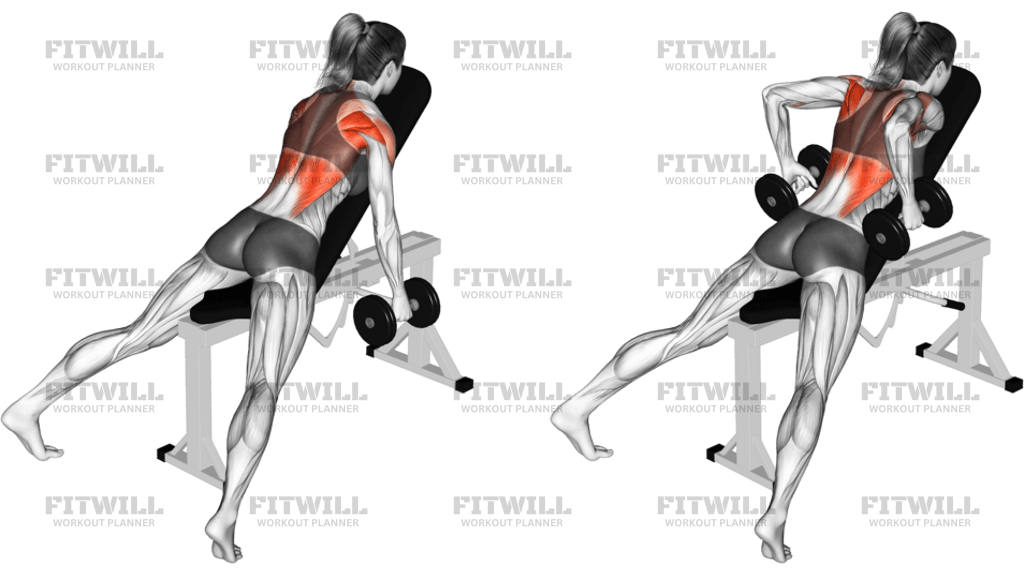
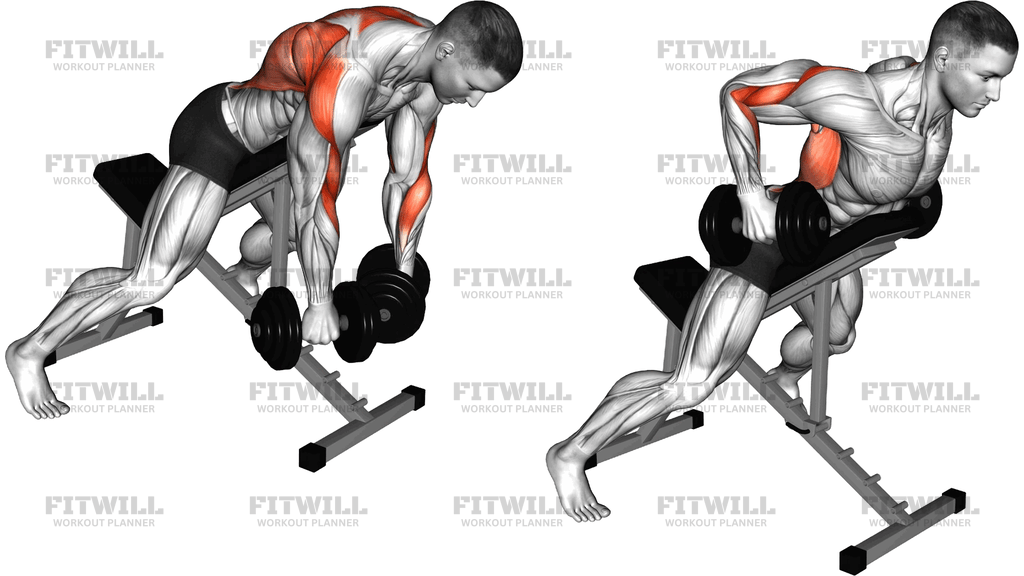
The Dumbbell Prone Incline Flexion Row is a chest-supported row performed lying face down on an incline bench with a dumbbell in each hand. Your chest and torso stay glued to the pad while the dumbbells hang beneath your shoulders, and from there you pull the weights up toward your lower ribs by driving your elbows back and squeezing your shoulder blades together. Because the bench absorbs the load that would normally hit your lower back and hips, everything your upper back does is isolated and measurable.
This setup is the main reason lifters choose it. In a bent-over row, the muscles between your shoulder blades often stop working before your lower back does — the torso starts rising, momentum takes over, and the row quietly becomes a hip hinge with some arm movement attached. Lying prone on the incline bench removes that problem entirely. Your torso is fixed, your spine is neutral and supported, and every rep must be earned by the rhomboids, mid traps, lats, and rear delts actually pulling the weight.
The exercise suits a wide range of lifters. Beginners benefit because the bench gives them feedback — if their chest lifts or their shoulders slump into the pad, they know the weight is too heavy. Intermediate and advanced lifters use it as a heavy accessory after deadlifts or barbell rows, or as a high-volume back builder where they want lat and upper-back work without stacking more fatigue on the lower back. It is also a common pick for anyone returning from lower-back issues who still needs a rowing stimulus.
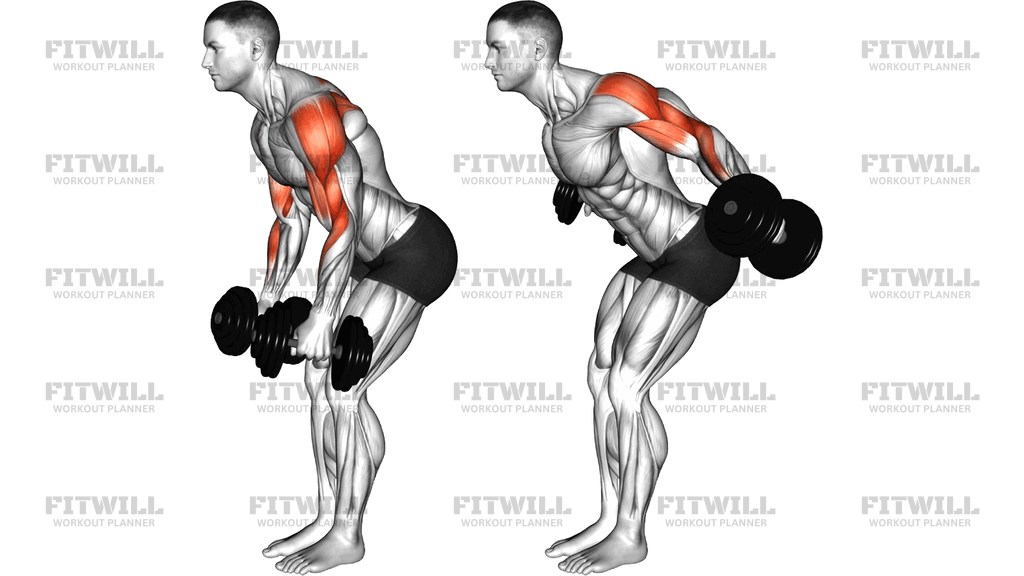
Expect the muscles of your upper back — the rhomboids, mid and lower traps — plus the lats and rear delts to do the driving, with the biceps and forearms working as the link between the dumbbells and your torso. The narrow, elbows-in path shown in the movement keeps the emphasis more on the lats and mid-back, while flaring the elbows shifts it toward the rear delts and upper back. Both are valid; just pick one intent per set.
The details that matter most are bench angle and honesty in the pull. Set the bench around 30 to 45 degrees so your chest is fully supported without your shoulders being jammed, and stagger one foot slightly behind you for a stable base. Pull the dumbbells to your hips, not your chest, and lower them under control until your arms are fully extended and your shoulder blades have released. If you have to heave, shorten your range, or lift your chest off the pad to finish a rep, drop the weight — this movement rewards strict, full-range reps far more than heavy, sloppy ones.
[ Workout Log & Planner ]
Put your next workout in Fitwill
Keep your plan and training log ready when you are.


Instructions
- Set an incline bench to roughly 30–45 degrees and place a dumbbell of your chosen weight on each side of the bench within easy reach.
- Mount the bench facing the pad so you can lie prone with your chest and upper abdomen in contact with it, letting your torso drape over the incline.
- Position your feet on the floor with a slight stagger — one foot a little further back — to create a stable base, and keep your neck in line with your spine by looking down at the pad.
- Pick up both dumbbells and let them hang straight down from your shoulders with your palms facing in, arms fully extended.
- Brace your core lightly and press your chest into the pad so it stays in contact throughout the set.
- Row both dumbbells up toward your hips by driving your elbows back and up, keeping them fairly close to your body, until your hands reach the sides of your torso.
- At the top, squeeze your shoulder blades together and down for a brief pause.
- Lower the dumbbells slowly until your arms are fully extended and your shoulder blades have spread apart again at the bottom.
- Exhale as you pull the weights up and inhale as you lower them, keeping a steady rhythm without holding your breath.
- Complete all reps, then carefully set the dumbbells on the floor on either side of the bench before standing up.
Tips & Tricks
- The most common fault on this movement is bouncing the dumbbells off the stretch at the bottom — control the last few inches of the descent so each rep starts from a dead hang, not a rebound.
- If your chest peels off the pad as you pull, the dumbbells are too heavy or you are pulling toward your chest instead of your hips; reduce the load and aim the elbows at your hip crease.
- Keep your wrists straight and stacked over the elbows rather than letting the dumbbells curl your wrists back, which shifts tension away from the back and into the forearms.
- Resist the urge to shrug the weights up with your upper traps near the top of each rep; think about pulling your elbows to your ribs and the blade squeeze will happen on its own.
- Because your torso is supported, this is one of the few rowing variations where you can push close to failure safely — use that, but stop the set when your chest starts lifting or reps get jerky.
- Rest the top of the bench pad against your upper chest, not your throat or chin; if the pad digs into your neck, adjust your position on the bench before adding weight.
- Let the shoulder blades protract and spread at the very bottom of each rep to get a full stretch through the mid-back, then retract them fully at the top — cutting this range short is a wasted rep.
- A slight stagger in the feet, as opposed to a narrow parallel stance, steadies your body against the diagonal pull of the dumbbells and keeps you from wobbling side to side.
- If your bench is very steep, your arms will hang closer to your head and the pull angle changes — around 30–45 degrees keeps the dumbbells under your shoulders where the row is strongest.
Frequently Asked Questions
What muscles does the Dumbbell Prone Incline Flexion Row work?
The main drivers are the rhomboids, middle trapezius, and lats, with the rear delts assisting and the biceps and forearms working to hold and move the dumbbells. Keeping the elbows close to your sides leans the work more toward the lats, while a slight flare brings the upper back and rear delts in harder.
Is this row better than a regular bent-over dumbbell row?
It is different rather than strictly better. The prone incline position supports your torso, so your lower back and hips cannot assist or fatigue first, which makes it a cleaner and more isolating upper-back stimulus — especially useful after heavy deadlifts or hinge work.
Why lie prone on an incline bench instead of standing?
The bench fixes your torso angle and removes the need to hold yourself in a hinge, so the target muscles do all the work and momentum has almost nowhere to come from. It also lets you train rows hard with less stress on the lower back.
What bench angle should I use for the Dumbbell Prone Incline Flexion Row?
Somewhere between 30 and 45 degrees works best for most people. Steeper angles push your head and shoulders toward the top of the pad and change the pull direction, while shallower angles reduce the support and can feel more like a standing row.
How heavy should I go on this exercise?
Choose a weight you can row all the way to your hips without your chest lifting off the pad. Because the torso is supported and cheating is hard, most lifters handle slightly less than their standing dumbbell row weight here — that is normal.
Can beginners do the Dumbbell Prone Incline Flexion Row?
Yes, and it is actually a good first row to learn because the bench gives instant feedback on form. Start light, focus on pulling the elbows back to the hips, and keep the chest in contact with the pad for every rep.
Should I row with both arms at the same time or one arm at a time?
The standard version rows both dumbbells together, which keeps the bench load balanced. You can perform single-arm reps to focus on one side or address a weaker side, but brace your free hand against the bench or the dumbbell rack to stop your torso twisting.
My lower back still feels tension on this row — what am I doing wrong?
Check that your chest is actually resting on the pad rather than hovering above it, and that you are not arching hard or lifting your hips as you pull. Pulling the dumbbells toward your hips instead of your chest and slowing the lowering phase usually resolves it.
What can I substitute if I do not have an incline bench?
A chest-supported row on a flat bench with the bench slightly elevated, a T-bar row with chest pad, or a seal row over a high bench all train the back in a similar supported position. A standing dumbbell row works too, but expect more lower-back involvement.
Where should I look and breathe during the movement?
Keep your face down toward the pad so your neck stays in line with the rest of your spine. Exhale as you pull the dumbbells up and inhale on the way down, breathing continuously rather than holding your breath through the set.