Standing Front Triple Arm Cross And Top Triple Arm
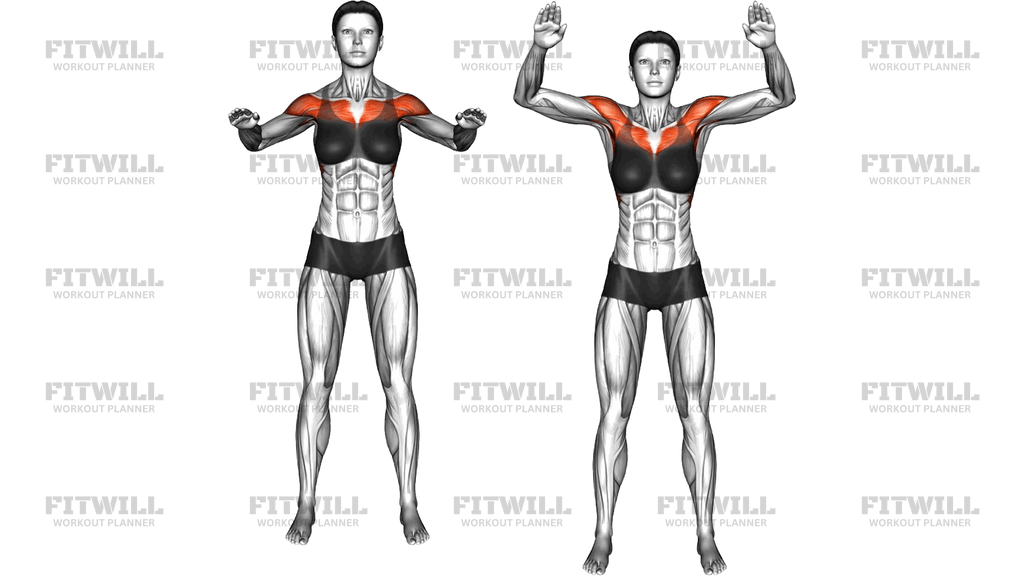
Standing Front Triple Arm Cross And Top Triple Arm is a bodyweight shoulder movement performed from a tall standing position. You work through two arm patterns in sequence: first crossing the arms in front of the chest at shoulder height for three repetitions, then lifting into a bent-elbow overhead position with the hands up and elbows flared, crossing there for three more. The shoulders and upper chest do most of the work while the traps and upper back stabilize the shoulder blades throughout.
Because it requires no equipment and only a small amount of space, this exercise fits naturally into warm-ups, desk-break routines, and upper-body preparation before pressing or pulling work. The repeated crossing and lifting takes the shoulder joint through horizontal adduction and elevation, which helps many people loosen the front of the shoulder after long periods of sitting or before bench pressing, overhead pressing, or swimming.
The standing setup matters more than it looks. With the feet planted and the torso upright, there is nothing to lean on, so the trunk has to hold itself steady while the arms move. That makes this a light but honest test of posture: if the ribs flare or the lower back arches when the arms go overhead, you will feel it immediately and can correct it before loading the shoulders with weights.
To execute it well, keep the movements deliberate rather than rushed. Sweep the arms across the body with intent so the chest and front shoulders actually do the crossing instead of letting momentum swing the arms. In the overhead position, press the palms upward with elbows wide, feeling the shoulders elevate and the upper back engage to support the arms. Three controlled crosses per position keeps the volume modest and the focus on quality.
This movement is best used as a rehearsal and activation drill rather than a strength builder on its own. Athletes and lifters commonly pair it with arm circles, band pull-aparts, or light presses to fully prepare the shoulders for heavier work. Anyone recovering general shoulder rhythm after long inactivity can also benefit, provided the motion stays pain-free and within a comfortable range.
[ Workout Log & Planner ]
Put your next workout in Fitwill
Keep your plan and training log ready when you are.


Instructions
- Stand with your feet about hip-width apart, weight evenly distributed, and let your arms hang relaxed at your sides.
- Draw your shoulders back and down, brace your trunk lightly, and keep your gaze forward with your spine tall.
- Raise both arms straight out to the sides until they reach shoulder height, palms facing forward.
- Sweep both arms across the front of your chest so they cross over each other, then open them back out to shoulder height. Complete three crosses, alternating which arm sits on top each time if you like.
- From the open position, bend your elbows and lift your arms until your upper arms are roughly level with your shoulders and your hands point toward the ceiling, elbows flared out to the sides.
- From this top position, press your hands up and slightly together overhead, then bring them back down to the bent-elbow position. Complete three repetitions of this top cross and press.
- Exhale as the arms cross or press up, and inhale as they return to the open position.
- Lower your arms back to your sides with control, reset your posture, and repeat the full sequence for another round if desired.
Tips & Tricks
- If your shoulders feel pinched in the overhead portion, narrow the arc slightly and bring the elbows a little forward of the torso instead of forcing them straight out to the sides.
- Keep the ribs stacked over the pelvis. A common mistake is arching the lower back as the arms lift overhead, which turns a shoulder drill into a spine-hyperextension habit.
- Do not let the shoulders creep up toward the ears during the crosses. If you see your traps riding up, lower the arm height an inch or two and relax the neck between reps.
- Move at the shoulder joint, not the trunk. If your torso twists to help the arms cross, slow down and let the chest and front shoulders do the work.
- Alternate which arm crosses on top from rep to rep so both shoulders get the same range and treatment.
- Treat the three-rep clusters as a tempo cue: about one second across, a brief pause, one second back. Rushing the triples usually means the last rep of each set loses range.
- If standing balance is an issue, place your back heel against a wall for reference rather than widening your stance, which can encourage leaning.
- Stop short of any sharp or pinching sensation at the front of the shoulder. Crossing lower across the sternum often feels smoother than crossing at the collarbone line.
Frequently Asked Questions
What muscles does Standing Front Triple Arm Cross And Top Triple Arm work?
The front shoulders are the primary movers, with the upper chest assisting on the crosses and the traps and upper back stabilizing the shoulder blades, especially in the overhead portion.
Is this exercise good for beginners?
Yes. It is bodyweight only, requires no equipment, and the range can be adjusted simply by lowering the arm height, which makes it a safe first drill in a shoulder warm-up.
Why does the exercise use three repetitions in each position?
The triple clusters keep the total volume light while giving the shoulders enough repeated exposure to loosen up and establish the movement pattern before heavier training.
Should I alternate which arm crosses on top during the front crosses?
Alternating is a good habit because it exposes both shoulders to the same range and prevents one side from always doing the deeper cross.
What is the most common mistake in the top triple arm portion?
Arching the lower back and shrugging the shoulders as the hands press up overhead. Keep the trunk braced and the neck relaxed so the shoulders and upper chest do the lifting.
When should I include Standing Front Triple Arm Cross And Top Triple Arm in my workout?
It works best at the start of an upper-body session as a warm-up, or before pressing exercises like bench press and overhead press to rehearse shoulder motion.
Can I do this exercise if my shoulders click or feel tight?
Mild tightness and harmless clicking are common during arm crosses, but reduce the range so the motion stays comfortable. If you feel sharp pain or pinching, stop and consult a qualified professional.
What can I substitute if the overhead position is uncomfortable?
Stay with the front crosses at chest or slightly lower height, or perform the top portion with the elbows a bit more forward so the hands travel in a narrower arc overhead.
How many rounds should I perform?
One to three full rounds of the complete sequence is plenty for a warm-up. Add rounds only if you are using it as a light standalone mobility circuit.