Standing Triple Arm Cross
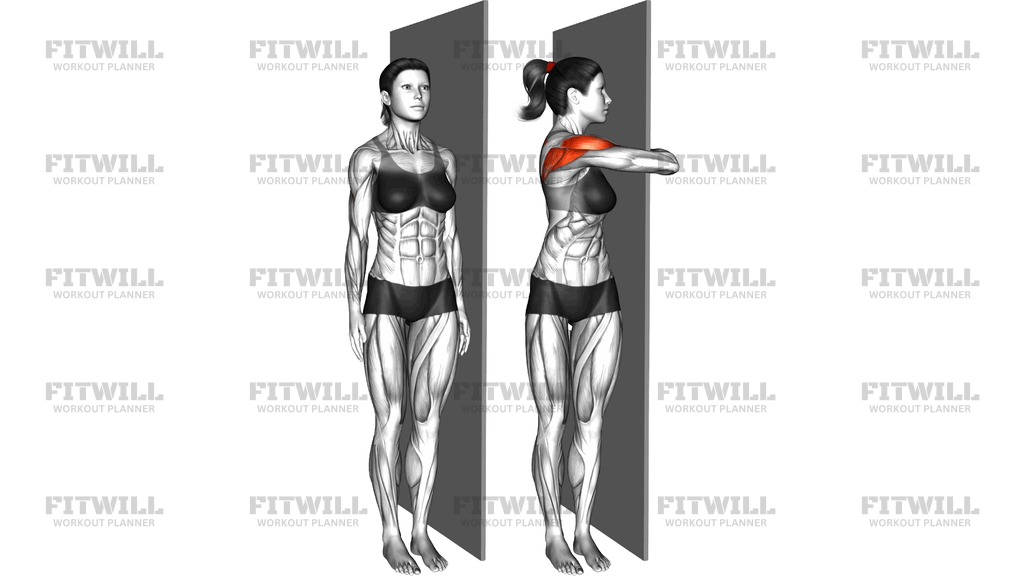
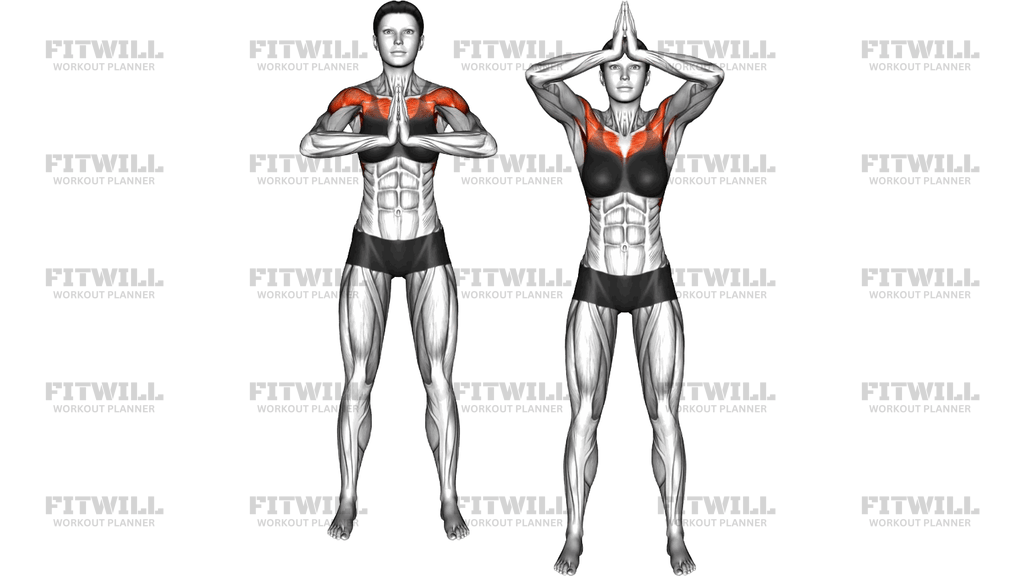
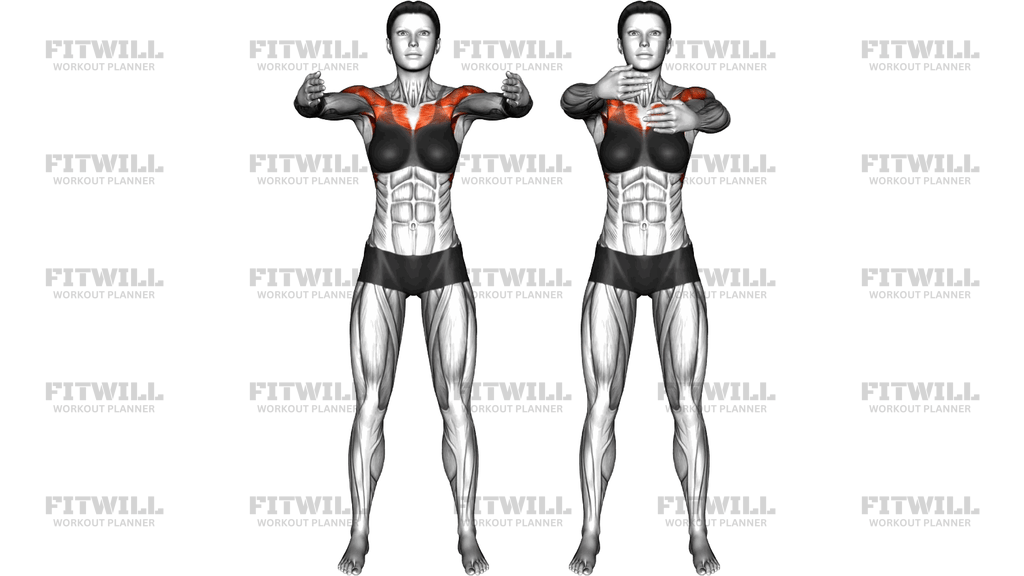
The Standing Triple Arm Cross is a bodyweight movement performed with the arms held straight out in front of the chest at shoulder height. From there, you cross one arm over the other in a deliberate, alternating pattern, typically completing three crossings before switching the top arm or returning to the start. The image highlights the upper chest and front shoulders as the working areas, and that matches how the exercise feels: the chest works to hold the arms together against gravity while the crossing action sweeps through the horizontal plane the pecs are built for.
Because there is no external load, this movement relies on sustained muscular tension rather than heavy resistance. It works well as a warm-up before pressing, as a finishing movement after bench or push-up work, or as a low-impact option for people easing back into upper body training. Office workers and anyone who spends long hours sitting also benefit from the shoulder-height arm hold, which gently engages the chest and front delts through a range that daily life rarely touches.
Setup matters more than it looks. Stand tall with feet about hip-width apart, ribs stacked over the pelvis, and shoulders pulled gently back and down. If you let the shoulders shrug toward the ears or the lower back arch, tension leaks away from the chest and the movement loses its purpose. Keeping the arms parallel to the floor with only a soft bend in the elbows is what keeps the upper chest and front shoulders doing the work.
Execution should be smooth and controlled. Sweep one arm across the body at chest height, bring it back, then sweep the other arm across, alternating for the prescribed crossings. Avoid swinging from the torso; the crossing should come from the shoulder joints while the trunk stays quiet. Breath steadily throughout rather than holding your breath during the crossings.
As a floor-free, equipment-free drill, the Standing Triple Arm Cross travels well — it can be done at home, in a hotel room, or between sets at the gym. Keep the repetitions moderate and stop if you feel any pinching at the front of the shoulder. People with irritated shoulder joints should reduce the crossing height to slightly below shoulder level and shorten the range.
[ Workout Log & Planner ]
Put your next workout in Fitwill
Keep your plan and training log ready when you are.


Instructions
- Stand upright with your feet hip-width apart, weight spread evenly across both feet, and your arms relaxed at your sides.
- Raise both arms straight forward until they are parallel to the floor at shoulder height, palms facing each other or turned slightly down, with a soft bend in the elbows.
- Draw your shoulder blades back and down, brace your core lightly, and keep your ribs stacked over your hips so your lower back stays neutral.
- Keeping your torso still, sweep your right arm across the front of your chest toward your left shoulder until your forearms cross.
- Return the right arm to the starting position at shoulder height without letting it drop.
- Sweep your left arm across the front of your chest toward your right shoulder to complete the alternating pattern; three crossings make one repetition.
- Exhale as each arm crosses in front of your body and inhale as it returns to the extended position.
- Keep both arms at the same height throughout — neither arm should sag toward your waist or rise above your shoulders.
- After your final crossing, lower both arms slowly to your sides, shake out the shoulders, and reset your posture before the next set.
Tips & Tricks
- If your shoulders creep up toward your ears as the set goes on, lower your arms an inch or two below shoulder height and reset your shoulder blades before continuing.
- A common mistake is turning this into a torso rotation — twist your trunk and the chest stops working. Face forward and let only the arms move.
- Straightening the elbows completely makes the hold harder on the joints without helping the chest; keep a soft bend so the muscles, not the joint capsule, take the load.
- To increase the challenge without adding equipment, hold each crossed position for two to three seconds before returning the arm.
- If one arm feels tighter or weaker, do the first set leading with that side so it gets attention while you are fresh.
- Slow the return phase down to a two-count — the lowering and uncrossing portion is where the chest stays under tension the longest.
- If you feel a pinch at the front of the shoulder, reduce the crossing range rather than pushing through; the movement should feel like a squeeze across the chest, not a stretch at the joint.
- Use this before pressing exercises as an activation drill with slow, deliberate crossings, or after pressing as a flush set with higher repetitions.
- Keep your gaze level and your chin neutral — dropping the head forward as fatigue sets in rounds the upper back and shortens the chest's working range.
Frequently Asked Questions
Which muscles does the Standing Triple Arm Cross work?
The primary muscles are the upper chest and the front shoulders, which hold the arms up and drive them across the body. The side shoulders and triceps assist as the arms extend and sweep through each crossing.
Is the Standing Triple Arm Cross suitable for beginners?
Yes. Because it uses only bodyweight and requires no equipment, beginners can learn it quickly by starting with a smaller crossing range and shorter sets. It is often used as a shoulder and chest warm-up before heavier pressing work.
Why should my arms stay at shoulder height during the crossings?
Holding the arms at shoulder height keeps constant tension on the upper chest and front delts through the whole set. Letting the arms drop toward your waist transfers the work to gravity and removes most of the training effect.
What does the triple crossing mean in this exercise?
It refers to the alternating pattern of sweeping one arm across the chest, returning it, and sweeping the other arm, repeated for three crossings per repetition. Keeping the crossings consistent in height and speed matters more than rushing the count.
How can I make the Standing Triple Arm Cross harder?
Add a two- to three-second pause at each crossed position, slow the return phase to a two-count, or increase the total repetitions per set. Light wrist weights can also be used once your form is solid.
What is the most common mistake with this movement?
Rotating the torso to help each arm across, which shifts work away from the chest and into the spine. Keep your chest and hips facing forward and let the shoulder joints do the sweeping.
Can I use the Standing Triple Arm Cross instead of chest presses?
It can complement pressing work, but on its own it provides low resistance, so it will not build strength the way loaded pressing does. Use it for warm-ups, active recovery, or high-rep finishers rather than as a complete chest builder.
Is this exercise safe if I have shoulder discomfort?
Reduce the crossing height to just below shoulder level and use a shorter range so the movement stays comfortable. If you feel sharp pain or pinching at any point, stop and consult a qualified professional before continuing.
Where should the Standing Triple Arm Cross fit in my workout?
It works well at the start of a session as a chest and shoulder activator, or at the end of upper body training as a burnout. Since it needs no equipment, it is also a convenient stand-alone drill on rest days or when traveling.