Bodyweight Standing Triple Pec Dec Pulse
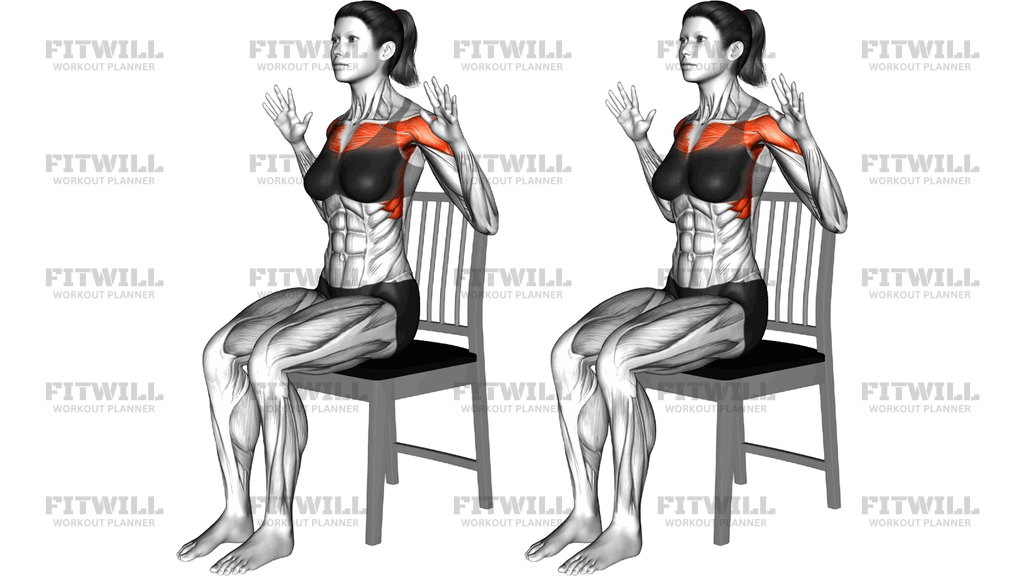
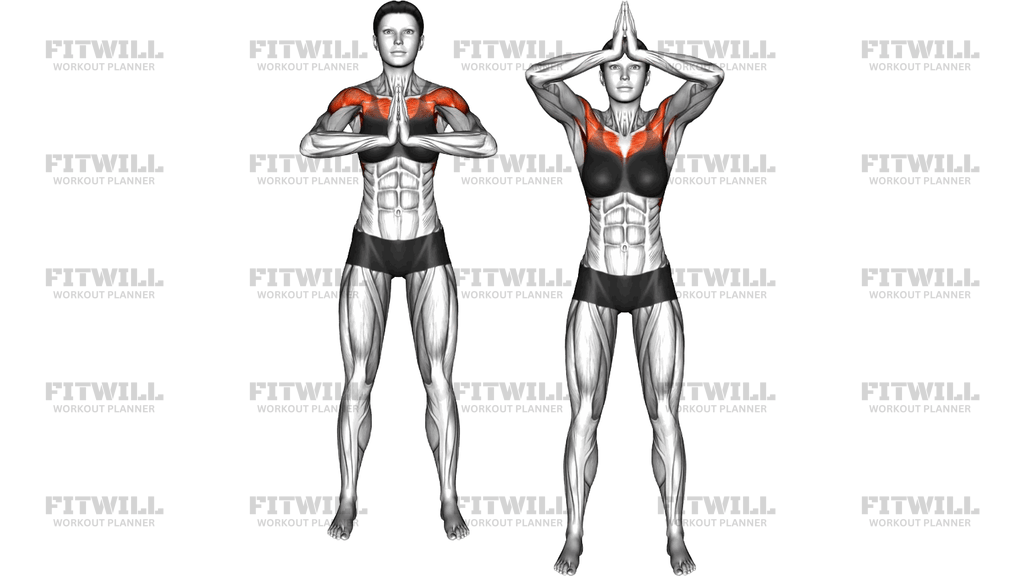
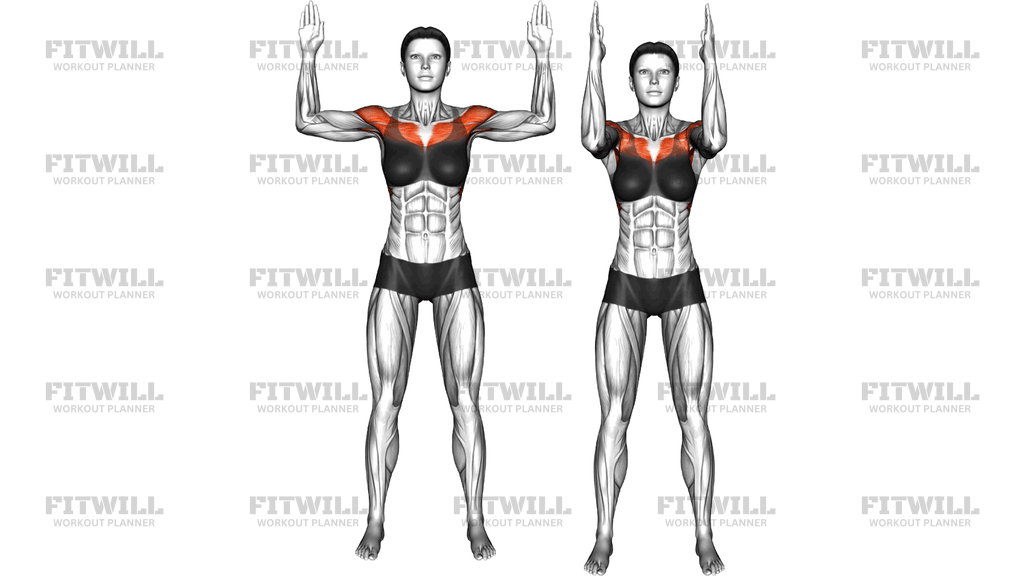
The Bodyweight Standing Triple Pec Dec Pulse is a standing chest exercise that recreates the arm path of a pec deck machine using nothing but your own muscular tension. You set your arms in a raised, goalpost-style position with the elbows bent to roughly 90 degrees, squeeze your forearms together overhead as if pressing against the arms of a machine, and finish each rep with three quick pulses at the top. Because there is no external load, the resistance comes entirely from deliberately squeezing the chest through the closing portion of the movement.
This movement is especially useful as a warm-up before pressing work, as a finishing pump at the end of a chest session, or as a training option for people who exercise at home with no equipment. It is also a practical way to learn what a proper chest contraction feels like. Many lifters go years pressing weights without ever consciously feeling their pecs work; the standing fly-and-pulse format isolates that adduction action so you can find it.
The primary muscles involved are the upper portion of the chest, the clavicular head of the pectoralis major, which is highlighted when the arms travel overhead toward the midline. The front delts assist strongly throughout, and the side delts help hold the arms up in the wide starting position. Because you are standing, your core and upper back also work isometrically to keep your torso tall and your shoulder blades controlled while the arms move.
Setup matters more than it might seem for a bodyweight movement. Your elbows should stay bent and roughly in the same vertical plane as your torso, your ribcage stays down, and your shoulders stay pulled away from your ears. If you straighten the arms or let the elbows drift behind your shoulders, the tension shifts away from the chest and onto the shoulder joints, which is where most discomfort with this pattern comes from.
To execute it well, think about drawing your elbows and forearms toward each other rather than simply clapping your hands together. The squeeze should come from the chest pressing the upper arms inward, with the pulse portion being a small, tight range of only a few inches. Keep the tempo controlled: a firm squeeze to the top, three crisp pulses, then a slow opening back to the wide position.
Expect a burning, high-rep style of work rather than a heavy strength stimulus. Since there is no external resistance, sets of 12 to 20 reps with a deliberate squeeze tend to work far better than low-rep attempts to make the movement feel heavy. If you want more challenge later, the same standing pattern translates directly to a resistance band or cable crossover.
[ Workout Log & Planner ]
Put your next workout in Fitwill
Keep your plan and training log ready when you are.


Instructions
- Stand with your feet about hip-width apart, knees soft, spine tall, and your weight spread evenly across both feet.
- Raise both arms out to the sides and up until your upper arms are at or slightly above shoulder height, then bend your elbows to about 90 degrees so your forearms point upward and your palms face forward.
- Brace your core lightly, keep your ribcage down, and pull your shoulders away from your ears so your neck stays long.
- Exhale and squeeze your arms in toward each other above your head, as if pressing your forearms into the arms of a pec deck machine, until your hands come close together.
- At the top of the squeeze, perform three quick, controlled pulses, pressing your forearms toward the midline a little harder on each pulse.
- Keep your elbows bent and in the same vertical plane as your torso the entire time; do not let them drift behind your shoulders.
- Inhale and slowly open your arms back out to the wide starting position, resisting the opening rather than letting the arms fall.
- Reset your posture, then repeat for your target number of reps, exhaling on every squeeze and pulse set and inhaling as the arms open.
Tips & Tricks
- If you feel the work mostly in your neck or traps, your shoulders are shrugging — lower your arms a few inches and consciously press your shoulder blades down before starting the next rep.
- The pulses should be a tight squeeze of only a few inches at the top, not a bouncing motion; bouncing turns the rep into momentum instead of chest work.
- Keep the elbows bent at roughly 90 degrees throughout. Straightening the arms shifts the effort to the shoulders and makes the chest squeeze much harder to feel.
- Think about bringing your elbows and forearms together, not your hands — this keeps the pecs driving the movement instead of the arms doing the work.
- Do not arch your lower back as you raise your arms overhead; brace your abs and keep your ribs stacked over your pelvis so the position stays in your upper body.
- Open the arms slowly on the way back. Since there is no external weight, the controlled lowering is where you maintain tension on the chest.
- Aim for higher reps, around 12 to 20, because the only resistance is your own muscular squeeze — low reps with quick reps will feel like nothing.
- Practice in front of a mirror at first to confirm your elbows stay forward of your shoulders and your torso does not lean back as the arms come together.
- If your shoulders feel pinched at the top, stop the squeeze slightly short of hands touching and keep the range just inside that point.
Frequently Asked Questions
What muscles does the Bodyweight Standing Triple Pec Dec Pulse work?
The main muscles are the upper chest, specifically the clavicular head of the pectoralis major, along with the front delts. The side delts and upper back help hold the arms in position while you squeeze.
Why does the exercise include three pulses instead of one squeeze?
The triple pulse extends the time the chest stays under tension at the fully shortened position, which is where the pecs are hardest to load with bodyweight alone. It makes each rep noticeably more demanding without any equipment.
Why are the elbows bent during this movement?
The bent-elbow, goalpost position copies the arm angle of a pec deck machine and keeps the chest driving the squeeze. Straight arms turn the movement into more of a shoulder exercise.
Is the Bodyweight Standing Triple Pec Dec Pulse good for beginners?
Yes. It is low-risk, requires no equipment, and teaches beginners what a chest contraction feels like before they progress to presses or machine work.
Where should I feel this exercise?
You should feel a burn across the upper chest near the collarbone and in the front of the shoulders. If you only feel your neck or traps, your shoulders are shrugging and you need to lower your arms and reset.
How many reps should I do of the Bodyweight Standing Triple Pec Dec Pulse?
Because the only resistance comes from your own squeeze, higher reps work best. Aim for 12 to 20 reps per set, pausing firmly on each triple pulse.
Can this replace a pec deck machine?
It trains the same arm path and muscle action, but without external load it works more as an activation, warm-up, or finishing movement than a replacement for weighted machine training.
What can I use instead if I want more resistance?
A standing chest fly with a resistance band anchored behind you, or a cable crossover, follows the same overhead squeeze pattern with added load.
Is it safe for my shoulders?
For most people, yes, as long as you keep the elbows in front of the shoulder line and stay within a pain-free range. If pinching occurs at the top, stop the squeeze slightly short of hands touching.
Should my lower back arch as my arms go overhead?
No. Keep your abs braced and ribs down so the arch does not creep in; arching the lower back changes the arm angle and reduces the chest squeeze.