Squat Alternating Lunge
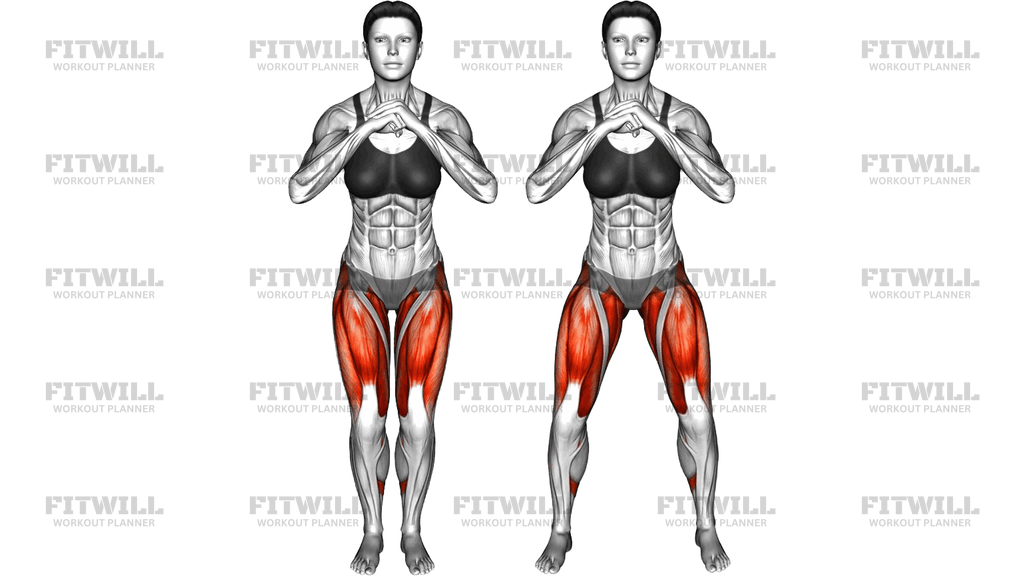
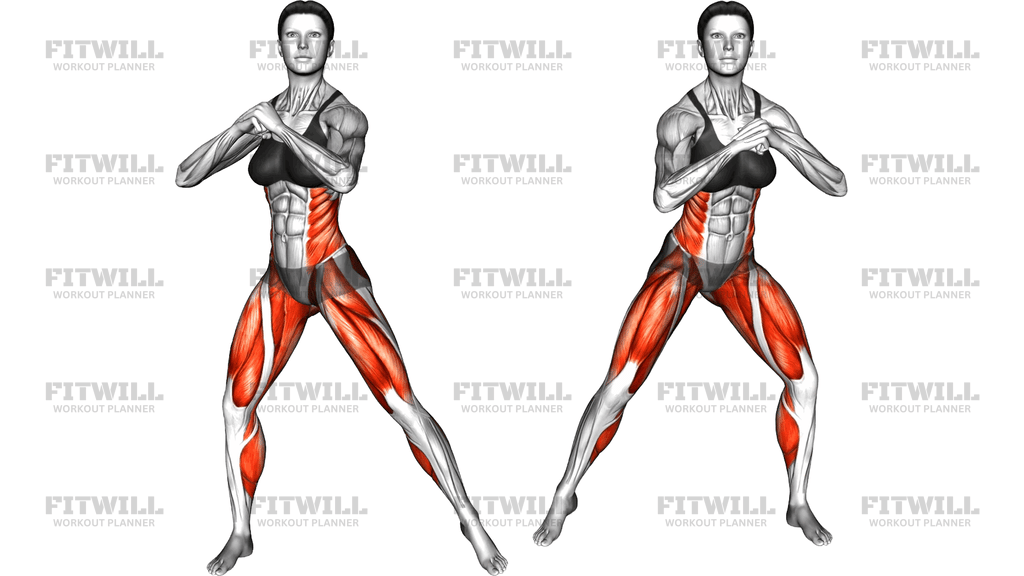
The Squat Alternating Lunge is a bodyweight lateral movement that blends a wide-stance squat with a shifting side lunge. You start with your feet planted well outside shoulder width, hands clasped in front of your chest, and instead of squatting straight down, you push your hips to one side, bending that knee deeply while the opposite leg stays long and relatively straight. You then transfer your weight smoothly across to the other side, alternating from left to right without standing all the way up between reps.
This movement is especially useful for anyone who wants to build single-leg strength and hip mobility without equipment. Because the wide stance places a strong stretch on the inner thighs, it targets the adductors more directly than a conventional squat, while the working leg still loads the quads and glutes through a deep range. The constant side-to-side weight transfer also challenges your balance and forces the core to stabilize your torso as it moves over a shifting base of support.
Setup matters more than most people expect. Your stance should be wide enough that you can sit into one side without your knee collapsing inward, but not so wide that you lose contact between your heels and the floor. Keeping your chest up, hands clasped at chest height, and your weight distributed through the midfoot and heel of the working leg gives you a stable hinge for the lateral shift.
To execute it well, think of sitting back and down onto one hip rather than simply leaning sideways. The bent knee should track roughly over or slightly inside the toes, and the straight leg should feel a noticeable stretch along the inner thigh and hamstring. Shift your weight across with control so the movement flows from one side to the other, rather than bouncing or dropping into each rep.
You will see this exercise in warm-ups, lower-body circuits, mobility sessions, and home workouts where no equipment is available. It also works well as a teaching progression toward weighted side lunges, cossack squats, and lateral movement patterns used in field and court sports.
From a safety standpoint, the main things to watch are knee tracking and lower-back position. If your heel lifts or your knee dives inward as you load one side, narrow your stance slightly and reduce your depth. Move within a range you can control smoothly, and let your flexibility improve over time rather than forcing depth on day one.
[ Workout Log & Planner ]
Put your next workout in Fitwill
Keep your plan and training log ready when you are.


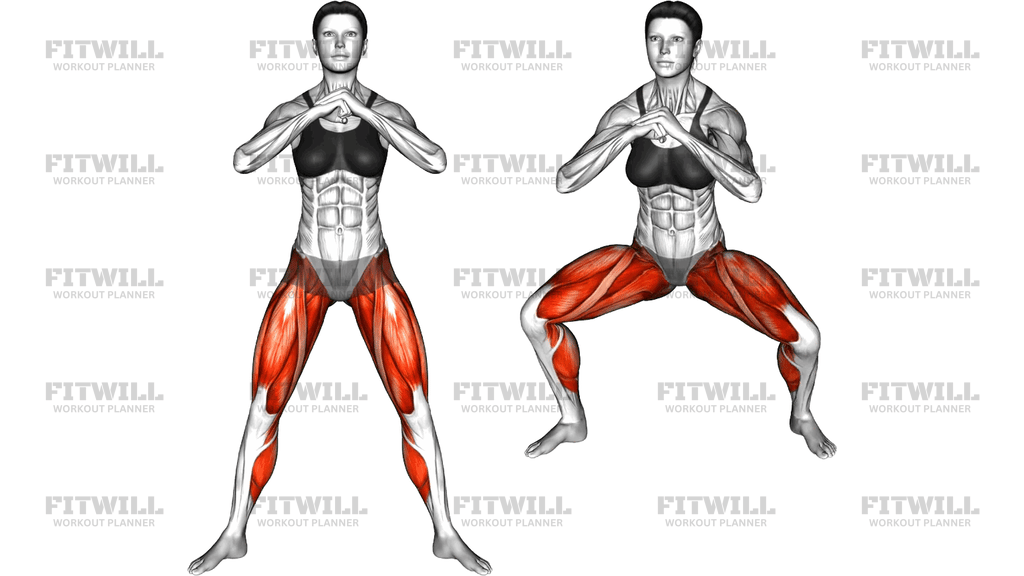
Instructions
- Stand tall with your feet roughly one and a half to two shoulder widths apart, toes turned slightly outward, and your body weight spread evenly across both feet.
- Clasp your hands together in front of your chest with your elbows tucked down, and keep your gaze forward.
- Brace your core as if preparing for a light push to the side, and lift your chest so your back stays long and neutral.
- Shift your hips back and to the right, bending your right knee and sitting into your right hip while your left leg stays long with the foot flat.
- Descend until your right thigh is roughly parallel to the floor or as deep as you can go while keeping the right heel down and the left foot planted.
- Press through the right midfoot and heel to drive upward and transfer your weight horizontally across to the left side, flowing directly into a left-side lunge.
- Continue alternating side to side in a smooth, controlled rhythm, keeping your torso upright and your clasped hands steady at chest height.
- Exhale as you shift into each side, and inhale during the transfer between sides.
- Complete your target repetitions on each side, then step your feet back in to shoulder width to reset before the next set.
Tips & Tricks
- If your heels lift as you shift to one side, your stance is probably too wide; bring your feet in a few inches so both heels stay glued to the floor.
- Avoid letting the working knee collapse inward toward your midfoot — think of spreading the floor with that foot as you sit into the hip.
- Keep the non-working foot flat and pointed forward; letting it roll onto the outer edge reduces the inner-thigh stretch and strains the ankle.
- Do not rush the transfer between sides — the horizontal shift is where your adductors and hip stabilizers do most of the work.
- If your lower back rounds as you descend, hinge slightly more at the hips and reduce depth until your torso stays upright.
- Start with shallow side shifts for the first set to grease the pattern, then deepen each rep once your hips feel open.
- Keep your hands clasped lightly at the sternum rather than pulling with your arms; swinging or yanking your arms forward usually means you are losing balance.
- If balancing is difficult, place a chair or wall just outside your non-working side and use a fingertip for light support until your control improves.
Frequently Asked Questions
What muscles does the Squat Alternating Lunge work?
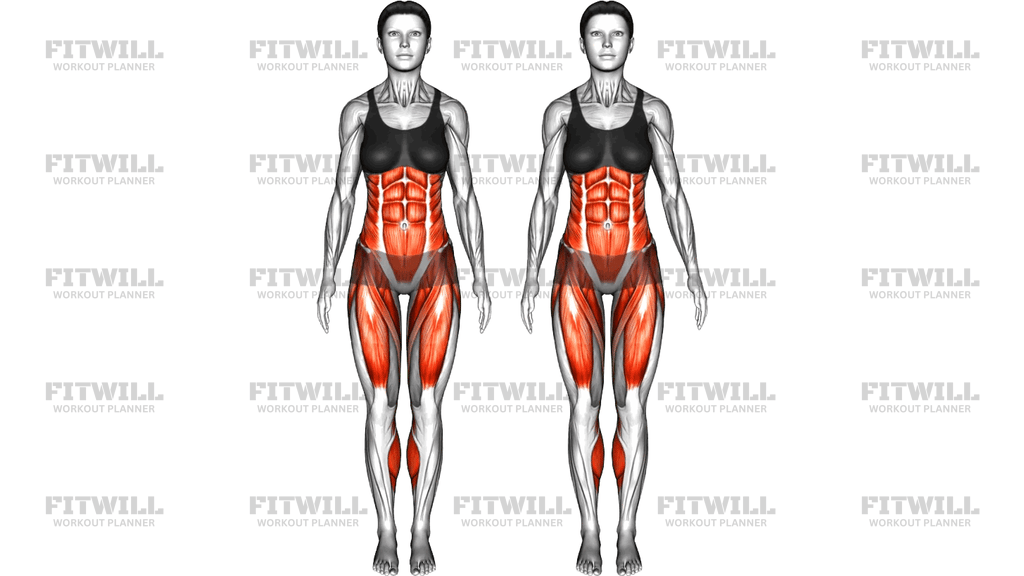
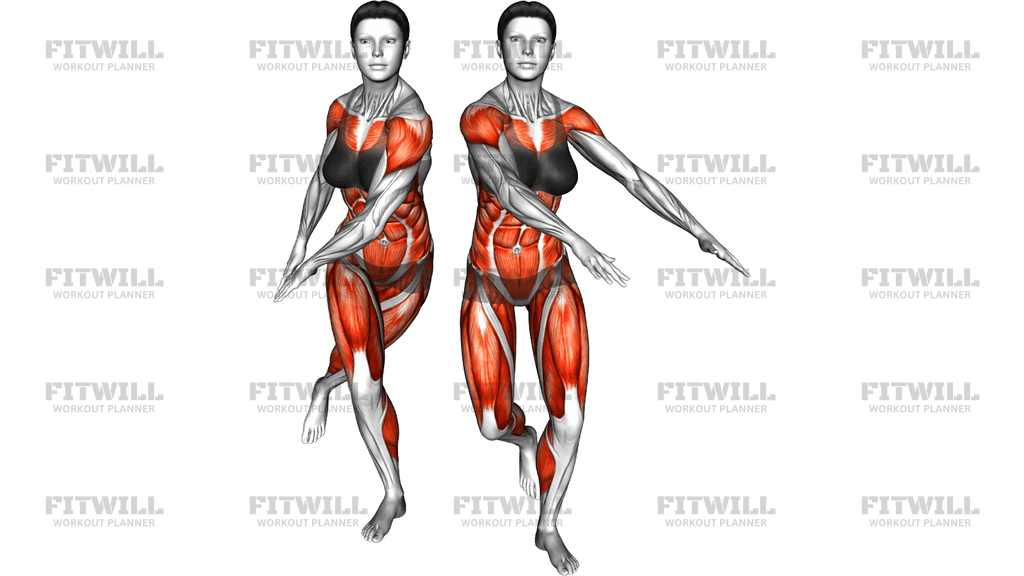
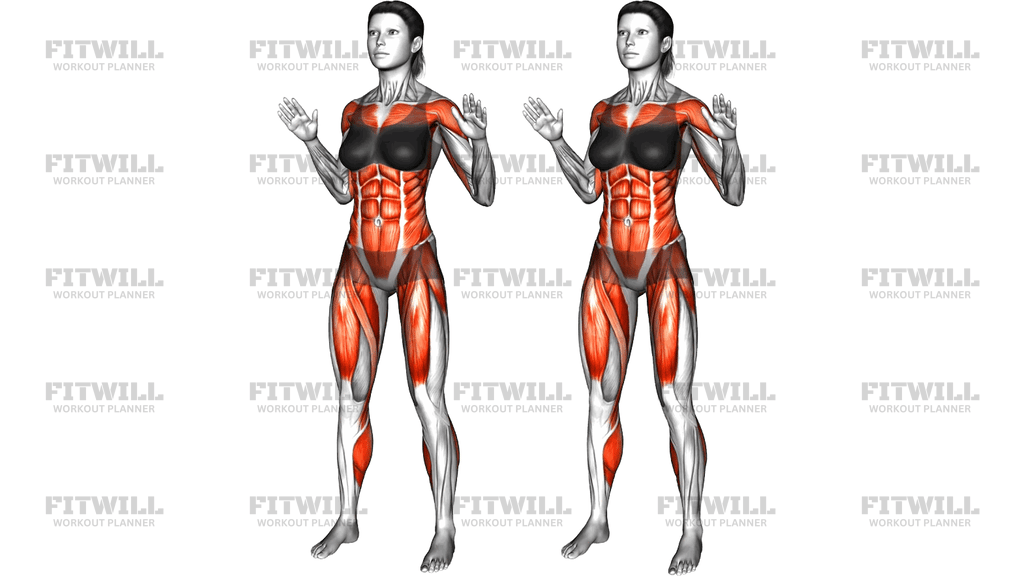
The working leg's quadriceps and glutes do the bulk of the pushing, while the adductors on both legs work hard because of the wide stance and lateral stretch. The calves and core contribute as stabilizers throughout the side-to-side transfer.
How is the Squat Alternating Lunge different from a regular side lunge?
In a regular side lunge you step out to one side and return to a narrow standing stance between reps. In the Squat Alternating Lunge your feet stay planted in a wide stance the whole time, and you simply shift your weight from hip to hip.
Is the Squat Alternating Lunge good for beginners?
Yes, it is a low-impact bodyweight movement that beginners can scale easily by reducing depth. Starting with a shallower range and slightly narrower stance makes the pattern easier to control before progressing deeper.
Why do my inner thighs feel so tight during this exercise?
The wide stance puts the adductors of the straight leg under a loaded stretch, which is one of the main points of the movement. Work within a comfortable range and your adductor flexibility will improve with consistent practice.
How deep should I sit into each side?
Aim for the working thigh to reach roughly parallel to the floor, but only as deep as you can keep the heel down, the knee tracking over the foot, and your chest up. Depth can increase gradually as mobility allows.
Should my non-working leg stay completely straight?
It should stay long with only a soft bend at the knee so the foot stays flat and the inner thigh stays engaged. Locking it rigid or bending it deeply takes tension away from the pattern.
Can I add weight to the Squat Alternating Lunge?
Yes, once your form is solid you can hold a dumbbell or kettlebell at your chest in a goblet position to increase the load. Add weight only after you can shift side to side smoothly without your heels lifting.
How many reps should I do per side?
Eight to twelve controlled shifts per side works well for strength and mobility, or 30 to 45 seconds of continuous alternating for a warm-up or conditioning finisher.
Is it safe for my knees if I feel the movement inside the knee joint?
Discomfort inside the knee usually points to the knee caving inward or the heel lifting as you load one side. Narrow your stance, reduce the depth, and consciously press the working knee out over the foot; stop if sharp pain persists.