Standing Opposite Straight Arm Clasp Raise (Right)
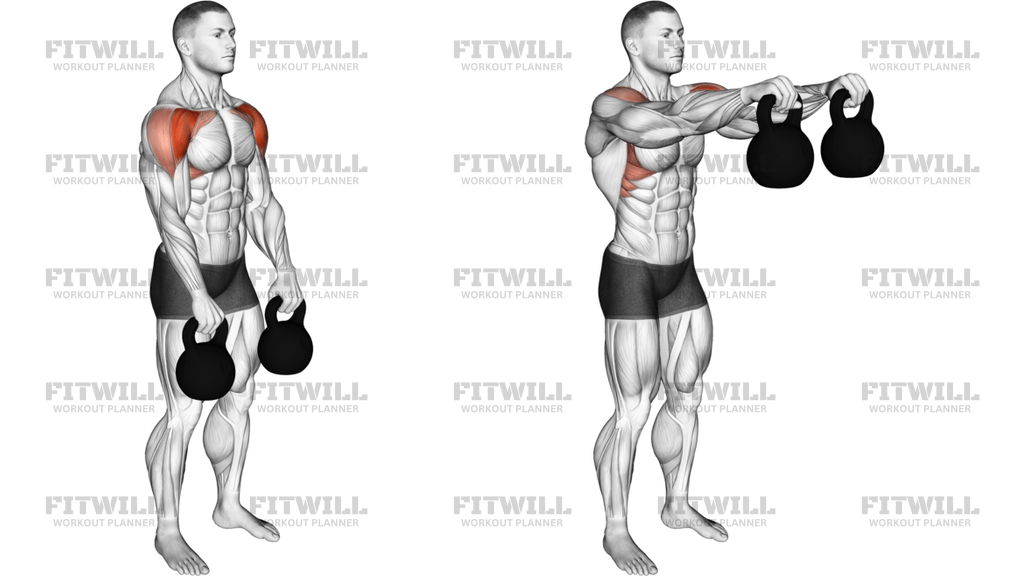
The Standing Opposite Straight Arm Clasp Raise (Right) is a bodyweight movement performed from a tall standing position. You clasp your hands together in front of your chest with both arms straight, then press the clasped hands against each other as you raise the arms in a smooth arc all the way overhead. The right-side version emphasizes the right shoulder and right side of the upper chest, while the left hand and arm act as the opposing contact point that creates the resistance.
What makes this drill interesting is that the load comes from your own opposing force rather than from external weight. As you push your right hand up and into the clasp, your left hand pushes back down and against it. That self-generated tension means you control the difficulty entirely by how hard you press, which makes the movement easy to scale for warm-ups, rehab-style shoulder work, or as a primer before pressing exercises.
The primary muscles working are the front delts and the upper portion of the chest on the working side, with the serratus anterior helping to control the shoulder blade as the arm travels overhead. The triceps hold the elbow straight, and the upper traps assist near the top of the range. Because both arms are involved, the non-working side gets isometric work holding the clasp steady.
Setup matters more than it looks. Stand with feet about hip-width apart, ribs stacked over the pelvis, and avoid leaning back as the arms rise. If you arch your lower back or shrug toward your ears, the shoulder blade control that makes this exercise valuable disappears and the neck and traps take over.
To execute it well, keep the elbows fully locked out from start to finish, move slowly, and think about pushing the hands up and slightly forward rather than swinging them back. The palms should stay pressed together firmly for the entire rep, both on the way up and on the way down.
This movement fits well as a shoulder warm-up before overhead pressing, as an activation drill for people whose shoulders feel stiff in the top range of motion, or as a low-load option on recovery days. Do it for higher reps, somewhere in the range of 10 to 20 controlled repetitions per side, and switch to the left-side version to keep the shoulders balanced.
[ Workout Log & Planner ]
Put your next workout in Fitwill
Keep your plan and training log ready when you are.


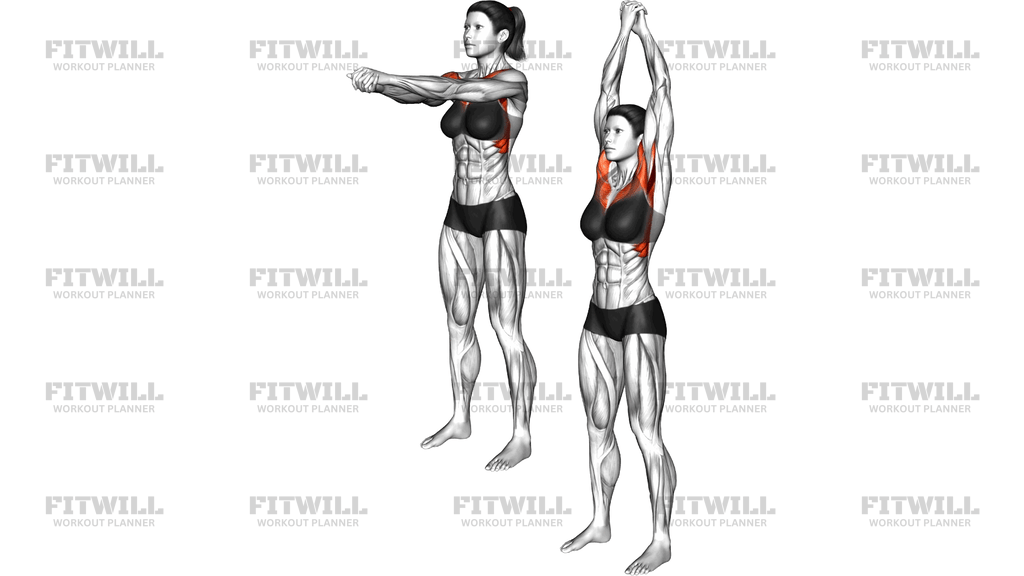
Instructions
- Stand tall with your feet about hip-width apart, weight spread evenly across both feet, and your gaze forward.
- Bring both arms straight out in front of you at chest height and clasp your hands together, right hand wrapping over the top of the left.
- Press the clasped palms firmly against each other to create tension through both arms before the movement begins.
- Brace your core lightly and stack your ribs over your hips so your lower back stays neutral.
- Keeping both elbows locked straight, raise the clasped hands in a smooth arc up and overhead until the arms finish beside or slightly behind your ears.
- At the top, keep pressing the hands together and reach upward through the palms without shrugging your shoulders toward your ears.
- Lower the arms back down along the same arc to chest height with the same slow control, maintaining the clasp and the pressure between the palms.
- Breathe steadily throughout, inhaling on the way up and exhaling on the way down, or simply keep an even breathing rhythm.
- Complete your repetitions on the right side, then unclasp, shake out the arms, re-clasp with the opposite hand on top, and repeat on the left side.
Tips & Tricks
- If your elbows bend as the arms rise, the triceps are fatiguing or the press between the palms is too weak. Reset at chest height and re-establish the firm palm press before continuing.
- A common mistake is letting the lower back arch and the ribs flare as the hands pass head height. Tighten your midsection slightly and think of keeping the tailbone tucked as you reach overhead.
- Do not let the shoulders ride up toward the ears at the top. Keep space between the shoulders and ears by actively reaching through the hands instead of lifting with the traps.
- The tension is self-controlled. Pressing the palms together harder makes the working right arm and upper chest do more; a soft press turns the rep into a loose swing with little benefit.
- Move slower on the lowering half than on the raise. Most people drop the arms quickly and lose the shoulder blade control the exercise is meant to train.
- If clashing wrists or an awkward clasp causes discomfort, adjust which hand is on top or interlock fingers lightly rather than forcing a deep grip.
- Keep the head neutral. Watching your hands the whole way up can pull your chin forward and strain the neck at the top position.
- Stay facing straight ahead. Rotating the torso toward the working side is a cheat that reduces the demand on the front shoulder and upper chest.
- If overhead range is limited, raise only to the height you can reach without arching back, and let the range improve gradually over weeks of practice.
Frequently Asked Questions
Which muscles does the Standing Opposite Straight Arm Clasp Raise (Right) work?
The front delts and upper chest on the right side do most of the work, with the serratus anterior and upper traps controlling the shoulder blade overhead. The triceps hold the elbows straight and the left arm works isometrically through the clasp.
Why are the hands clasped instead of just raising the arms?
The clasp creates a point of opposing force, so each hand pushes against the other as the arms rise. That self-generated tension is what turns a simple arm raise into a resistance exercise for the shoulder and upper chest.
Is the Standing Opposite Straight Arm Clasp Raise (Right) suitable for beginners?
Yes. It requires no equipment and the load adjusts to however hard you press your palms together. Beginners should focus on slow tempo and keeping the elbows straight rather than chasing a high number of reps.
How many repetitions should I do on the right side?
Ten to twenty slow, controlled reps per side works well as a warm-up or activation drill. Because the resistance comes from your own press, focus on quality of tension rather than adding volume.
What is the most common mistake in this exercise?
Bending the elbows and arching the lower back as the arms pass head height. Both errors remove tension from the shoulder and upper chest and let momentum or the lower back do the job instead.
What can I use instead if clasp position bothers my wrists?
You can press the palms flat against each other without interlocking fingers, or hold a light stick between both hands and perform the same straight-arm raise. Both keep the same arm path and muscle emphasis.
Should I do the left side as well?
Yes. The right-side version biases the right shoulder and upper chest, so performing the same reps on the left keeps both sides even. Alternate which hand sits on top of the clasp when you switch sides.
When is the best time to use this movement in a workout?
It works best as a warm-up before overhead pressing, or as a low-load shoulder drill on recovery days. Doing it fresh lets you focus on shoulder blade control rather than grinding reps under fatigue.
Is this exercise safe for shoulder pain?
Mild, controlled movement in a comfortable range is generally well tolerated, but stop if you feel sharp pain, clicking with discomfort, or pinching at the top. Reduce the range or the pressing force, and check with a qualified professional if symptoms persist.