Standing Alternating 5 Arm Cross And Elbow Lift
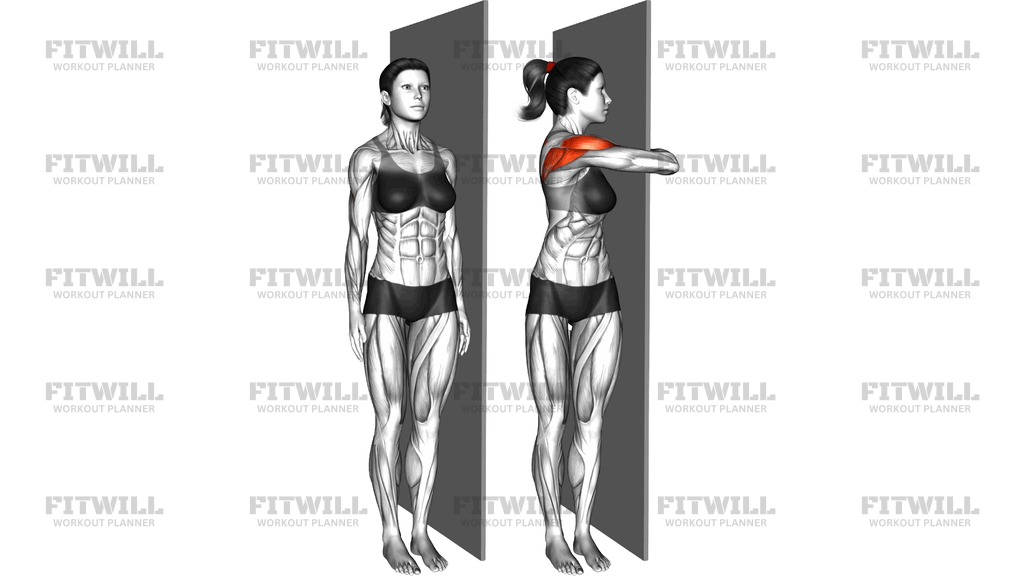
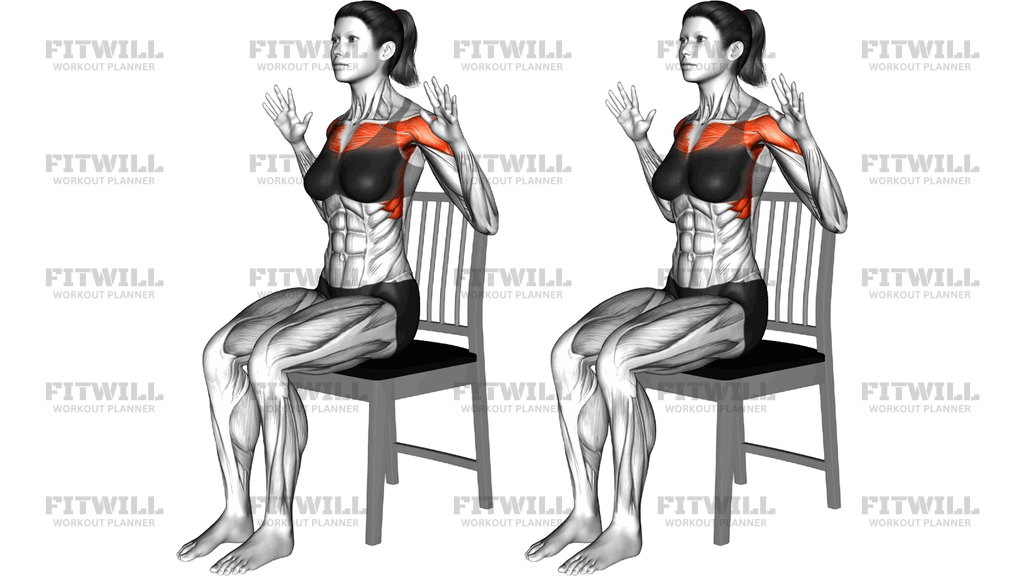
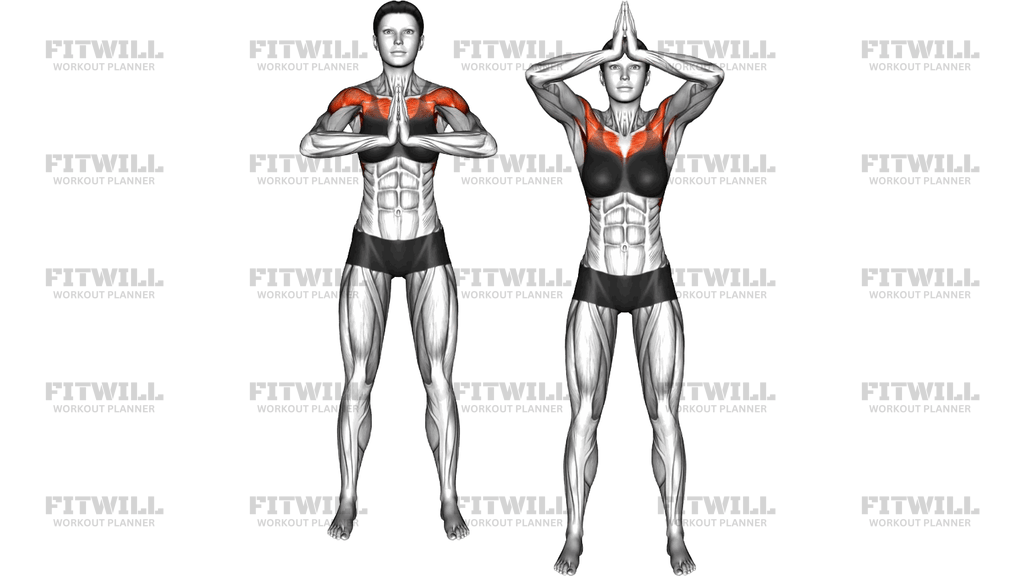
The Standing Alternating 5 Arm Cross And Elbow Lift is a body weight movement performed from a tall standing position with both arms raised to shoulder height. From there, you cross one arm over the other in front of your chest, lift the elbows upward so the crossed arms rise toward your face, then uncross and repeat the pattern with the other arm on top. The alternating structure means each side takes a turn being the working arm, which keeps the effort balanced left to right.
Although no load is involved, the movement is surprisingly demanding through the upper chest and front shoulders. Holding the arms extended at shoulder height while crossing and lifting them creates a sustained isometric squeeze across the clavicular fibers of the chest, and the upward elbow lift adds active work for the anterior deltoids and the muscles that elevate the shoulder girdle. Because the arms stay away from the torso the entire time, you also get a subtle stability demand through the upper back and core to keep the ribs stacked over the hips.
Setup matters more than it looks. A wide or staggered stance, a leaning torso, or shrugging the shoulders toward the ears all make the movement easier by letting gravity or momentum do the work. Standing with the feet roughly hip-width apart, the spine tall, and the shoulders pressed slightly down and back forces the chest and front delts to actually produce the movement rather than just follow it.
This exercise fits well as a warm-up primer before pressing work, as a high-rep finisher after bench or overhead pressing, or as a low-equipment option when training at home or traveling. It is also a useful teaching tool for lifters who struggle to feel their upper chest during presses, since the crossing and lifting pattern puts the clavicular fibers in a shortened, easy-to-familiarize position.
Execute it with intent: move the arms deliberately rather than swinging them, pause briefly when the arms are crossed at the top, and control the uncrossing on the way down. Keep the neck relaxed and the breathing steady throughout. If you feel pinching at the front of the shoulder, reduce the height of the elbow lift slightly rather than pushing through discomfort.
[ Workout Log & Planner ]
Put your next workout in Fitwill
Keep your plan and training log ready when you are.


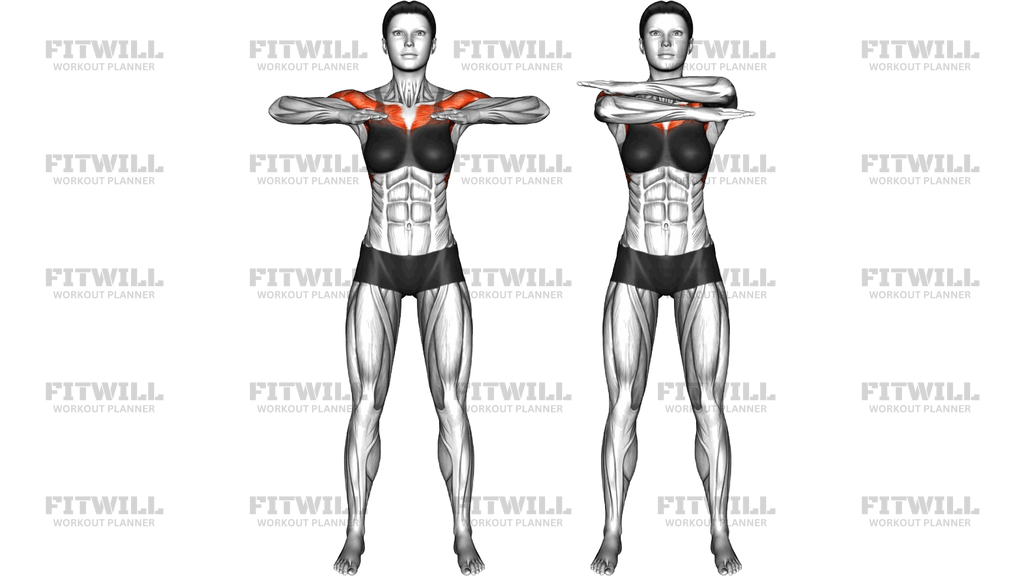
Instructions
- Stand with your feet about hip-width apart, weight spread evenly across both feet, and your spine tall with the crown of your head reaching up.
- Raise both arms straight out to the sides and forward until they are extended at shoulder height, palms facing down and elbows nearly locked but not strained.
- Pull your shoulders down away from your ears and lightly brace your abdominal muscles so your ribs and hips stay aligned.
- Cross one arm over the other in front of your chest at shoulder height, letting the forearms pass over each other.
- Lift both elbows upward together so the crossed arms rise toward chin height, squeezing the upper chest as the arms compress.
- Hold the crossed, lifted position for a brief pause of about a second before moving back.
- Uncross the arms in a controlled manner and return them to the wide, shoulder-height starting position without letting them drop.
- Repeat the cross and lift with the other arm on top, and keep alternating sides for the planned number of repetitions.
- Exhale as you cross and lift the elbows, and inhale as you uncross and return to the start.
- At the end of the set, lower your arms slowly to your sides rather than dropping them suddenly.
Tips & Tricks
- The most common mistake is shrugging the shoulders toward the ears as the elbows lift. Keep the shoulders actively pressed down so the work stays in the chest and front delts instead of the neck.
- Do not let the elbows drop below shoulder height as the arms tire. Once the crossed arms start sagging, the upper chest loses tension and the set loses its point.
- Keep the torso vertical. Leaning back to help lift the elbows turns the movement into a partial body lean rather than a shoulder and chest action.
- Alternate which arm crosses on top every rep, not every set, so both sides get identical work.
- If your shoulders click or pinch at the top, lower the end height of the lift slightly. A controlled lift to just under chin height is enough to keep tension on the upper chest.
- Move at a steady two-to-three second tempo. Because there is no external load, time under tension is what makes this exercise productive.
- Keep the palms facing down and the fingers long. Turning the palms upward or letting the hands flop changes the shoulder rotation and reduces the chest involvement.
- Do this before bench presses or overhead presses as a primer; it warms the clavicular chest fibers and front delts without fatiguing them for heavy pressing.
- If you cannot keep the arms fully extended at shoulder height for the whole set, bend the elbows very slightly rather than lowering the arms below shoulder level.
Frequently Asked Questions
What muscles does the Standing Alternating 5 Arm Cross And Elbow Lift work?
The primary work comes from the upper chest, specifically the clavicular fibers, with strong support from the front shoulders. The upper traps and muscles around the shoulder blades help control the arm position throughout.
Is the Standing Alternating 5 Arm Cross And Elbow Lift suitable for beginners?
Yes, it requires no equipment and the movement pattern is simple to learn. Beginners should start with slower reps and a slightly lower elbow lift until the shoulder position feels comfortable.
Why do the arms cross in front of the chest instead of just raising out to the sides?
The cross places the upper chest fibers in a shortened, squeezed position that a simple side raise does not reach. The elbow lift on top of the cross adds elevation work for the front delts.
How many repetitions should I do of the Standing Alternating 5 Arm Cross And Elbow Lift?
Because the resistance is your own arm weight, higher repetitions work best, typically 10 to 20 alternating reps per set. Use it for warm-up sets before pressing or as a finisher with slower tempo.
My shoulders shrug up when I lift the elbows. How do I fix this?
Actively press the shoulder blades down before starting and check them each rep. If the shrug persists, reduce the height of the elbow lift so you can keep the shoulders down through the full range.
Can I do the Standing Alternating 5 Arm Cross And Elbow Lift every day?
It is low-load and generally fine to perform frequently, even as a daily shoulder and chest activator. If the front of the shoulder feels sore rather than worked, take a rest day.
What can I substitute if this exercise bothers my shoulders?
Try a front raise with a lighter range or a wall slide, both of which keep the arms in front of the body with less compression. Avoid forcing the crossed position if it produces pinching rather than a working sensation.
Should my elbows be straight or bent during the arm cross?
Start with the arms nearly straight at shoulder height, with only a tiny soft bend at the elbows. Locking them hard is unnecessary, and bending them more than slightly shifts the work toward the shoulders and away from the chest.
How do I know I am doing the Standing Alternating 5 Arm Cross And Elbow Lift correctly?
You should feel a steady burn across the upper chest and front of the shoulders while the neck and upper traps stay relaxed. If your neck tightens or your torso leans back, reset your posture and continue with a smaller lift.