Standing Behind Head Clasp And Pushdown
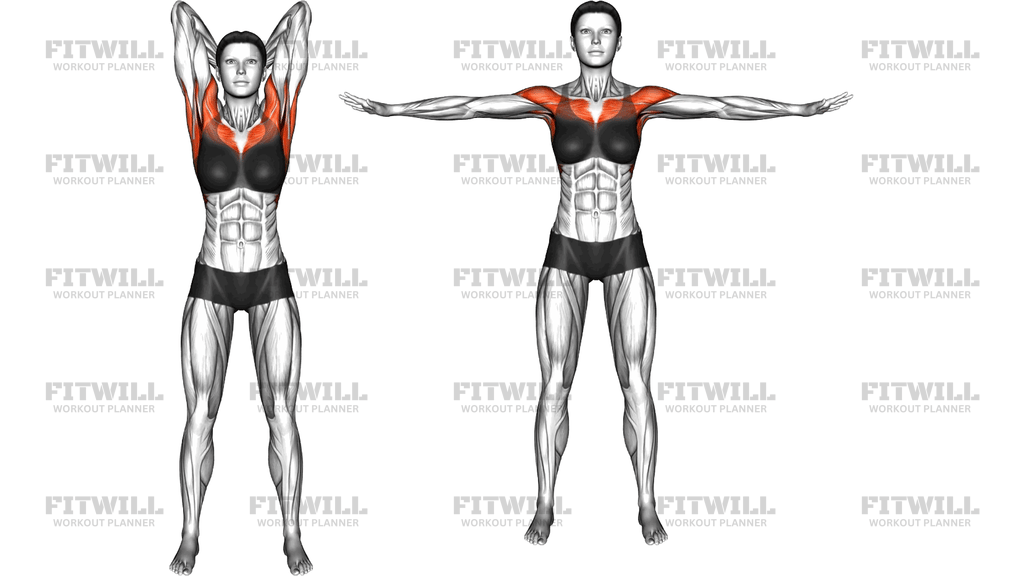
The Standing Behind Head Clasp And Pushdown is a bodyweight mobility drill that moves your shoulders from an overhead, externally rotated position out into a wide, open stretch. You start by clasping your hands behind your head with your elbows pointed forward and up, then gradually press or let the elbows sink down and out to the sides until your arms spread wide. The highlighted areas in the movement are the front of the shoulders and the chest, which lengthen as the elbows travel back, while the upper back and neck muscles work to keep your head and posture steady.
This drill is especially useful for anyone who spends long hours sitting at a desk, driving, or looking at a phone, because those habits pull the shoulders forward and round the upper back. Office workers, lifters who do a lot of pressing, and people with naturally tight chest muscles all tend to feel an immediate release from it. It is also a common warm-up or between-set reset for push-ups, bench presses, and overhead work, since it briefly opens the exact tissues those movements compress.
The setup matters more than it looks. Because your hands are clasped behind your head, there is a natural temptation to pull on the neck or let the head jut forward. Keeping the clasp light and the head neutral ensures the stretch lands in the shoulders and chest instead of straining the cervical spine. Standing tall with ribs stacked over the hips also prevents the lower back from arching to fake extra range.
To execute it well, think of the elbows leading the motion rather than the hands pulling. Draw the elbows down and outward along a wide arc until your arms are stretched out to the sides at roughly shoulder height or slightly below, feeling a comfortable spread across the chest and front delts. The movement should be slow and smooth, taking two to three seconds in each direction, with no forcing or bouncing at the end range.
Because it requires no equipment and very little space, this drill fits easily into a daily routine. Two or three slow repetitions in the morning, before pressing sessions, or after long periods of sitting is usually enough to feel looser. If you have a current shoulder injury or notice pinching rather than a stretch, reduce the range or skip the movement until the shoulder is cleared for overhead positions.
[ Workout Log & Planner ]
Put your next workout in Fitwill
Keep your plan and training log ready when you are.


Instructions
- Stand with your feet about hip-width apart, weight balanced evenly across both feet, and your spine tall.
- Raise both arms and clasp your hands lightly behind your head, fingers interlaced or simply resting against each other, with elbows pointing forward.
- Keep your gaze level and your head neutral so the clasp does not pull your neck forward.
- Brace your core gently and stack your ribs over your hips to avoid arching your lower back.
- Slowly draw your elbows down and out to the sides in a wide arc, letting your hands stay in contact with the back of your head.
- Continue until your arms spread out to roughly shoulder height or a point where you feel a comfortable stretch across your chest and the front of your shoulders.
- Pause in the open position for one to two seconds, keeping your shoulders relaxed and away from your ears.
- Reverse the arc slowly, bringing the elbows back up and forward to the starting position behind your head.
- Exhale as the elbows press down and out, and inhale as they return up.
- Reset your posture between repetitions, then perform two to three slow, controlled reps per set.
Tips & Tricks
- A common mistake is pulling the head forward with the clasped hands, which shifts tension into the neck; keep the clasp light and let the elbows do the moving.
- If you feel pinching at the front of the shoulder, do not force the elbows all the way down to shoulder height; stop a few degrees earlier where the stretch stays comfortable.
- Avoid arching your lower back to gain range; squeeze your glutes slightly and keep the ribs down so the stretch stays in the chest and shoulders.
- Let the shoulder blades glide naturally as the elbows travel; shrugging them up toward the ears defeats the purpose of the opening arc.
- Move slower than feels necessary. Rushing the pushdown turns a shoulder opener into a ballistic swing and reduces the stretch quality.
- If your chest is very tight, start with partial arcs and gradually work toward the full arms-wide position over several sessions.
- Keep the wrists relaxed behind the head; gripping the hands tightly creates unnecessary forearm and neck tension.
- Use this drill before pressing exercises or after long sitting blocks rather than as a max-effort stretch; gentle frequency beats aggressive intensity here.
Frequently Asked Questions
Which muscles does the Standing Behind Head Clasp And Pushdown target?
It primarily stretches the front shoulders and chest, which lengthen as the elbows press down and out. The upper traps and neck muscles work isometrically to keep your head stable while the hands stay clasped behind your head.
Is the Standing Behind Head Clasp And Pushdown a strength exercise or a stretch?
It is best treated as a stretching and mobility drill. The muscles highlighted in the movement are lengthening rather than working against load, so treat it as a warm-up or recovery exercise, not a strength builder.
Can beginners do the Standing Behind Head Clasp And Pushdown?
Yes, it is very beginner friendly because it uses only body weight and a small range of motion. Beginners should simply keep the elbow arc shallower at first and avoid pulling on the head with the hands.
Why do my shoulders pinch when I push my elbows down?
A pinching sensation usually means you are pushing past your current available range or shrugging the shoulders up as the elbows travel. Reduce the depth of the arc, keep the shoulders relaxed and low, and build range gradually.
Should my hands stay clasped behind my head the whole time?
Yes, the clasped position behind the head is what sets the shoulders in the externally rotated starting position. Keep the clasp light so you are guiding the arms, not pulling your head forward.
What can I use instead of the Standing Behind Head Clasp And Pushdown?
Doorway chest stretches, wall slides, and arm circles at shoulder height offer similar opening for the chest and front shoulders. This drill is simply one of the most convenient because it needs no equipment or wall.
How many repetitions should I do?
Two to three slow repetitions with a one to two second pause in the open position works well, and you can repeat that two or three times per day. Quality of the arc matters far more than the number of reps.
When is the best time to do this movement?
It fits well as a warm-up before pressing or overhead lifting, and as a break during long periods of sitting. Avoid doing it aggressively right after an acute shoulder injury or if overhead positions currently cause pain.
Why does my neck feel tight during the exercise?
Neck tension usually comes from pulling on the head with the clasped hands or jutting the chin forward as the elbows drop. Keep the head neutral, gaze level, and let the elbows travel without using the hands to force them.