Slight Bend Top Crossover And Prayer Push
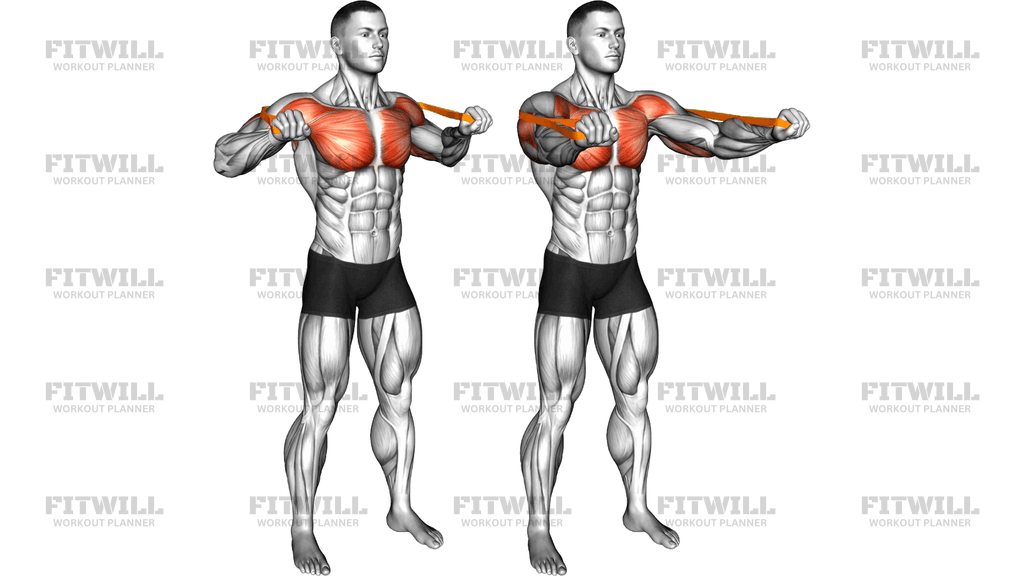
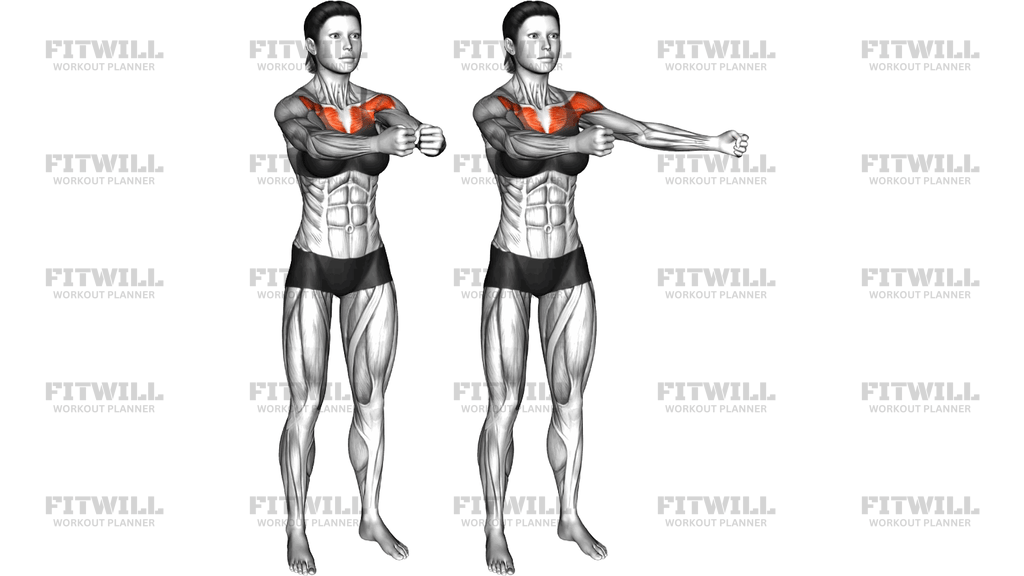
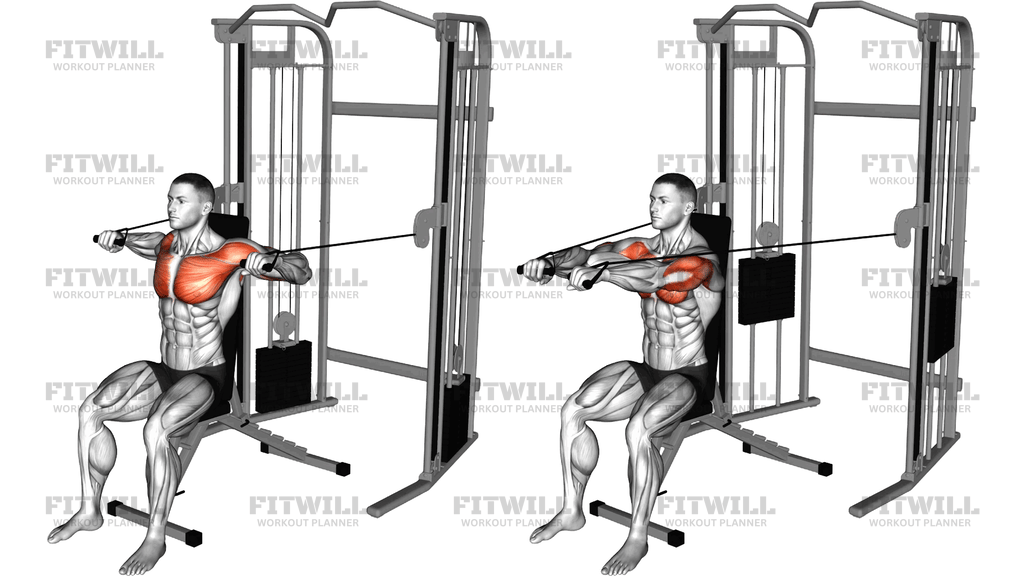
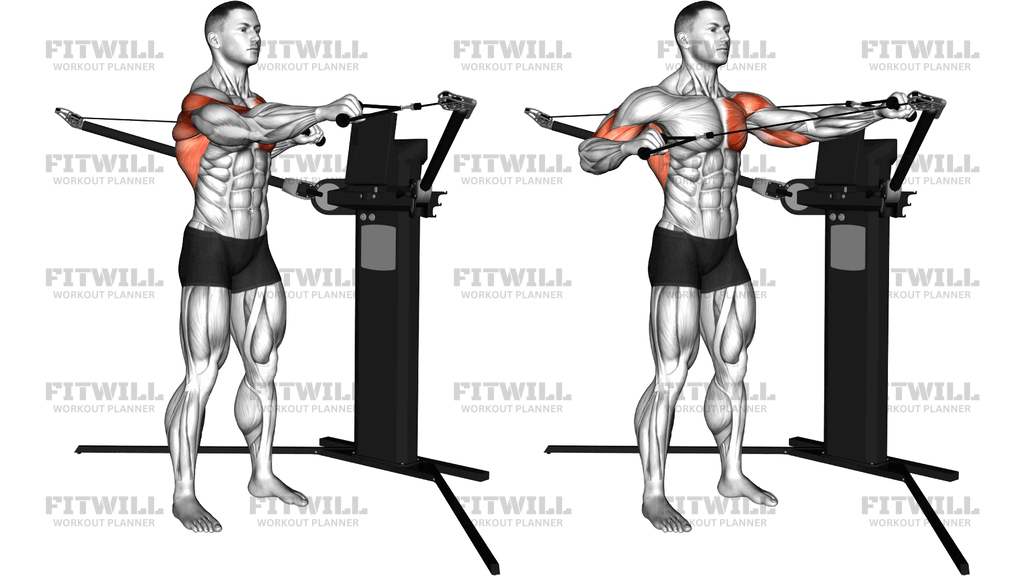
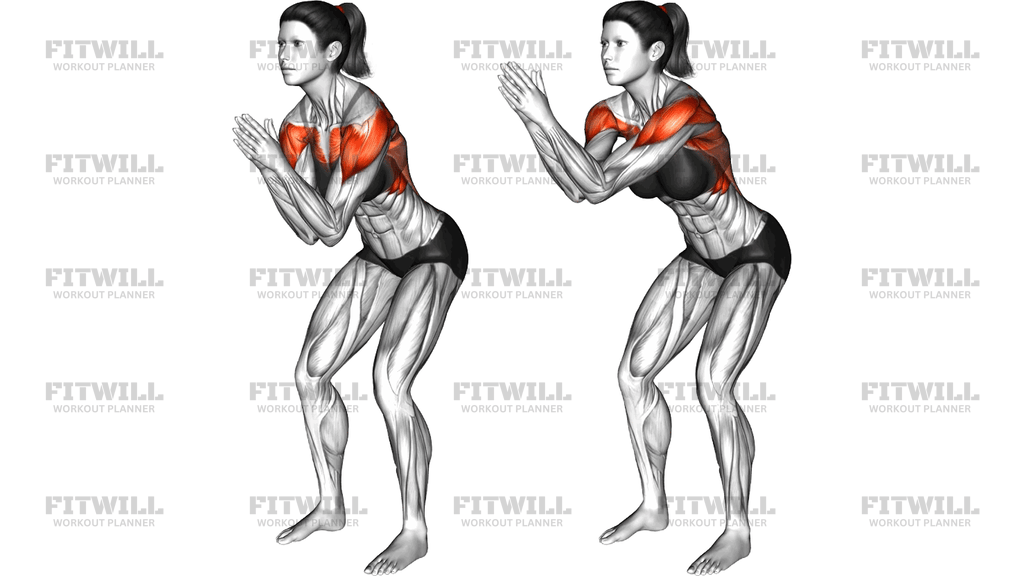
The Slight Bend Top Crossover And Prayer Push is a cable chest exercise that combines two finishing actions into one continuous movement. You set both pulleys at the top of a cable machine, take a handle in each hand, hinge forward slightly at the hips with a small knee bend, and draw the handles down and across your body until your hands meet in front of your chest. From there you press your palms together in a prayer position and squeeze, adding an isometric chest contraction on top of the crossover arc.
This movement is best used as a shaping and finishing exercise rather than a heavy strength builder. Because cables keep tension on the pecs through the entire range, it works well at the end of a chest session when the muscles are already fatigued but you want to chase a deep, controlled squeeze. It is also a good option for people who find barbell or dumbbell pressing uncomfortable on the shoulders, since the arms follow a free, adjustable path and the hands never have to travel behind the torso.
The primary muscles worked are the pectorals, with the slight forward lean shifting some emphasis toward the upper chest fibers as the hands cross downward and inward. The front delts assist on every rep, the triceps lock out the prayer press, and the core and legs work quietly to hold the bent-over stance steady. That bent position is not decorative: it changes the pull angle, keeps the shoulders from flaring up toward the ears, and lets the chest fibers line up properly with the cable path.
Setup matters more here than in most chest work. If the pulleys are not at the top position, the crossover arc will pull the arms upward or straight back instead of down and across, and the pecs lose their line of pull. A slight hinge at the hips, soft knees, and a braced torso give you a stable base so the arms can move independently of the body. Stand in a staggered or shoulder-width stance, far enough forward of the machine that the weight stack does not re-rack between reps.
To execute it well, think of the arms as two cables sweeping toward a single point. Lead with the elbows, keep them slightly bent and fixed, and let the hands travel down and across until they overlap in front of your sternum. Then press the palms firmly together for a beat before opening back up along the same arc. The return should be just as controlled as the pull, resisting the weight as the hands separate.
Use this movement for two to four sets of ten to fifteen reps with a moderate weight. It pairs naturally with presses earlier in the workout, or with flyes as a contrasting angle. Common mistakes are standing too upright, letting the elbows straighten during the crossover, and rushing the prayer squeeze, all of which shift work away from the chest and toward the front delts and momentum.
Fitwill
Log Workouts, Track Progress & Build Strength.
Achieve more with Fitwill: explore over 9600 exercises with images and videos, access built-in and custom workouts, perfect for both gym and home sessions, and see real results.
Start your journey. Download today!




Instructions
- Set both pulleys of the cable machine to the top position and attach a single handle to each side.
- Grip one handle in each hand and step forward, taking a staggered or shoulder-width stance with one foot slightly ahead of the other.
- Hinge forward a small amount at the hips, bend the knees slightly, and let the arms extend up and out to the sides with a soft, fixed bend at the elbows.
- Brace your core and pull your shoulder blades down so your shoulders sit away from your ears before the first rep begins.
- Exhale as you sweep both handles down and across your body, leading with the elbows, until your hands cross in front of your upper chest.
- At the crossover point, press your palms together firmly in a prayer position and squeeze your chest for a one-count pause.
- Inhale as you slowly open the arms back up along the same downward-to-outward arc until you feel a controlled stretch across the pecs.
- Keep the elbow bend constant throughout the set so the hands, not the elbow angle, define the movement path.
- Complete all reps on one side bias before switching which hand crosses on top, or alternate the top hand each rep for even development.
- After the final rep, walk the handles back to the stack and let the weights return gently rather than dropping them.
Tips & Tricks
- If your shoulders shrug during the crossover, you are standing too upright — increase the slight forward bend at the hips and actively press the shoulder blades down.
- The prayer squeeze should come from pressing the palms together, not from pushing the arms straight; if your elbows lock out, the triceps take over and the chest loses tension.
- Choose a weight you can stop and hold at the crossover point for a full second; if the stack pulls your hands apart, drop one plate increment.
- Keep the same slight elbow bend from start to finish — straightening the arms on the way out turns the exercise into a swinging motion instead of a flye arc.
- Alternate which hand crosses over the other each set so both sides of the chest receive the same line of pull over time.
- Stagger your stance so the cable path does not drag your torso backward; if you feel yourself leaning further forward rep after rep, widen your base.
- Let the hands cross slightly past the midline of the body rather than stopping short — that final overlap is where the pec fibers reach their shortest, most contracted position.
- The slight knee bend is there to protect the lower back in the hinged stance; if you feel your back working, soften the knees and re-brace before continuing.
- Slow the return phase down deliberately — many lifters pull with control but let the cables yank their arms back open, which wastes half the rep.
Frequently Asked Questions
What muscles does the Slight Bend Top Crossover And Prayer Push target?
It primarily targets the chest, with the forward-leaning crossover angle placing extra emphasis on the upper chest fibers. The front shoulders assist on every rep, the triceps work during the prayer press, and the core stabilizes the bent-over stance.
Why does this exercise use a slight forward bend instead of standing tall?
The hinge at the hips changes the direction of the cable pull so the hands travel down and across the chest rather than straight back, which lines the resistance up with the pec fibers. Standing upright shifts the load toward the front delts and makes the shoulders shrug.
How is the prayer push different from a regular cable crossover?
In a standard crossover the hands simply pass each other and the rep ends. Here, the hands meet in front of the chest and you press the palms together in a prayer position, adding an isometric squeeze that keeps the pecs contracted through the end of each rep.
Is the Slight Bend Top Crossover And Prayer Push suitable for beginners?
Yes, provided the weight stays light enough to control through the full arc. Beginners should first practice the crossover without the pause, then add the prayer squeeze once the arm path feels smooth.
How high should the cable pulleys be set?
Both pulleys belong at the top of the machine so the cables feed down from above shoulder height. If the pulleys sit at mid or low position, the movement stops being a top crossover and the chest loses its line of pull.
What is the most common mistake with this movement?
Letting the elbows straighten and swing during the crossover, which turns the exercise into a momentum-driven pull. Keep the elbow bend fixed and small, and let the arms sweep as levers rather than pressing movements.
Where should this exercise sit in my chest workout?
It works best as a finishing movement after heavier presses or flyes, using moderate weight for ten to fifteen controlled reps. Loading it heavily first in the session usually compromises the prayer squeeze, which is the point of the exercise.
Can I substitute dumbbell flyes for the Slight Bend Top Crossover And Prayer Push?
Dumbbell flyes on a bench are a reasonable alternative for the pecs, but they lose two things: the continuous tension from the cables and the crossed-hands finish past the body's midline. Cables allow the hands to meet and overlap, which bench flyes cannot replicate.
My wrists ache when I press my palms together — how do I fix that?
Ease the pressure of the prayer press so the palms touch firmly without forcing the wrists back, or reduce the pause length. If discomfort continues, overlap the hands slightly instead of pressing them flat and let the chest contraction do the work.
Is this exercise safe for the shoulders?
Generally yes, because the arms stay in front of the torso and the cable path can be adjusted to avoid pinching positions. Keep the elbow bend soft, avoid letting the hands travel too far behind you on the return, and stop the set if you feel any pinching at the front of the shoulder.