Suspender Y Raise
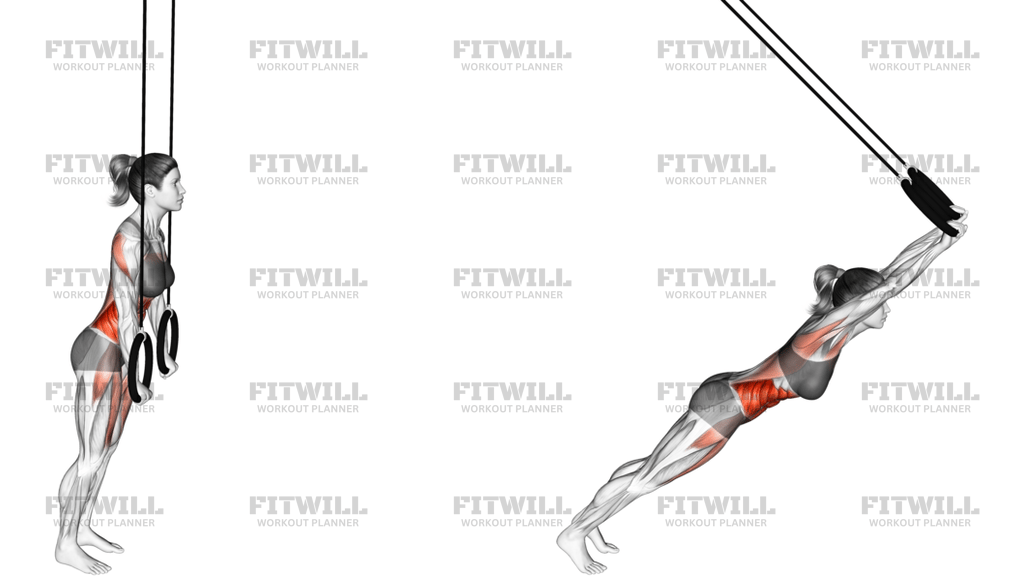
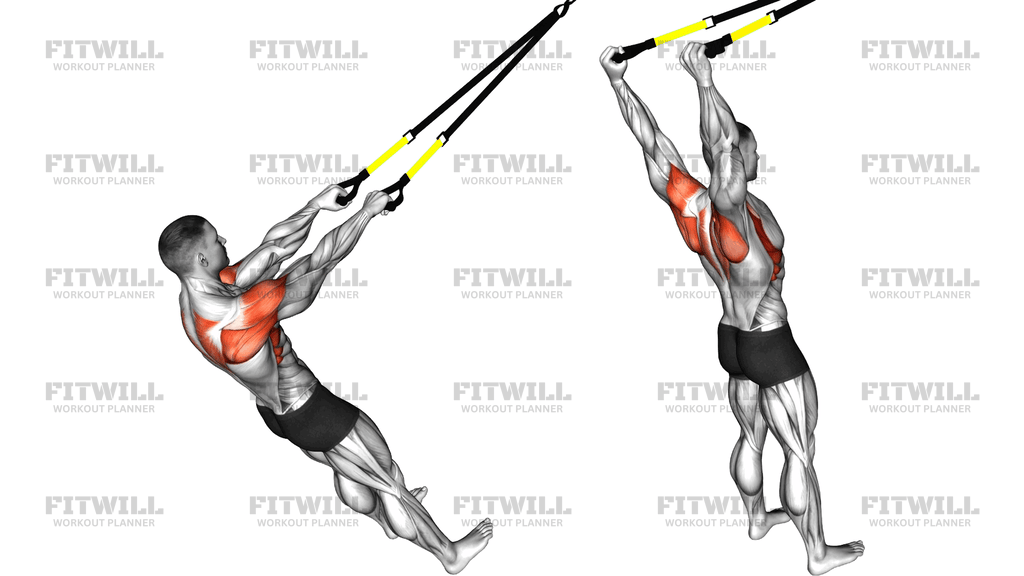
The Suspender Y Raise is a bodyweight shoulder exercise performed with a suspension trainer. You stand facing the anchor point, grip the handles, and lean back until your body forms a straight, angled line from head to heels. From there, you sweep both arms from a forward-extended position up and out into a wide Y shape overhead, letting the straps take your bodyweight as your shoulders and upper back do the work.
What makes this movement special is the leverage. Because your torso is reclined, gravity pulls against your shoulders through a much longer range than a standing dumbbell raise, yet the suspension straps let you dial the difficulty up or down simply by stepping your feet closer to or farther from the anchor. This makes it accessible to beginners who need a gentle angle and challenging enough for advanced lifters who want serious delt and upper-back work without external load.
The Suspender Y Raise primarily trains the middle and rear shoulders, with strong involvement from the upper and lower traps and the rhomboids as the shoulder blades rotate and retract during the raise. Your core, glutes, and legs work isometrically the entire time to keep your body rigid on the angled line, so you also get meaningful trunk stability work for free.
Setup matters more here than in most shoulder exercises. Strap length determines your lean angle, and your lean angle determines the load. If the straps are too short or you stand too far under the anchor, the movement becomes a weak, cramped raise. If you lean too far back too soon, your core will give out before your shoulders do. Adjust until the hardest part of the range, arms fully overhead in the Y, still feels controlled.
To execute it well, keep your elbows nearly straight but not locked, lead with the shoulders rather than the hands, and think about pushing your fists away and up rather than pulling yourself up. The straps should stay taut throughout. At the top of the Y, your arms should be wide, slightly in front of your ears, with your shoulder blades wrapped around your ribcage rather than shrugged toward your neck.
This exercise fits well as an accessory movement on shoulder or upper-back days, as a warm-up activation before pressing, or as a high-rep finisher. It is especially useful for people who spend long hours sitting, since the Y position trains exactly the scapular upward rotation and mid-back strength that desk posture tends to erode. Those with cranky shoulder joints often tolerate it better than heavy overhead pressing because the angle and instability of the straps encourage a lighter, more controlled load.
[ Workout Log & Planner ]
Put your next workout in Fitwill
Keep your plan and training log ready when you are.


Instructions
- Set the suspension trainer to a medium-to-long length and anchor it securely overhead. Stand facing the anchor and grip one handle in each hand with a neutral grip, thumbs up.
- Walk your feet back until your arms are extended in front of you and your body leans away at roughly 45 to 60 degrees, forming a straight line from head through hips to heels.
- Stiffen your core, squeeze your glutes, and set your feet about hip-width apart so your whole body moves as one rigid piece.
- Start with your arms extended together in front of your chest, straps taut, and shoulders pulled slightly down away from your ears.
- Exhale and sweep both arms up and outward at the same time, keeping the elbows almost straight, until your arms form a wide Y above your head.
- At the top, your body should still be leaning back on one line, arms wide, with the tension in your shoulders and upper back rather than your neck.
- Pause briefly in the Y position, then inhale and lower your arms back together in front of you under control, resisting the straps as they pull you slightly forward.
- Complete all reps without letting your hips sag or your body swing, then step forward toward the anchor before releasing the handles.
Tips & Tricks
- If you cannot keep a straight body line at the top of the raise, you are leaning back too far. Step your feet forward to reduce the angle instead of shortening the arm path.
- The most common mistake is shrugging your shoulders toward your ears as the arms rise. Actively press the handles away and think of lengthening your arms, not lifting them.
- Bend your elbows slightly if your shoulders feel pinched at the top, but keep the bend consistent on every rep rather than turning it into a press.
- Do not let the straps go slack between reps. Slack straps mean your bodyweight is dropping out of the movement and your shoulders are resting mid-set.
- Keep your wrists firm and in line with your forearms. Floppy wrists let the handles rotate and dump tension out of the deltoids.
- Brace your glutes hard. When the glutes relax, the hips drop and the lower back takes over the stabilization work, which is exactly what you want to avoid.
- Slow the lowering phase down deliberately. Because the straps pull you forward on the way down, a rushed return is where most people lose their body line.
- Turn your palms slightly so your thumbs point up throughout. This keeps the shoulders in a friendlier position in the overhead Y range.
- Treat the first set as a calibration set. Find the lean angle where the last two reps are hard but your torso never bends, then keep that distance for the remaining sets.
Frequently Asked Questions
What muscles does the Suspender Y Raise work?
The middle and rear shoulders do most of the lifting, while the upper and lower traps and rhomboids control the shoulder blades. Your core, glutes, and legs hold the reclined body line isometrically throughout.
Is the Suspender Y Raise suitable for beginners?
Yes, and it is one of the more beginner-friendly overhead shoulder options because the difficulty scales with your lean angle. A beginner can stand nearly upright and still get the full movement pattern.
How far back should I lean during the Suspender Y Raise?
Lean back only as far as you can maintain a rigid line from head to heels while still reaching the full Y position. For most people that lands between 45 and 60 degrees; adjust strap length and foot position until the top of the raise feels controlled.
Why do my shoulders shrug up when my arms go overhead?
Your upper traps are compensating because the scapular muscles that should rotate the shoulder blade upward are not doing their job. Cue yourself to push the handles away and up, keeping space between your ears and shoulders, and reduce your lean angle until you can do it cleanly.
Can I do the Suspender Y Raise if overhead pressing bothers my shoulders?
Many people find the Y angle and the self-adjusting load of the straps more comfortable than a barbell or dumbbell press, since the shoulder blades are free to move naturally. Start at a shallow lean and stop short of any painful range.
What can I use instead of a suspension trainer?
Light dumbbells or a resistance band can replicate the arm path from a standing or slightly inclined position, though you lose the bodyweight leverage and the added core stability demand that the reclined suspension setup provides.
Should my elbows stay straight during the raise?
Keep them almost straight with only a slight, fixed bend. If your elbows bend and straighten during the set, the movement turns into a hybrid press and the deltoids stop getting consistent tension.
How many reps and sets should I do?
Because the load is your own bodyweight at an angle, this works best in moderate-to-high rep ranges. Two to four sets of 10 to 15 controlled reps is a solid starting point, stepping feet further back as you get stronger.
Is it safe if the straps slip or the anchor looks questionable?
No. Your full bodyweight leans onto the trainer during this exercise, so only use a door anchor or mounting point rated for bodyweight and test it with a partial lean before committing to a full set.