Bodyweight Patrick Step
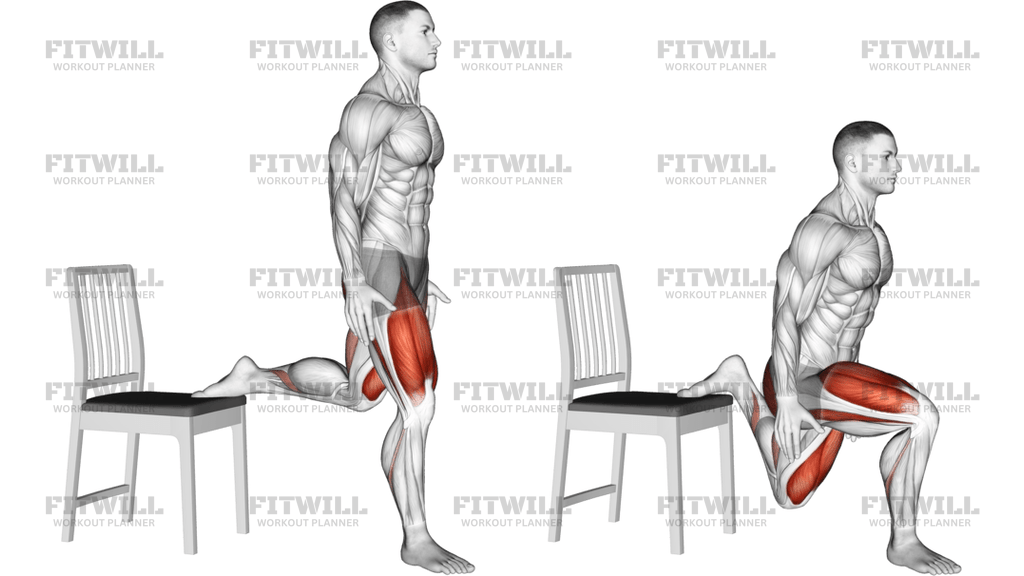
The Bodyweight Patrick Step is a single-leg step-down that hammers the quadriceps, especially the inner quads around the knee. You stand tall on a low step or platform with hands on your hips, reach one foot down to the floor in front of you, let the heel of that reaching foot settle, and then pull yourself back up using only the leg on the step. It looks simple, but because the working leg stays loaded through the entire rep, the knee-extensor demand is far higher than it appears.
This movement is popular in knee-health and prehab programming because it trains the leg through a deep range while the load stays modest. The front knee travels well past the toes during the descent, which builds strength and tolerance in the exact position many people avoid. Runners, lifters returning from time off, and anyone whose knees complain on heavy squats often use Patrick Steps to rebuild capacity gradually.
The setup matters more than people expect. The step height should let your reaching foot touch the floor lightly without your hips dropping or your torso pitching forward. Hands stay on the hips or lightly at your sides rather than reaching for support, so the working leg does all of the braking and all of the lifting. Keep your weight stacked over the standing leg instead of shifting onto the foot that touches down.
To execute well, think of the floor-bound foot as a gauge rather than a helper. It should kiss the ground with the ball of the foot or the heel, carry almost no load, and come straight back up as you drive through the standing leg. The descent is slow and quiet, the pause at the bottom is brief, and the return is deliberate. Rushing the lowering phase turns the drill into a hop and erases most of its value.
Common use cases include warm-ups before lower-body training, high-rep finishers for the quads, and unilateral strength work for people who want single-leg skill without external load. Because each rep exposes side-to-side differences quickly, it doubles as a simple assessment: one leg usually feels stronger or steadier, and that asymmetry is exactly what you want to train down.
For safety, start with a low step and a shallow range you can control smoothly. Stop short of any depth that causes pinching or pain at the front of the knee, and let your strength and range grow over weeks rather than days. If balance is the limiting factor at first, standing near a wall for reassurance is fine, as long as you are not leaning on it for help.
[ Workout Log & Planner ]
Put your next workout in Fitwill
Keep your plan and training log ready when you are.


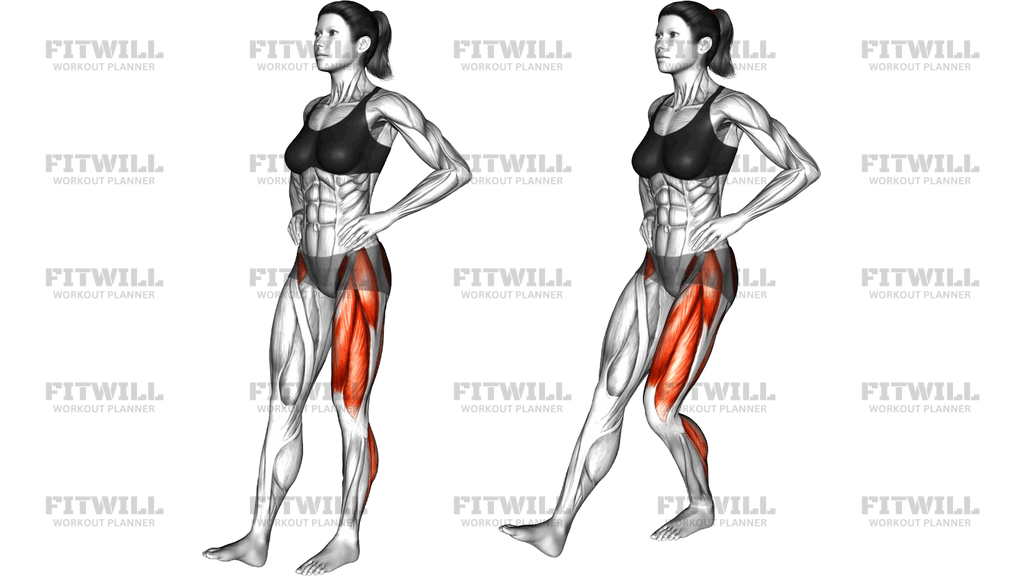
Instructions
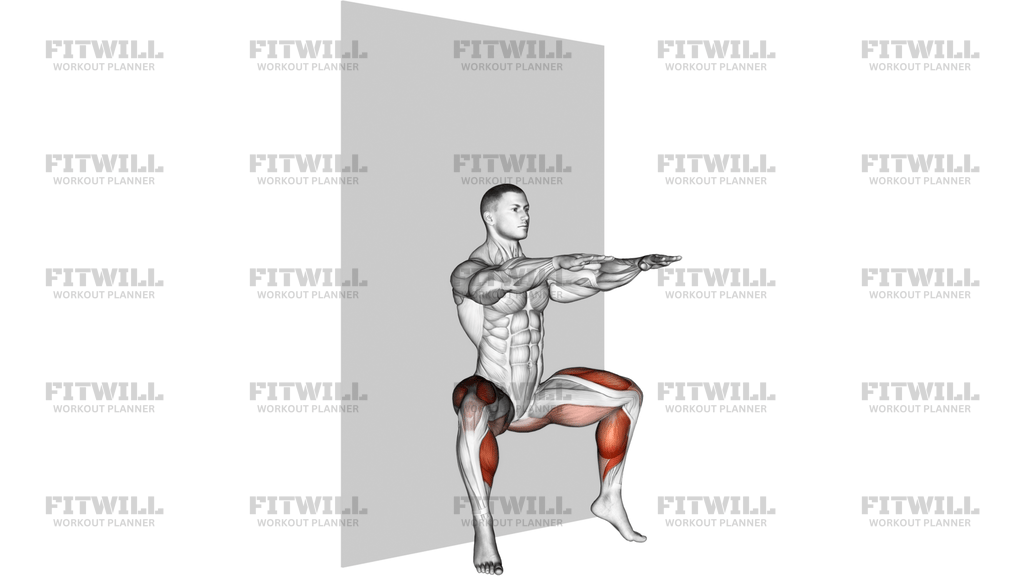
- Stand on a low step or stable platform with your full working foot planted near the front edge and your hands resting on your hips.
- Let your other leg hang slightly behind you, then reach it forward so it can reach the floor in front of the step without you leaning or dropping your hips.
- Brace your core and keep your chest tall, with your weight stacked directly over the standing leg.
- Slowly bend the standing knee and lower your body, letting the front knee travel forward over the toes while the reaching foot descends toward the floor.
- Touch the floor lightly with the ball of the reaching foot, keeping almost all of your load on the working leg on the step.
- Pause for a beat at the bottom without bouncing or dumping weight onto the floor-bound foot.
- Drive through the working leg to straighten the knee and lift your body back up, raising the reaching foot clear of the floor as you rise.
- Exhale as you lower and inhale as you press back up, keeping your breathing steady throughout the set.
- Complete all repetitions on one leg, then reset your stance and switch sides, matching the range and tempo between legs.
Tips & Tricks
- If your hips sway side to side on the way down, shorten the reach of the bottom foot or lower the step height until your torso stays stacked over the working leg.
- The most common mistake is letting the floor-bound foot take over at the bottom; tap the ground, do not stand on it, and you will keep the tension where it belongs.
- A fast, noisy lowering phase means the quads are not doing the braking. Aim for a two- to three-second descent with a silent touchdown.
- Letting the knee collapse inward is a red flag. Think of spreading the floor with the standing foot and track the knee over the second and third toes.
- If your ankle feels pinched at the front when the knee travels over the toes, ease the depth back a few centimeters rather than forcing the range on day one.
- Keep the reaching foot relaxed. Pointing or clawing that foot toward the floor usually signals you are shifting weight onto it.
- Hands on hips give you instant feedback: if one hand presses down for balance, the rep is drifting away from the working leg.
- Start with fewer reps than you think you need. The quads around the knee often fatigue quickly on Patrick Steps, and form degrades fast once it does.
Frequently Asked Questions
What muscles do the Bodyweight Patrick Step work?
The quadriceps are the primary mover, with extra demand on the quads near the knee. The glutes, calves, and inner thigh muscles assist with control and stability throughout the lowering and lifting phases.
How is the Bodyweight Patrick Step different from a regular step-up?
In a step-up the free leg drives you to the top, but in a Patrick Step the working leg lowers you down and pulls you back up while the other foot only touches the floor. That makes it much more demanding on the quads despite using no weight.
Is the knee traveling over the toes dangerous in this exercise?
For most healthy knees, controlled knee-over-toe travel is a normal and useful range, and this exercise is often used to build tolerance to it. Move into the depth gradually and stay short of any position that causes pinching or pain.
Can beginners do the Bodyweight Patrick Step?
Yes, but start with a very low step and a shallow descent, only reaching the bottom foot partway to the floor. As strength and balance improve, increase the step height and the depth of the reach.
Why does one leg feel much weaker when I do the Bodyweight Patrick Step?
Single-leg work exposes side-to-side differences that bilateral exercises hide, so a gap between legs is common. Train each side with the same reps and start with your weaker leg so it sets the standard.
Should the reaching foot support any of my weight?
No, it should only touch down lightly with the ball of the foot or heel as a depth reference. If you feel yourself pressing into the floor with that foot, reduce the depth or step height until the working leg can handle the full load.
What can I use if I don't have a step platform?
Any stable, non-slippery elevation works, such as a low stair, a sturdy aerobic step, or a flat weight plate. Avoid anything that rocks or slides, since your full weight rests on it for the entire set.
How many reps and sets of the Bodyweight Patrick Step should I do?
Most people do two to four sets of six to twelve controlled reps per leg, stopping before form breaks down. Because the lowering phase is the main source of tension, quality matters more than chasing high numbers.
Where should the Bodyweight Patrick Step fit in my workout?
It works well as a warm-up activation before squats or lunges, or as a finishing movement for the quads after your main lifts. Keep it before heavy work if you are using it for skill and control, and after if you are using it for volume.