Standing Double Elbow Touch And Elbow Raise
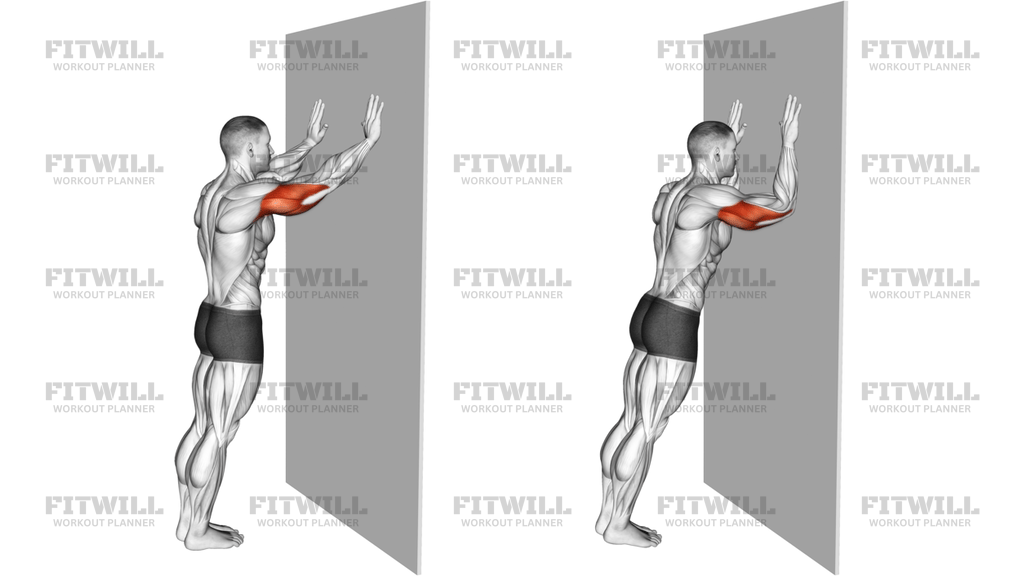
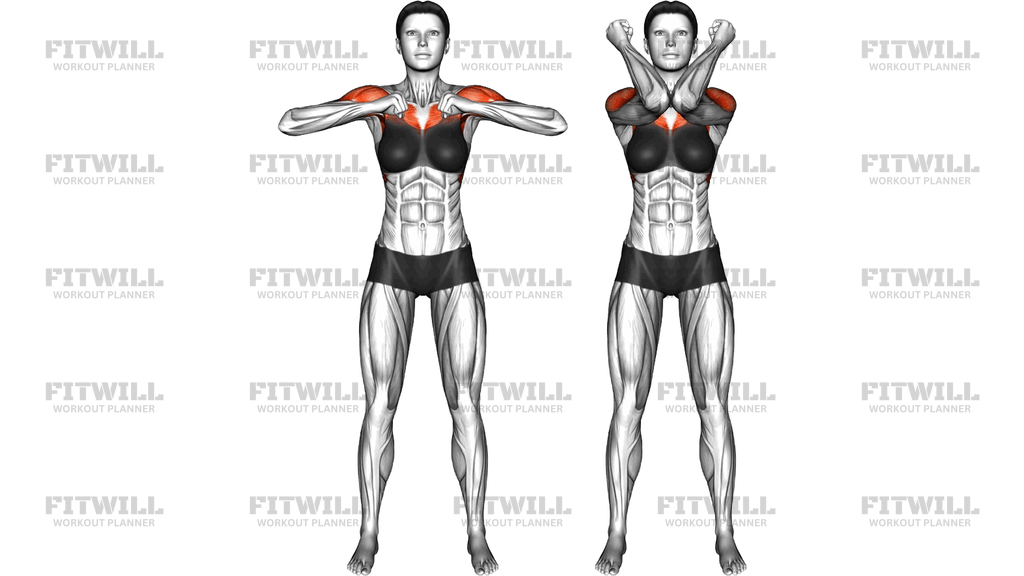
The Standing Double Elbow Touch And Elbow Raise is a bodyweight movement performed entirely with your arms: you stand tall, lift both arms into a bent-elbow position at shoulder height, then drive your elbows together so they touch or cross in front of your chest, before raising and reopening them out to the sides. Because there is no external load, all of the work comes from your own muscular control, and the movement specifically challenges the front of the shoulders along with the upper chest fibers that help pull the arms across the body.
This exercise is a useful warm-up primer before pressing days, since it takes the shoulders through horizontal adduction and elevation without weight, waking up the anterior deltoids and the stabilizing muscles around the shoulder girdle. It also works well as a standalone activation drill for anyone who sits at a desk with rounded shoulders, because it repeatedly moves the arms through a full crossing range that everyday life rarely uses. People rehabilitating general shoulder stiffness or beginners who are not yet ready for loaded front raises can use it to build coordination and awareness of how the shoulder actually moves.
Setup matters more than it looks. Your stance should be about hip-width with your weight balanced over both feet, ribs stacked over the pelvis, and your elbows starting level with your shoulders. If your torso leans back or your shoulders shrug toward your ears, the front delts stop doing the work and the traps take over, which defeats the purpose of the drill. Keeping the fists loosely closed and the neck relaxed helps you stay honest with the movement.
To execute it well, think about leading with the elbows rather than the hands. The elbows travel forward and inward toward the midline of your chest, touch or lightly cross, then lift slightly as they reopen out to the starting position. The path should feel like a smooth arc, not a jerk. Move at a moderate tempo with a one- to two-second pause at the touching point so you actually feel the front of the shoulders engaging.
In practice, you will see this drill used in group warm-ups, dance and combat-sport preparation, and general shoulder health routines. It pairs naturally with arm circles and band pull-aparts. Because it is gentle and load-free, the main safety consideration is simply avoiding forcing the elbows past a comfortable crossing range, especially if you have a history of shoulder impingement. Stop at the depth where the movement feels smooth and pain-free.
[ Workout Log & Planner ]
Put your next workout in Fitwill
Keep your plan and training log ready when you are.


Instructions
- Stand with your feet about hip-width apart, weight spread evenly across both feet, and your spine tall with the ribs stacked over the pelvis.
- Raise both arms out to the sides and bend the elbows to roughly 90 degrees so your upper arms are level with your shoulders and your loose fists point forward near the midline of your chest.
- Relax your neck and pull your shoulder blades down slightly so they are not riding up toward your ears.
- Brace your core lightly to keep the torso still, then exhale as you drive both elbows forward and inward until they touch or lightly cross in front of your upper chest.
- Pause for one to two seconds at the touching point, feeling the front of the shoulders and upper chest shorten.
- Keeping the elbows high, begin to reopen them out to the sides along the same arc, allowing them to rise slightly as they separate.
- Inhale as the elbows travel back out, stopping once they return to the starting position level with your shoulders.
- Maintain a steady rhythm, moving with control rather than speed, and keep the hands relaxed the entire time.
- Complete your target repetitions, then lower the arms to your sides and roll the shoulders gently to reset before the next set.
Tips & Tricks
- Lead with the elbows, not the fists. If your hands cross first, the arms collapse inward and the front delts lose tension on the touch.
- Watch for shrugging. If your traps are burning instead of your shoulders, drop the elbow height slightly and consciously press the shoulder blades down before each rep.
- Do not let the lower back arch as the elbows come together. Brace the abs so the crossing comes from the shoulders, not from leaning the chest forward.
- Aim for the elbows to meet in front of the sternum, not the face. Crossing too high shifts the work into the neck and upper traps.
- If your elbows cannot touch without forcing it, bring them close together instead. The contact point is a target, not a requirement.
- Slow the reopening phase down. Most people rush the way out, but the eccentric control is where the shoulder stabilizers get the most benefit.
- Keep the fists soft. Squeezing the hands tightly creates unnecessary tension that travels up the forearms into the neck.
- Use this drill before bench presses, overhead presses, or push-ups to pre-activate the front delts, but stop if you feel any pinching at the front of the shoulder.
Frequently Asked Questions
Which muscles does the Standing Double Elbow Touch And Elbow Raise work?
The front shoulders do most of the work as the elbows drive across the body, with the upper chest assisting during the crossing phase. The upper traps and rotator cuff stabilize the shoulder blades throughout.
Is the Standing Double Elbow Touch And Elbow Raise suitable for beginners?
Yes, it is one of the most accessible shoulder drills because it uses no equipment and no load. Beginners should focus on keeping the elbows at shoulder height and avoiding a shrug rather than on speed or reps.
Should my elbows actually cross each other, or just touch?
Either is acceptable. Touching is enough to get the contraction, and a light cross is fine if it feels comfortable. If crossing causes any pinching at the front of the shoulder, stop at the touch point instead.
Why do my traps fatigue before my shoulders during this exercise?
That usually means your elbows have drifted above shoulder height or your shoulder blades are riding up. Lower the starting position slightly and actively press the shoulder blades down before each repetition.
Can I use the Standing Double Elbow Touch And Elbow Raise as a warm-up?
It works very well as a warm-up before pressing movements like push-ups, bench presses, or overhead presses. Do 10 to 15 smooth repetitions to bring blood flow into the front delts and upper chest.
How many reps and sets should I do?
For activation or warm-up, 2 to 3 sets of 12 to 20 controlled repetitions is typical. Since the movement is bodyweight only, the goal is quality of motion rather than reaching muscular failure.
What can I substitute if this movement bothers my shoulders?
Try arm circles at a comfortable height, or a single-arm version where only one elbow crosses at a time. Both reduce the amount of horizontal adduction required while still warming the front delts.
Do I need to squeeze my fists during the exercise?
No. Keep the hands loosely closed. A tight grip creates tension that travels up the forearms and into the neck, which can pull your form away from the shoulders.
Is it safe to do the Standing Double Elbow Touch And Elbow Raise every day?
For most people, yes, because the load is very low and the range is natural for the shoulder. If you have a current shoulder injury or a history of impingement, check with a qualified professional before adding any daily drill.