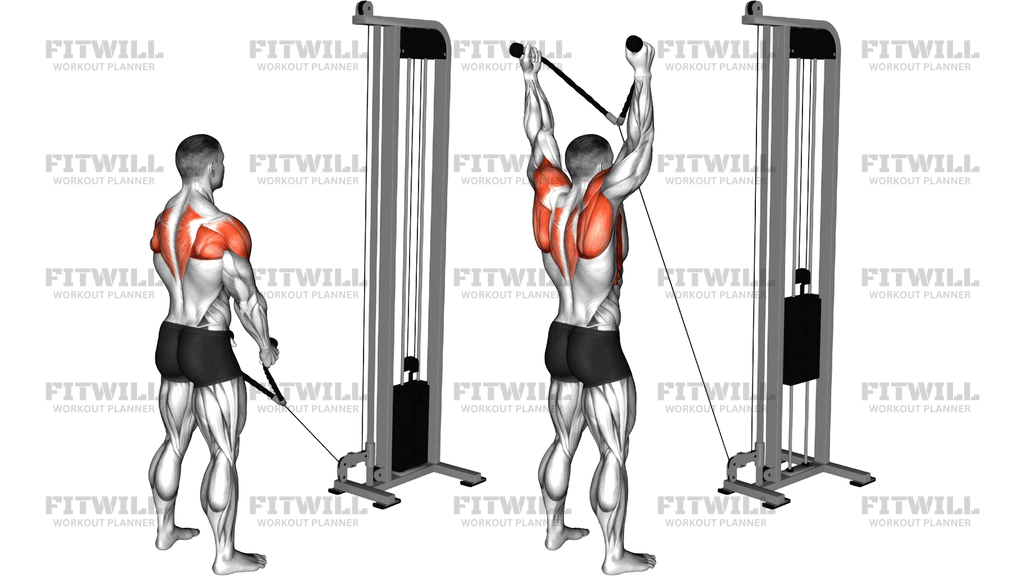
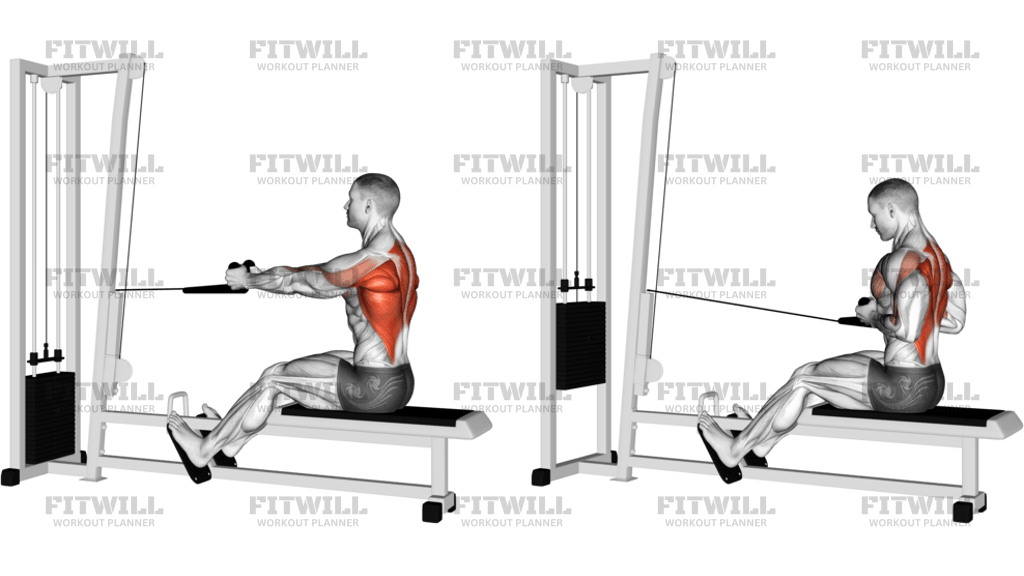
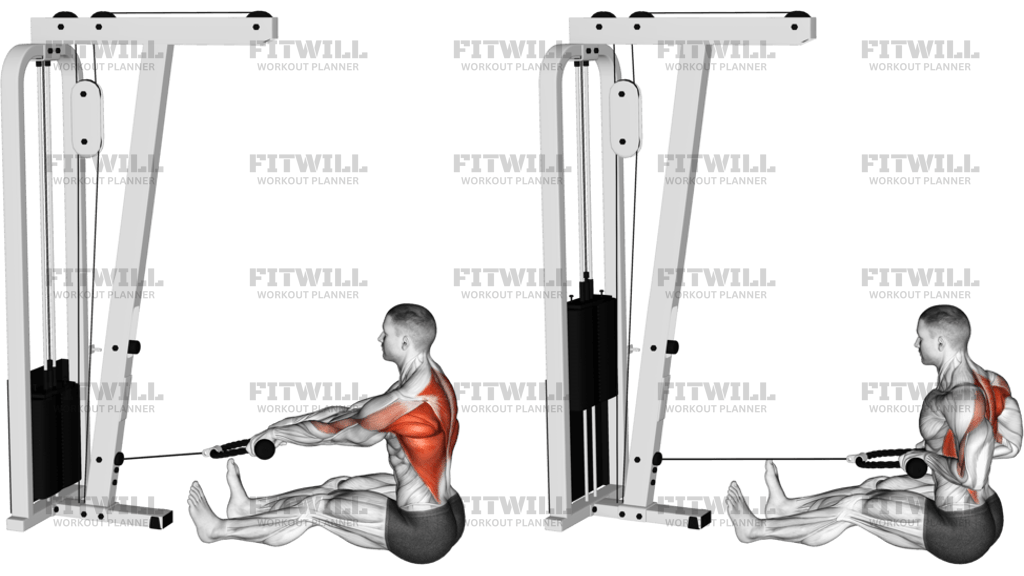
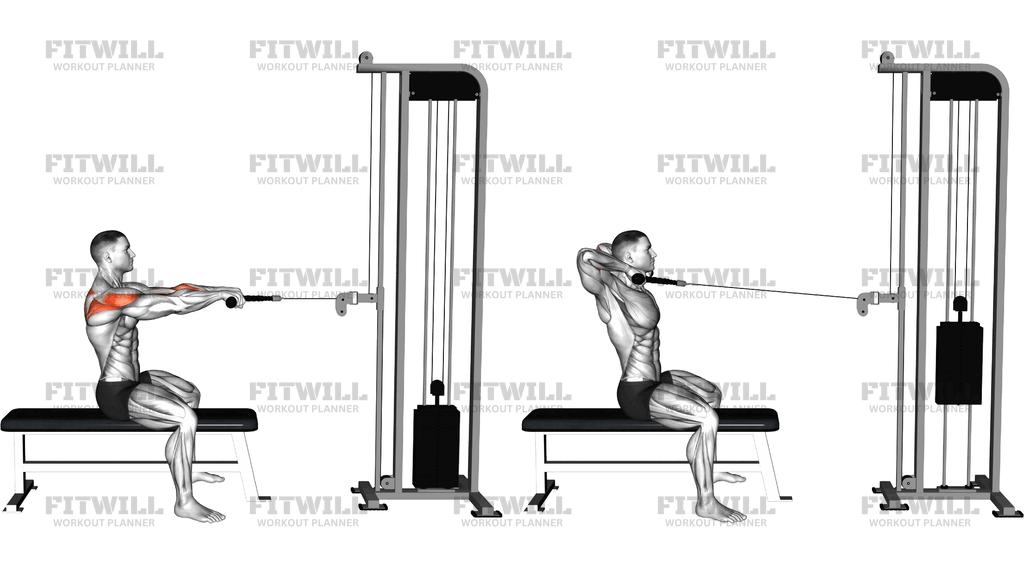
Standing Double Hand Row
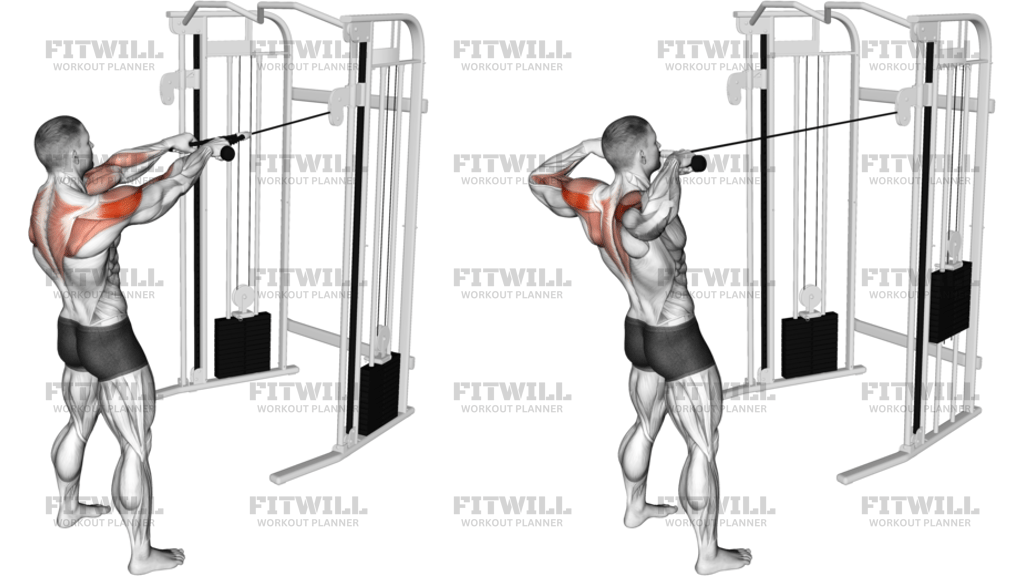
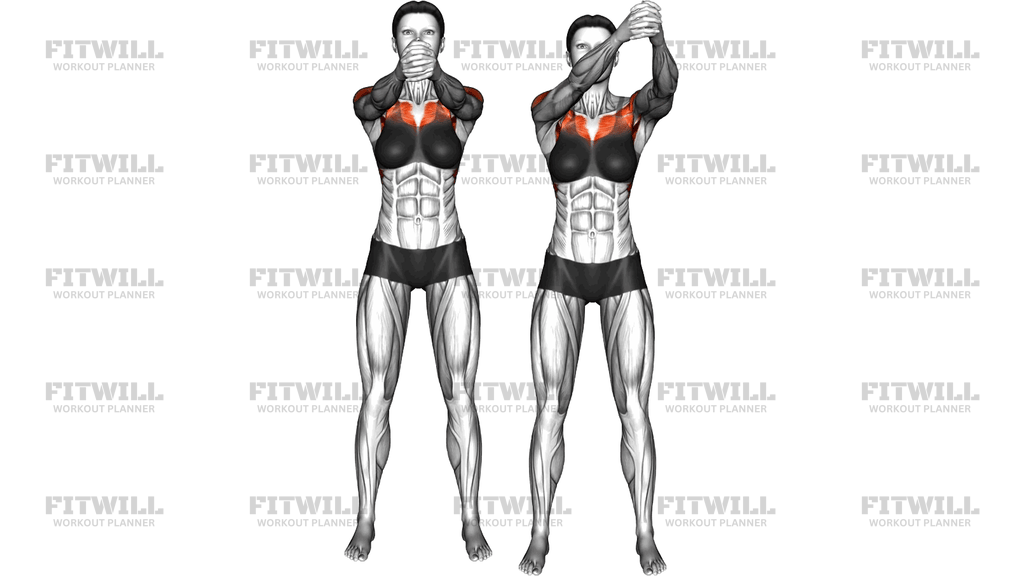
The Standing Double Hand Row is a standing cable pull performed with both hands gripping the same attachment, drawing the hands up and in toward the chin or upper chest while the elbows travel wide of the body. Unlike a seated row, where the torso is braced against a pad, your legs and trunk have to do all of the stabilizing here, which makes it as much a posture exercise as a pulling one.
The main work comes from the upper back — the middle traps and rhomboids retract the shoulder blades as you pull — with strong support from the shoulders, particularly the front and rear deltoid heads depending on the exact elbow path you choose. The biceps assist through the elbow flexion, and the forearms and grip work continuously to hold the attachment as the load pulls your arms back toward the stack.
Setup matters more here than in most rows because there is nothing behind you to lean on. The cable should run roughly level with your face or collarbone, your feet should be planted at hip width with a slight knee bend, and your trunk needs to stay upright rather than rocked backward. If the anchor point or your stance drifts, the pull turns into a body-English swing and the upper back stops doing the job.
To execute well, start with the arms long and a light tension already on the cable. Pull by driving the elbows up and outward, keeping them higher than the wrists, and finish with your hands close to the chin and the shoulder blades squeezed together. Pause for a beat, then let the arms extend under control until the shoulder blades have fully separated again before starting the next rep.
This movement slots in well as an upper-body accessory on back or shoulder days, as a warm-up activation before heavier pressing or pulling, or as a higher-rep finisher when you want the upper back and shoulders fatigued without loading the spine. It is also a practical option for people who sit a lot, since the wide-elbow pull directly trains the retracted shoulder position that desk posture erodes.
Keep the load honest. A weight that forces you to lean back, shrug violently, or bounce at the end range defeats the purpose of a standing pull. Choose something you can move through the full elbow path with a one-second hold at the top, and the exercise will reward you with better shoulder mechanics and a thicker, more resilient upper back.
Fitwill
Log Workouts, Track Progress & Build Strength.
Achieve more with Fitwill: explore over 9600 exercises with images and videos, access built-in and custom workouts, perfect for both gym and home sessions, and see real results.
Start your journey. Download today!




Instructions
- Set the cable attachment at a height level with your face or upper chest and grip the rope or handles with both hands, thumbs up.
- Step back a foot or two from the stack and set your feet hip-width apart with a soft bend in the knees so the cable tension is already pulling gently on your arms.
- Stand tall with the chest open, ribs stacked over the pelvis, and brace the abdominal wall as if bracing for a light push.
- Begin each rep with the arms extended and the shoulder blades allowed to drift slightly forward with the reach.
- Pull both hands up and in toward the chin by driving the elbows high and wide, keeping them above wrist level throughout the pull.
- Finish with the hands near the chin and the shoulder blades pulled fully together; hold that top position for a full second.
- Reverse the pull slowly, letting the arms extend and the shoulder blades spread until the cable is close to but not resting on the stack.
- Exhale as you pull toward the chin and inhale as the arms return to the start.
- Complete the set, then release one hand first and let the stack settle before stepping away from the cable.
Tips & Tricks
- If your shoulders creep up toward your ears at the top, the weight is too heavy or you are leading with the traps — drop the load slightly and think about pulling the elbows back and down around the ribcage instead of hoisting the hands.
- Elbows dropping below the wrists turns this into a biceps curl with a shrug attached; check your elbow height in a mirror and reset if the hands finish above the elbows.
- Standing too close to the machine removes tension at the start of the rep, so the first third of the pull goes untrained — step back until there is clear resistance even with the arms fully extended.
- Do not rock backward as you pull; if the trunk swings, the standing setup has become a hip-hinge heave. Reduce the weight and imagine a wall behind your heels holding you upright.
- A brief pause with the hands at the chin is where most of the upper-back benefit lives; rushing through the top position turns the set into a momentum drill.
- Neutral or slightly supinated grip with the thumbs up keeps the shoulder in a friendlier path than forcing the elbows above shoulder height with heavy load — if pinching shows up at the top, shorten the range instead of stopping altogether.
- Keep the wrists straight rather than bent back; flexed wrists sneak in when the grip is under-challenged and shift tension away from the pulling muscles.
- Use this before heavy pressing days as a two-to-three set activation with light weight — the shoulder blades respond well to high-quality, low-fatigue reps.
Frequently Asked Questions
Which muscles does the Standing Double Hand Row work?
The primary movers are the middle traps and rhomboids of the upper back, with the front and rear deltoids contributing through the high elbow path. The biceps, forearms, and grip assist, and the legs and trunk work statically to keep you upright.
How high should the cable be set for the Standing Double Hand Row?
Anchor it level with your face or upper collarbone so the cable runs roughly parallel to the floor when your arms are extended. If the attachment sits much lower, the pull turns into a low row instead of the chin-height path this exercise calls for.
Is the Standing Double Hand Row suitable for beginners?
Yes, as long as the load stays light enough to control without leaning back or shrugging. Beginners often progress faster by mastering the elbow-high pull path with minimal weight before adding resistance.
Why do the elbows need to stay wide and high in this row?
The high, wide elbow path is what drives the shoulder blades together and targets the upper-back muscles along with the deltoid area. Letting the elbows sink converts the movement into a standard row or a biceps-dominant curl.
What is the most common mistake in the Standing Double Hand Row?
Leaning backward and swinging the trunk to move the weight. This shifts work away from the upper back and turns a precise standing pull into a full-body heave, so fix it by lowering the load and bracing the trunk before each rep.
Can I do the Standing Double Hand Row without a cable machine?
A resistance band anchored at face height works well as a substitute — the setup and pulling path stay the same, and the band actually increases tension toward the top of the rep, which suits the pause at the chin.
How does the Standing Double Hand Row differ from a seated cable row?
The seated version is pad-supported and pulls the hands toward the lower chest, making it more lat-focused. The standing double-hand version pulls toward the chin with high elbows, biases the upper back and shoulders, and adds a trunk-stabilization demand the seat normally handles.
My shoulders pinch at the top of the pull — is this exercise safe for me?
Stop at the height where the pinch begins and work just below it, or lower the weight and narrow the elbow flare slightly. Persistent pinching during pulling motions is worth discussing with a qualified professional before continuing with heavy loads.
How many sets and reps work best for the Standing Double Hand Row?
Two to four sets of 10 to 15 reps with a one-second hold at the top covers most goals, from activation to accessory work. Because the standing setup limits how much load you can cheat with, higher-rep sets tend to be more productive than grinding heavy singles.