Alternate Opposite Superman Lift And Row
The Alternate Opposite Superman Lift And Row is a prone body weight exercise that combines the classic superman hold with a controlled rowing pull of the arm. You lie face down on the floor with your arms stretched out overhead, then lift one arm and the opposite leg at the same time. As the arm lifts, you draw it back toward your hip in a rowing motion, squeezing the shoulder blade before extending it forward again and switching sides. The result is a movement that trains spinal extension, scapular retraction, and hip extension all in one rhythm.
This exercise is especially useful for people who spend long hours sitting, because it directly works the muscles that weaken in a seated posture: the erector spinae along the lower back, the rhomboids and mid-traps between the shoulder blades, and the glutes. It also fits well into warm-ups, back-focused home workouts, and rehabilitation-style routines where no equipment is available and load on the spine needs to stay light.
The setup matters more than it looks. Because you are face down with limbs moving on opposite sides, your lower back and core are responsible for keeping the torso square and stable. If you rush, the hips tilt, the lower back arches aggressively, and the rowing arm stops doing the work. Keeping the movements slow and the opposite limbs that stay down pressed gently into the floor gives you the control you need.
To execute it well, lift only as high as you can without straining, pull the elbow back until the hand is roughly level with your ribs, and pause briefly at the point of maximum squeeze. The row should feel like you are pulling something toward your hip, not just swinging the arm. Breathe steadily throughout, exhaling on each lift and row, and keep the neck in line with the spine by looking at the floor.
A common use case is programming two to three sets of eight to twelve alternating repetitions per side as part of a lower back or posture circuit. It pairs naturally with planks and bird dogs for a complete core-and-back session. If you feel pinching in the lower back rather than muscle effort, reduce the lift height and slow the tempo before adding any external resistance like light dumbbells.
[ Workout Log & Planner ]
Put your next workout in Fitwill
Keep your plan and training log ready when you are.


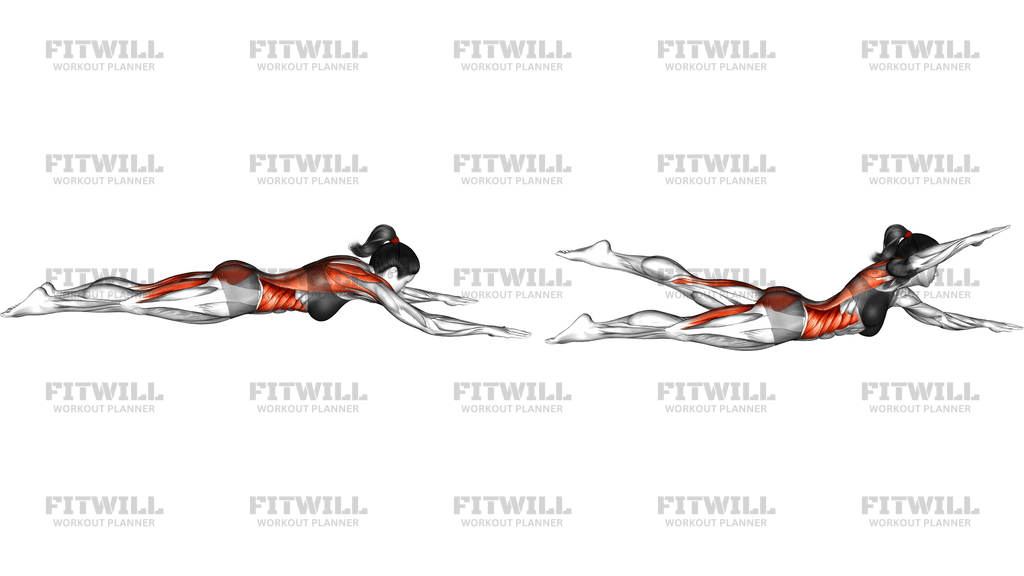
Instructions
- Lie face down on an exercise mat with your legs straight behind you and both arms extended overhead, palms facing the floor.
- Point your toes away and position your feet about hip-width apart so your body forms one long line from fingers to heels.
- Gently brace your abdominal muscles and rest your forehead or chin lightly on the mat, keeping your neck neutral.
- Exhale and lift your right arm and left leg a few inches off the floor at the same time, keeping both elbows and knees straight during the lift.
- Bend the lifted arm and pull your elbow back toward your hip, squeezing the shoulder blade toward your spine in a rowing motion.
- Pause for one to two seconds at the fully rowed position, with the hand near your ribs and the opposite leg still raised.
- Extend the arm back overhead in a controlled manner, then lower the arm and leg together back toward the floor.
- Repeat the lift and row on the other side with your left arm and right leg, and continue alternating for the desired number of repetitions.
- Inhale as you lower each pair of limbs and exhale as you lift and row, keeping your breathing smooth and continuous.
- After your final repetition, lower both arms and legs, push back into a child's pose or gentle hip hinge stretch, and let your lower back relax before standing up.
Tips & Tricks
- Keep the leg that is not lifting pressed lightly into the floor; letting both hips rise turns the row into a lower back arch and steals work from the upper back.
- If you feel the row in your neck instead of your shoulder blade, check that you are not lifting your head; the eyes should stay on the mat throughout.
- Do not chase height. Lifting the arm and leg two to four inches is enough to load the glutes and lower back once the row is added.
- Row with the elbow close to the body rather than flaring it wide, which keeps the emphasis on the mid-back instead of the shoulder joint.
- Slow the tempo to a two-second lift, a one-second squeeze, and a two-second return; speed is the most common reason this exercise loses its value.
- Avoid pointing the lifting foot or bending the lifting knee, since a straight leg makes the glute and hamstring do the extension work.
- If your lower back grips or cramps, place a thin folded towel under your hips to reduce the arch angle and shorten the lift range.
- Once body weight feels easy, hold a very light dumbbell in the rowing hand only, keeping the other hand empty to preserve the alternating pattern.
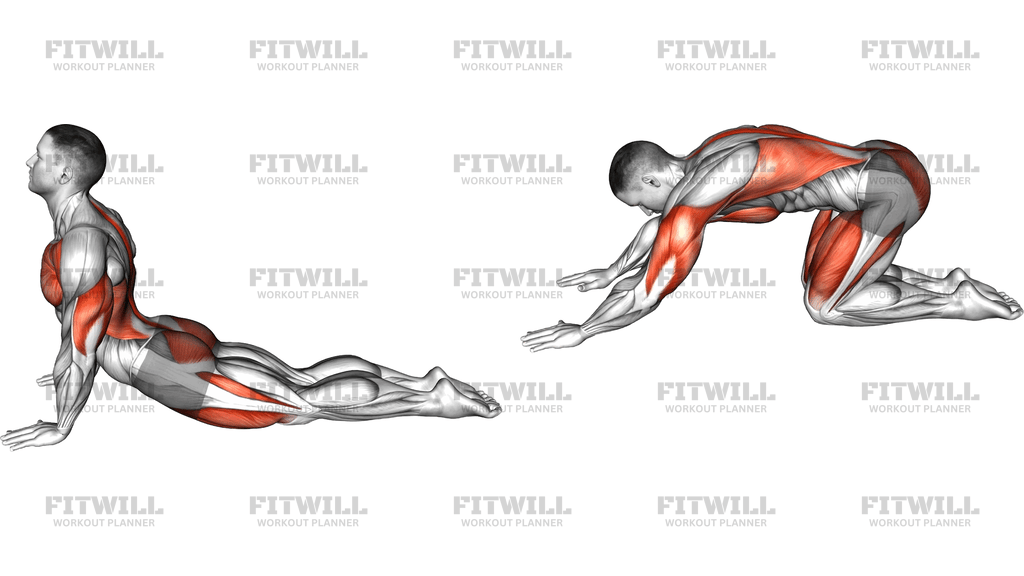
- Warm up with a few cat-cow reps first so your spine is moving freely before you hold it in extension against gravity.
Frequently Asked Questions
What muscles does the Alternate Opposite Superman Lift And Row work?
The primary muscles are the erector spinae of the lower back, supported by the glutes, hamstrings, and core. The rowing portion adds strong work for the rhomboids, mid-traps, and rear shoulders.
Why lift the opposite arm and leg instead of the same-side arm and leg?
The opposite, or contralateral, pattern matches how the body naturally coordinates movement and challenges your core to resist rotation. It also mirrors the cross-body stability needed for walking, running, and climbing.
Can beginners do the Alternate Opposite Superman Lift And Row?
Yes, it is very beginner friendly because it uses only body weight. Start by lifting the arm and leg one or two inches and skip the pause, then add the full row and hold as your control improves.
How high should I lift my arm and leg during the row?
Two to four inches off the floor is enough. Height matters far less than keeping the hips square, the leg straight, and the shoulder blade squeezing during the row.
My lower back pinches at the top of the lift. What should I change?
Lower the lift height, keep the non-working limbs in contact with the floor, and slow the tempo. If discomfort continues, place a folded towel under your hips or switch to a bird dog, which trains a similar pattern with less spinal extension load.
Can I add dumbbells to the Alternate Opposite Superman Lift And Row?
Yes, but only in the rowing hand and only with a very light weight. Adding load to the lifting leg or both hands quickly makes the lower back work harder than the target muscles.
How many repetitions should I do?
Two to three sets of eight to twelve alternating lifts per side works well for strength and endurance. Rest about 30 to 60 seconds between sets, or superset it with a front plank for a balanced core circuit.
What can I substitute if lying on my stomach is uncomfortable?
The bird dog on hands and knees trains the same opposite arm-and-leg pattern without spinal compression. Band pull-aparts or bent-over rows can cover the rowing portion if floor work is not an option.
Should I hold the row or move continuously?
A one-to-two-second pause in the rowed position gives the mid-back muscles the best stimulus, but moving continuously at a slow tempo is also effective. Use the pause if your goal is posture strength, continuous reps if your goal is endurance.