Pulsing Squat Step Back
The Pulsing Squat Step Back combines two demanding elements into one bodyweight drill: you hold a deep squat position, add small up-and-down pulses at the bottom, and step one foot back at a time from that low stance. Because you never stand all the way up between reps, your thigh muscles stay under continuous tension, which creates that unmistakable burning fatigue far faster than a normal set of squats.
This movement is especially useful for building muscular endurance in the quads and glutes, sharpening squat depth and control, and adding a low-impact conditioning element to a warm-up or finisher. It suits anyone who trains at home without equipment, lifters looking to pre-fatigue their legs before heavier work, and people who find full jump-based or lunge-based leg drills too hard on the knees but still want a serious challenge.
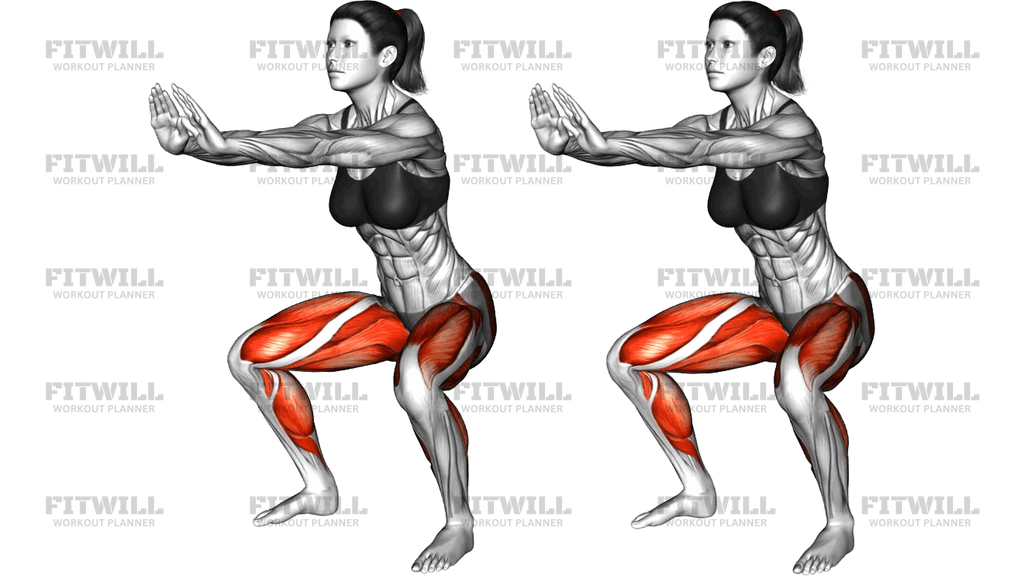
The setup matters more than it looks. A deep squat with your weight spread across the whole foot, chest tall, and arms extended forward for balance gives you a stable base to pulse from and to step back from. If you let your heels lift or your torso collapse forward, the pulses stop targeting the thighs and start stressing the knees and lower back instead. Spend a moment finding a comfortable bottom position before you begin, and adjust your stance width until it feels solid.
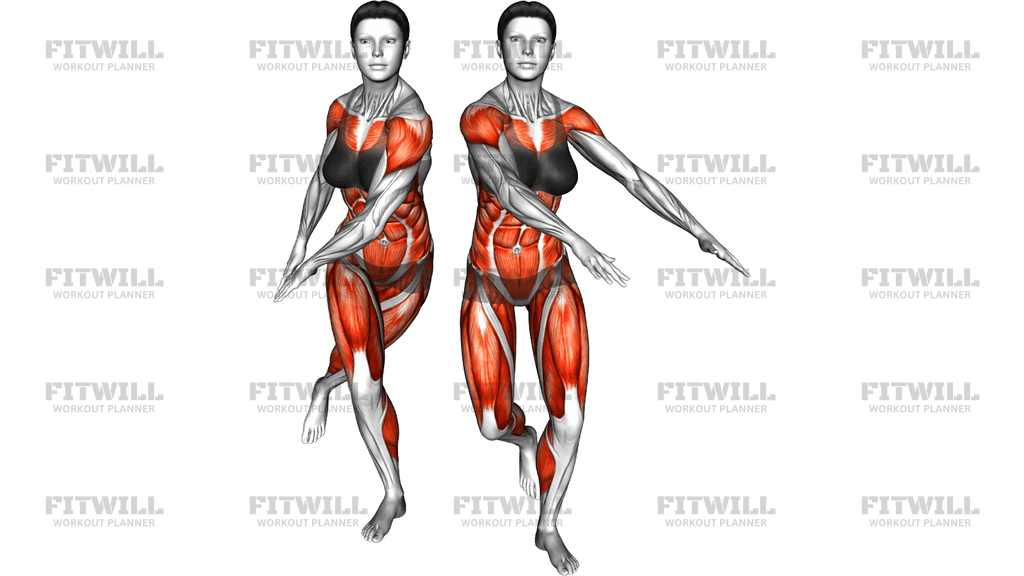
To execute it well, lower into your squat, then perform two or three small, controlled pulses by moving only a few inches up and down. While staying low, step one foot back toward you to stand briefly or shift your base, then step it forward again and continue pulsing, alternating sides. Keep every pulse deliberate rather than bouncy, and let the arms reach forward to help counterbalance your hips as they travel back and down.
Common use cases include home leg circuits, glute and thigh burnout sets at the end of a session, active recovery days, and warm-ups before barbell squats. Because the pace is slow and controlled, it also doubles as a good tool for learning what a full-depth squat should feel like in your ankles, knees, and hips.
For safety, only descend as deep as you can while keeping your heels down and your knees tracking over your toes. If you feel pinching in the front of the knee or strain in the lower back, reduce your depth, shorten the pulse range, or place your hands on your hips or a sturdy support to help with balance. Stop the set when your form changes, not when the burn alone tells you to quit.
[ Workout Log & Planner ]
Put your next workout in Fitwill
Keep your plan and training log ready when you are.


Instructions
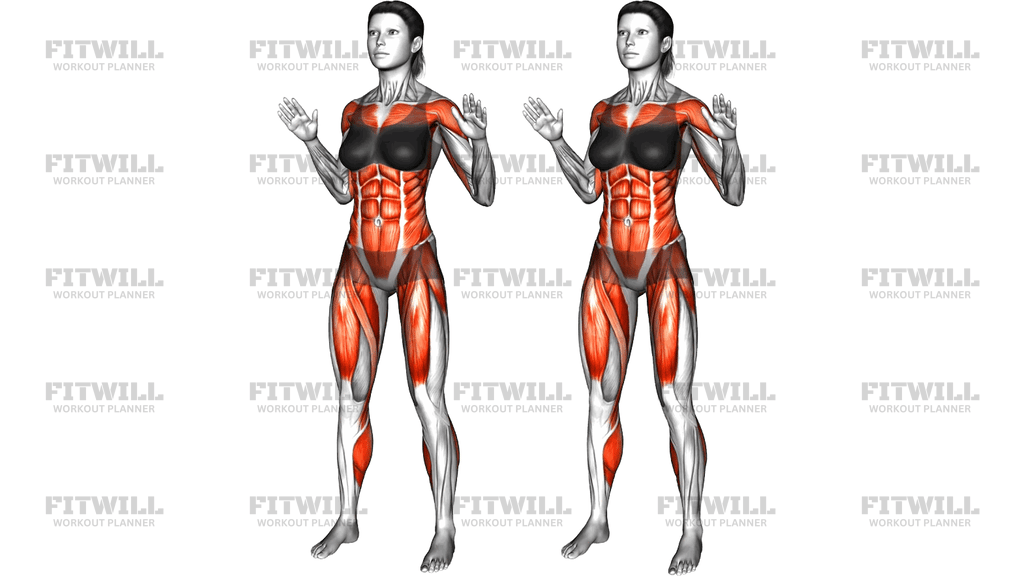
- Stand with your feet about hip-width to shoulder-width apart, toes turned out slightly, and your arms relaxed at your sides.
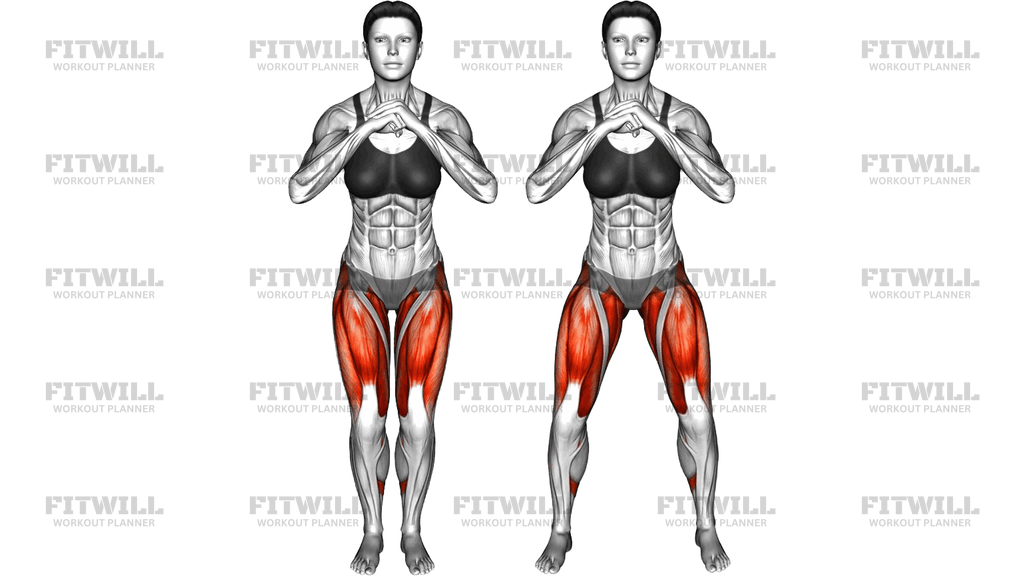
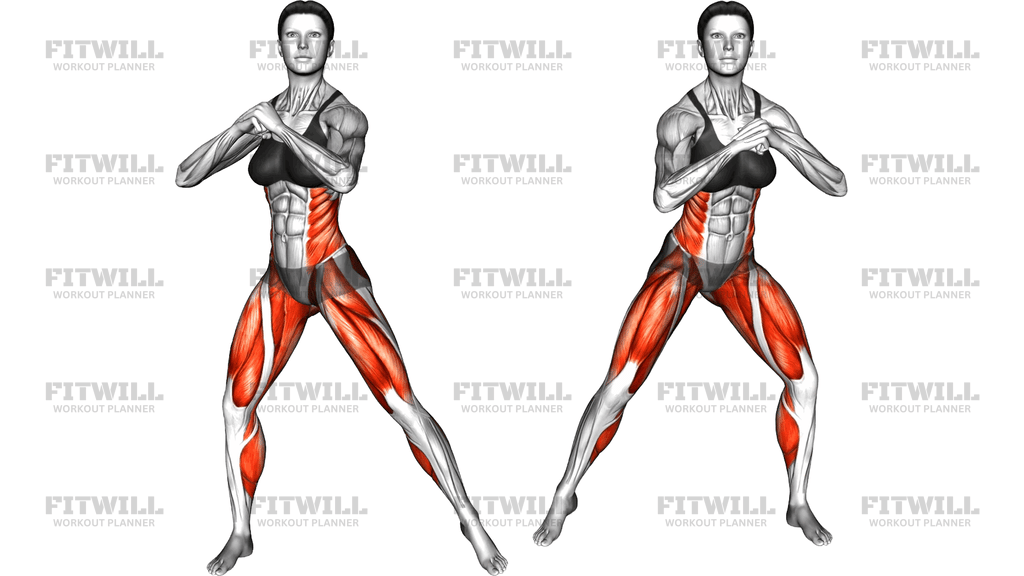
- Push your hips back and bend your knees to lower into a deep squat, letting your arms extend straight forward at chest height for balance, with your weight spread across your whole foot and heels down.
- Brace your abs and keep your chest lifted, imagining your shoulders and hips stacked so your torso stays as upright as the depth allows.
- From the bottom position, perform small controlled pulses: rise two to three inches, then lower back down, keeping tension in your thighs the entire time.
- After a set number of pulses, step one foot back toward your body from the low position, shifting your weight briefly, then step it forward again to return to the wide squat stance.
- Repeat the pulses, then step the other foot back, alternating sides with each round while maintaining the same squat depth and foot placement.
- Breathe steadily throughout, inhaling as you lower and exhaling on each pulse and each step, rather than holding your breath.
- Keep your knees pressing outward over your toes during the pulses so they do not cave inward as fatigue builds.
- When the set is finished, drive through your heels to stand all the way up, lower your arms, and reset your stance before starting the next set.
Tips & Tricks
- The most common mistake is pulsing with a bouncing rhythm, which lets momentum do the work; pause for a beat at the bottom of each pulse so your muscles, not momentum, control the movement.
- If your heels lift at the bottom, widen your stance a few inches and turn your toes out slightly more, or place a thin book or wedge under the heels to improve ankle range.
- Watch that the knee of the leg you step back does not drift inward; actively push it out over the pinky toe as you shift weight.
- Keep the pulse range small. Big up-and-down swings turn this into partial squats and remove the constant-tension effect that makes the Pulsing Squat Step Back effective.
- Your arms are not decoration here. Reach them firmly forward and slightly up to counterbalance your hips shifting back, especially on the deep pulses.
- If you feel this mostly in your lower back, you are likely rounding or over-arching; squeeze your glutes lightly at the bottom and re-brace your abs before continuing.
- Alternating steps is easy to rush. Move one foot at a time with a deliberate tempo so you never lose your balance mid-rep.
- As your thighs fatigue, depth tends to creep up. Check yourself from the side or film a short clip to confirm you are still reaching the same low position on every pulse.
- Start with shorter sets, such as 15 to 20 seconds or 6 to 8 pulses per side, and build up rather than going to failure in the first set.
Frequently Asked Questions
Which muscles does the Pulsing Squat Step Back work the most?
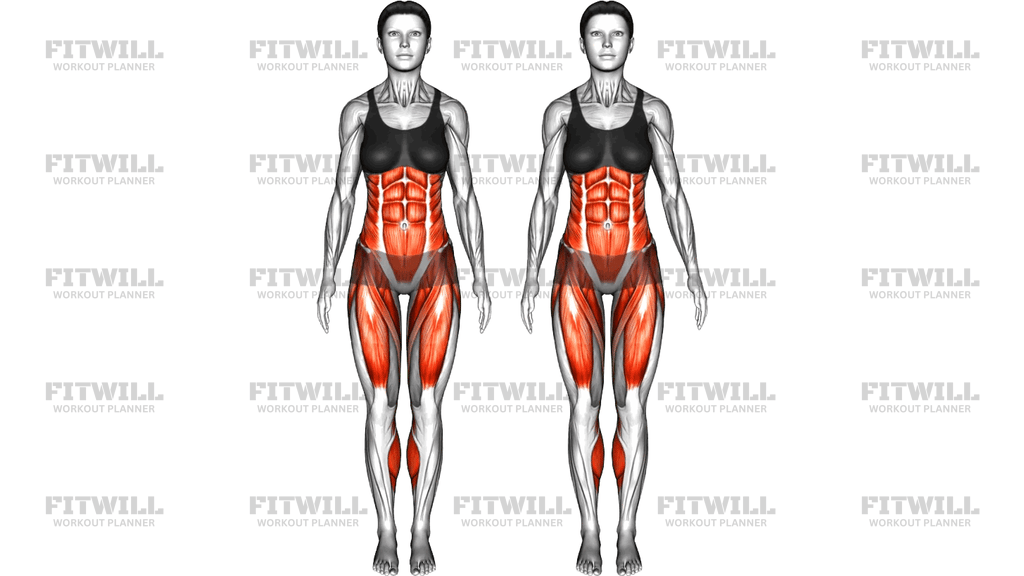
The quads and glutes do most of the work because you hold and pulse from a deep squat position. The hamstrings, inner thighs, calves, and core work continuously to stabilize your low stance and control each step back.
Why does my thigh burn so quickly during the pulses?
The pulses keep your muscles in a shortened, loaded position without ever letting you stand up and rest. That constant tension, combined with the deep-knee angle, fatigues the quads much faster than standard squats of the same rep count.
Is the Pulsing Squat Step Back suitable for beginners?
Yes, as long as you scale the depth and volume. Beginners can pulse from a higher squat position, do fewer pulses before each step back, and hold onto a chair or wall for balance until the bottom position feels secure.
How deep should my squat be before I start pulsing?
Go as deep as you can while keeping your heels flat, your chest tall, and your knees tracking over your toes. For most people that means thighs at or near parallel, but a slightly higher pulse position is better than a deep position with compromised form.
What is the purpose of stepping the foot back during the exercise?
The step back forces you to shift and re-stabilize your weight from the low position, which challenges your balance and hip control and gives one leg a brief moment of extra load. It also breaks the set into rounds so you can keep pulsing longer overall.
My knees ache at the bottom of the Pulsing Squat Step Back. What should I change?
Reduce your depth slightly, shorten the pulse range, and make sure your heels stay down and your knees keep tracking over your toes rather than caving inward. If discomfort persists, check your stance width and stop the exercise until you can move through the range without pain.
Can I substitute another exercise if I cannot do this one yet?
A regular bodyweight squat with a paused bottom position or a supported squat pulse holding a doorframe works well. As your depth and control improve, remove the support and add the alternating step back.
Where should the Pulsing Squat Step Back fit in my workout?
It works well as a warm-up drill before heavier lower-body lifts, or as a burnout finisher at the end of a leg session. Because it drives significant fatigue into the thighs, avoid placing it right before exercises that demand fresh legs.
Do I need any equipment for this movement?
No, the exercise is fully bodyweight. All you need is floor space for your stance and, optionally, a thin heel wedge or a sturdy support nearby if your ankle mobility or balance is limited.