Bodyweight Shifting Reverse Lunge
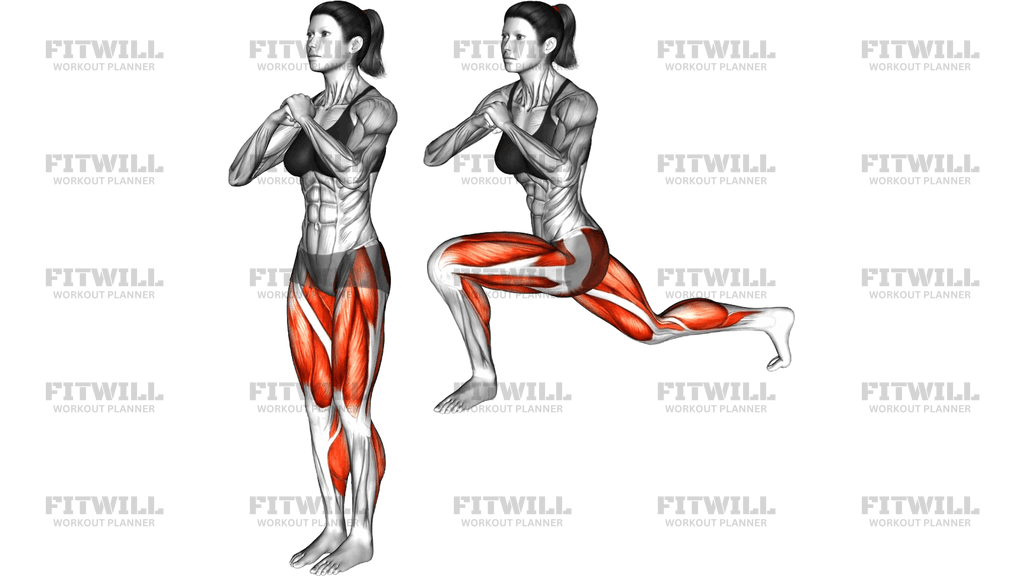
The Bodyweight Shifting Reverse Lunge is a single-leg strength exercise performed by stepping one foot back into a lunge, loading the front leg, and deliberately shifting your body weight over that working leg before returning to standing. Because you alternate sides and shift your center of mass from one leg to the other each rep, the movement doubles as balance and hip-stability work, not just leg training.
This exercise suits a wide range of trainees. Beginners use it to learn single-leg control without external load, while more experienced lifters use it as a warm-up, a higher-rep finisher, or a low-impact option when the knees or a barbell are not available. The hands are clasped in front of the chest, which helps counterbalance the backward step and keeps the torso upright without needing weight.
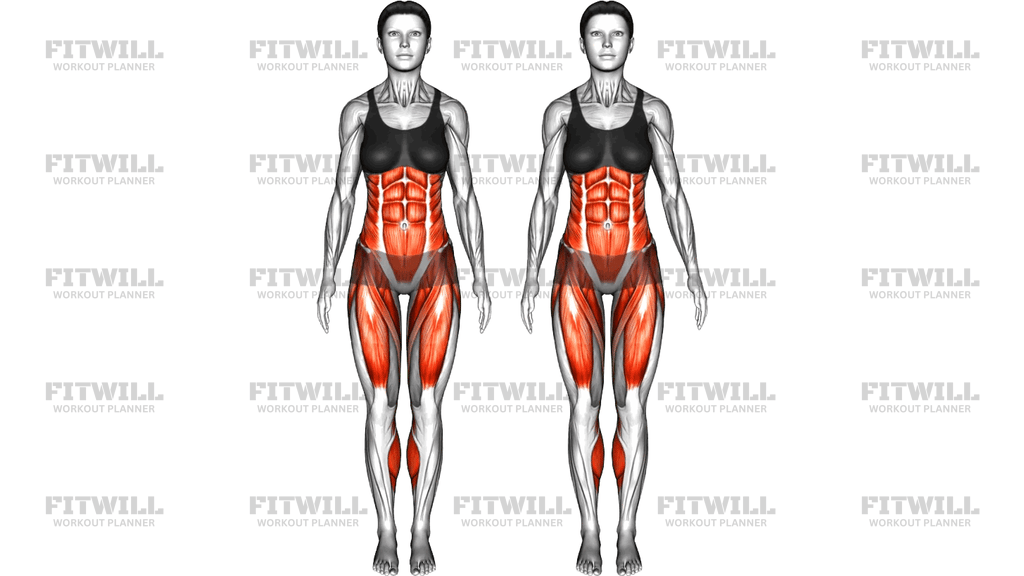
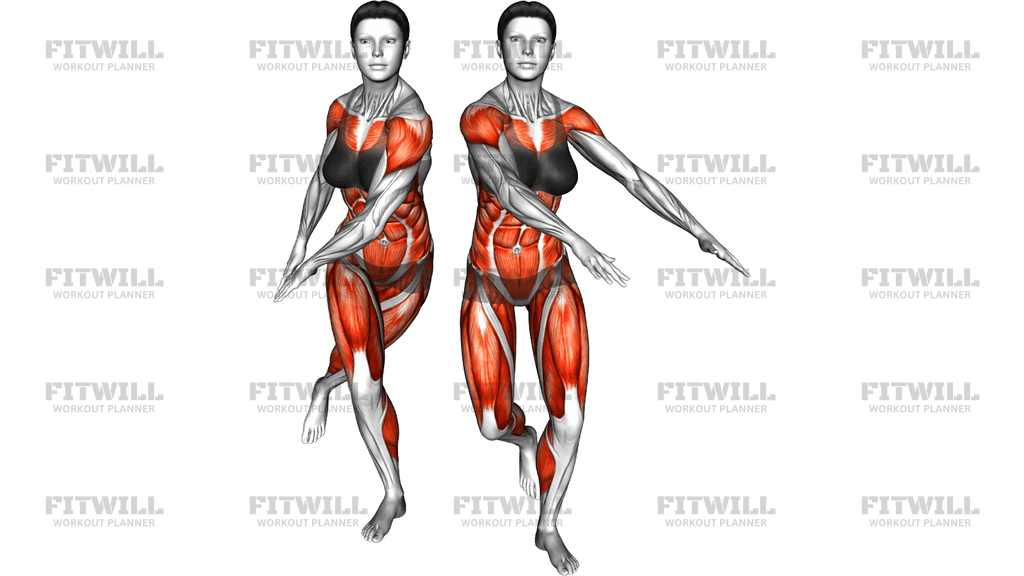
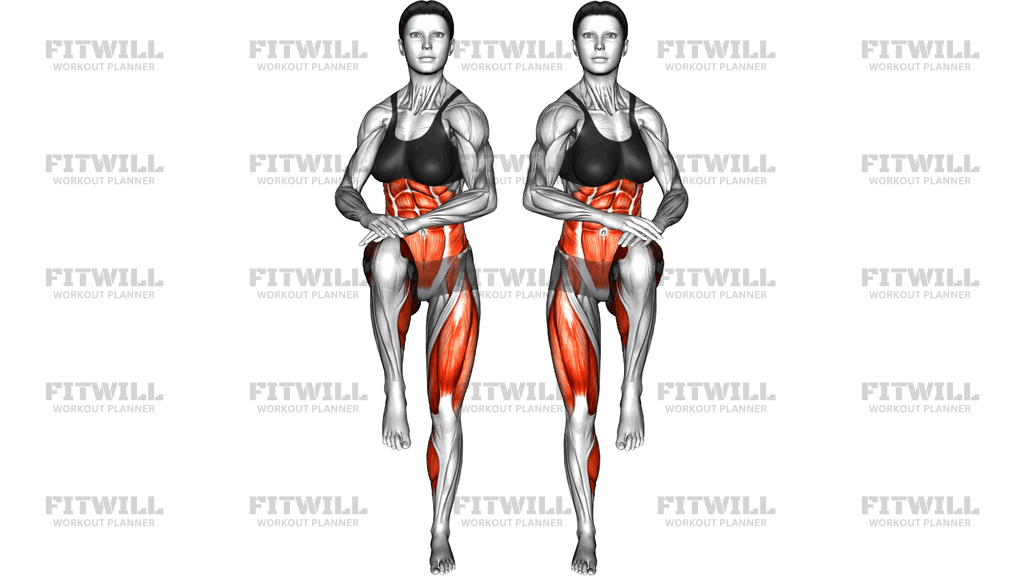
The main muscles working are the glutes and quadriceps of the front leg, with the hamstrings and calves assisting and the core stabilizing the torso through every weight shift. The hip abductors on the stance side also work quietly to keep your pelvis level as your center of mass travels sideways over the working leg. That lateral shift is what separates this from a standard reverse lunge.
Setup matters because the shift component magnifies any alignment errors. A stance that is too narrow makes the movement feel wobbly and pushes the knee inward, while a step that is too short prevents a full hip hinge on the front leg. Give yourself enough space behind you to reach a full stride, and keep the front foot planted flat for the entire rep.
Execution comes down to rhythm and control: step back, lower until the front thigh is roughly parallel or as deep as your hips allow, shift your weight fully onto the front leg, then drive through the front heel to stand. The knee of the back leg should travel toward the floor without slamming into it. Keep the movement smooth rather than rushed, and alternate legs with each rep or complete all reps on one side before switching, depending on your goal.
A few practical points will keep the exercise productive. Keep your shin close to vertical over the planted foot, let the torso lean slightly forward from the hips rather than rounding the lower back, and stop the set when your balance degrades rather than when your legs fail. If you feel strain in the front of the knee, shorten the range slightly and focus on pushing the hips back as you descend.
[ Workout Log & Planner ]
Put your next workout in Fitwill
Keep your plan and training log ready when you are.


Instructions
- Stand tall with your feet hip-width apart and clasp your hands together in front of your chest for counterbalance.
- Brace your core lightly and pull your shoulder blades back so your torso stays upright before you step.
- Shift your weight onto one leg, then step the opposite foot straight back into a long stride, landing on the ball of that foot.
- Bend both knees to lower straight down, keeping the front shin close to vertical and the back knee dropping toward the floor.
- Continue descending until your front thigh is about parallel to the floor, or as deep as your hip mobility comfortably allows.
- Shift your weight fully over the middle of the front foot so the back leg carries almost no load at the bottom.
- Press through the front heel and mid-foot to stand, pulling the back leg forward until your feet are together again.
- Exhale as you rise and inhale as you step back into each lunge.
- Repeat on the opposite leg, or complete all reps on one side before switching, resetting your stance and posture between reps.
Tips & Tricks
- If you wobble during the weight shift, widen your base slightly by angling the front foot a few degrees out instead of stepping perfectly in line.
- A common mistake is rushing off the back leg and letting momentum do the work; pause for a beat at the bottom and make the front leg pull you up.
- Avoid letting the front knee cave inward as you shift your weight over it—cue yourself to spread the floor with the front foot.
- Keep the back heel lifted for the whole rep; dropping it flattens the back leg and turns the movement into a split squat.
- Do not let your torso collapse forward as you tire; the hands stay clasped at chest height and the chest stays proud.
- If the back knee touches down hard, control the last inch of the descent instead of relying on the floor to catch it.
- Shorten the backward step if you feel pinching at the front of the hip in the bottom position, then rebuild the range gradually.
- On soft flooring or an unstable surface, plant the front foot deliberately before each shift, since the lateral weight transfer demands more balance than a normal lunge.
- Alternate legs rep for rep for balance practice, or work one side at a time when you want a focused strength and endurance stimulus.
Frequently Asked Questions
What makes the Bodyweight Shifting Reverse Lunge different from a regular reverse lunge?
In this version you deliberately shift your center of mass over the front leg during each rep, so the working glute and hip stabilizers do more work and the balance demand is higher. A standard reverse lunge keeps the weight more centered between both legs.
Which muscles does the Bodyweight Shifting Reverse Lunge target most?
The glutes and quadriceps of the front leg do most of the work, with the hamstrings and calves assisting. The core and hip abductors stabilize your torso and pelvis as the weight shifts from side to side.
Is the Bodyweight Shifting Reverse Lunge good for beginners?
Yes, it is one of the safer ways to learn single-leg strength because there is no external load and the backward step is easier on the knees than a forward lunge. Beginners can reduce depth and hold onto a wall until the shifting feels stable.
Why do I lose my balance when I shift my weight onto the front leg?
The lateral weight transfer challenges your hip stabilizers, so wobbling is common at first. Slow the tempo, keep your eyes on a fixed point ahead of you, and make sure your front foot is fully planted before you descend.
Should my back knee touch the floor during the Bodyweight Shifting Reverse Lunge?
A light tap is acceptable, but it should never slam into the ground. Lower under control until the back knee is just above or gently grazing the floor, then drive up through the front leg.
How deep should I go in the Bodyweight Shifting Reverse Lunge?
Aim for the front thigh roughly parallel to the floor, or slightly above it if your hips or knees complain. Depth is only useful if you can keep the front heel down and the knee tracking over the foot.
Can I add weight to the Bodyweight Shifting Reverse Lunge?
Yes, holding dumbbells at your sides or a light weight at the chest works well once your balance is solid. Master the bodyweight shifting pattern first, since the load makes balance errors more obvious.
What can I use instead if stepping back bothers my knees?
A reverse lunge from a small step-up platform, a split squat with the rear foot on a bench, or a shorter-stride reverse lunge all reduce knee stress. Keep the shift component by loading the front leg fully before standing.
How many reps of the Bodyweight Shifting Reverse Lunge should I do?
Eight to twelve reps per leg works well for strength and control, while fifteen to twenty per leg builds muscular endurance. Stop the set when your balance or knee tracking starts to break down rather than pushing to total fatigue.
Is the Bodyweight Shifting Reverse Lunge safe if I feel knee discomfort?
Mild knee discomfort usually means the front knee is drifting forward or inward, so shorten the range and focus on pushing the hips back as you lower. Persistent or sharp pain is a signal to stop and have the movement assessed by a qualified professional.