Marching Kick On Spot
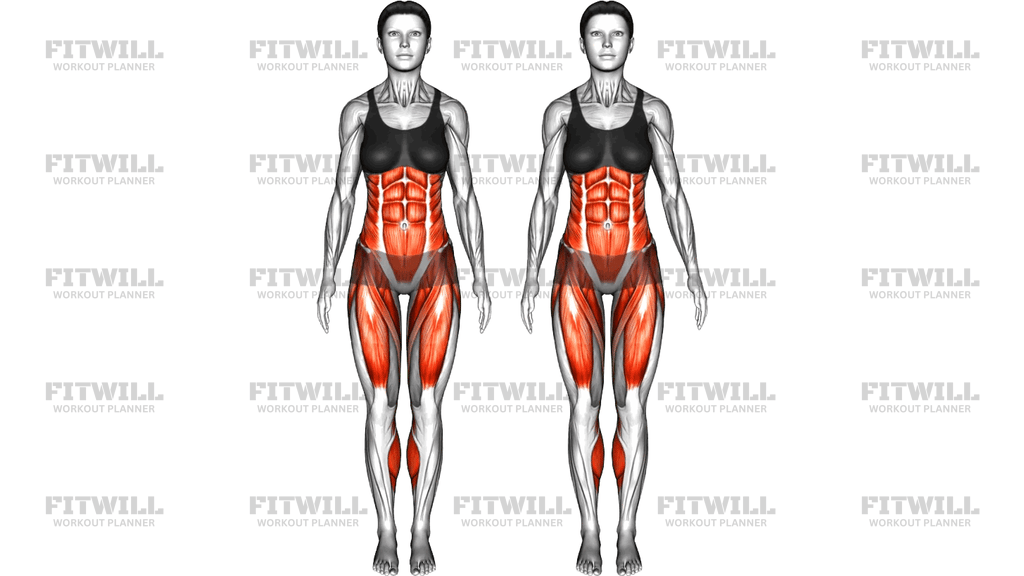
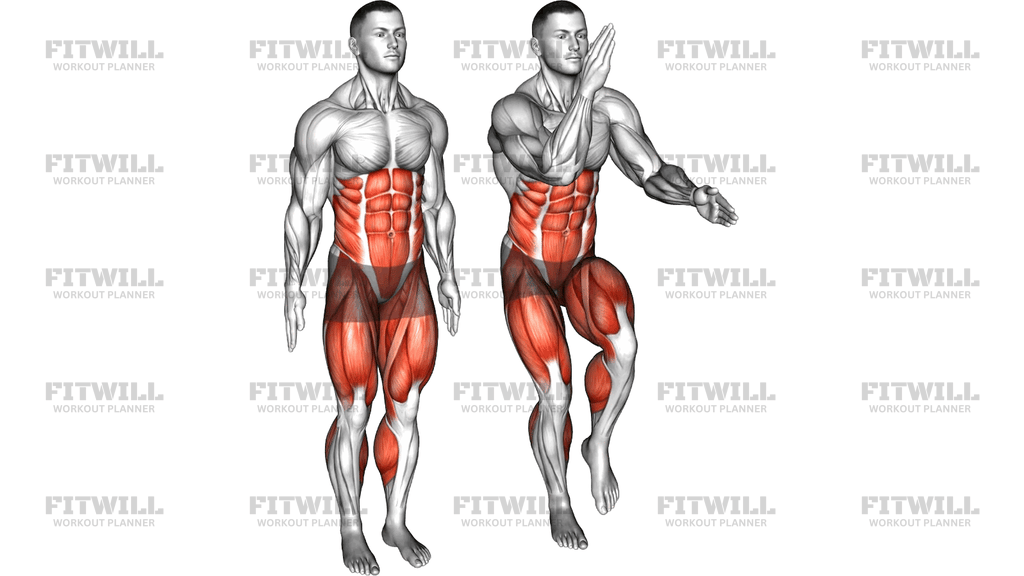
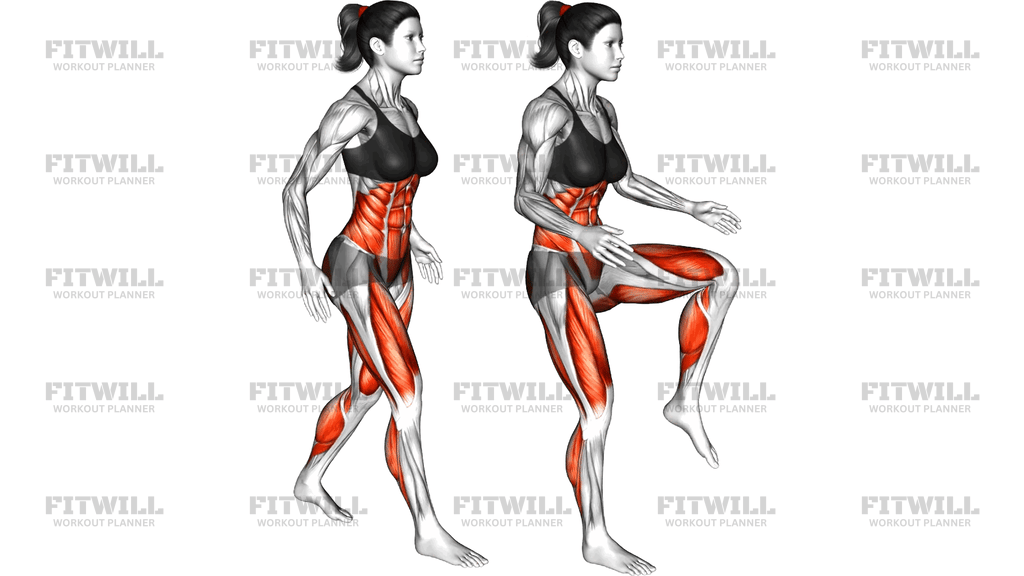
Marching Kick On Spot is a standing, body-weight movement where you march in place and extend each leg into a controlled forward kick as it comes up, then lower it back down with control. You stay anchored to one spot the entire time, which makes it easy to fit into a small space, a warm-up, or an active rest interval. Because one leg is always loaded or moving, your stance side has to stay tall and stable while the working leg swings through.
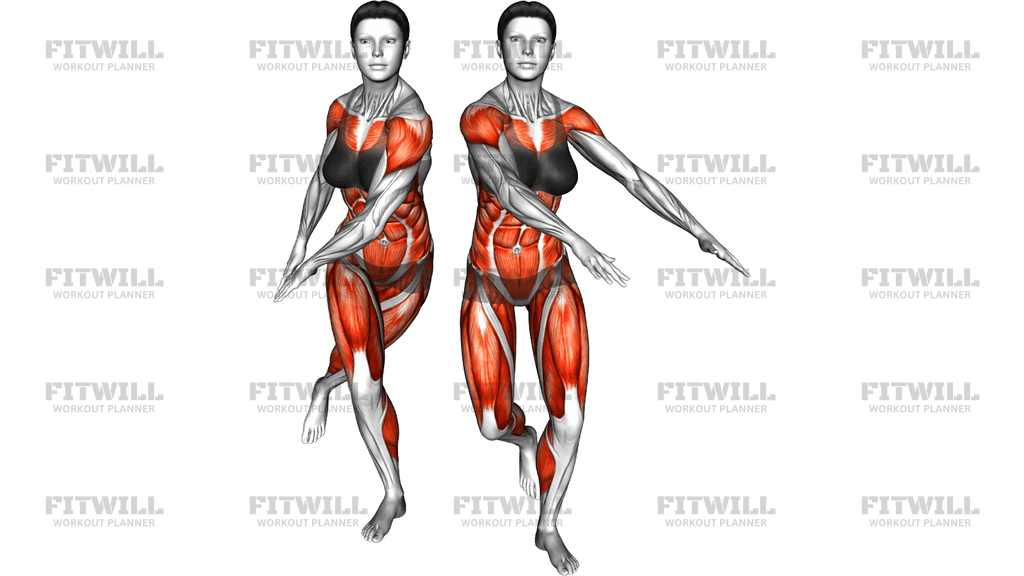
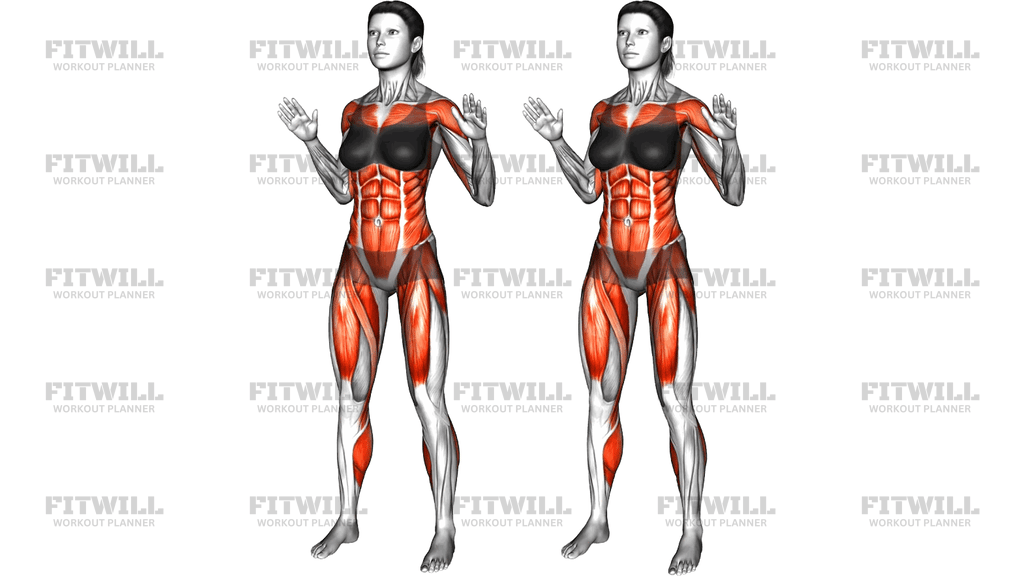
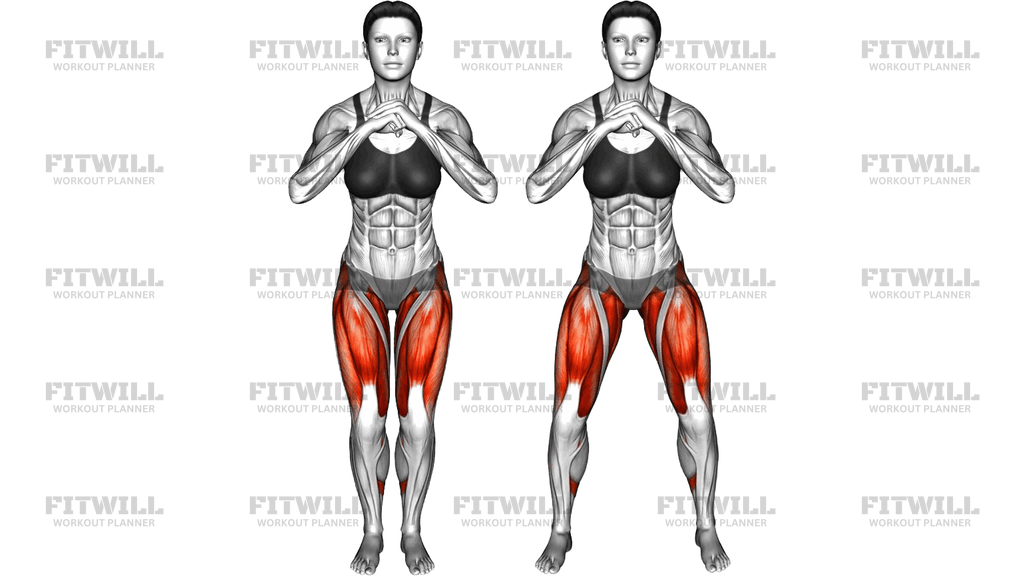
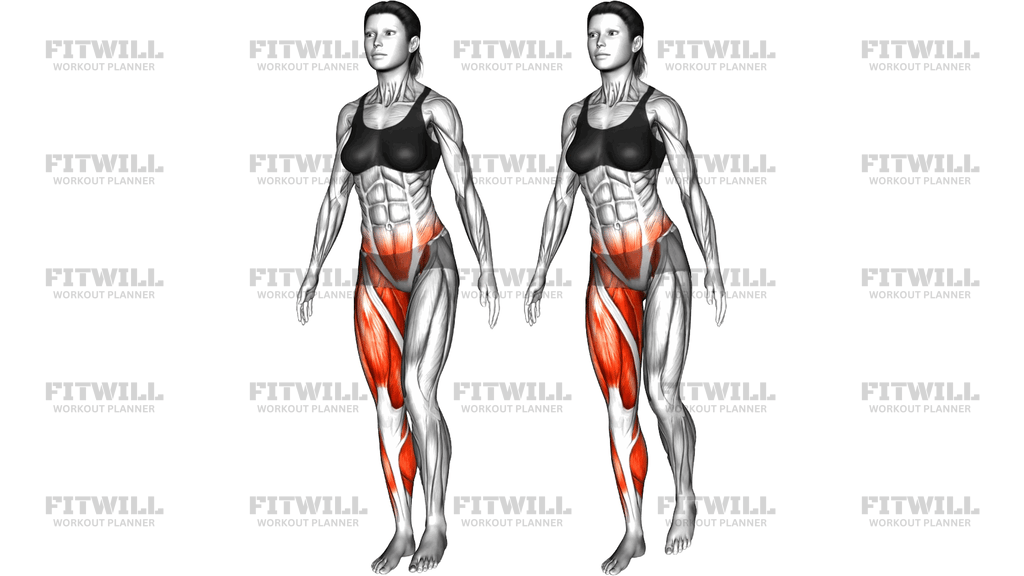
The main demand lands on the quadriceps, which straighten the knee to produce the kick, and on the hip flexors, which lift the thigh to marching height in the first place. The calf of the support leg works to keep you balanced on the ball of the foot as your weight shifts, and your core stays engaged to stop your torso from rocking backward every time a leg kicks out. It is a simple pattern on paper, but doing it smoothly for a minute or more adds up to real work for the legs and a noticeable rise in heart rate.
This exercise suits beginners learning to control single-leg balance, anyone warming up before squats, lunges, or running, and people doing low-impact cardio circuits where jumping is not appropriate. Older trainees and those returning from a layoff often use it as a stepping stone toward higher kicks or marching with more drive, because the height and speed are completely self-selected.
Setup matters more than it looks. Stand tall with feet about hip-width apart, arms bent at the elbows in front of you as if in a light guard position, and your gaze forward. If your torso is slouched or your feet are too narrow, the kick will pull you off balance and the movement turns into a stumble. A braced midsection and a soft bend in the standing knee give the swinging leg a stable base to move from.
To execute well, lift one knee to roughly hip height, then extend that same leg forward into a kick without leaning back, and re-bend the knee before placing the foot down. Immediately repeat on the other side and find a steady rhythm. The kick should feel like a controlled extension, not a snap; the height can start low near knee level and progress toward waist level as your balance and hamstring flexibility allow.
In practice, you will see Marching Kick On Spot used as a dynamic warm-up drill, a cardio interval in follow-along workouts, and a balance challenge in rehab-style or senior fitness programming. Keep the pace honest: if your torso starts swaying or your feet start stomping, slow down and shorten the kick rather than pushing through sloppy reps.
[ Workout Log & Planner ]
Put your next workout in Fitwill
Keep your plan and training log ready when you are.


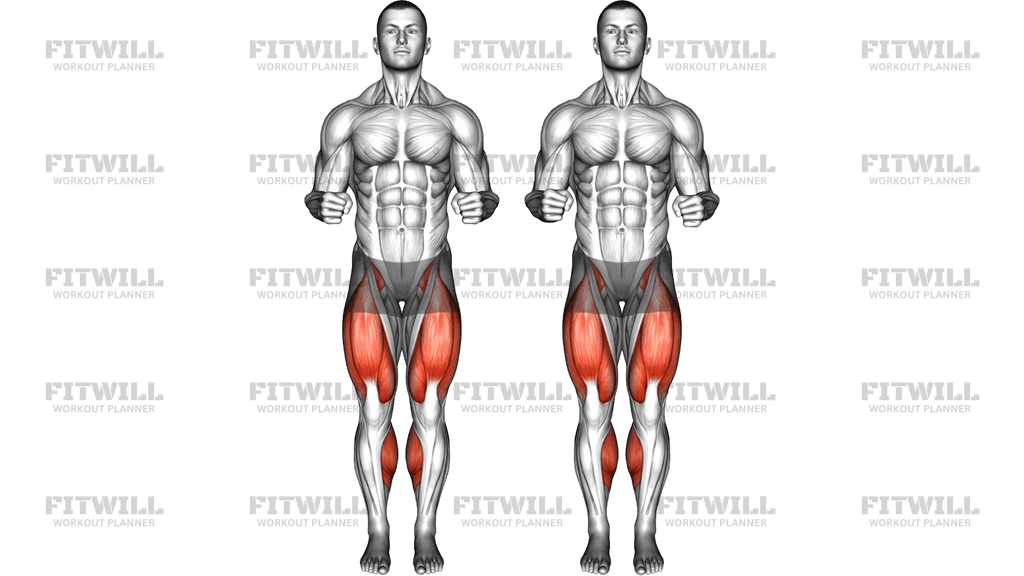
Instructions
- Stand upright with your feet hip-width apart, weight evenly distributed, and arms bent at roughly 90 degrees held loosely in front of your chest.
- Soften your knees slightly, brace your abdominal muscles, and set your gaze on a fixed point forward to help with balance.
- Shift your weight onto your left leg and lift your right knee up to about hip height.
- From that lifted position, extend your right leg forward into a controlled kick, reaching the foot out to a height you can manage without leaning back.
- Re-bend the right knee and lower the foot back to the floor under control, returning to your standing stance.
- Immediately repeat the lift and kick on the left leg, keeping the movement alternating and continuous.
- Exhale as you lift and kick, and inhale as the leg lowers back down.
- Keep your arms swinging naturally or hold them steady in front of you to counterbalance each kick.
- Maintain a tall chest and level hips throughout; the standing knee stays soft, never locked.
- Complete your planned time or reps, then stand still for a moment to let your balance settle before moving to the next exercise.
Tips & Tricks
- A common mistake is leaning the torso backward as the leg extends forward; if this happens, kick to a lower height and squeeze your abs harder to keep the ribs stacked over the hips.
- Avoid locking out the knee of your support leg; a small bend acts as a shock absorber and makes balancing much easier.
- Do not let the foot slap down between kicks; placing it quietly means you are controlling the descent rather than dropping it.
- If you wobble, widen your feet slightly between reps or hold onto a wall or chair with one hand until your balance improves.
- Keep the kick mostly a knee-extension action; letting the leg swing out to the side turns it into a different drill and stresses the outer hip.
- Start with kicks around knee height and only raise the foot toward waist level once you can keep your back straight at the lower range.
- Point your toes gently rather than clenching them; a tense foot makes the whole leg stiff and the kick jerky.
- If your calves fatigue before your thighs, you are probably rising onto the ball of the support foot too aggressively; keep the whole foot close to the floor.
- Use a steady rhythm instead of rushing; two seconds up and kick, one second down is a good tempo to aim for.
Frequently Asked Questions
What muscles does Marching Kick On Spot work?
The quadriceps do most of the work straightening the knee on each kick, while the hip flexors lift the thigh to marching height. The calves and stabilizers of the standing leg and your core handle balance and posture.
Is Marching Kick On Spot suitable for beginners?
Yes. The kick height and pace are fully self-selected, so beginners can start with low kicks near knee level and slow tempos, then progress as balance and control improve.
How high should I kick during Marching Kick On Spot?
Start around knee height and only work toward waist height once you can kick without leaning your torso back. Height should come from hip and thigh control, not from arching your lower back.
Why do I keep losing my balance when I kick?
Balance usually breaks down because the support knee is locked, the gaze is wandering, or the kick is going higher than your hips can control. Soften the standing knee, fix your eyes on a point ahead, and reduce the kick height.
Can I use Marching Kick On Spot as a warm-up?
It works well as one, since it raises your heart rate while taking the hips, knees, and ankles through a dynamic range. Do 30 to 60 seconds at an easy pace before lower-body strength work or running.
What can I substitute if kicking is uncomfortable?
Plain high-knee marching on the spot trains the same lifting pattern with less knee extension, or you can perform the same kick while holding a wall or chair for light support.
Should my arms move during Marching Kick On Spot?
Keeping the arms bent in front of your chest helps counterbalance each kick, while a natural opposing swing adds coordination demand. Either option is fine; just avoid letting the arms flop loosely at your sides.
How long should I perform Marching Kick On Spot?
For a warm-up, 30 to 60 seconds is typical; in a cardio circuit, work in intervals of 30 to 90 seconds. Stop the set when your form leans toward stomping or swaying rather than at total fatigue.
Is it safe for my knees?
When done with a controlled kick, a soft support knee, and a moderate height, it is a low-impact, low-load movement for most people. If you have a current knee issue, keep kicks low and check with a qualified professional first.