Butt Kick With Row
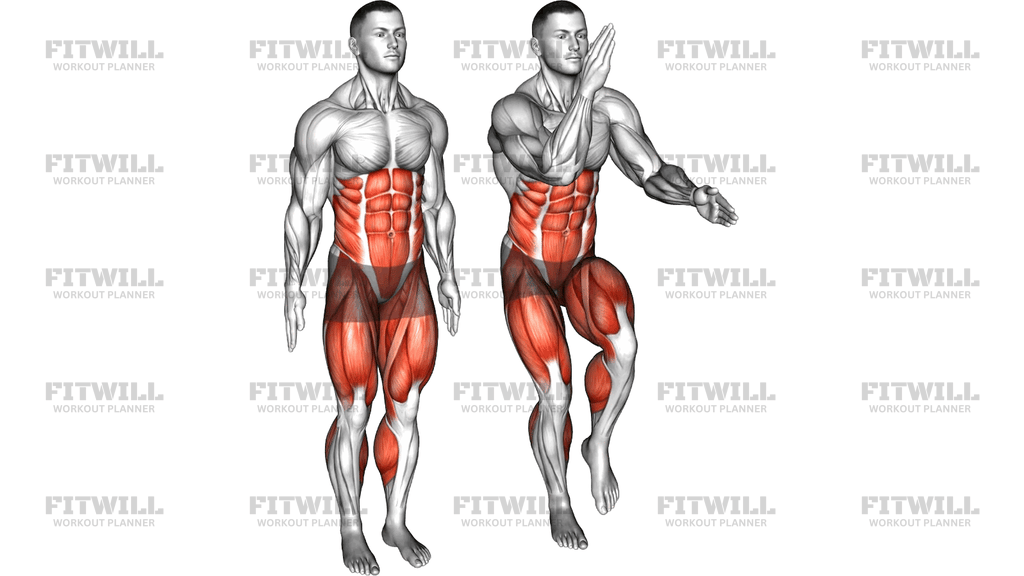
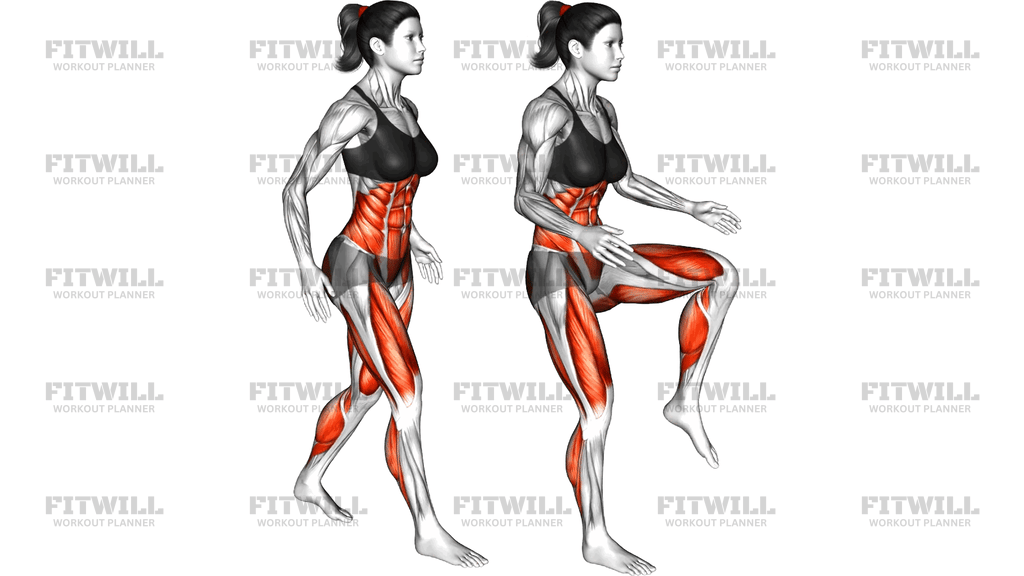
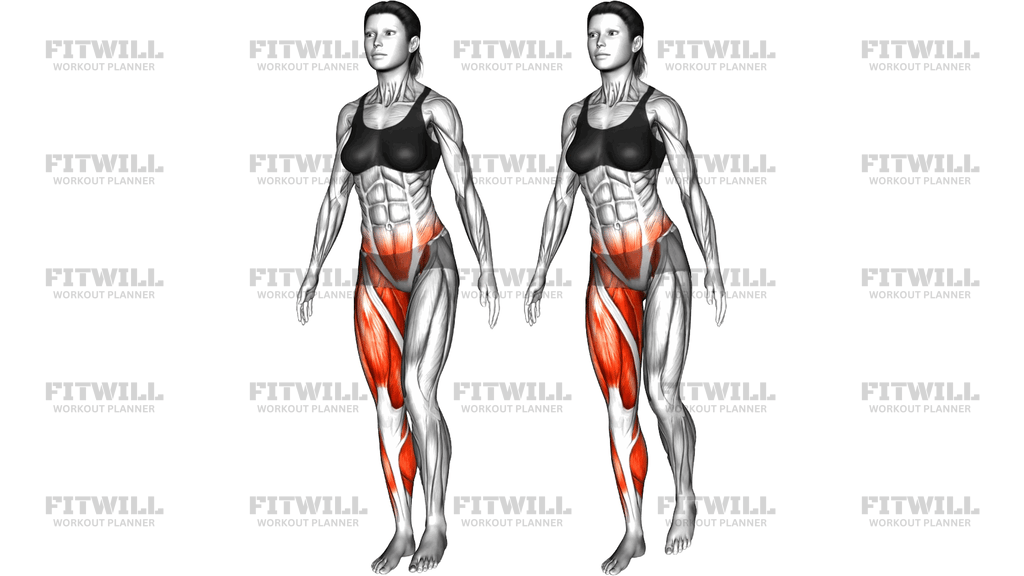
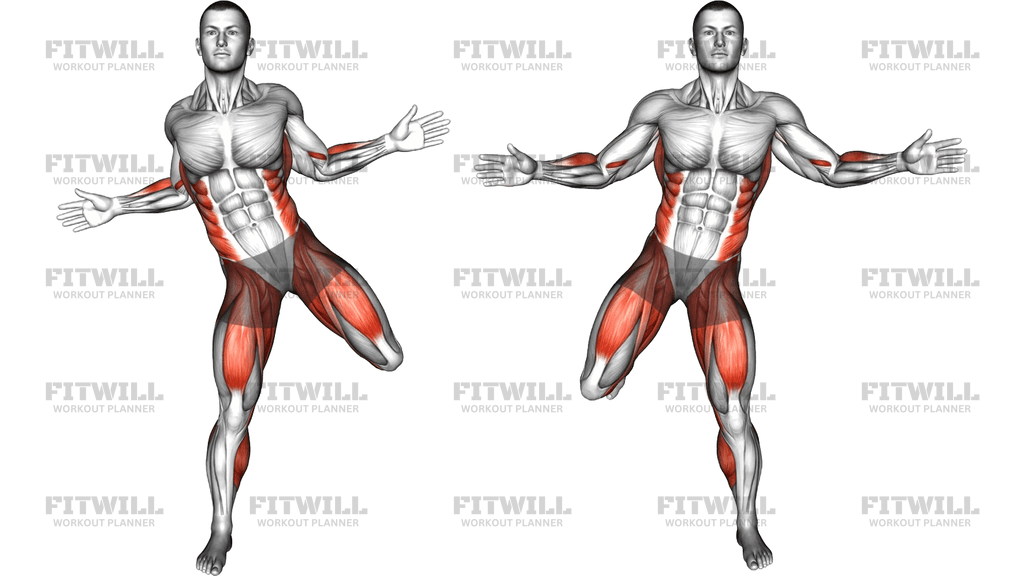
The Butt Kick With Row is a single-leg, body-weight exercise that pairs a heel raise toward the glutes with a simultaneous rowing pull of the arms. You balance on one standing leg, flex the opposite knee to kick the heel up behind you, and drive the elbows back past the torso at the same time, as if pulling two invisible handles toward your ribs. The result is a movement that challenges balance, single-leg strength, and upper-back pulling action all in one rep.
This combination is especially useful for people who want to train coordination between the lower and upper body without any equipment. Because you are standing on one leg while the other limb moves, the standing leg has to stabilize through the hip, knee, and ankle the entire time. The kicking action works the hamstrings and glutes of the moving leg, while the rowing arm action recruits the upper back and the muscles between the shoulder blades. The trunk works hard to keep you upright and level, which is why the midsection feels involved even though no crunching happens.
Setup matters more here than in most body-weight drills. Your base of support is a single foot, so where you place it, how soft your knee is, and where your eyes focus all determine whether the movement feels smooth or wobbly. Start with the arms extended out to the sides or forward, depending on the variation you choose, and commit to keeping the pelvis square to the front. If the pelvis rotates every time the heel kicks up, you lose much of the balance and core benefit.
Execution comes down to rhythm and control. Kick the heel up deliberately toward the glute rather than snapping it, and match the kick with a clean elbow pull. Think of the arms and leg working as a team: heel up, elbows back, then both return together under control. Keep the chest tall and the shoulders down away from the ears so the row comes from the upper back instead of shrugging.
This exercise fits well into warm-ups, circuit training, or short home sessions where no equipment is available. It is also a practical choice for older trainees or anyone returning from time off, since it rebuilds single-leg balance and pulling mechanics with very low load. Coaches often use it to teach athletes how to hold a stable trunk while the limbs move, a skill that carries over to running, throwing, and everyday movement.
As with any single-leg drill, progress gradually. Master the kick alone, then the row alone, then combine them. Stay near a wall or sturdy surface at first if balance is a limiting factor, and stop the set as soon as your ankle starts grinding or your form drifts.
[ Workout Log & Planner ]
Put your next workout in Fitwill
Keep your plan and training log ready when you are.


Instructions
- Stand tall with your feet hip-width apart and arms extended out to your sides or slightly forward, palms facing down or inward.
- Shift your weight fully onto your right foot, soften the standing knee slightly, and find a fixed point in front of you to focus on.
- Brace your abdominal muscles and keep your pelvis squared to the front before you start moving.
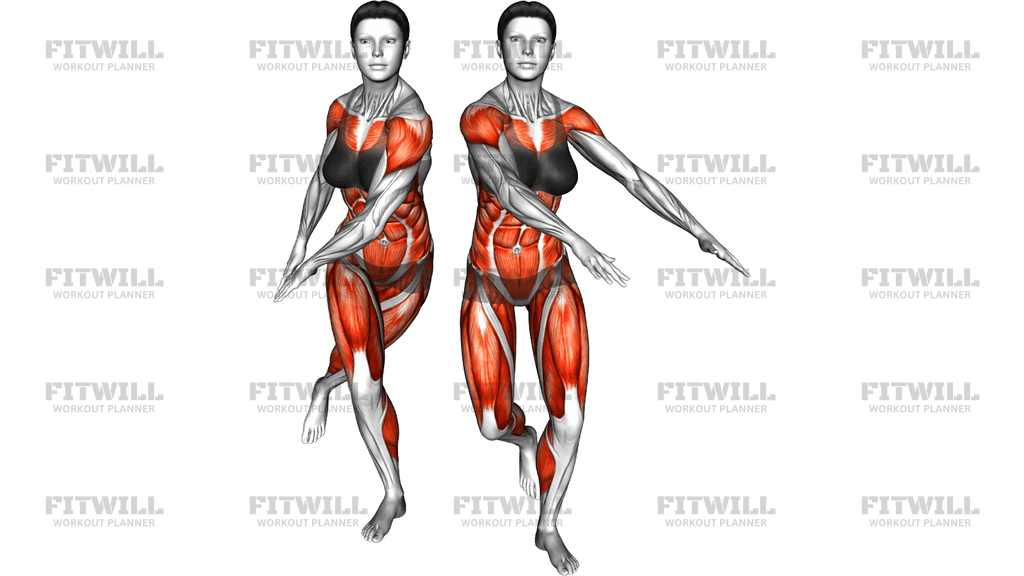
- Bend your left knee and kick your heel up and back toward your glute, letting the knee point down toward the floor.
- At the same moment, pull both arms back in a rowing motion, driving the elbows behind your ribs and squeezing your shoulder blades together.
- Pause briefly at the top with the heel near the glute and elbows fully pulled back.
- Lower the leg and extend the arms forward again in one smooth, controlled return rather than letting them drop.
- Exhale as you kick and row, inhale as you return to the starting stance.
- Complete all repetitions on the left support, then switch and balance on the left foot while kicking the right heel.
- Reset your stance and brace between sets if you noticed any twisting or loss of balance.
Tips & Tricks
- If your torso twists every time the heel comes up, slow the kick down and think about keeping both hip bones facing the same direction.
- A common mistake is kicking the heel straight back behind the body, which arches the lower back; instead let the knee drop slightly so the heel travels up toward the glute.
- Do not shrug during the row. Keep the shoulders pressed down and pull with the elbows so the upper back does the work, not the muscles of the neck.
- If you wobble badly on the standing leg, hold a wall or doorframe lightly with one hand for the first few sessions and remove it as balance improves.
- Keep the standing knee softly bent and stacked over the ankle. A locked knee makes balance harder and stresses the joint.
- Match the tempo of the arms and leg exactly. When the kick and row fall out of sync, the core stops bracing and the movement turns sloppy.
- Aim the heel at the glute, not just backward. A short, lazy kick removes most of the hamstring and glute work.
- If your standing foot rolls inward, grip the floor with your toes and press through the big toe to keep the arch active.
- Start with a slower tempo and fewer reps than feels necessary; fatigue makes the balance demands of this drill spike quickly.
Frequently Asked Questions
Which muscles does the Butt Kick With Row work?
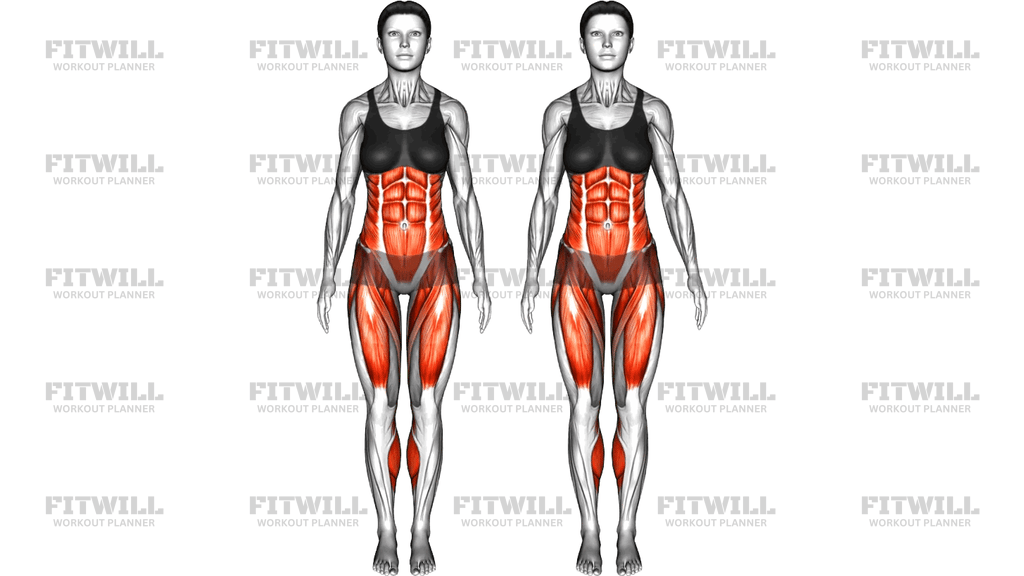
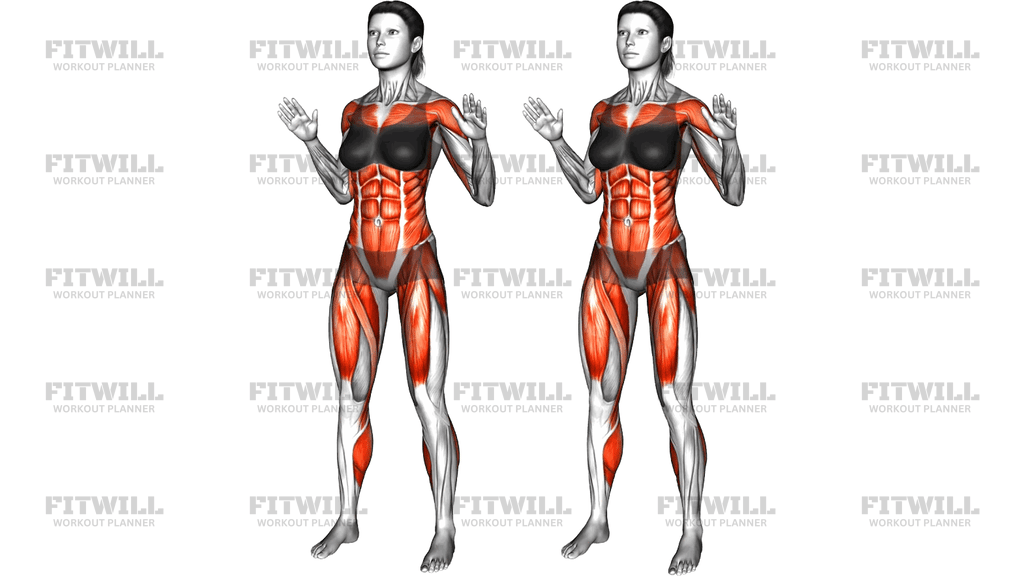
The kicking leg uses the hamstrings and glutes to lift the heel toward the glute, while the standing leg's quads and hip stabilizers hold you upright. The rowing arm action targets the upper back and the muscles between the shoulder blades, and the core braces throughout.
Is the Butt Kick With Row suitable for beginners?
Yes, because it uses no load beyond your body weight. Beginners should start by holding a wall for balance and performing the kick and row slowly before combining them at full speed.
Why does my balance fail during the Butt Kick With Row?
Most instability comes from a locked standing knee, a pelvis that rotates with the kick, or looking down at your feet. Soften the knee, keep the hips square, and fix your gaze on a point at eye level in front of you.
How many reps should I do per side?
Start with 8 to 10 controlled repetitions per leg, focusing on matching the kick and row. Once you can complete the sets without wobbling, add reps or slow the tempo instead of adding weight.
Can I do the Butt Kick With Row without any equipment?
Yes, the exercise is entirely body weight and needs only enough floor space to stand on one leg with your arms free to pull back.
What is the most common mistake in the Butt Kick With Row?
The most common error is letting the torso lean or twist as the heel kicks up, which turns it into a momentum exercise. Keep the chest tall and let the leg and arms move around a stable trunk.
What can I substitute if single-leg balance is too hard?
Practice the butt kick alone while holding a sturdy support, or perform the rowing motion with both feet planted. Progress to the combined Butt Kick With Row once each part feels steady.
Should my standing leg stay completely straight?
No, keep a slight bend in the standing knee with the knee tracking over the ankle. A rigid straight leg makes balancing harder and places unnecessary stress on the knee joint.
Is the Butt Kick With Row safe for people with knee issues?
The movement is low impact, but anyone with a current knee or hip complaint should keep the kick small, move slowly, and stop if discomfort appears. Checking with a qualified professional is a sensible step before adding single-leg drills.