Plank Side Jump
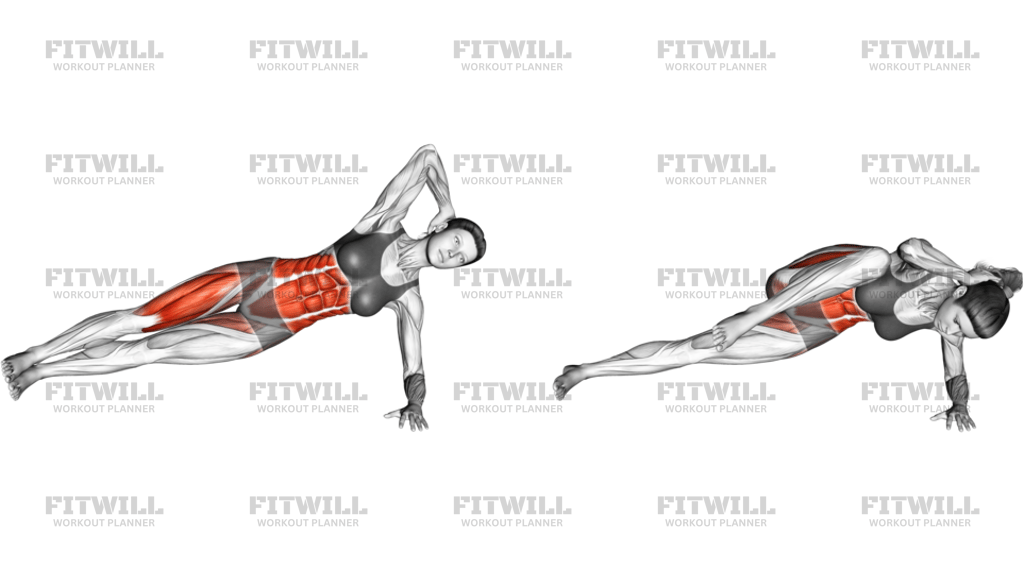
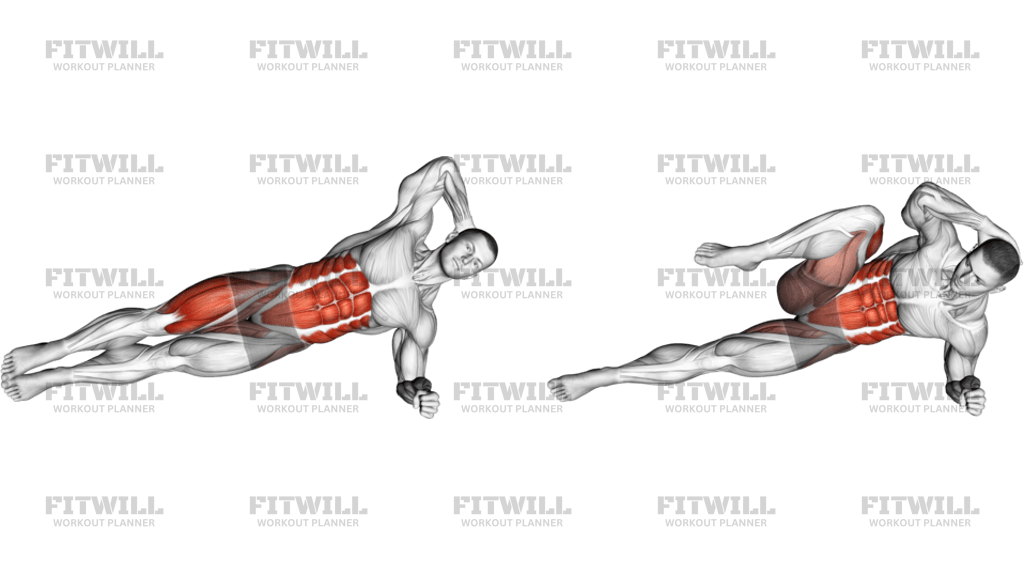
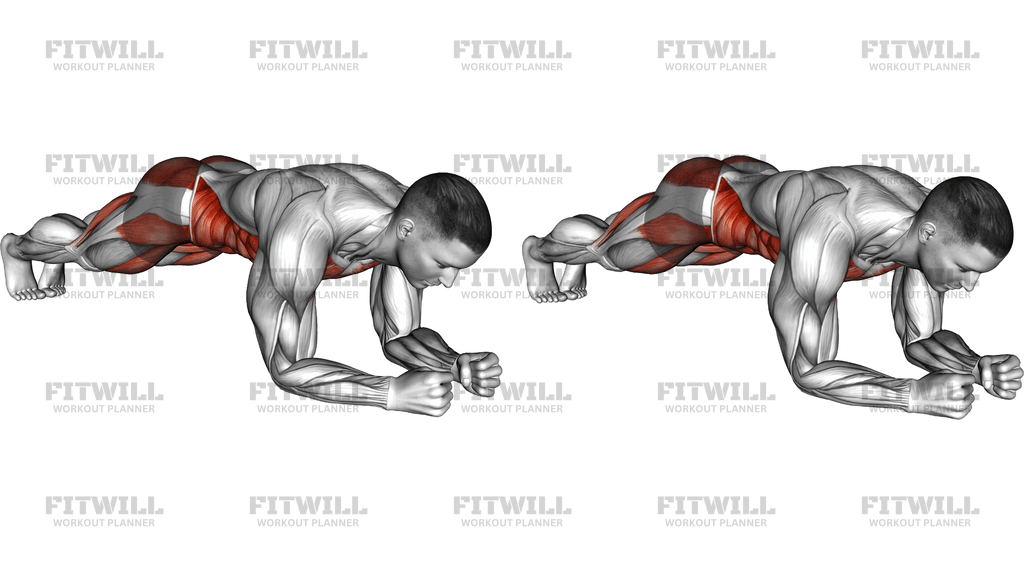
The Plank Side Jump is a dynamic core exercise that starts from a forearm plank and uses quick lateral hops of the feet to challenge your midsection far beyond what a static hold can do. From a plank supported on your forearms and toes, you jump both feet out wide to the sides at the same time, then jump them back together, keeping your hips level and your shoulders stacked over your elbows throughout. The result is a movement that combines the anti-extension demands of a plank with the adduction, abduction, and timing demands of a jumping jack done with your lower body only.
This exercise earns its place in a workout because it forces the core to work as a stabilizer while the legs are moving fast. Every time your feet leave the floor and land out wide, your abdominals, obliques, and deep core muscles have to brace hard to stop your hips from sagging or rotating. Your glutes and outer hip muscles control the landing position, and your shoulders, chest, and upper back hold the plank frame steady. It also raises your heart rate quickly, which makes it a useful bridge between strength work and conditioning.
Setup matters more than speed here. Because you are hopping while balanced on your forearms, any wobble in your shoulder or hip position multiplies with each jump. Place your elbows directly under your shoulders, set your feet about hip-width apart, and create a straight line from your head to your heels before you move at all. If your hips start high in the air or drop toward the floor, the exercise stops training the core and starts stressing the lower back.
To execute it well, think of your torso as a rigid board on two rails. Brace your abs as if bracing for a light punch, squeeze your glutes slightly, and let the legs do the hopping. Jump the feet wide with a soft landing on the balls of your feet, pause briefly with your hips still level, then jump them back to the starting width. The hop should come from your hips and legs, not from a rocking motion through your upper body.
The Plank Side Jump fits well in circuit training, metabolic conditioning blocks, and core finishers where you want to keep the heart rate up without equipment. It is also a practical progression for people who can hold a solid forearm plank for 45 seconds or more but need something more demanding. Because of the impact and the bracing requirement, it is best performed on a mat or forgiving surface, and it should be skipped by anyone with wrist, elbow, shoulder, or lower back complaints that a static plank already aggravates.
[ Workout Log & Planner ]
Put your next workout in Fitwill
Keep your plan and training log ready when you are.


Instructions
- Set up on an exercise mat in a forearm plank: elbows directly under your shoulders, forearms flat on the floor and parallel to each other, hands lightly clenched or relaxed.
- Place your feet about hip-width apart with the balls of your feet on the floor, and form one straight line from head to heels before moving.
- Brace your abdominal wall, squeeze your glutes lightly, and pull your shoulder blades down so your upper back stays flat rather than rounded.
- Exhale and jump both feet out to the sides at the same time, landing softly on the balls of your feet roughly one and a half times your starting stance width.
- Absorb each landing by keeping your knees and ankles loose, and check that your hips stay level with your shoulders — no sagging toward the floor and no piking upward.
- Without pausing longer than a beat, jump your feet back together to the starting hip-width position with the same soft landing.
- Keep your head neutral and your gaze on the floor just in front of your hands so your neck stays in line with your spine.
- Breathe in a steady rhythm through the hops — one exhale on the jump out, one on the jump back in — rather than holding your breath.
- Complete the target number of reps, then rest by lowering your knees to the mat instead of letting your hips collapse mid-set.
Tips & Tricks
- If your lower back arches on the wide landing, shorten the jump distance first before abandoning the exercise — most sagging hips come from hopping too wide too soon.
- Common mistake: rocking your torso side to side with each hop. Push the floor away through your forearms and think about keeping your elbows nailed under your shoulders.
- Land on the balls of your feet with your toes gently gripping the mat; flat-footed slaps mean the landing is uncontrolled and your hips will pay for it.
- Do not let your shoulders drift behind your elbows as you fatigue. When the elbow crease moves backward toward your knees, the set is done.
- Squeeze your glutes at the moment of landing — this is the fastest fix for a bouncing, wobbly pelvis.
- Start with 3–4 controlled hops each way rather than a max-speed set; speed is only useful once the plank line holds under impact.
- A slightly wider hand or elbow base can help if you feel unstable, but avoid widening so much that your shoulders round inward.
- If your calves and ankles fatigue before your core, reduce the hop height instead of the width — the goal is lateral distance, not vertical air.
- Use a mat on a non-slip surface; sweaty forearms on a hard floor can cause your elbows to slide outward as you jump.
Frequently Asked Questions
What muscles does the Plank Side Jump work?
The primary work is done by the abdominals and obliques, which brace against the impact of each landing. Your glutes, outer hips, hip flexors, and shoulders provide the supporting effort to keep the plank position intact.
How is the Plank Side Jump different from a regular plank?
A regular plank is a static hold, while the Plank Side Jump adds repeated lateral hops that force your core to absorb impact and control leg movement. This makes it more demanding on the obliques, hips, and conditioning side.
Can beginners do the Plank Side Jump?
Beginners should first be able to hold a solid forearm plank for about 45 seconds with a flat back. If that is not there yet, step one foot out to the side and back alternately instead of jumping both feet.
Why do my hips sag when my feet jump out wide?
Sagging usually means the abdominal brace relaxed or the jump was too wide for your current control. Narrow the hop distance, squeeze your glutes on each landing, and reset your plank line between reps if needed.
Should I jump both feet at the same time or step one at a time?
The named movement uses a simultaneous two-foot hop to each side. Stepping one foot out and back is a valid low-impact regression while you build the timing and bracing strength.
Is the Plank Side Jump safe for the lower back?
It is generally safe when your back stays neutral and your hips do not drop or rotate, but the hopping does create spinal loading. If a static plank already bothers your lower back, choose a stepping version or a different core drill.
How many reps of the Plank Side Jump should I do?
Start with 2–3 sets of 10–20 total hops, counting each jump out and back as two reps. Stop the set as soon as your plank line breaks, since extra reps in a bad position teach poor habits.
Where should my elbows and shoulders be during the exercise?
Keep your elbows directly under your shoulders with your forearms flat on the floor for the entire set. Shoulders drifting behind the elbows is a common sign of fatigue and reduces the core demand.
What can I substitute if hopping on my forearms is uncomfortable?
A high plank (hands under shoulders) version of the side jump shifts load away from the forearms, or you can use plank jacks with a step-out pattern. Both train a similar bracing effect with less joint stress.