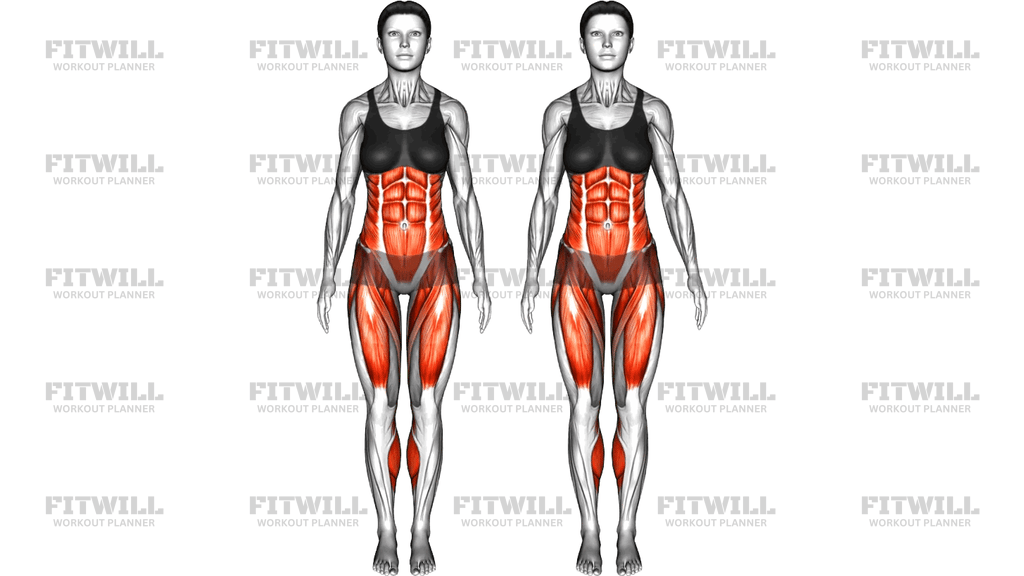
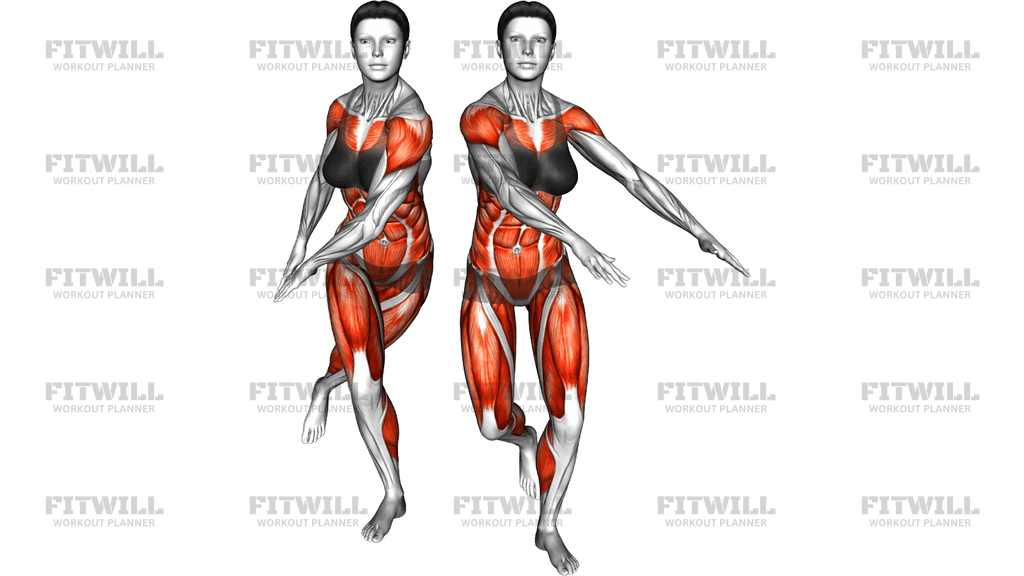
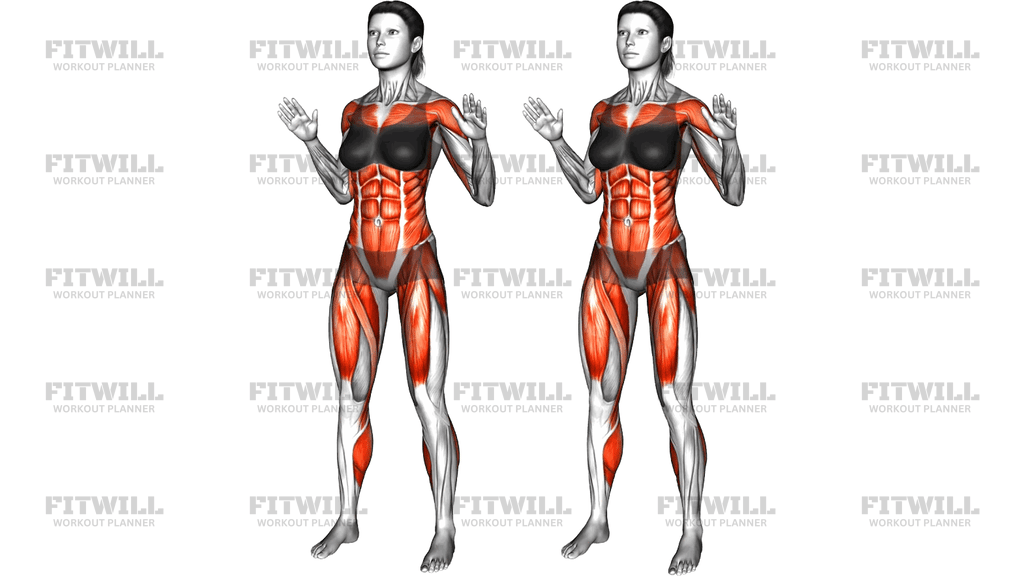
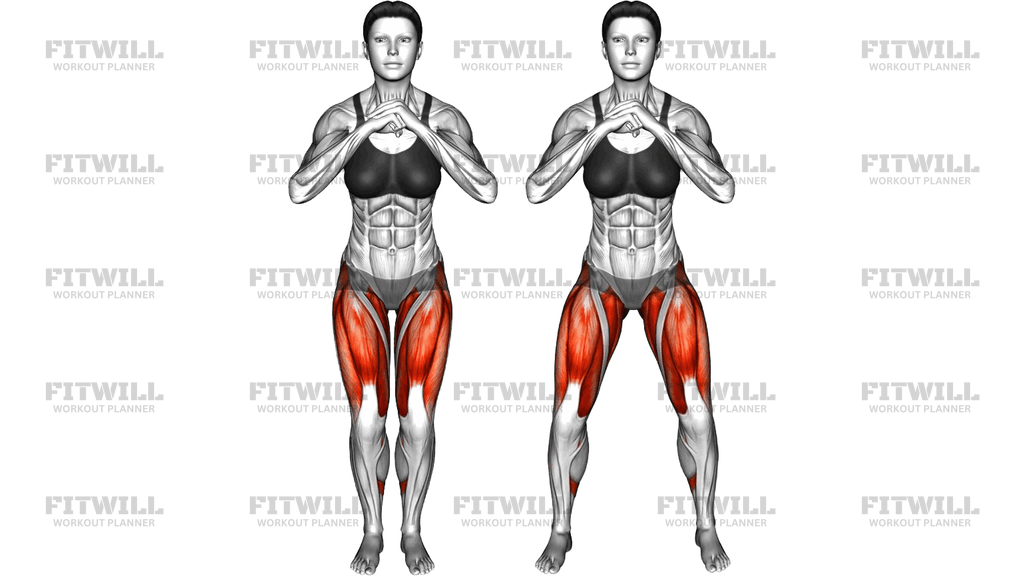
Sitting Alternating Quads Stretch
The Sitting Alternating Quads Stretch is a floor-based flexibility exercise that targets the quadriceps on the front of the thigh, one leg at a time. You sit on the ground, bend one knee so the heel travels toward your glute, gently draw the ankle in with your hand, and hold the stretch before switching sides. Because each leg is stretched separately, you can compare left-to-right flexibility and give the tighter side extra attention without being limited by the more flexible leg.
This stretch is especially useful for runners, cyclists, and anyone who spends long hours sitting, since tight quads and hip flexors are common in all three groups. It also works well as part of a cooldown after leg training, a warm-up companion on lower-body days, or a standalone routine for people working on general hip and thigh mobility.
The main muscles lengthened are the quadriceps, with the rectus femoris receiving the most attention because it crosses both the hip and the knee. The hip flexors at the front of the hip also get a mild release as the thigh moves behind the body line. Keeping the torso tall and the pelvis neutral is what makes the stretch effective; if the lower back rounds or the hips tuck under, the tension shifts away from the thigh and the exercise loses its purpose.
Setup matters more than it looks. Sitting on a mat with a straight spine lets you control how far you lean back, and placing the stretching leg's knee at a comfortable width prevents stress on the knee joint itself. Move into the stretch gradually, hold a position where you feel a clear but tolerable pull along the front of the thigh, and breathe steadily throughout. Never force the heel to the glute or push through sharp pain in the knee.
Alternating between legs keeps both sides warm and makes the routine efficient. Most people do two to three rounds per side, holding each stretch for 20 to 40 seconds. Over weeks of consistent practice, you should notice easier knee bending, a more comfortable deep squat, and less stiffness standing up after sitting for long periods.
[ Workout Log & Planner ]
Put your next workout in Fitwill
Keep your plan and training log ready when you are.


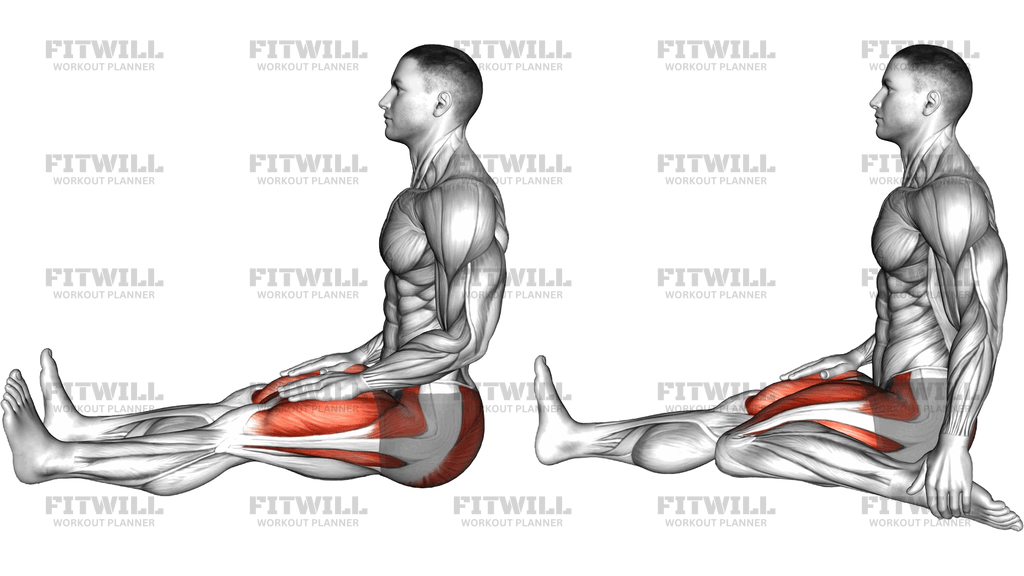
Instructions
- Sit on an exercise mat with your legs extended in front of you and your spine tall, resting your hands lightly on the floor beside your hips.
- Bend your right knee and slide your right heel out to the side toward your glute, letting the knee point down toward the mat.
- Place your right hand on the floor behind you for support, then reach back with the same-side hand to hold your right ankle or the top of your foot.
- Brace your core lightly and keep your chest lifted so your lower back stays neutral instead of rounding.
- Gently draw the heel toward your glute until you feel a steady pull along the front of your right thigh and hip.
- Hold the position for 20 to 40 seconds, breathing slowly and letting the tension ease slightly with each exhale.
- Release the foot, straighten the right leg, and pause for a breath before repeating the same sequence on the left side.
- Continue alternating legs for two to three rounds per side, finishing with the leg that felt tighter.
- To exit, bring both legs back to the extended starting position and sit tall for a moment before standing.
Tips & Tricks
- If your knee complains when the heel moves toward the glute, reduce the range so the bend is smaller — the stretch should be felt in the thigh, never inside the knee joint.
- Avoid letting the stretching-side hip lift off the mat; keep both sit bones grounded so the quad lengthens instead of the pelvis tipping.
- A common mistake is collapsing the chest and rounding the lower back to reach the ankle. Sit taller and hold closer to the knee or shin if reaching is the limiting factor.
- Keep the kneecap pointing toward the ceiling or slightly outward; forcing the knee to roll inward changes the stretch line and can strain the joint.
- If you feel the stretch mostly in the front of the hip rather than the thigh, that is normal — the rectus femoris and hip flexors share the workload in this position.
- Exhale as you settle deeper into the hold rather than holding your breath; tension in the breath usually means tension in the muscle.
- On a hard floor, a folded towel under the bent knee makes the position much more comfortable and lets you hold longer.
- Do not bounce the heel toward the glute; static holds produce better flexibility results and are safer for the knee.
- If one side is noticeably tighter, add one extra round to that side rather than stretching it harder in a single hold.
Frequently Asked Questions
Which muscles does the Sitting Alternating Quads Stretch target?
The primary target is the quadriceps on the front of the thigh, especially the rectus femoris, which crosses both the hip and knee. The hip flexors at the front of the hip also receive a mild stretch.
Why is the stretch done alternating instead of both legs at once?
Stretching one leg at a time lets you match the intensity to each side independently. Most people have a noticeable left-right difference, and alternating keeps both legs active in the same session.
Is the Sitting Alternating Quads Stretch safe for beginners?
Yes. Beginners can simply bend the knee less and hold the stretch shorter. The position is easy to self-adjust, and no equipment beyond a mat or soft surface is needed.
I feel the stretch in my knee instead of my thigh. What should I change?
Stop and reduce the knee bend so the heel sits farther from the glute. Make sure the kneecap points up or slightly out, and never pull the ankle if the sensation is sharp or inside the joint.
How long should I hold each side?
Twenty to forty seconds per hold works well, repeated two to three times per leg. Longer, relaxed holds are generally more effective than short, forceful ones for flexibility.
Can I do this stretch before a workout?
Yes, but keep pre-workout holds shorter, around 15 to 20 seconds, so the muscles stay responsive. Longer holds of 30 seconds or more fit better in a cooldown.
What can I use instead if sitting on the floor is uncomfortable?
A standing quad stretch, where you hold a wall or chair for balance and draw one heel toward your glute, stretches the same muscles. A side-lying version is another low-strain option for sensitive knees.
Should my back hand support me on the floor during the stretch?
Yes, placing the same-side hand on the floor behind your hips helps you stay tall and control how far you lean back. Without that support, many people round their lower back and lose the stretch in the thigh.
Who should be careful with this stretch?
Anyone with a recent knee injury, kneecap problems, or hip replacements should reduce the range significantly or consult a professional first. The stretch should never produce joint pain, only a muscle pull.