High Knee Tap
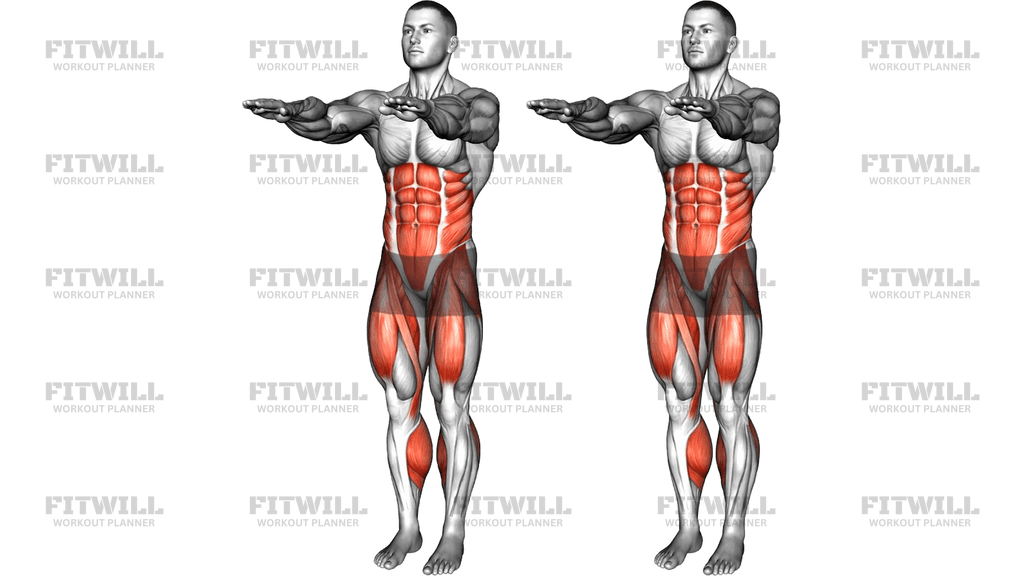
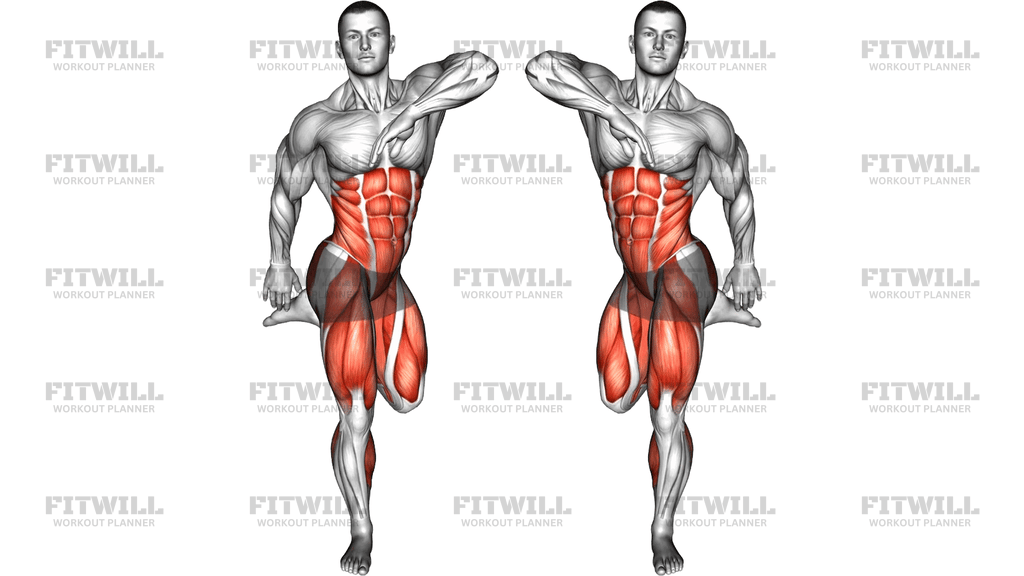
The High Knee Tap is a standing bodyweight drill where you lift one knee up toward waist height and tap it with the hand on the opposite side, then switch legs in a smooth, alternating rhythm. It looks simple, but the combination of a tall torso, a deliberate knee drive, and a precise hand-to-knee touch forces your trunk to stay rigid while one hip flexes hard and the other leg stabilizes your balance.
This movement earns its place in warm-ups, core circuits, and low-impact conditioning blocks. Because you perform it standing with no equipment, it works well as a dynamic warm-up before squats or running, as an active core exercise between strength sets, or as a joint-friendly cardio option for anyone who wants to avoid jumping. It is especially useful for beginners learning to brace the trunk while moving the limbs independently, and for older or returning trainees who need balance work with a low fall risk.
The main work comes from the front of the trunk and the front of the hip. Your rectus abdominis and deep core brace to keep the ribs stacked over the pelvis while the hip flexors drive the thigh up and the quads finish the knee lift. The obliques resist the small side-to-side wobble that each knee raise creates, and the standing leg's glutes and calf keep you steady on a single foot. The arm reach adds a rotational pull that ties the upper and lower body together.
Setup matters more than speed here. Stand tall with feet about hip-width apart, arms bent and hands held loosely at waist height in front of you. If your torso leans back, your lower back arches, or your ribs flare as the knee rises, the core stops doing its job and the hip flexors take over with poor leverage. Think of the tap as a target, not the goal: the quality of the knee lift and the stability of your trunk are what count.
To execute it well, brace your midsection as if bracing for a light push, then drive one knee up until your thigh is roughly parallel to the floor and tap it with the opposite hand. Lower the foot under control rather than letting it drop, reset your posture, and repeat on the other side. Keep the movement quiet and smooth; if you hear your feet slamming, you are rushing. Most people do well with 20 to 40 total taps per set, either for time or for reps, staying controlled the entire time.
A few practical safety points: keep your gaze forward and your weight over the middle of the standing foot, not the toes. If balance is a challenge, stand near a wall or place one fingertip on a sturdy surface until the pattern feels natural. Stop the set as soon as your knee height drops or your posture sags, because a sloppy tap trains nothing you actually want.
[ Workout Log & Planner ]
Put your next workout in Fitwill
Keep your plan and training log ready when you are.


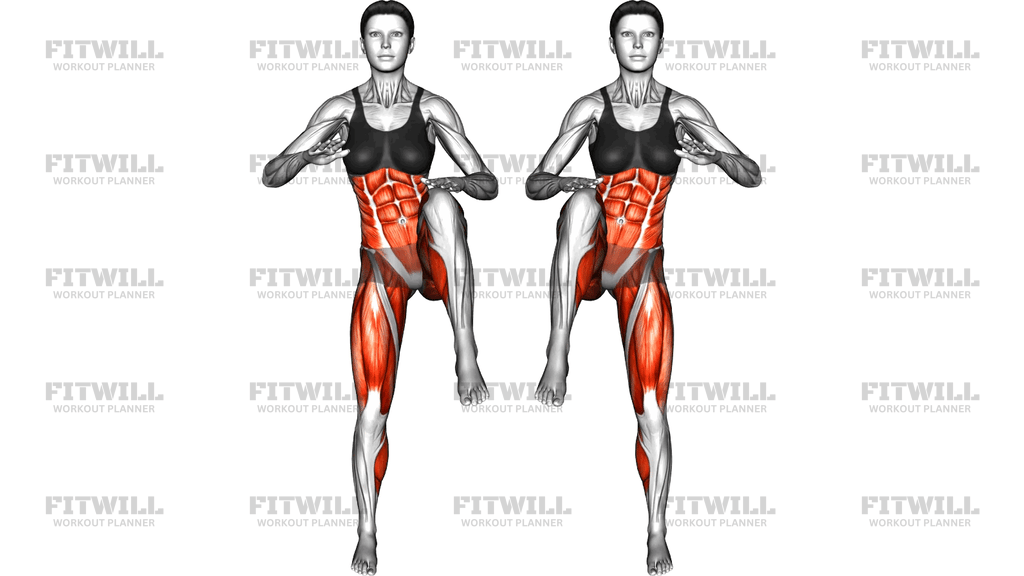
Instructions
- Stand upright with your feet hip-width apart, weight balanced over the middle of both feet, and your gaze fixed on a point ahead at eye level.
- Bend your elbows and hold your hands loosely in front of your body at about waist height, palms facing down, ready to meet your knees.
- Brace your midsection gently and pull your ribs down so your lower back is neutral before you start moving.
- Shift your weight onto one leg and drive the opposite knee up and slightly across until your thigh is about parallel to the floor.
- Tap the top of the raised knee with the hand on the opposite side, keeping the contact light and deliberate.
- Lower the foot back to the floor under control, placing it in the same spot it started rather than letting it drift forward.
- Exhale as the knee rises, inhale as the foot returns, and keep the breathing steady with each rep.
- Repeat the lift-and-tap on the other side and continue alternating for your target number of reps or time.
- Between reps, recheck your posture: head tall, shoulders relaxed, ribs stacked over the pelvis before the next knee drive.
Tips & Tricks
- If your torso rounds forward to meet the knee, the tap is beating the lift. Keep the chest tall and bring the knee higher instead of dropping the hand.
- Leaning back as the knee rises usually means the hip flexors are being used without core support. Reset the ribs over the pelvis and brace before the next rep.
- Watch for the standing knee caving inward on each lift. Push the ground away through the whole foot and keep the standing knee tracking over the toes.
- A common mistake is letting the foot crash down between taps. Lower it with the same control you used to raise it; the eccentric part is where balance is built.
- Speed is the enemy of this drill. If your taps become noisy and rushed, cut the set in half and rebuild the tempo before adding reps.
- If one side taps cleanly while the other feels wobbly, give the weaker side an extra set rather than letting your dominant side set the standard.
- Shorten the range slightly rather than arching your lower back to chase a higher knee. Height should come from hip flexion, not spine extension.
- To increase the challenge without speed, pause for one second at the tap or hold your hands slightly higher so the knee has to travel farther.
Frequently Asked Questions
What muscles does the High Knee Tap work?
The main work comes from the abs and hip flexors, with the quads assisting the knee lift. The obliques and the glutes of the standing leg stabilize your trunk and balance throughout each rep.
Should I tap my knee with the same-side or opposite hand?
The standard version uses the opposite hand, which adds a natural cross-body rotation and keeps the movement balanced. Same-side taps are a valid variation, but the opposite-hand pattern is easier to coordinate and more common in warm-ups.
Is the High Knee Tap good for beginners?
Yes, it is one of the more accessible standing core drills because it requires no equipment and no impact. Beginners should start with slow, deliberate reps and stand near a wall for balance support if needed.
How high should I lift my knee during the tap?
Aim for thigh roughly parallel to the floor, or whatever height lets you tap without rounding your torso or arching your lower back. A slightly lower knee with a tall spine beats a high knee with a collapsed posture.
Why do I lose my balance on one side more than the other?
Small side-to-side differences in hip strength and ankle stability are normal. Give the weaker side an extra set, slow the tempo down, and keep your weight over the middle of the standing foot rather than the toes.
Can I use the High Knee Tap as cardio?
Yes, when performed at a brisk but controlled pace for longer sets, it raises the heart rate without jumping, making it a good low-impact conditioning option. Keep the tempo honest; a frantic pace usually degrades the knee lift and trunk position.
What can I substitute if standing on one leg is difficult?
Try a seated knee lift on a bench, or a standing march where you drive the knee up without the hand tap and rest one hand on a wall. Both train the same hip flexion and bracing pattern with less balance demand.
How many reps should I do per set?
For warm-ups, 20 to 30 slow alternating taps is plenty. For core or conditioning work, go for time, such as 30 to 45 seconds, and stop when your knee height or posture starts to slip.
Is it safe for my lower back?
When done with a braced trunk and a neutral spine, the movement is generally gentle on the lower back because the range is controlled and there is no load. If you feel back strain, reduce the knee height and double-check that your ribs are not flaring as the leg rises.