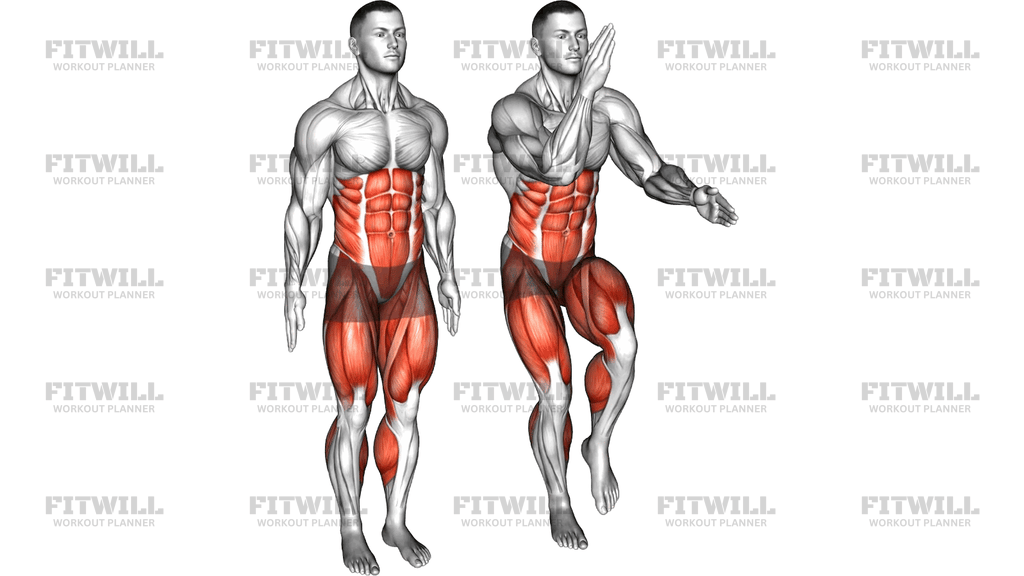
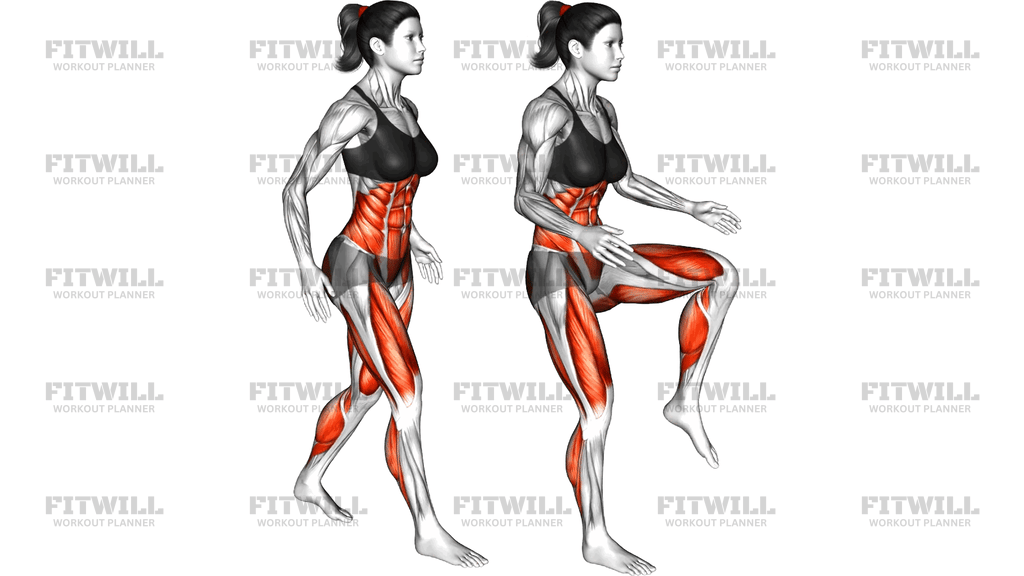
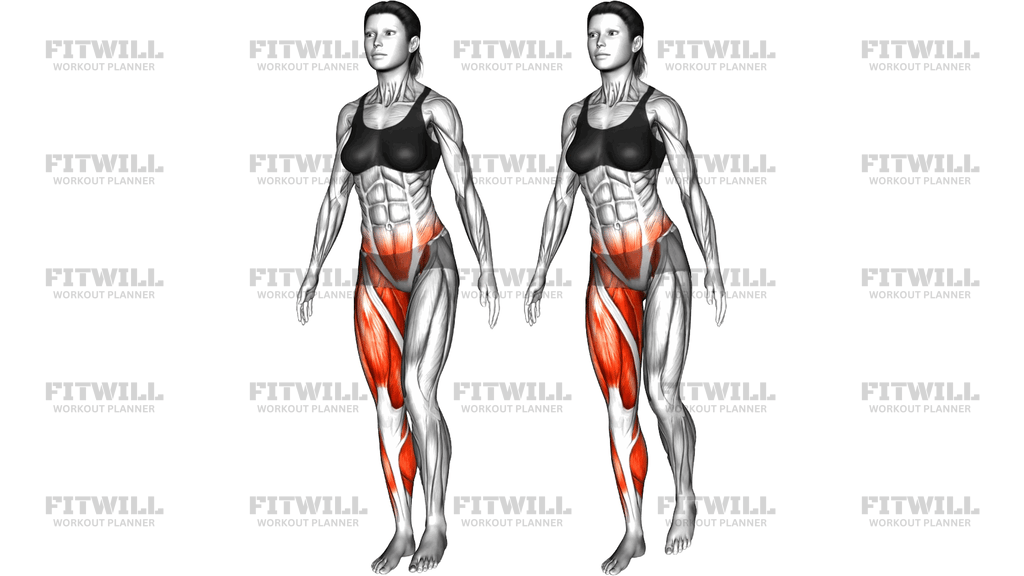
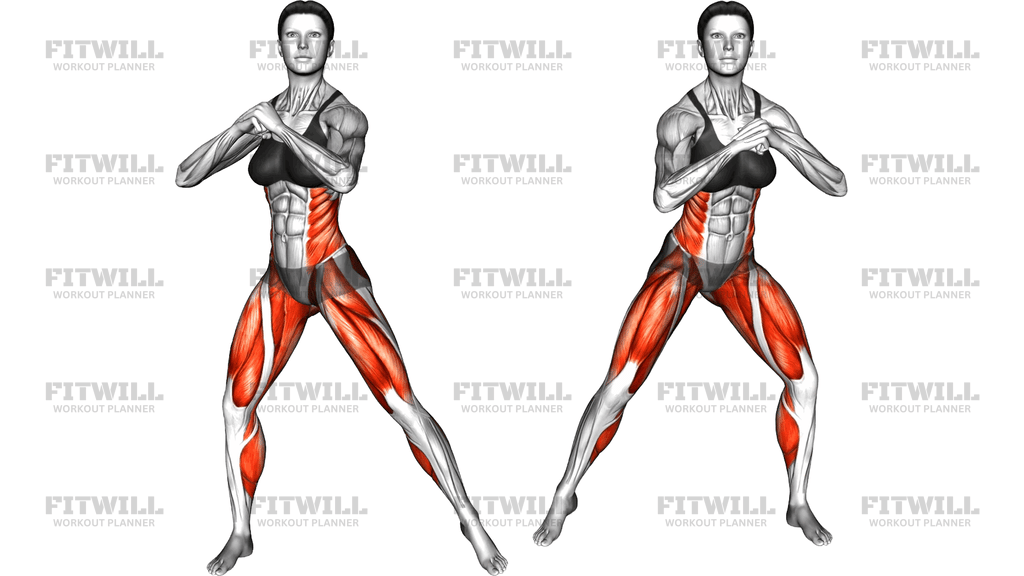
Bodyweight Elevated Heel Front Squat
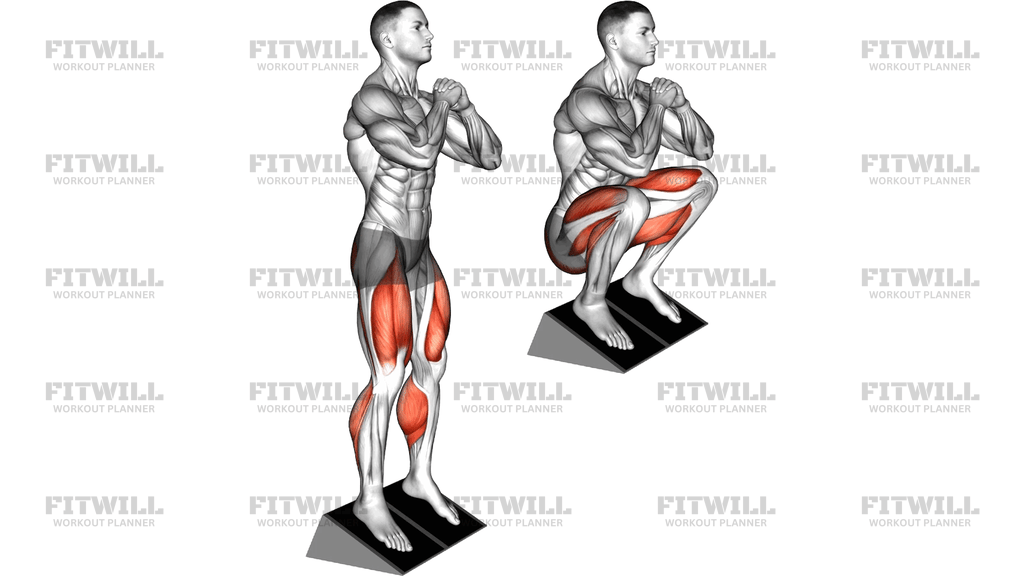
The Bodyweight Elevated Heel Front Squat is a bodyweight squat performed with your heels raised on a slant board, wedge, or similar stable surface, and your hands held together in front of your chest in a front-squat style arm position. Elevating the heels shifts your center of mass backward over the mid-foot, which lets you sit straight down into a deep squat while keeping your torso upright and your knees traveling forward over the toes. It is one of the most joint-friendly ways to load the quadriceps through a full range of motion without any external weight.
This movement is especially useful for people who struggle with ankle mobility. If tight calves or limited dorsiflexion cause your heels to lift, your torso to pitch forward, or your squat to bottom out early, the elevated heel setup immediately gives you the extra range you need. It is also a go-to teaching drill for learning an upright front squat pattern, and a reliable muscle-building exercise for the quads, since the deep knee bend and upright torso place sustained tension on the front of the thigh.
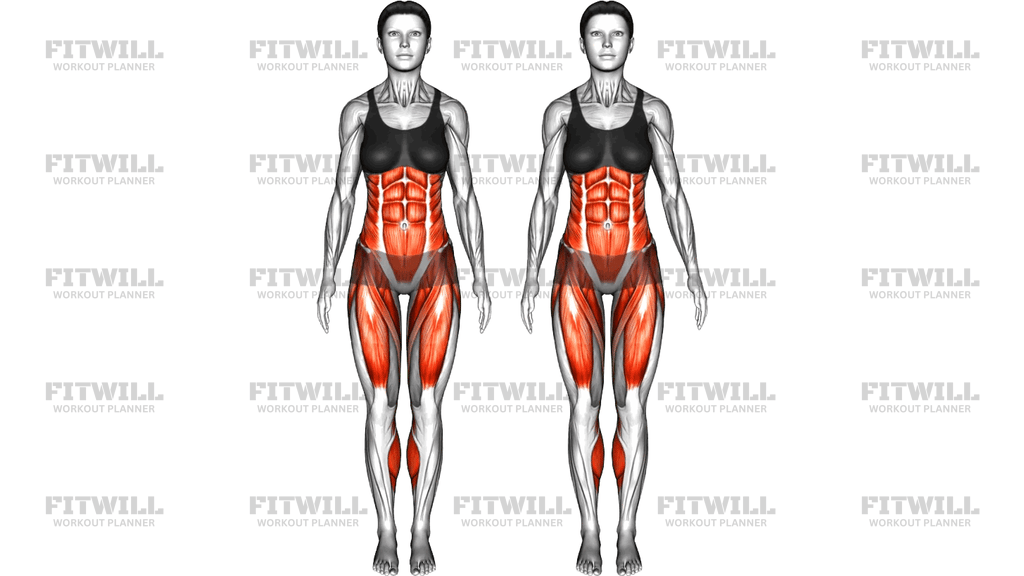
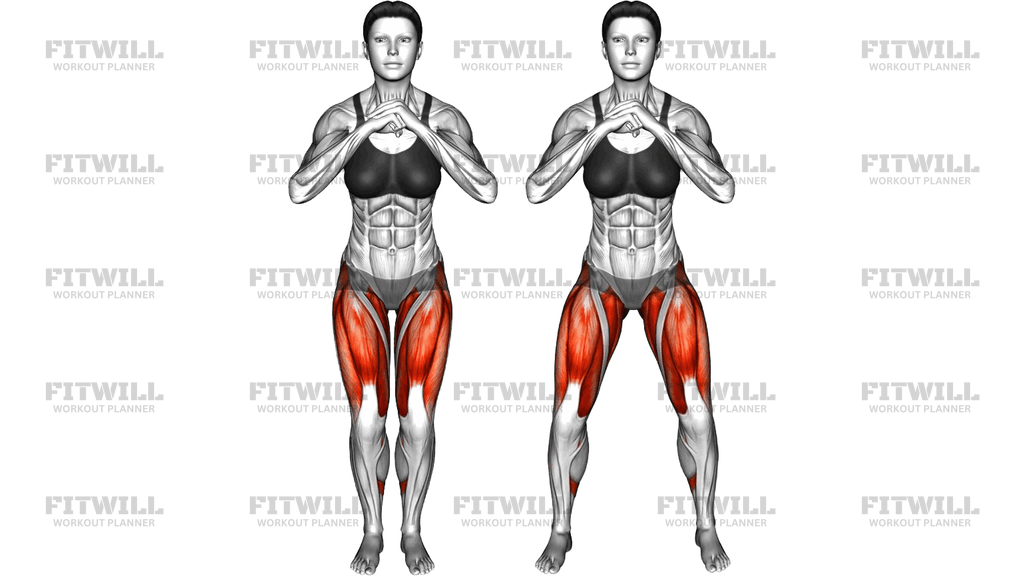
The quadriceps do most of the work here, particularly the vastus group that straightens the knee from a deeply flexed position. The glutes assist on the way up, the adductors help control the thighs, and the core works isometrically to keep your ribcage stacked over your pelvis while your arms are held forward. Holding your hands together at chest height also engages the upper back and shoulders as they fight to keep the chest open and elbows down.
Setup matters more than it might seem. The wedge should be on a non-slip surface, your whole foot should rest on it with the ball of the foot in full contact, and your stance should be about shoulder width with toes turned out slightly. Because you are barefoot or in flat shoes in this position, you can feel the pressure through the mid-foot, which is exactly what keeps the squat stable. A sloppy setup with the heels hanging off the edge of the wedge defeats the purpose and stresses the Achilles.
To execute it well, brace your abdominal wall, then push your hips back slightly and bend your knees apart in line with your toes as you descend. Keep your elbows tucked and chest tall so the torso stays nearly vertical, and descend until your thighs are at least parallel or as deep as your mobility comfortably allows. Drive the floor away through the whole foot to stand back up, exhaling on the way up.
Common use cases include squat warm-ups, quad-focused home workouts, mobility and position work for barbell front squats, and rehabilitation-friendly strength training after guidance from a professional. Because there is no load on the spine, most healthy lifters can perform this movement with high reps and slow tempos, pausing at the bottom for extra time under tension. Stop short of any depth that forces your knees to cave inward or causes pinching at the front of the hip or knee.
Fitwill
Log Workouts, Track Progress & Build Strength.
Achieve more with Fitwill: explore over 9600 exercises with images and videos, access built-in and custom workouts, perfect for both gym and home sessions, and see real results.
Start your journey. Download today!




Instructions
- Place a slant board or wedge on a flat, non-slip surface, with the high edge under your heels.
- Stand with your full foot on the board, feet about shoulder width apart, toes turned out 15 to 30 degrees.
- Bring your hands together in front of your chest with fingertips touching or palms stacked, elbows pointing down and in.
- Take a breath into your belly and brace your abdominal wall like you are about to be lightly tapped in the stomach.
- Push your hips back a few inches, then bend your knees forward and apart, tracking over your toes.
- Lower with control until your thighs are at least parallel to the board, keeping your chest up and heels pressed down.
- At the bottom, keep your weight spread across the whole foot and your elbows down so your torso stays upright.
- Drive through the floor and extend your hips and knees together to stand tall.
- Exhale as you rise, then reset your brace and repeat for the desired number of repetitions.
- Step off the board backward from a stable stance rather than walking off the high edge.
Tips & Tricks
- If your heels float off the board at the bottom, the wedge is too low or your stance is too wide; narrow your feet slightly and let the elevation do its job.
- Do not let the knees collapse inward as you descend; cue your knees toward your pinky toes, especially in the bottom half.
- Keep your hands pressed together and elbows low; letting the elbows flare up turns this into a leaning squat and shifts work away from the quads.
- A slow three-second descent with a one-second pause at the bottom makes this far harder than adding speed, and highlights any balance wobble.
- If you feel a pinch at the front of your hip, stop a few degrees higher and work on depth gradually rather than forcing the bottom position.
- Check that the ball of your foot, not just your arch, is in solid contact with the board; pressure in the toes alone means your weight has drifted forward.
- Warm up your calves and ankles with a few bodyweight squats on the flat floor first so the elevated position does not feel like a sudden stretch under load.
- Look at a point on the wall slightly above eye level; dropping your gaze tends to round the upper back and pull the chest forward out of the upright front squat posture.
Frequently Asked Questions
What muscles does the Bodyweight Elevated Heel Front Squat work?
The quadriceps are the primary movers, working hard through the deep knee bend. The glutes assist on the way up, the adductors stabilize the thighs, and the core and upper back hold the upright torso position.
Why are the heels elevated on a slant board for this squat?
Raising the heels compensates for limited ankle dorsiflexion, letting the knees travel forward so you can squat deeper with a more upright torso. It also keeps your center of mass over the mid-foot, which makes the bodyweight front squat position much easier to balance.
Can beginners do the Bodyweight Elevated Heel Front Squat?
Yes, and it is often easier for beginners than a flat-footed squat because the heel lift removes the ankle mobility barrier. Start with partial depth and add range as balance and comfort improve.
What can I use if I don't have a slant board?
A pair of weight plates, a thick book wedged against a wall, or a folded stable mat under the heels all work, as long as the surface cannot slide or compress unevenly. Avoid anything rounded or soft enough to wobble.
How deep should I squat in this exercise?
Aim for thighs at least parallel to the floor, and go deeper only if you can keep your heels down, knees tracking over the toes, and torso upright. Depth you cannot control is not worth chasing.
Why are my heels lifting even with the elevation?
This usually means your stance is too wide, your weight has drifted to the toes, or the wedge is not high enough for your current ankle range. Narrow the stance slightly, shift pressure back toward the mid-foot, and consider a taller wedge.
Is the Bodyweight Elevated Heel Front Squat a good substitute for barbell front squats?
It trains the same upright squat pattern and quad emphasis without spinal loading, making it a solid option for home training or as a position drill. It will not build the same maximal strength as a loaded barbell, but it prepares the positions well.
Should I wear shoes or go barefoot for this exercise?
Either works, but flat, flexible shoes or bare feet let you feel pressure through the whole foot on the board. Thick, cushioned running shoes make balancing on the wedge less stable.
How many reps should I do?
Because the load is your body weight, work in the 10 to 20 rep range with a controlled tempo, or add a two-second bottom pause for extra difficulty. Stop the set when your knees drift inward or your heels start to lift.
Is this squat safe for my knees?
For healthy knees, a deep controlled squat with the heels elevated is generally well tolerated and strengthens the muscles that support the joint. If you have a current knee injury or pain during the movement, reduce the depth and check with a qualified professional first.