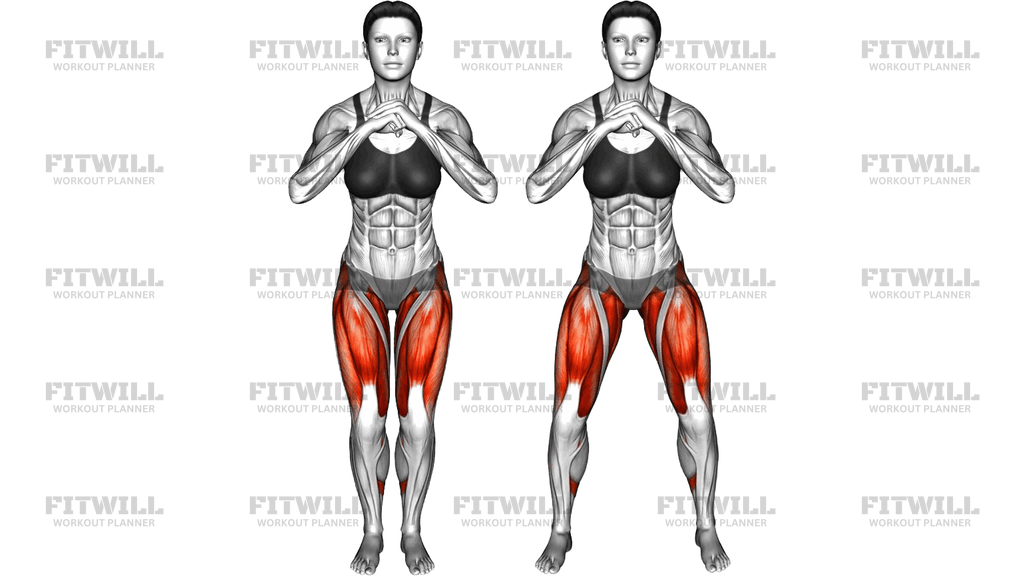
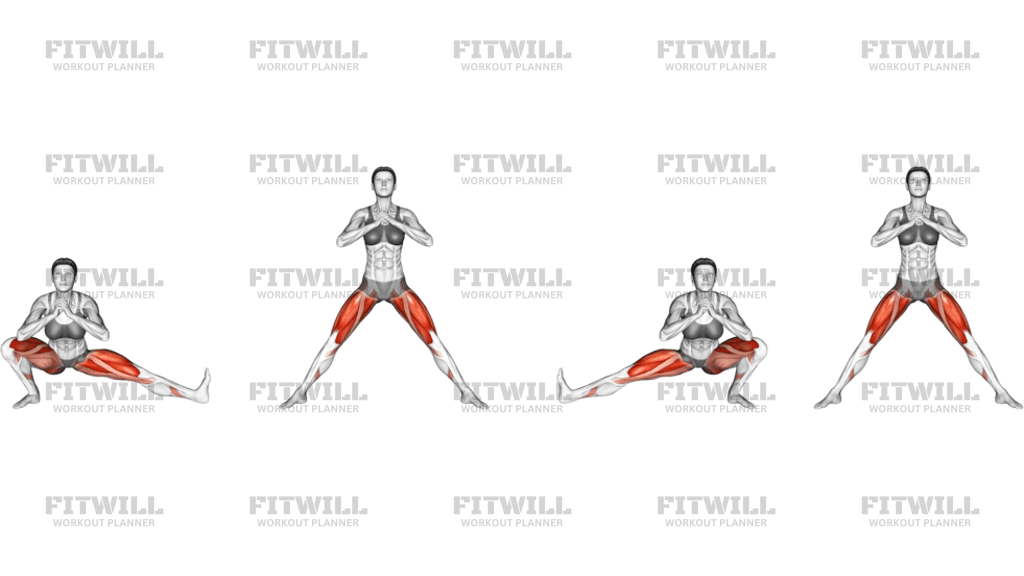
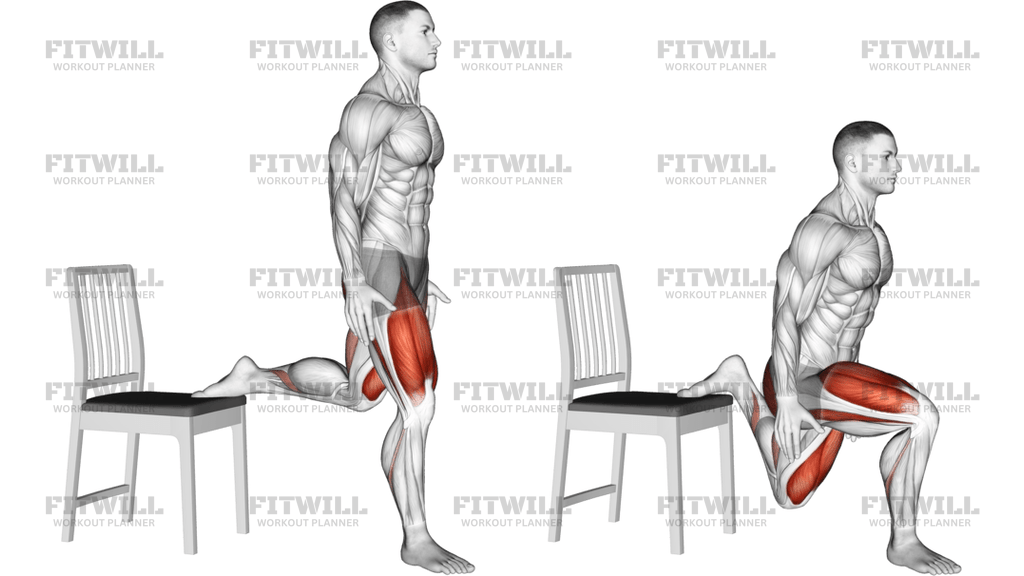
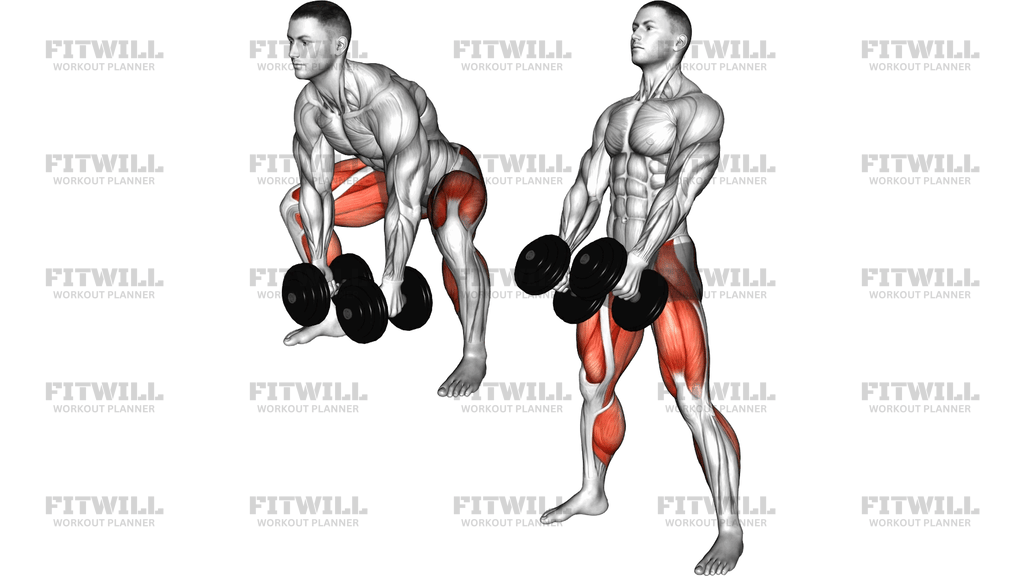
Bodyweight Walking Low Lunge
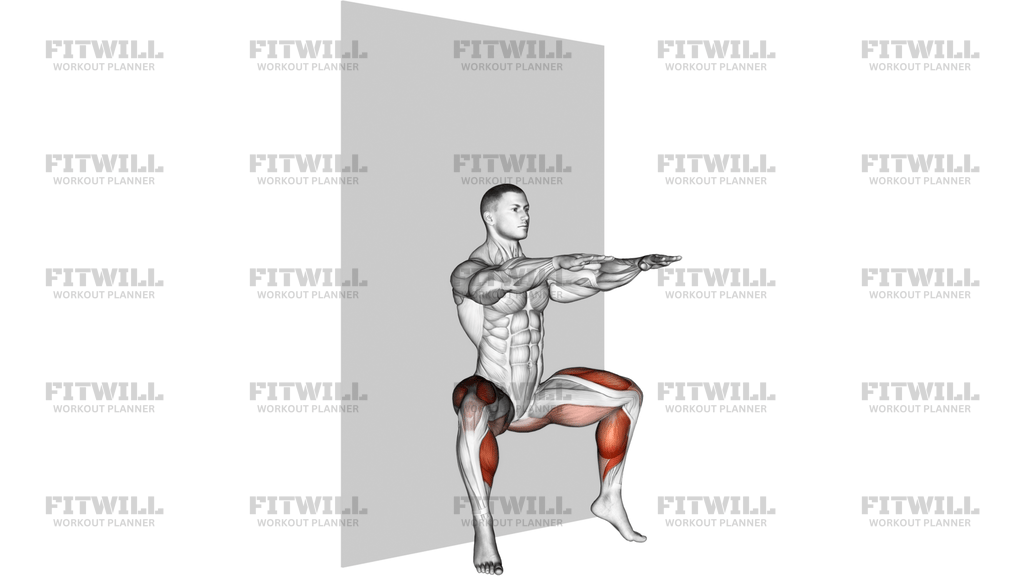
Bodyweight Walking Low Lunge is a forward-stepping lunge variation where you travel across the floor with each rep, lowering the back knee until it hovers just above the ground. You start from a tall stand, take a long step forward, sink straight down until both knees approach right angles, then drive through the front foot to rise and step the trailing leg into the next lunge. Because you keep moving forward instead of returning to the start, every rep demands a fresh balance challenge and a controlled push-off from the working leg.
This movement hits the quadriceps hard, especially in the deep bottom position where the front knee is heavily flexed and the front thigh has to lift your entire bodyweight. The glutes and hamstrings contribute on the way up, the hip flexors of the trailing leg work to control the rear leg as it lowers, and the calves and foot stabilizers manage the heel-raised back foot. Your core stays quietly busy the whole time, keeping your torso upright as your base of support shifts from rep to rep.
The 'low' part of the name matters. Letting the rear knee descend close to the floor increases the range of motion at the front hip and knee, which lengthens the hip flexors of the back leg and places the front glute under a fuller stretch. This makes the exercise a favorite warm-up or mobility drill for people who sit a lot, since it combines strength work with a practical opening of the front-of-hip position that gets shortened by long hours in a chair.
Setup determines whether you get a clean lunge or a wobbly stumble. Step distance is the key variable: too short and your front knee juts far past your toes while your heels crowd together; too long and you cannot reach the low position without collapsing your posture. Aim for a step that lets both knees bend to roughly ninety degrees at the bottom, with your torso tall and your shoulders stacked over your hips.
To perform it well, keep your gaze forward, your chest lifted, and your hands free at your sides for balance. Sink vertically rather than pitching forward, letting the back knee travel down toward the floor rather than back. Drive up through the midfoot of the front leg, bring the rear foot through, and immediately plant it into the next step. Because you alternate sides and cover distance, keep the tempo deliberate — this is not a speed drill until your balance is consistent.
This exercise suits beginners building single-leg strength before loaded lunges, runners and field-sport athletes warming up their hips, and anyone training at home with no equipment. Common sense points: stop short of letting the rear knee slam into the floor, keep the front knee tracking over the toes rather than caving inward, and reduce depth if you feel pinching at the front of either hip or knee.
[ Workout Log & Planner ]
Put your next workout in Fitwill
Keep your plan and training log ready when you are.


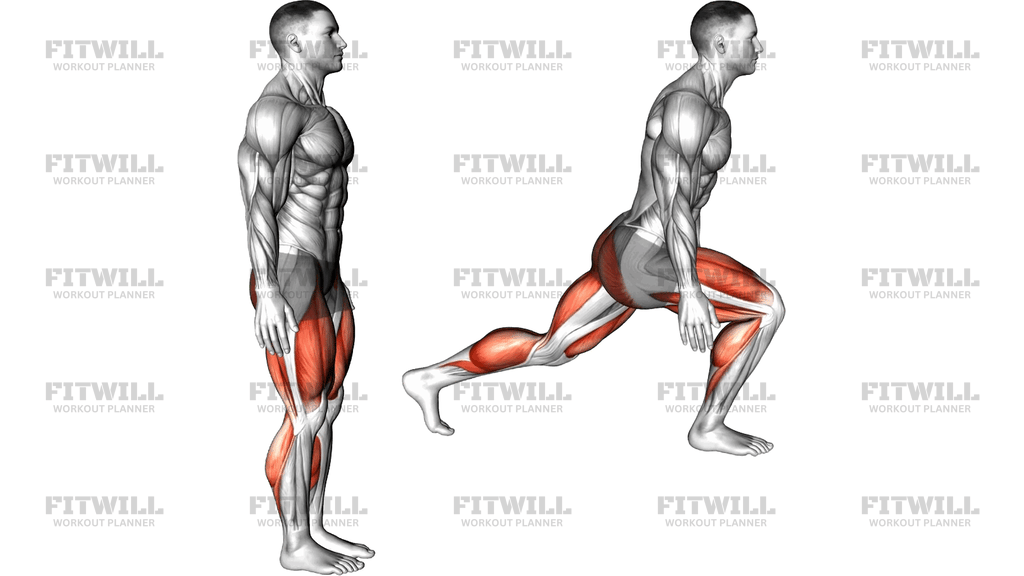
Instructions
- Stand tall with your feet hip-width apart, arms relaxed at your sides, and your weight spread evenly across both feet.
- Take a controlled step forward with your right foot, long enough that both knees can bend to about ninety degrees, and plant the whole front foot flat on the floor.
- Keep the heel of your back foot lifted so only the ball of the rear foot contacts the ground, and rise to a tall posture with your shoulders stacked over your hips.
- Brace your core lightly and pull your shoulder blades back so your torso stays upright throughout the set.
- Bend both knees and sink straight down until your rear knee nearly touches the floor and your front thigh is close to parallel with the ground; your front shin should stay roughly vertical with the knee tracking over your toes.
- Pause for a beat at the bottom, feeling the stretch across the front of your back hip and the load in your front thigh.
- Exhale and press through the midfoot of your front leg to stand back up, keeping the rear foot's ball in contact with the floor until you have full height.
- Step your rear left foot forward past the right, planting it into the next lunge position, and repeat the descent on the other side.
- Continue alternating legs and traveling forward, inhaling as you lower and exhaling as you drive up.
- Finish the set by stepping your feet together and standing fully upright before resting.
Tips & Tricks
- If your front knee shoots well past your toes at the bottom, your step is too short — restart the set with a longer stride so both knees can reach ninety degrees together.
- The most common mistake is leaning the torso forward to reach the low position. Cue yourself to imagine the back knee dropping like an elevator shaft straight down, not pushing your chest over the front foot.
- Keep your hands free and hanging at your sides rather than on your thighs; pressing on your legs steals work from the quads and glutes you are trying to train.
- Watch your front knee in a mirror: if it drifts inward toward the big toe, actively spread the floor with your foot and think of the knee tracking over the second and third toes.
- Do not let the rear knee crash into the floor. Hover it an inch or two above the ground so the muscles, not the joint, control the bottom of the rep.
- If your balance wobbles on the transition step, slow down and pause standing between reps until you can move continuously without stumbling.
- On soft or slick flooring, the ball of the trailing foot can slip — train barefoot or in flat-soled shoes where the rear toes can grip the surface.
- Tighter hips can handle a slightly shallower rear-knee depth early on; gradually increase range over weeks instead of forcing the knee to the floor on day one.
- Keep the working leg doing the lifting. If you find yourself pushing off the back toes to rise, shift your weight fully onto the front foot before initiating the drive upward.
Frequently Asked Questions
Which muscles does the Bodyweight Walking Low Lunge work most?
The quadriceps of the front leg do the majority of the lifting, especially near the bottom of the rep. The glutes and hamstrings assist on the way up, while the hip flexors, calves, and core stabilize the moving body.
How low should my back knee go in the Bodyweight Walking Low Lunge?
Lower it until it hovers just above the floor without touching or slamming down. That depth gives you the full stretch through the front of the rear hip while keeping the load on your muscles rather than your knee joint.
Is the Bodyweight Walking Low Lunge good for beginners?
Yes, as long as you start with a moderate depth and a slower tempo. If balance is an issue, begin with stationary split squats or reverse lunges in place, then progress to walking once each rep feels stable.
Why does my front knee hurt past my toes during this lunge?
That usually means your step is too short, which forces the knee to travel excessively forward to reach depth. Take a longer stride so both knees bend together, and keep your weight centered over the middle of the front foot.
How far should I step forward in the Bodyweight Walking Low Lunge?
Step roughly two to two and a half of your own foot lengths, or whatever distance lets both knees reach about ninety degrees at the bottom. Taller people generally need a longer step; test and adjust on your first rep.
How is a walking low lunge different from a regular stationary lunge?
In a stationary lunge you stay in one spot and repeat reps on the same leg. The walking version requires you to rise, bring the trailing leg through, and plant a new step every rep, which adds a balance and coordination challenge and spreads fatigue across both legs naturally.
Can I use the Bodyweight Walking Low Lunge as a warm-up?
Absolutely. A slow set of five to eight lunges per leg raises body temperature, opens the hip flexors, and primes the quads and glutes before running or lower-body lifting. Keep the reps controlled and avoid going to fatigue.
What should I do if I feel a pinch at the front of my hip in the low position?
Reduce your depth slightly and check that your torso is staying upright rather than rounding forward. A slightly wider or shorter step can also change the hip angle enough to remove the pinch.
How many reps and sets should I do?
For general strength, 2-3 sets of 8-12 lunges per leg works well, counting each time a knee lowers as one rep. For a warm-up, cut that to one light set of 5-8 per leg.
How do I progress the Bodyweight Walking Low Lunge once it feels easy?
First slow the tempo and add a two-second pause at the bottom, then add load such as dumbbells at your sides or a backpack. You can also elevate the rear foot onto a bench to increase the range on the front leg.