Shrimp Slight Squat Supported Wall
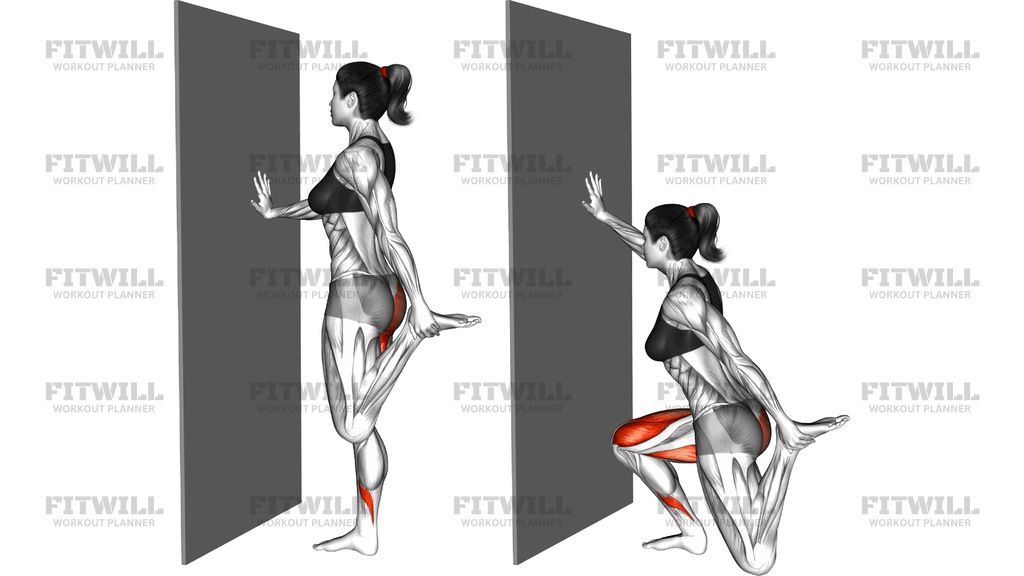
The Shrimp Slight Squat Supported Wall is a single-leg squat variation in which you hold your rear foot with one hand while bracing lightly against a wall with the other. Instead of letting the trailing leg hang loose as in a full shrimp squat, you keep it captured behind you, and because this version calls for only a slight squat depth with the wall for balance, it becomes far more approachable for people who find deep unilateral squatting intimidating. The standing leg does the work while the wall acts as a gentle safety line rather than a crutch.
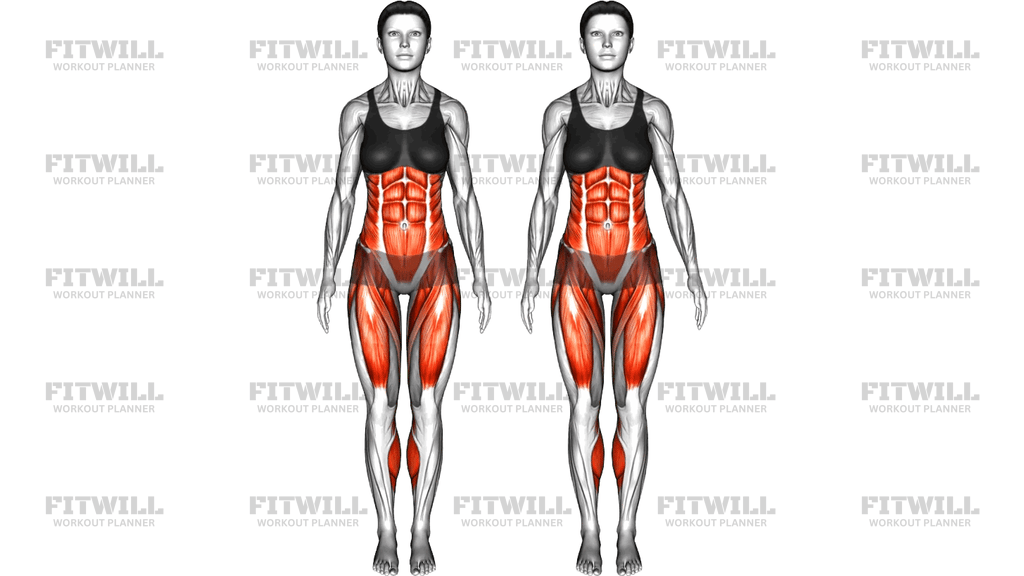
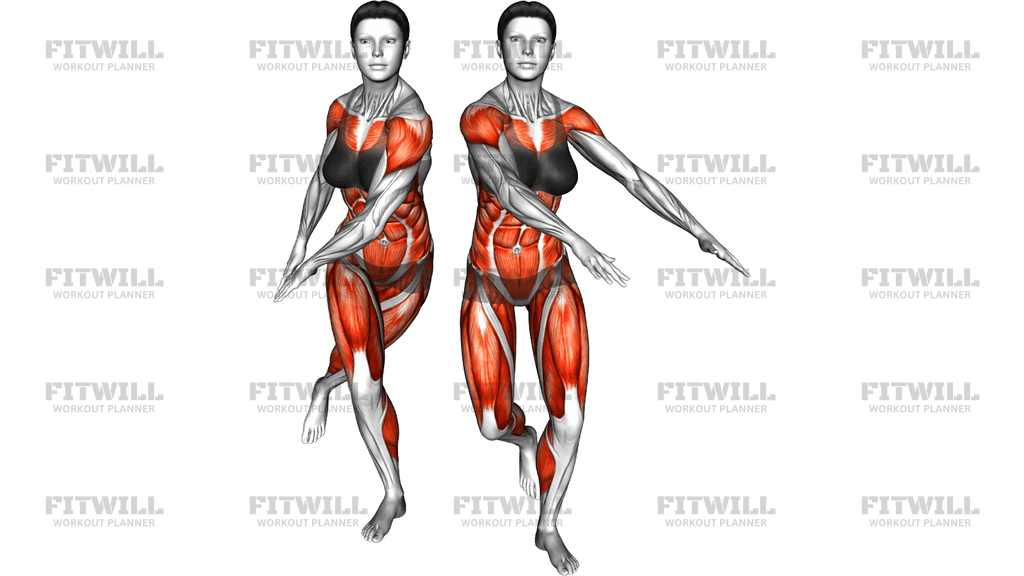
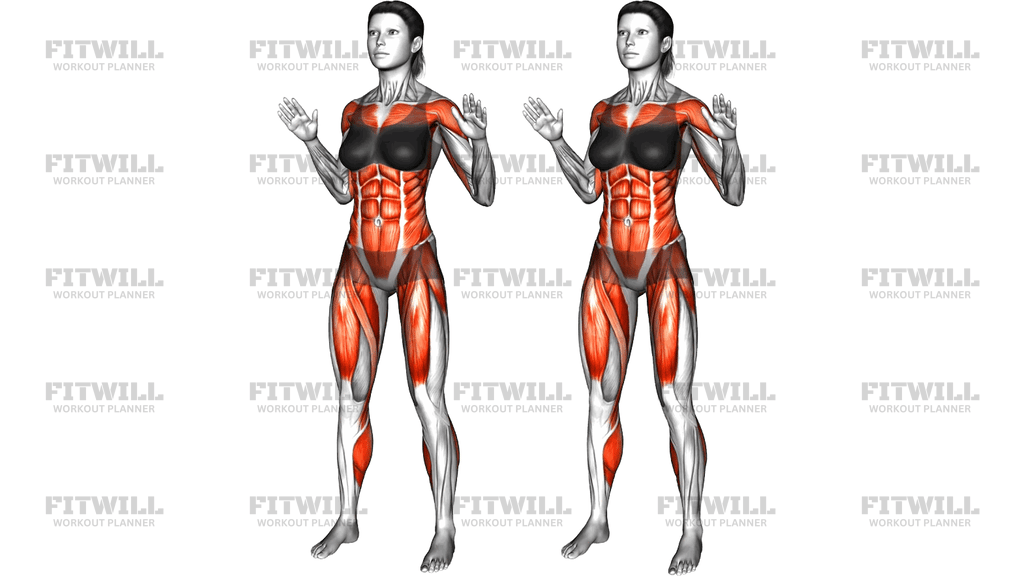
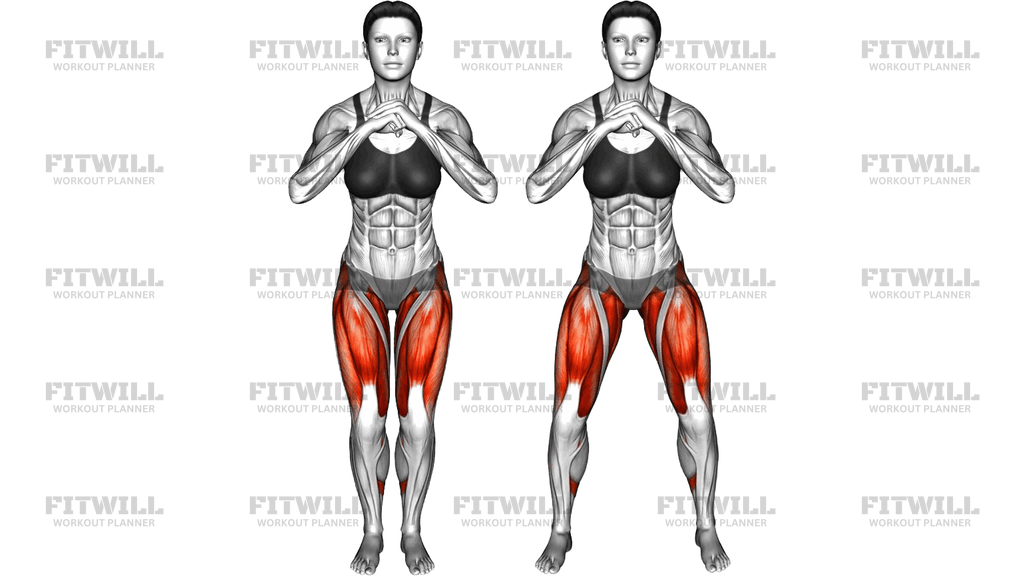
This movement primarily trains the quadriceps of the working leg, with the glutes helping you rise back to standing and the calf and ankle stabilizers working hard to keep you from tipping forward or sideways. Because one leg carries nearly all the load, even a shallow rep delivers a meaningful challenge compared with a regular two-legged squat. The balance demand also wakes up the small stabilizing muscles around the hip, knee, and ankle that often get overlooked in machine-based leg training.
The setup matters more than it might seem. Standing an arm's length from the wall gives you a fingertip or palm contact point you can lean into as you descend, which makes a huge difference when one leg is folded behind you and your center of mass is constantly shifting. The hand gripping the rear foot should stay relaxed but secure; if you grip too hard or pull on the foot, you change the tension through the back leg and can twist your hips out of alignment.
To perform it well, stand tall next to the wall, reach out with one hand for light support, and bend the opposite knee behind you so the same-side hand can hold the raised foot or ankle. From there, sit down into a slight squat on the standing leg, keeping your torso upright and your hips level, then press through the floor to stand back up. Move slowly, especially on the way down, because the descent is where balance tends to break down.
This exercise suits beginners building toward deeper single-leg squats, people returning from time off who want controlled knee-dominant loading, and more experienced lifters using it as a warm-up activation drill. It is also a practical hotel-room or home option, since all you need is a clear wall and enough space to stand on one leg. Keep the depth modest, respect your knee tracking, and let the wall provide just enough help to keep each rep smooth and repeatable.
[ Workout Log & Planner ]
Put your next workout in Fitwill
Keep your plan and training log ready when you are.


Instructions
- Stand facing a clear wall about an arm's length away, feet roughly hip-width apart.
- Reach out with one hand and place your palm or fingertips lightly on the wall at chest height.
- Shift your weight onto the leg farther from the wall, then bend your other knee behind you so the same-side hand can reach back and hold the raised foot or ankle.
- Stand tall, pull your ribs down, and brace your core to keep your torso from arching as one leg loads up.
- Keeping your hips square and your standing knee tracking over your toes, sit down into a slight squat, only descending as far as you can stay balanced and controlled.
- Pause briefly at the bottom, keeping light contact with the wall and a steady hold on the rear foot.
- Press through the whole foot of the standing leg, driving through mid-foot, to rise back up to full standing.
- Exhale as you lower into the squat and inhale as you stand back up, keeping the breath steady rather than held.
- Complete all reps on one side, release the rear foot, then switch sides so the opposite hand takes the wall.
- Step away from the wall slowly and shake out the ankles and hips between sets to reset your balance.
Tips & Tricks
- Treat the wall as a backup, not a handle: if you feel your weight pulling into your arm during the descent, shift your hips back over the standing foot instead of leaning forward.
- Hips that rotate open toward the wall are a common fault; turn the hip of the lifted leg down slightly and squeeze the glutes to keep both hip points facing forward.
- If you struggle to reach your rear foot, hold the ankle instead of the toes, or loop a towel around the foot and hold the ends for a longer strap.
- Descending too fast is the main reason people wobble in this variation; aim for a two- to three-second lower so the standing knee stays quiet and tracked.
- Avoid letting the standing heel lift; if it does, turn your toes out a few degrees and keep your weight spread across the whole foot rather than on the ball.
- A slight squat means just a modest bend of the knee — chasing depth here usually costs you balance and pulls the knee inward, so stay in a range where the kneecap tracks smoothly.
- Keep the grip on the rear foot passive; actively pulling the foot toward your glutes twists the lower back and changes the feel of the squat.
- If your calf or ankle cramps on the standing leg, that is normal at first — shorten the set, and add a few calf raises on flat ground between sessions.
- Place yourself near a corner or a sturdy wall rather than a flimsy partition, since even light leaning transfers some force into it.
Frequently Asked Questions
Which muscles does the Shrimp Slight Squat Supported Wall work?
The quadriceps of the standing leg do most of the work, supported by the glutes as you rise. The calves and ankle stabilizers stay busy keeping you balanced, and the core works isometrically to hold your torso upright.
Is the Shrimp Slight Squat Supported Wall suitable for beginners?
Yes, the slight depth and the wall support make it one of the most accessible single-leg squat variations. Start with shallow reps and light fingertip contact with the wall, and progress by leaning less and sitting a little lower.
How far should I stand from the wall?
Roughly an arm's length, so your palm or fingertips can rest on the wall at chest height with a soft elbow. If you have to lean noticeably forward to touch it, step closer; if your arm is bent sharply, step back.
Why hold the rear foot instead of just lifting the back leg?
Holding the rear foot is what makes this a shrimp squat rather than a regular single-leg squat. It loads the quad of the standing leg through a longer range, stretches the front of the lifted leg, and adds a balance and coordination demand you do not get otherwise.
Can I do the Shrimp Slight Squat Supported Wall if I cannot reach my foot behind me?
Yes. Loop a towel around the rear foot and hold the ends instead, or hold your ankle if that reach feels comfortable. If even that is restrictive, simply flex the back knee without holding it and keep both hands on the wall.
How deep should the squat be in this variation?
Only a slight bend — enough that the standing knee flexes comfortably while your heel stays down and your knee tracks over your toes. Depth can grow over time, but the supported slight version is meant to build control before range.
What is the most common mistake in this exercise?
Dumping weight into the wall arm, which turns the drill into a lean-down rather than a squat. Keep wall contact light enough that you could lift your hand for a second mid-rep, and fix balance by adjusting your hips, not your arm.
How is this different from a full shrimp squat?
The full version takes the knee toward or below parallel with no external support, which demands considerable strength and balance. This wall-supported slight version reduces the range and adds a balance point, so you can groove the pattern with far less load on the knee.
How many reps and sets should I do?
Start with two to three sets of five to eight controlled reps per leg, resting as needed between sides. Because balance is often the limiting factor, favor smooth, quality reps over pushing to fatigue.
Are there safety points I should watch for?
Keep the standing knee lined up over your toes and stop if you feel pinching or shifting at the kneecap. Use a sturdy wall, clear the floor of obstacles, and if balance is poor that day, widen your base slightly by lowering the rear foot between reps.