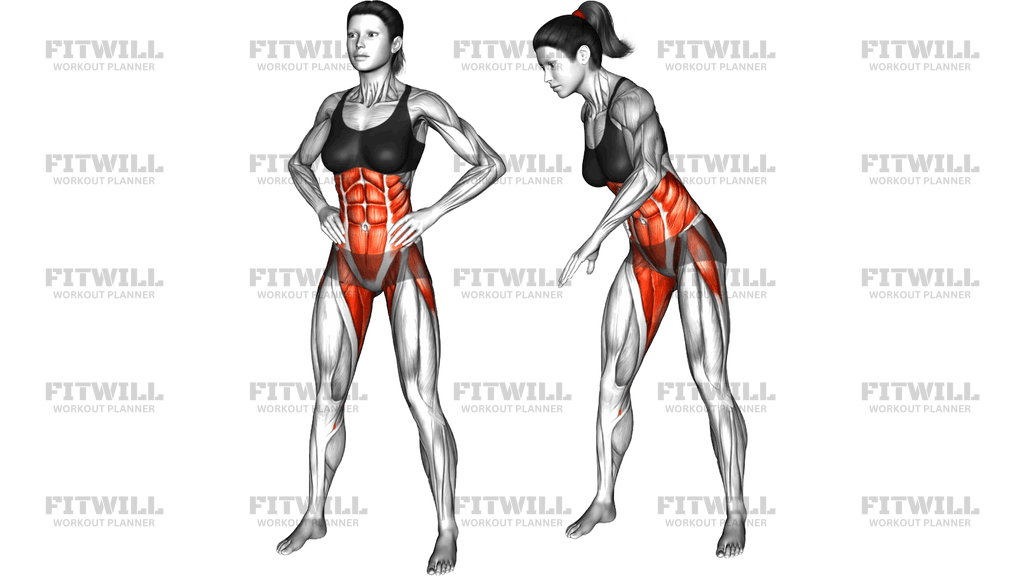
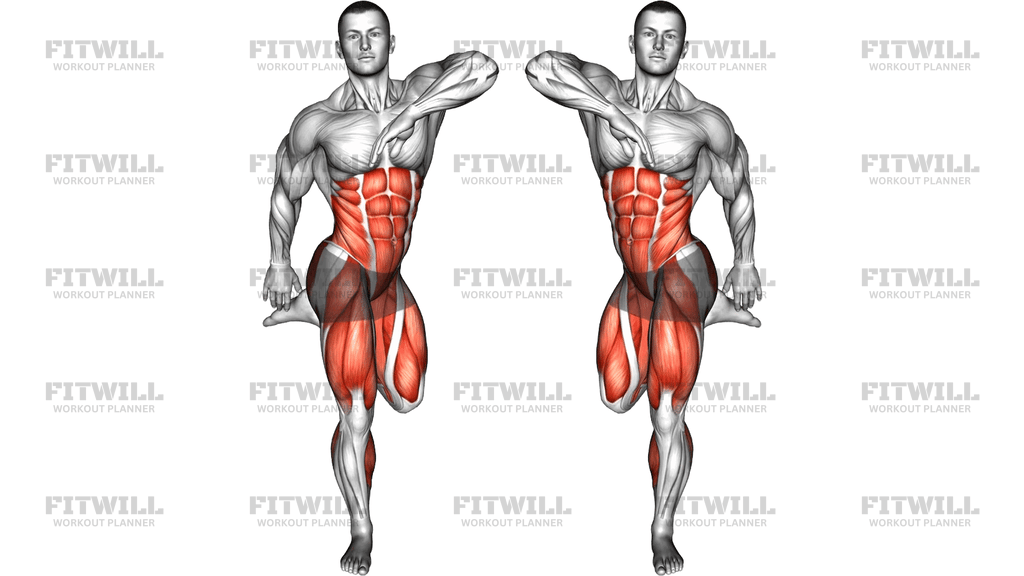
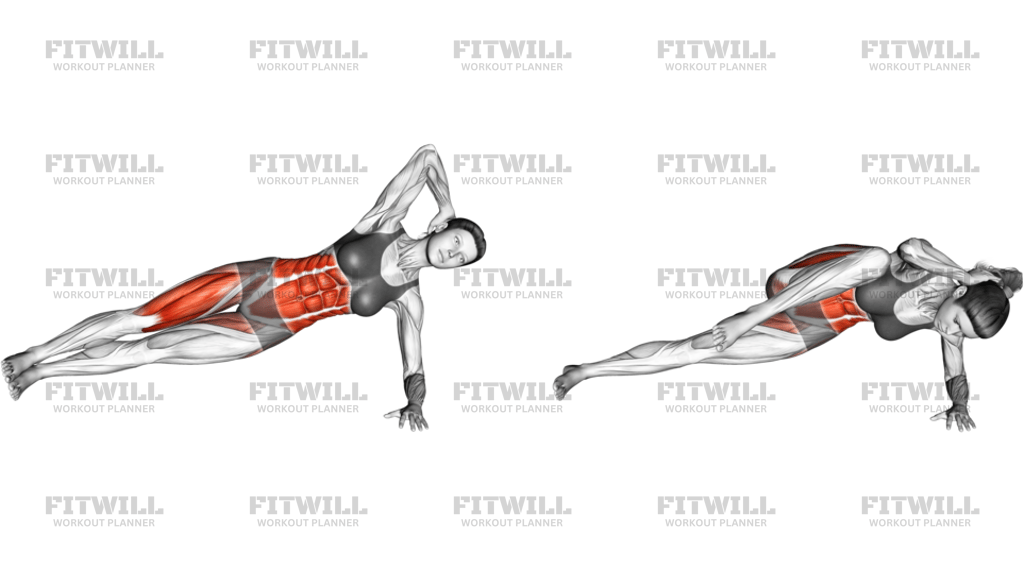
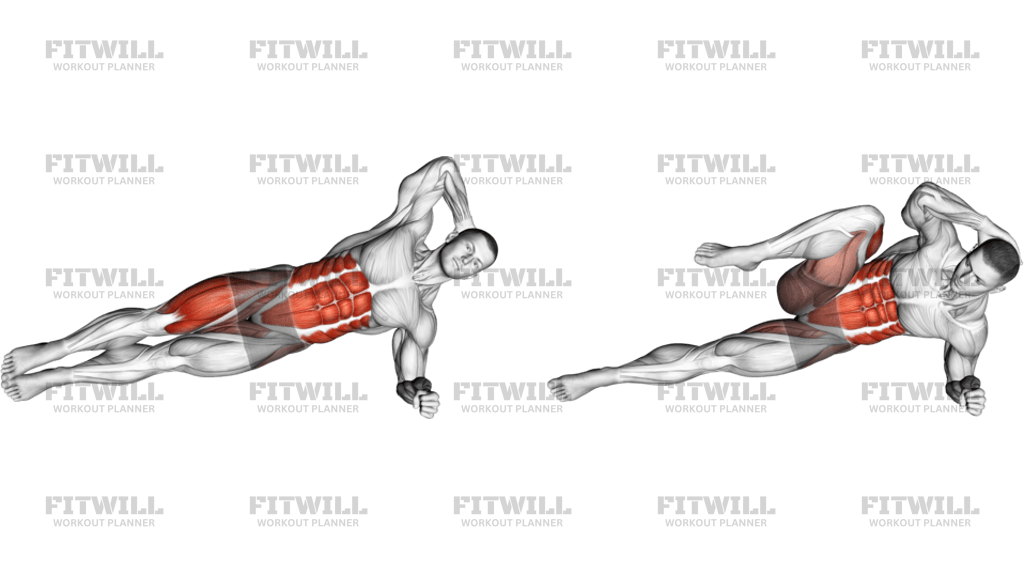
Standing Clasp Hands Shoulders Forward Swing
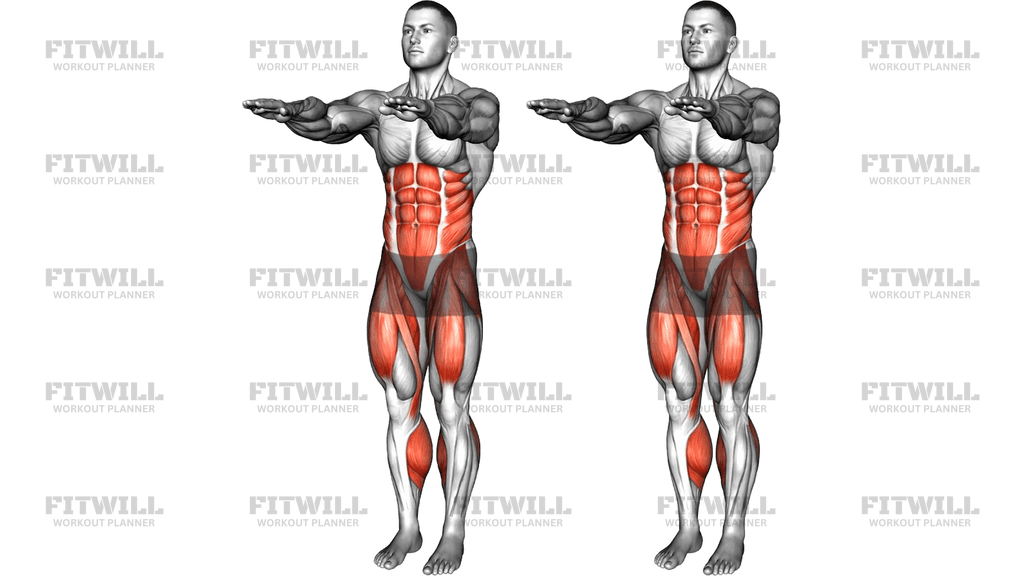
Standing Clasp Hands Shoulders Forward Swing is a standing bodyweight movement where you hinge forward at the hips, clasp your hands together in front of you, and swing your straightened arms forward and down in a controlled arc. The highlight of the setup is that your torso stays bent over while your clasped hands travel through a sweeping path, forcing the abdominal wall — especially the rectus abdominis and obliques — to brace, decelerate, and re-accelerate the swing on every repetition.
Because it requires no equipment and very little space, this exercise fits easily into warm-ups, core circuits, or short home sessions. It is particularly useful for people who want to feel their abs working without getting on the floor, such as beginners building core awareness, office workers breaking up long sitting periods, or lifters looking for a light activation drill before heavier hinge or pressing work.
The forward hinge is what makes the movement work. With your torso pitched over and your arms hanging in front of you, gravity pulls on your clasped hands and your core has to manage that load through the entire swing. The shoulders and arms move the hands, but the trunk is what keeps the position stable and controls the tempo, which is where most of the training effect comes from.
To execute it well, hinge from the hips rather than rounding from the lower back, keep a soft bend in the knees, and let the swing come from the shoulder girdle and trunk working together rather than from loose, uncontrolled flopping of the arms. The hands should travel in a smooth arc in front of your body, and your head should stay neutral, following the line of your spine rather than craning up to watch your hands.
A common mistake is turning the swing into a momentum contest, where the arms whip around and the lower back takes over the work. Slowing the tempo down and squeezing the abs at the end of each forward swing fixes this quickly. Another frequent issue is standing too upright; if your torso is nearly vertical, the abs have almost nothing to do, so commit to a genuine hip hinge with your chest angled toward the floor.
Use this movement as a low-fatigue core drill: higher reps, steady breathing, and crisp control. It pairs well before deadlifts, squats, or overhead pressing as a bracing primer, or it can sit in the middle of a home circuit as the standing core slot between lower- and upper-body exercises.
Fitwill
Log Workouts, Track Progress & Build Strength.
Achieve more with Fitwill: explore over 9600 exercises with images and videos, access built-in and custom workouts, perfect for both gym and home sessions, and see real results.
Start your journey. Download today!




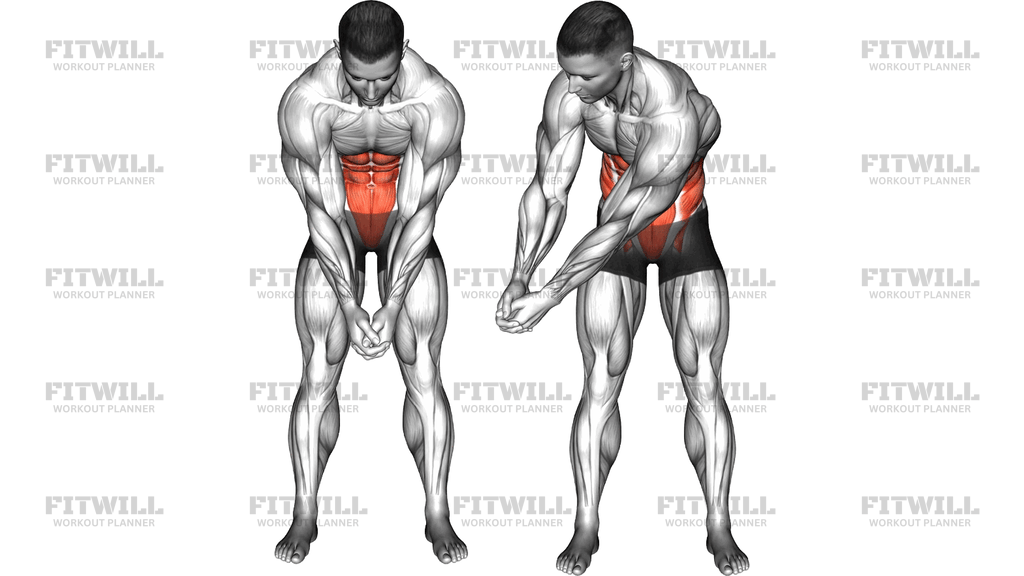
Instructions
- Stand with your feet roughly hip-width apart, toes pointing forward, and your weight spread evenly across both feet.
- Clasp your hands together with your fingers interlocked and your arms fully extended in front of your body.
- Hinge forward at the hips until your torso is angled down toward the floor, keeping your back flat and a slight bend in both knees.
- Brace your abdominal wall as if bracing for a light push to the stomach, and let your neck stay relaxed and in line with your spine.
- From the hinged position, swing your clasped hands forward and down in a smooth arc, letting the motion originate from your shoulders and trunk.
- At the end of the forward swing, actively squeeze your abs to decelerate the hands and pull the arc back under control.
- Swing the hands back toward your body along the same path, keeping your torso hinge and knee bend unchanged throughout.
- Exhale as you swing forward and inhale as your hands return toward your body, keeping your breathing steady.
- Complete your reps, then stand up slowly by driving your hips forward, resetting your stance and grip before the next set.
Tips & Tricks
- If you feel the work shifting into your lower back, you are probably swinging from lumbar extension instead of bracing; tighten your abs before the first rep and keep that tension through every swing.
- A torso that creeps upright between reps removes the load from your abs entirely — pick a hinge angle at the start and hold it for the whole set.
- Keep your hands clasped firmly but without strangling your fingers; a white-knuckle grip tenses your forearms and neck and steals focus from the trunk.
- The swing should feel like an arc drawn by your shoulders, not a flick of the wrists — if your hands are whipping, cut the range in half and rebuild the tempo.
- Let your head hang in line with your spine; looking up at the top of each swing strains the neck and flattens the brace.
- Soft knees matter more than they look — locked knees combined with a forward hinge pulls tension into the hamstrings' attachment and stiffens the whole hip hinge.
- Start with 2 sets of 15–20 controlled swings before adding speed; this movement rewards tempo and endurance far more than raw pace.
- If balance feels shaky, widen your stance slightly and press your toes into the floor rather than leaning the torso lower.
Frequently Asked Questions
Which muscles does Standing Clasp Hands Shoulders Forward Swing work?
The primary work comes from the abs, particularly the rectus abdominis, which braces and controls the swing from the hinged position. The obliques assist with trunk stability, while the front shoulders and arms move the clasped hands through the arc.
Why do I need to hinge forward instead of swinging with an upright torso?
The forward hinge positions your clasped hands in front of your body against gravity, which forces your core to control the swing. Standing nearly upright removes most of the demand and turns the movement into loose arm swinging with little training value.
Is Standing Clasp Hands Shoulders Forward Swing suitable for beginners?
Yes, it is a low-load, no-equipment movement that beginners can learn quickly. The main coaching points are hinging from the hips, keeping the back flat, and starting with a slow, modest swing range.
Should my arms stay straight during the swing?
Yes, keep your elbows extended with the hands clasped so the arms act as one lever. Bending the elbows shortens the lever, reduces the demand on the trunk, and changes the path of the swing.
How many reps should I do?
Fifteen to twenty controlled swings per set works well for most people. Because the resistance is your own bodyweight, prioritize smooth tempo and a continuous brace over chasing higher numbers.
My lower back feels the exercise more than my abs — what am I doing wrong?
This usually means the swing is being driven by lumbar movement rather than a braced trunk, or the hinge has been lost. Re-set your forward lean, brace the abs before each rep, and shorten the swing arc until the tension shifts back to the midsection.
Can I use this exercise as a warm-up?
Absolutely. It works well as a bracing primer before deadlifts, squats, or overhead pressing, and it also raises core temperature without fatiguing the shoulders or grip.
What can I substitute if I find the movement uncomfortable?
A standing forward reach with clasped hands held statically, or a slow alternating arm swing in the same hinged position, trains a similar bracing demand with less dynamic motion. Floor-based options like dead bugs offer the same core control work in a supported position.
How fast should the swing be?
Aim for a speed you could stop at any point in the arc. If your hands are flopping or your torso is jolting, the swing has outpaced your control — slow down and tighten the brace.