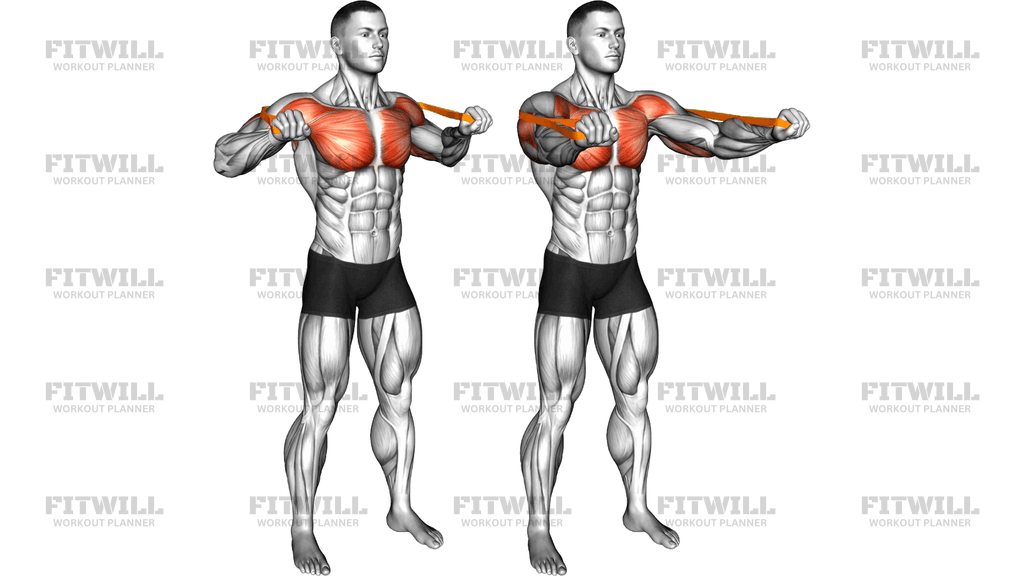
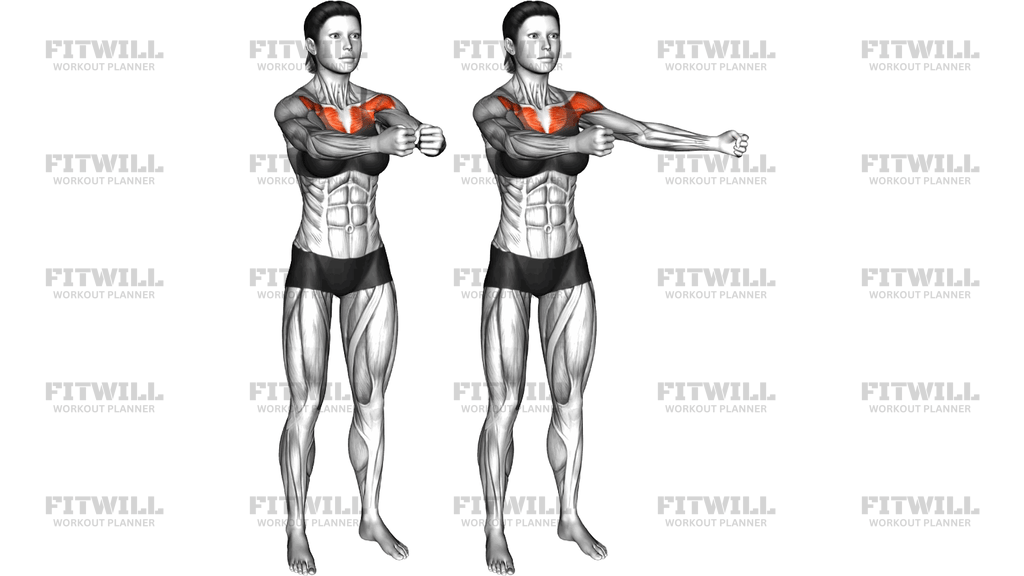
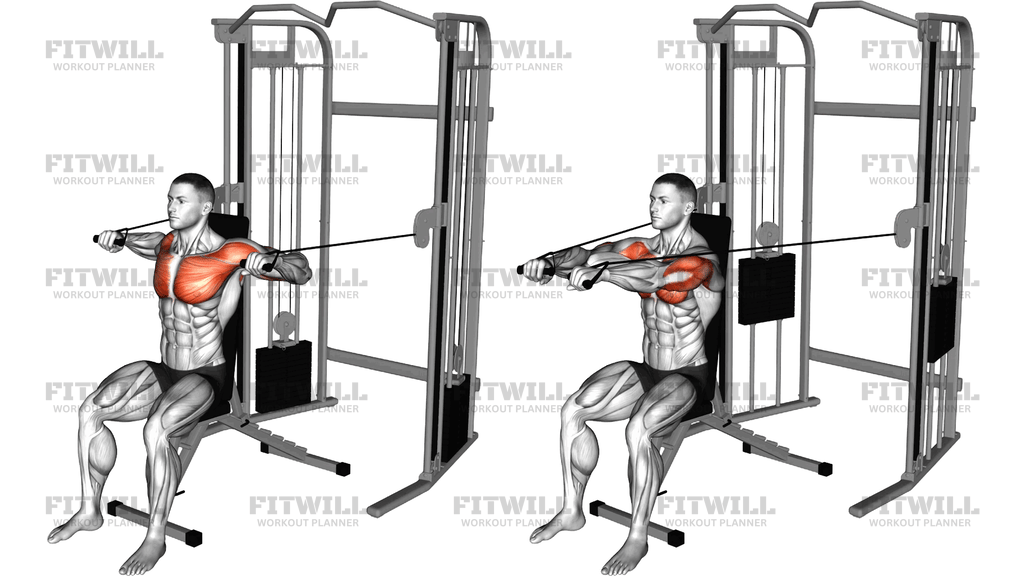
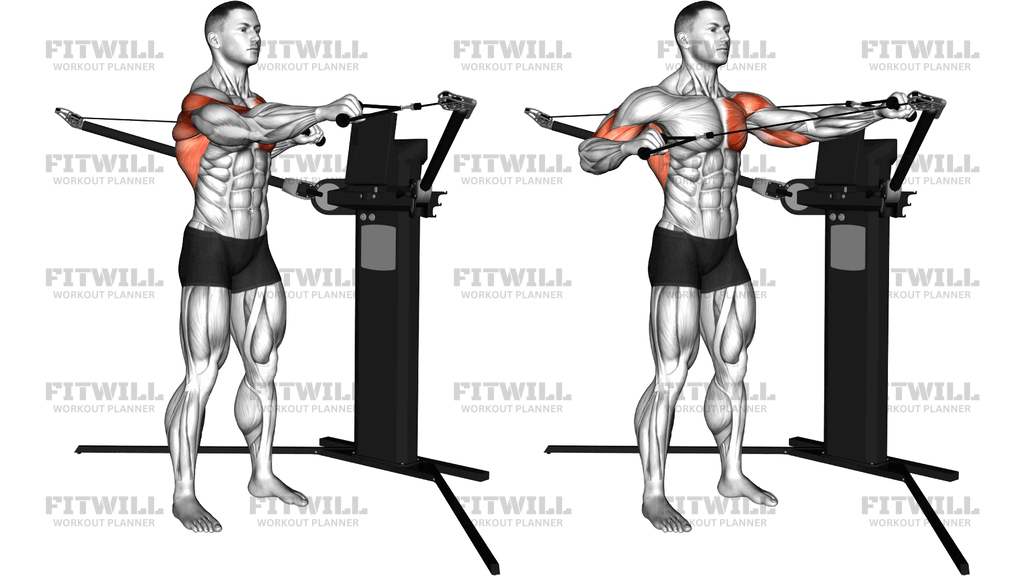
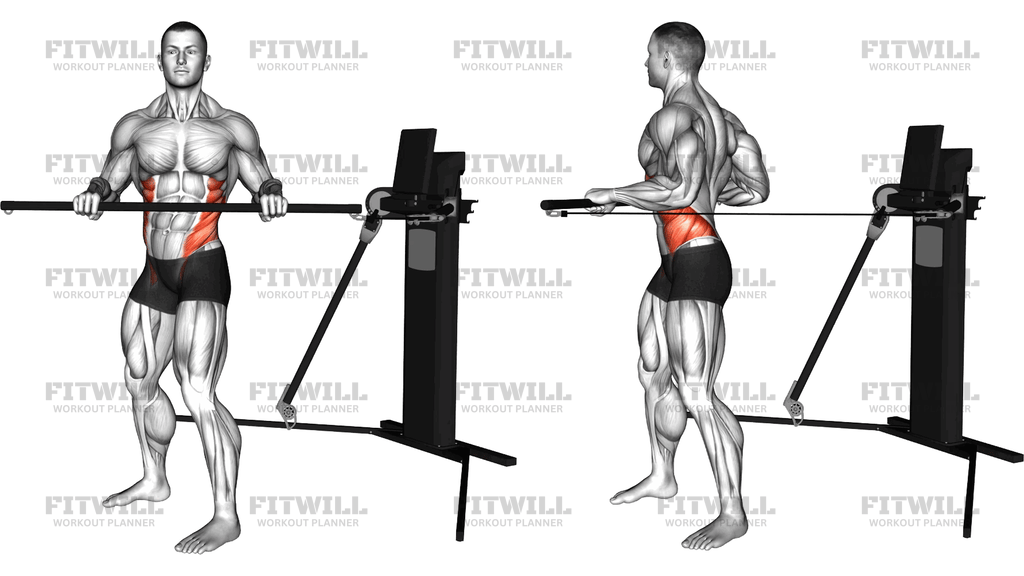
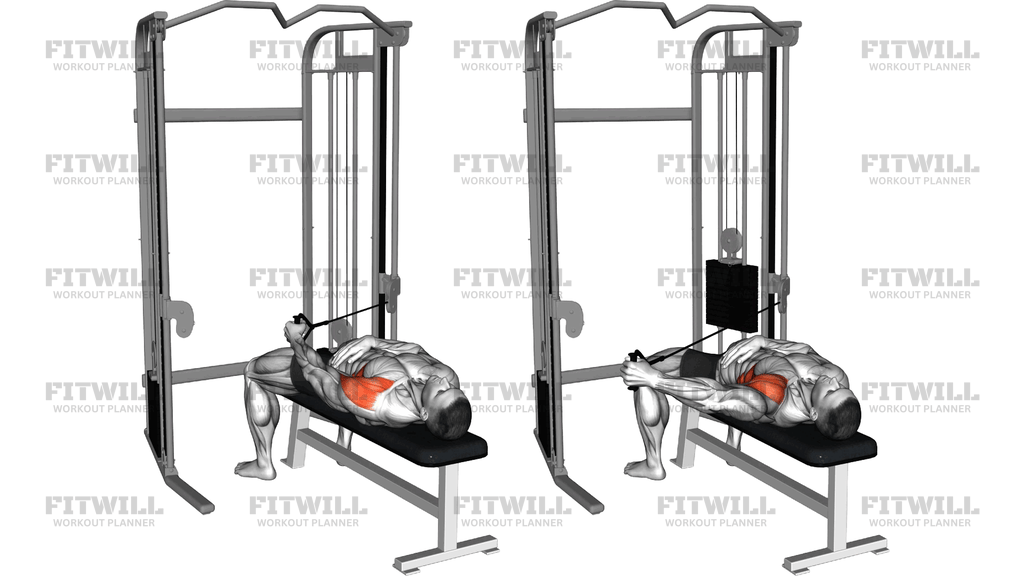
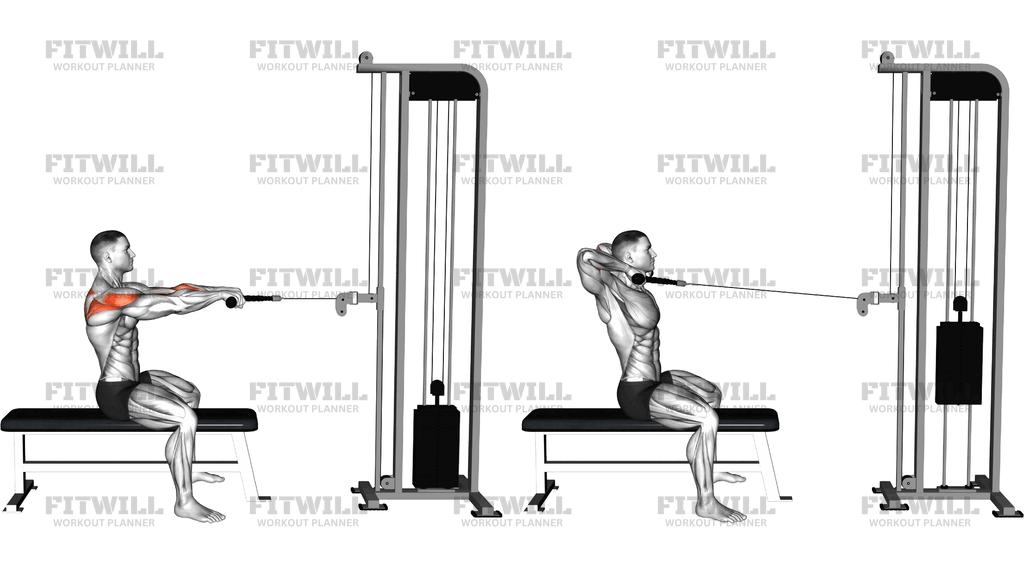
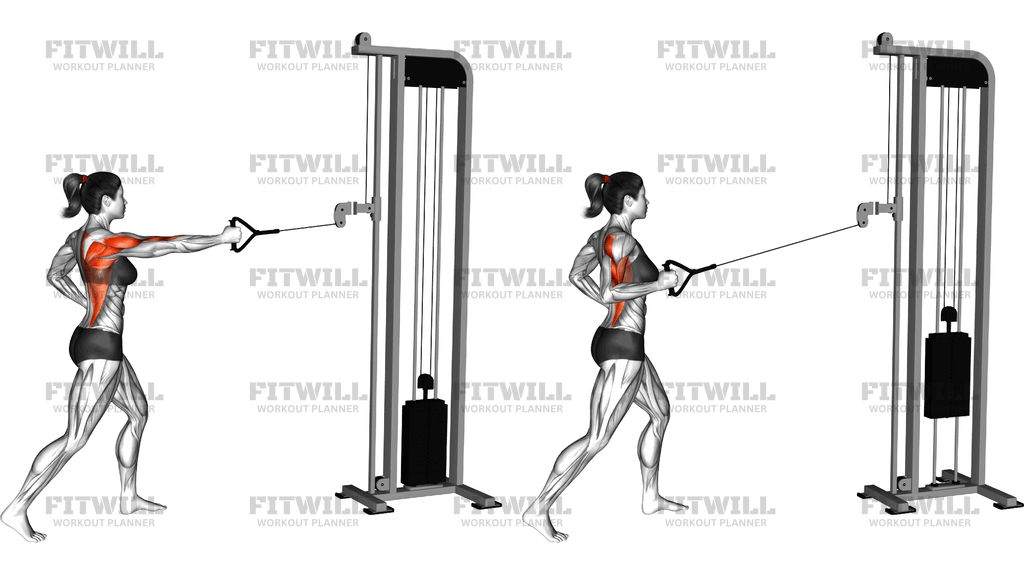
Cable Middle Fly
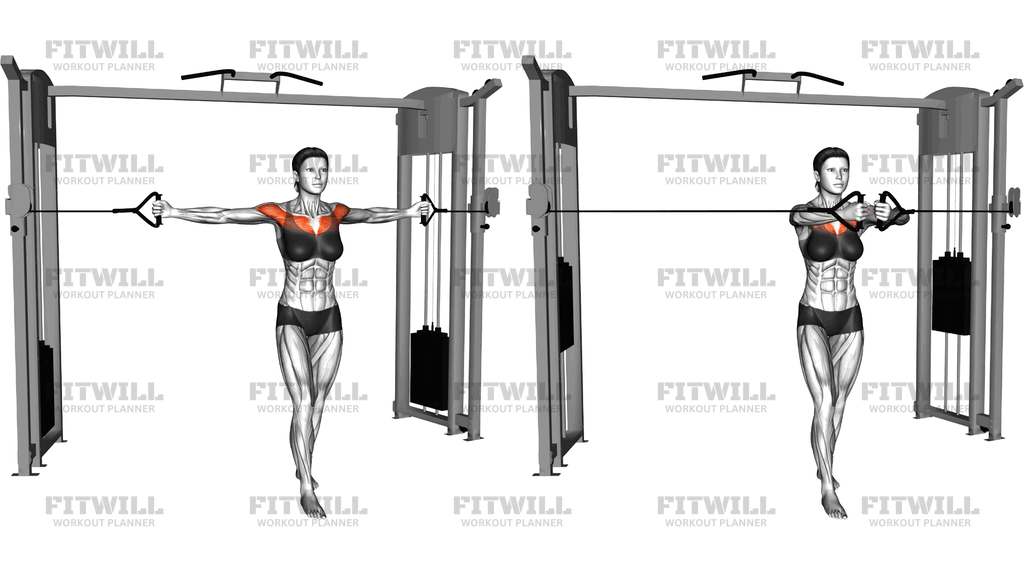
The Cable Middle Fly is a standing chest isolation exercise performed on a dual-cable machine with both pulleys set at mid height, roughly level with your chest or shoulders. You take one handle in each hand, step forward into a split stance so the weights lift the stacks slightly, and sweep your arms from a wide, out-to-the-sides position inward until your hands meet in front of your chest. Because the cables pull horizontally from behind you on both sides, the resistance stays on the chest through the entire range of motion, which is something dumbbell flys cannot do.
This movement is useful for almost anyone training upper body. It suits beginners because the machine guides the path and the weight stacks are easy to adjust in small increments, and it suits more experienced lifters because constant tension lets you load the middle chest in its stretched position and finish with a strong squeeze. It is also a common choice in hypertrophy programs as a second or third chest exercise after pressing movements, or as a finisher when the pressing muscles are already fatigued.
The primary muscle worked is the pectoralis major, with emphasis spread across the middle and lower portions of the chest since the pulleys sit at mid height and the arms travel slightly downward as they come together. The front delts assist strongly, and the core, legs, and upper back work isometrically to keep your torso still while the arms move. Compared to a high-to-low or low-to-high cable setup, the mid pulley position gives the most balanced stretch across the whole chest rather than biasing the upper or lower fibers.
Setup matters more than people expect. The pulley height determines the line of pull, so if the pulleys sit too high or too low the tension shifts away from the middle chest and toward the shoulders. Your stance also matters: stepping one foot forward creates a stable base so your body does not rock backward as the weights pull you, and standing slightly ahead of the pulleys keeps tension on the chest even at the start position.
To perform it well, keep a soft, almost fixed bend in the elbows and move only at the shoulder joints. Think of wrapping your arms around a large barrel: the hands travel a wide arc, the chest initiates the pull, and the squeeze happens with the hands nearly touching or slightly crossing in front of you. The return should be slow and controlled, resisting the cables as they pull the arms back out wide. Avoid loading so heavy that your torso leans, your elbows straighten, or your shoulders roll forward, since those compensations turn the movement into a press and take work away from the chest.
[ Workout Log & Planner ]
Put your next workout in Fitwill
Keep your plan and training log ready when you are.


Instructions
- Set both pulleys of the cable machine to mid height, around chest or shoulder level, and attach a stirrup handle to each side.
- Grip one handle in each hand with a neutral grip (palms facing inward), then step one foot forward into a split stance and lean very slightly forward from the hips.
- Walk forward just enough that the weight stacks lift slightly and you feel steady tension on both cables with your arms out to the sides.
- Brace your core, pull your shoulder blades back and down, and keep a small, fixed bend in both elbows.
- Exhale as you sweep your arms forward and inward in a wide arc, leading with your elbows, until your hands meet in front of your mid-chest.
- Pause briefly at the front and squeeze your chest, letting one hand pass slightly over the other for a fuller contraction if it feels natural.
- Inhale as you slowly open your arms back out to the sides, resisting the cables until you feel a comfortable stretch across the chest.
- Keep your torso still throughout; do not rock back on your rear leg or shrug your shoulders as the arms return.
- Complete the set, then step back carefully and return the handles one at a time so the stacks lower in a controlled way.
Tips & Tricks
- If your shoulders roll forward at the widest point, the weight is too heavy or you are overstretching; reduce the load and stop the return just short of a maximum stretch.
- A common mistake is turning this into a chest press by bending and straightening the elbows. Lock in your elbow angle before the first rep and keep it identical on every rep.
- If you feel it mostly in the front of the shoulders, shift your focus to driving the elbows toward each other rather than the hands, and keep the arms slightly lower than shoulder height.
- Do not stand too close to the machine. If your arms are nearly at your sides at the start, there is little tension on the chest; step back until the cables pull your arms out wide.
- Let the rear foot do real work in the split stance. Pushing it into the floor stops the backward sway that shows up as the weights pull you open.
- For a stronger peak contraction, add a half-second hold with the hands crossed slightly at the front instead of just touching them together.
- Because the cables provide constant tension, use a lighter weight and slower tempo than you would for dumbbell flys; two to three seconds on the way out is plenty.
- If one side feels weaker, train with the exercise occasionally using a lighter weight to check that both arms travel the same arc and finish at the same point.
Frequently Asked Questions
Which muscles does the Cable Middle Fly work?
The pectoralis major, especially the middle and sternal fibers of the chest, is the primary mover. The front delts assist, and the core and legs stabilize your torso while the arms sweep inward.
Why are the pulleys set at middle height for this exercise?
Mid-height pulleys create a horizontal line of pull that matches the fibers of the middle chest, so resistance stays even across the whole pec rather than biasing upper or lower fibers. High pulleys shift emphasis lower and low pulleys shift it higher.
Is the Cable Middle Fly good for beginners?
Yes. The machine fixes the path of the handles, the weight adjusts in small increments, and the standing position teaches bracing and body control. Beginners should start light and focus on keeping the elbow angle constant.
How is the Cable Middle Fly different from a dumbbell fly?
Cables keep tension on the chest through the entire arc, including at the widest point where dumbbells lose resistance because gravity pulls straight down. Cables also allow a slight crossing of the hands at the front for a stronger squeeze.
Should my arms be straight during the Cable Middle Fly?
No. Keep a small, fixed bend in the elbows, around 10 to 20 degrees, and move only at the shoulder joints. Fully straight arms strain the elbow and shoulder joints and make it harder to isolate the chest.
Why do I sway backward when I open my arms?
The weights are pulling you toward the machine, so your stance needs work. Step one foot forward, push that rear foot firmly into the floor, and brace your core. If you still sway, the load is too heavy.
How many sets and reps should I do?
Two to four sets of 10 to 15 reps works well, since the movement suits moderate loads and controlled tempos. Because it provides constant tension, go lighter than you would on presses and prioritize a full stretch and squeeze.
What can I substitute if my gym has only one adjustable cable station?
Perform the fly one arm at a time, facing sideways to the single pulley set at chest height, keeping the same elbow angle and arc. A resistance band anchored at chest height behind you works with a very similar movement path.
Is it safe to let the cables stretch my arms far behind my body?
Stop the return when you feel a comfortable stretch across the chest. Pulling the handles well behind your torso at mid height places unnecessary stress on the shoulder capsule and makes it harder to keep the chest engaged.