Cable Seated Chest Fly
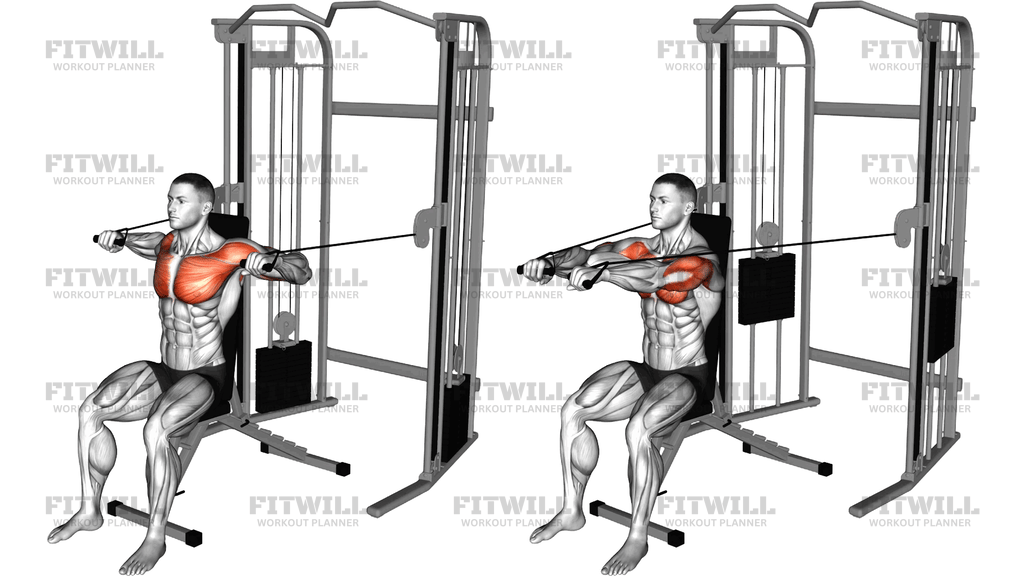
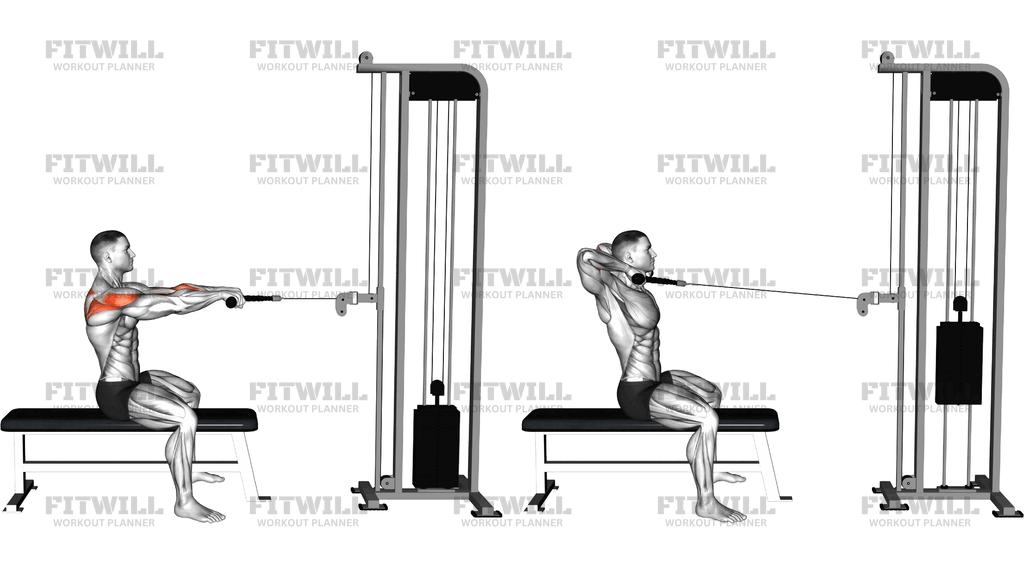
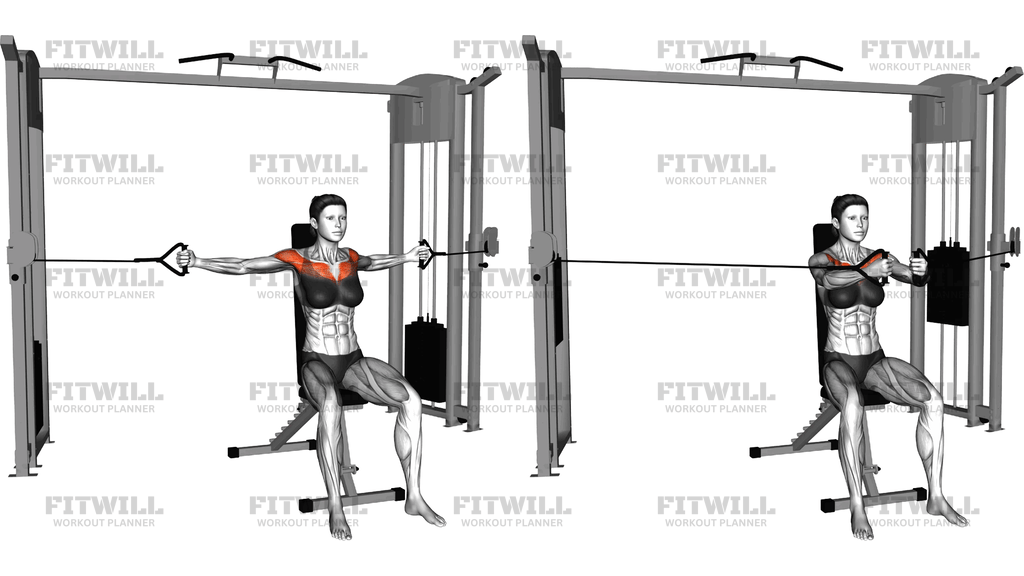
Cable Seated Chest Fly is a chest isolation exercise performed on a dual-cable station while sitting on an upright bench. The pulleys are set at roughly shoulder height on each side, and you hold one handle in each hand, starting with your arms extended out to your sides. From there, you sweep the handles forward and together in a wide arc until they meet in front of your chest, then slowly let them travel back out. Because the cables run horizontally at chest level, the tension on the pecs stays constant through the entire range of motion, which is something dumbbell flyes cannot offer once your arms move past the midpoint.
This movement is a good fit for lifters who want focused chest work without loading the elbow or shoulder joints the way a press does. Beginners appreciate how the seated position and back support remove the balance demands of a standing or lying fly, while more experienced lifters use it as a finishing movement after presses to fatigue the pecs with strict form and a strong squeeze. It also works well for people rehabilitating around general shoulder wear, since the weight can be kept light and the arc adjusted.
The primary muscles worked are the pectorals, with noticeable involvement of the upper chest fibers when the handles are drawn slightly upward toward collarbone height. The front delts assist throughout, and the muscles of the upper back and core work isometrically to keep your torso upright and stable as the cables pull your arms outward.
Setup matters more here than it might seem. If the pulleys sit too high or too low relative to your seated chest height, the resistance vector shifts and the fly turns into a partial press or an awkward shoulder raise. Sit tall with your back against the pad, feet flat on the floor, and position the bench far enough forward that you feel a gentle stretch in your pecs at the starting position, not a yank on the shoulder capsule.
To execute well, keep a soft, almost fixed bend in the elbows and let the shoulder joints do the traveling, not the elbow joints. Think of hugging a wide barrel: the handles trace a level, slightly forward-scooping path and meet in front of your sternum, with a deliberate one-second squeeze before the controlled return. Avoid letting the wrists bend back or the shoulders shrug up toward the ears.
Common use cases include hypertrophy chest days, mind-muscle-connection work at the start of a session, and high-rep burnout sets at the end. Keep the load honest; this is one exercise where ego lifting immediately shows up as shrugging, torso rocking, and elbow extension rather than actual chest work.
[ Workout Log & Planner ]
Put your next workout in Fitwill
Keep your plan and training log ready when you are.


Instructions
- Position an upright bench centered between two cable pulleys set at shoulder height, and attach a single handle to each cable.
- Sit on the bench with your back against the pad, feet flat on the floor about hip-width apart, and grasp one handle in each hand with a neutral grip (palms facing each other).
- Lean back into the pad, lift your chest, and extend your arms out to your sides at chest height with a slight, fixed bend in each elbow. Take one step forward mentally by checking that you feel mild tension, not a hard pull, in the pecs.
- Brace your core and pull your shoulder blades down slightly so your shoulders are not shrugged toward your ears.
- Exhale and sweep both handles forward in a wide, level arc until they meet in front of your sternum, keeping the elbow bend unchanged.
- Squeeze your pecs together at the front for about one second, allowing the handles to pass close to one another or lightly touch.
- Inhale and let the handles travel slowly back out along the same arc until you feel a stretch across your chest, stopping before the cables pull your shoulders forward.
- Repeat for your target number of reps, then release one handle at a time with control before standing up.
Tips & Tricks
- If your shoulders roll forward at the widest point of the stretch, the pulleys are set too wide or the weight is too heavy; reduce the load or move the bench back slightly so you control the end range.
- Keep the elbow bend locked in for the whole set. Straightening the arms as you press forward quietly converts the fly into a cable chest press and steals work from the pecs.
- Aim the finish slightly upward so the handles cross at upper-chest height if you want more emphasis on the clavicular pec fibers, which the highlighted region in this movement reflects.
- Do not let your wrists fold backward under load. Hold the handles with a firm neutral grip so the force travels through your forearm into the elbow, not across the wrist joint.
- Watch for shrugging as fatigue sets in; it usually means the front delts and upper traps are taking over. Lighten the weight and reset your shoulder blades between reps if needed.
- Pause for a full second at the front of every rep. The squeeze is where this movement earns its place, because the cables keep tension there unlike a dumbbell fly.
- Keep your lower back in contact with the pad. Arching and leaning forward to finish reps means your abs have disengaged and momentum is moving the weight.
- Breathe out on the sweep in, breathe in on the return. Holding your breath through the whole arc is common on this exercise because both sides are loaded at once.
- When setting the bench, a good check is that your hands line up with the middle of your chest when your arms are stretched out, not above your shoulders or down near your ribs.
Frequently Asked Questions
Which muscles does the Cable Seated Chest Fly work?
The pectorals are the primary movers, with the upper chest fibers and front delts assisting throughout the arc. Your upper back and core also work statically to hold you upright against the pull of the cables.
Why sit on a bench instead of doing this standing between the cables?
Sitting against a back pad locks out the legs and trunk, so you cannot lean or use body English to move the handles. That makes the chest do the work and makes the exercise easier to learn than a standing version.
How high should the pulleys be set for the Cable Seated Chest Fly?
Set them at roughly seated shoulder or mid-chest height so the cables run level with your chest. Pulleys that are too high shift the work toward the lower chest and shoulders; too low and the movement turns into an upward scoop.
Should my elbows be straight or bent?
Keep a small, constant bend of about 10 to 15 degrees and hold it for the entire set. Straightening the arms at the front turns the fly into a press and shifts load away from the pecs and toward the triceps and front delts.
Is the Cable Seated Chest Fly good for beginners?
Yes. The seated setup, back support, and even tension of the cables make it one of the easier chest isolation exercises to learn, and light weights let beginners focus on feeling the pecs work before pressing movements.
What is the most common mistake on this exercise?
Using too much weight, which shows up as shrugged shoulders, jerky reps, and elbows opening and closing. Cut the load until you can pause and squeeze the handles together smoothly for every rep.
Can I substitute dumbbell flyes for the Cable Seated Chest Fly?
Dumbbell flyes on a flat bench are a reasonable substitute, but they lose tension at the top when your arms are over your chest. The cable version keeps resistance on the pecs through the whole arc, especially at the squeeze.
Should the handles touch or cross at the front?
Letting the handles meet or lightly cross in front of your sternum is fine and gives a stronger pec contraction. If you want extra upper-chest emphasis, angle the finish slightly upward toward your collarbones instead of straight across.
Is it safe if I feel a pinching sensation at the deep stretch?
A pinch at the far end of the arc usually means the weight is pulling your shoulders too far back. Stop the return earlier, reduce the load, and shorten the stretch slightly; if the sensation persists, get it assessed before continuing.
Where should this exercise fit in my chest workout?
It works best after your main pressing movements, either as a mid-session isolation lift or as a high-rep finishing set. Doing heavy presses first lets you keep the fly light and strictly focused on the pecs.