Svend Bench Press
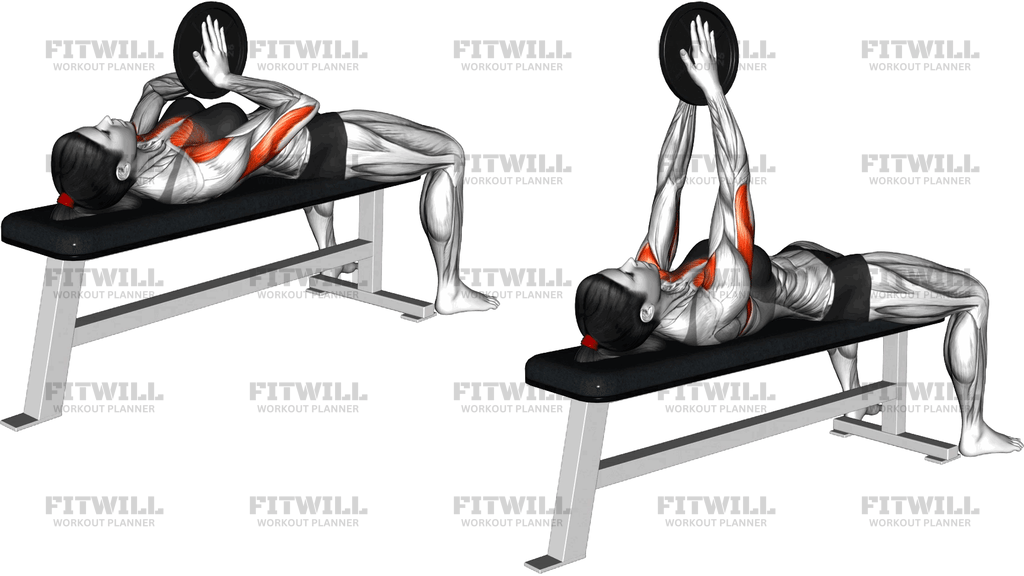
The Svend Bench Press is a chest isolation exercise performed lying on your back on a flat bench while squeezing a single weight plate between your palms. Instead of pushing an external load away from your body, you create tension by pressing your hands hard against the plate and then extend your arms toward the ceiling. This constant inward squeeze is what makes the movement unique — the resistance comes as much from your own effort to hold the plate as from its weight.
Because the plate is usually light, this is one of the most accessible pressing exercises you can do. It suits beginners learning to feel their chest working, lifters recovering from heavier bench sessions who want extra volume without heavy loading, and anyone training at home or in a busy gym where only a plate and a bench are free. It also works well as a burnout finisher at the end of a chest day.
The primary muscles worked are the pectorals, with the triceps and front delts assisting as you press the plate upward. The sustained inward squeeze also wakes up the smaller stabilizing muscles around the shoulder joint, which is why many coaches use it as a teaching tool before progressing to barbell or dumbbell pressing.
Setup matters more than it looks. Your back should stay flat against the bench, feet planted on the floor, and the plate held at chest level with fingers spread wide around its face. If the plate slips or your hands drift apart, tension disappears and the set loses its purpose. Keep the squeeze deliberate from the first rep to the last.
To execute well, press your palms forcefully into the plate as if trying to crush it, then push it straight up until your arms are extended over your chest, keeping a slight bend at the elbows rather than locking out hard. Lower it under control until the plate hovers just above your chest, never releasing the inward pressure. Breathe steadily throughout rather than holding your breath.
The main practical caution is hand placement: if your fingers sit behind the plate's face or your grip loosens at the top, the plate can slip toward your face or chest. Always keep both hands flat and centered on the plate, and choose a lighter plate until you can complete a set without it shifting.
[ Workout Log & Planner ]
Put your next workout in Fitwill
Keep your plan and training log ready when you are.


Instructions
- Place a flat bench in an open area and lie on your back with your head, shoulders, and hips in contact with the bench and your feet flat on the floor.
- Hold a single weight plate vertically with both hands, one palm on each face of the plate, positioned over your chest with fingers spread wide around the edges.
- Press your palms hard into the plate so it feels pinched between your hands, and keep that inward squeeze for the entire set.
- Draw your shoulder blades down and back against the bench and brace your core lightly to keep your ribcage from flaring.
- Exhale as you press the plate straight up until your arms are extended over your chest, keeping a small bend in the elbows rather than snapping into a full lockout.
- Pause briefly at the top while maintaining maximum inward pressure on the plate.
- Inhale as you slowly lower the plate back down until it hovers just above your chest, resisting the pull of gravity the whole way.
- Stop the descent just short of touching your chest so tension stays on the pecs, then press straight back up for the next rep.
- After your final rep, bring the plate down slowly to your chest, sit up with control, and set the plate on the floor or a rack before releasing your grip.
Tips & Tricks
- The most common failure in the Svend Bench Press is loosening the squeeze at the top of the press — if the plate is only resting in your hands rather than being pinched, the chest stops working, so renew the inward pressure before every rep.
- Keep your hands centered on the plate's face, not gripping the rim from behind; hands drifting behind the edge is how plates slip toward your face at full extension.
- If the plate twists or rotates during the press, your arms are not moving in the same line — press both hands straight up over the middle of your chest instead of letting one side lead.
- Choose a lighter plate than you think you need; a 5 lb or 10 lb plate squeezed hard trains the chest better than a 25 lb plate you can barely hold.
- Avoid bouncing the plate off your chest at the bottom — the pause just above the chest is where the muscles stay under tension.
- Flaring your ribs and arching your lower back off the bench shortens the pressing range; plant your feet and keep your spine flat against the pad.
- If your wrists ache, angle your hands so the pressure runs through your palms and forearms rather than bending your wrists backward under the plate.
- Treat this as a mind-muscle exercise: slow, quiet reps with a hard squeeze beat fast reps where the plate rattles between loose hands.
- Use it as the last exercise of a chest session or a warm-up primer before benching, rather than trying to load it heavy as a main lift.
Frequently Asked Questions
What muscles does the Svend Bench Press work?
The chest is the primary mover, with the triceps and front delts assisting the press. The constant inward squeeze also challenges the small stabilizer muscles around the shoulders and the muscles of the hands and forearms that hold the plate.
Why does the Svend Bench Press use only one plate instead of a barbell or dumbbells?
The point of the single plate is the inward squeeze between your palms, which biases tension toward the chest and shoulder stabilizers in a way a barbell or dumbbell press cannot. Because the load is light, the exercise targets feel and control rather than maximal strength.
Is the Svend Bench Press good for beginners?
Yes, it is one of the friendliest pressing exercises for newcomers. The light weight lets you learn how a chest contraction feels and practice pressing over your chest without the risk that comes with a loaded bar.
How heavy should the plate be for the Svend Bench Press?
Start with a 5 lb or 10 lb plate and only go heavier when you can hold a hard squeeze for every rep without the plate shifting or slipping. If your hands are straining to grip before your chest tires, the plate is too heavy.
How do I stop the plate from slipping out of my hands?
Keep both palms flat and centered on the faces of the plate with your fingers spread wide around the edges, and maintain the inward press continuously. Slipping almost always happens when the squeeze relaxes at the top of the rep.
Should my elbows lock out at the top of the press?
No, press to full extension but keep a small bend in the elbows. Locking out hard transfers load to the joints and lets the squeeze relax, both of which reduce the value of the rep.
Can I do the Svend Bench Press without a bench?
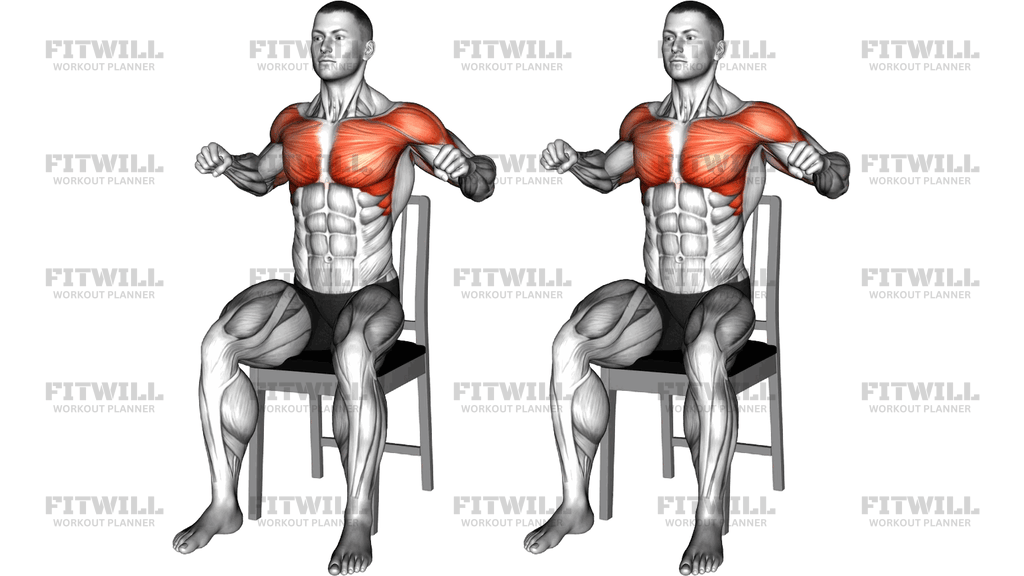
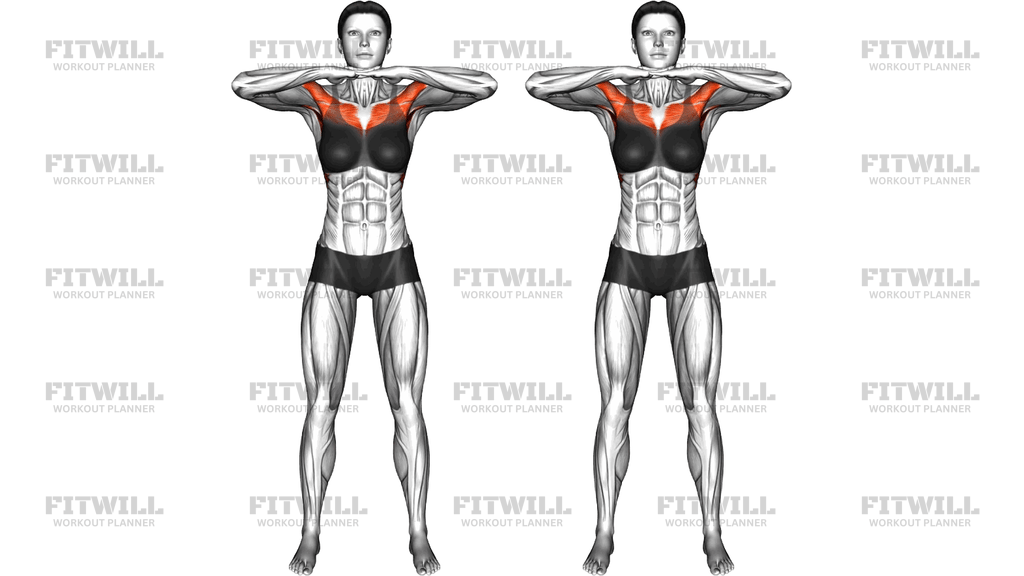
Yes, the classic standing or seated Svend Press uses the same plate squeeze without a bench, though lying down removes momentum and body English so the chest does the work. A bench or a stable floor setup both work.
How many reps and sets should I do of the Svend Bench Press?
Because the load is light, higher reps work best — usually 2 to 4 sets of 12 to 20 reps with a strong squeeze throughout. It fits well at the end of a chest workout or as a warm-up before heavier pressing.
Is the Svend Bench Press safe for someone with shoulder discomfort?
Its light load and stable position make it gentler than most presses, but you should keep the range pain-free and shorten the descent if overhead positions bother you. Check with a qualified professional before training through any persistent shoulder pain.