Dumbbell Single Leg Romanian Deadlift Leg Raise
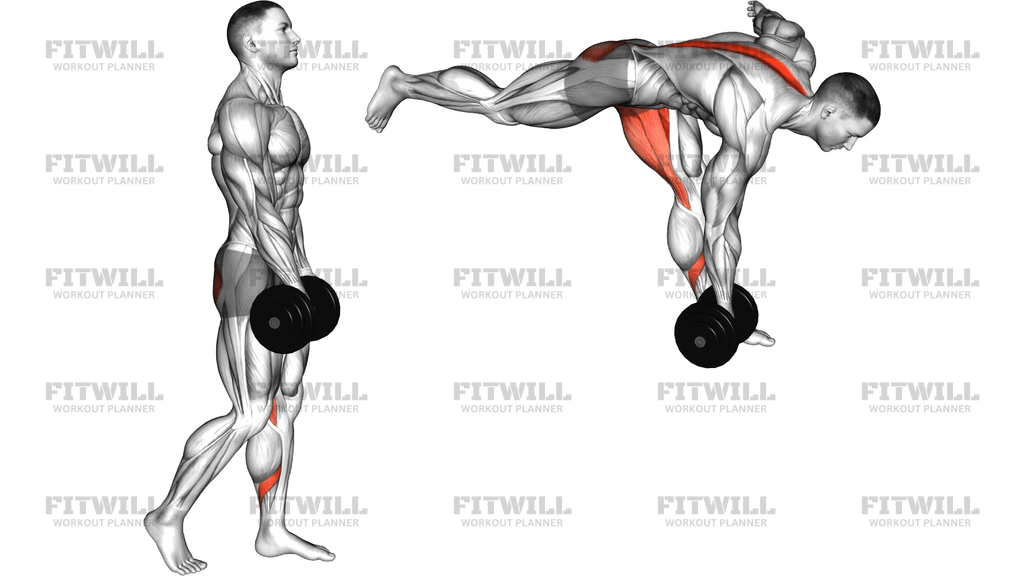
The Dumbbell Single Leg Romanian Deadlift Leg Raise is a balance-driven hinge that loads one leg at a time while the opposite leg travels up behind you. You stand on one foot holding a dumbbell, then push your hips back and fold forward until your torso and lifted leg form a long line parallel to the floor, before driving through the heel to stand back up. Because the rear leg rises with the torso instead of staying parked, the working hip has to control both the hinge and the extension of the free leg, which makes this noticeably harder than a standard single leg Romanian deadlift.
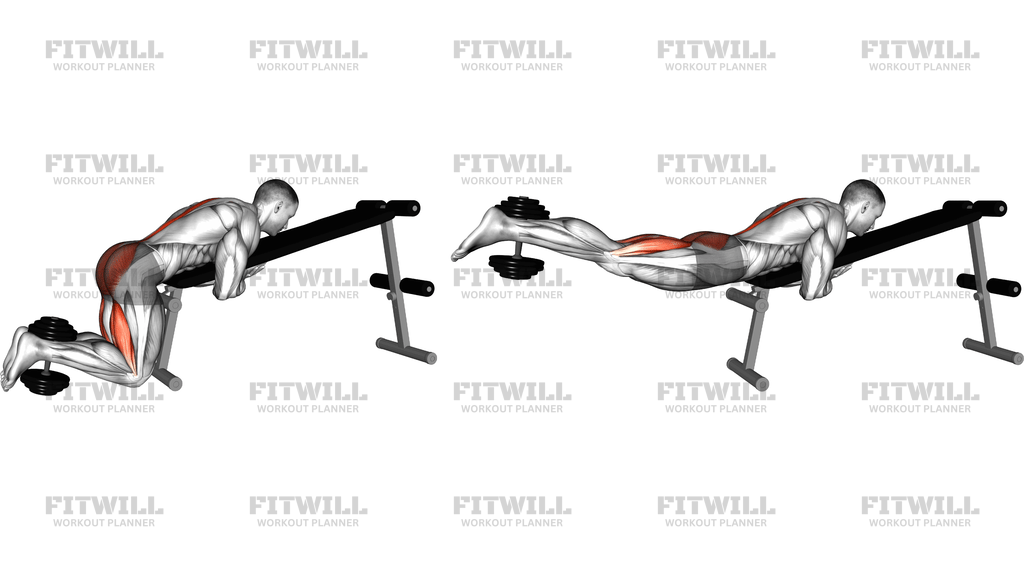
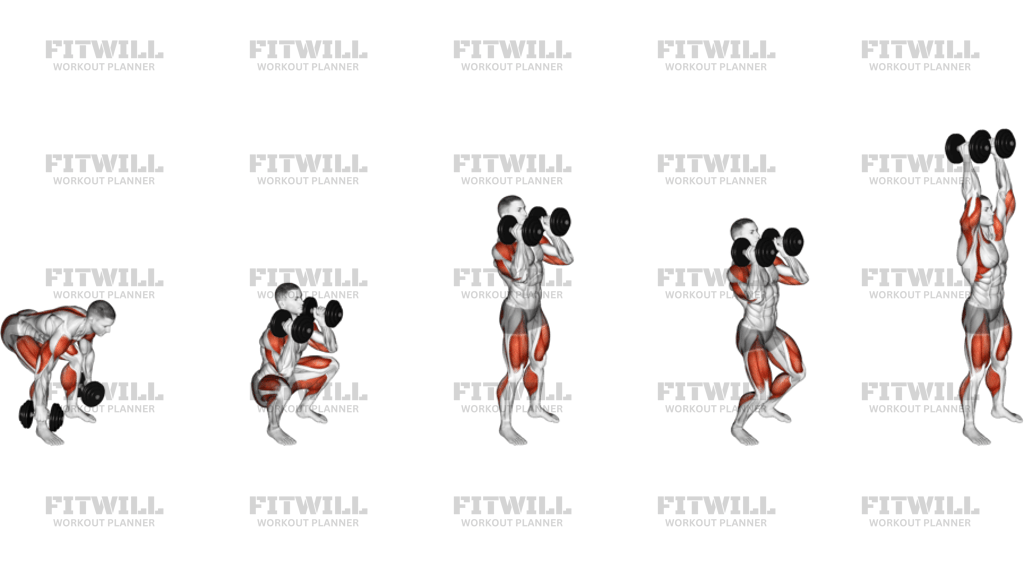
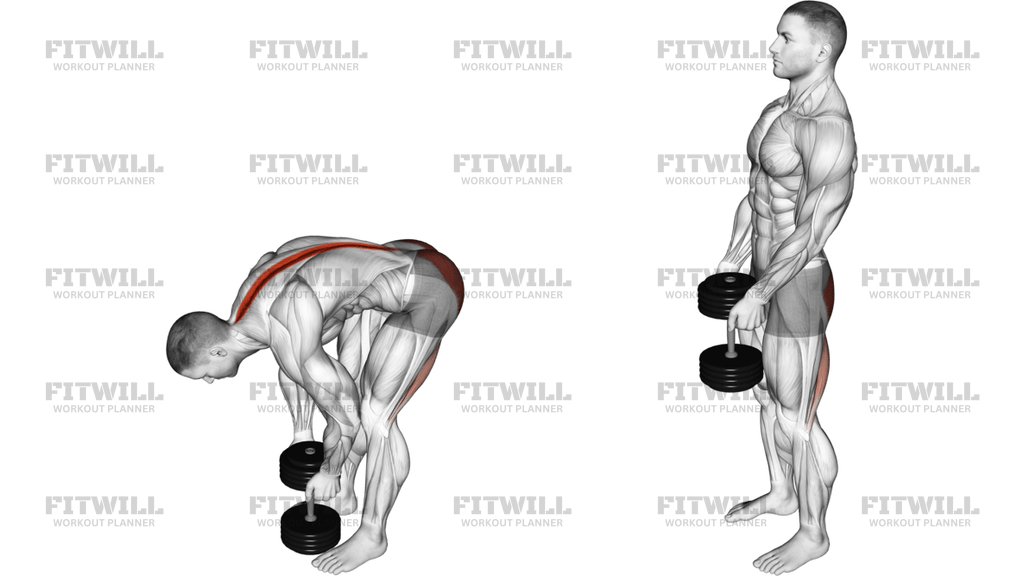
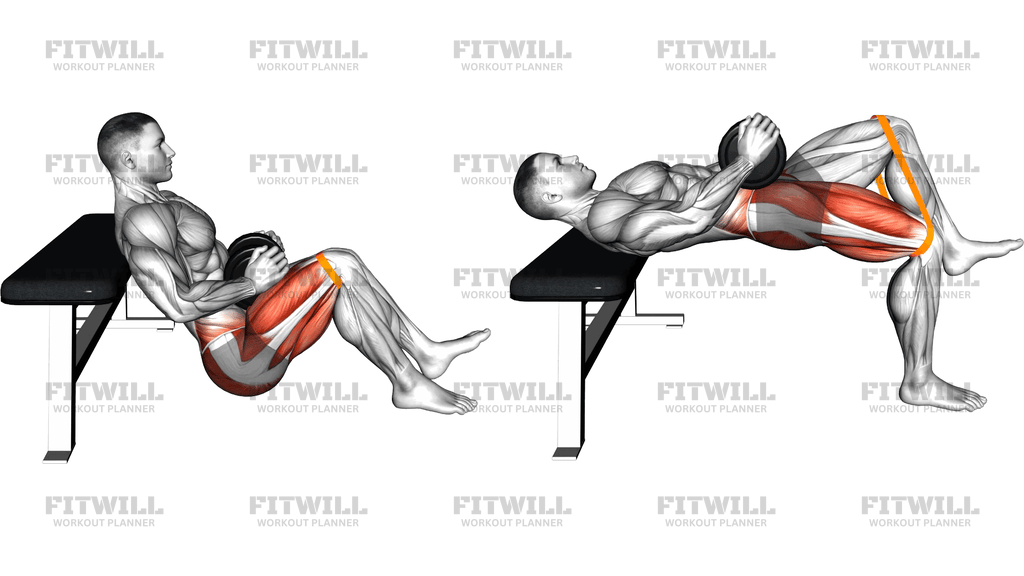
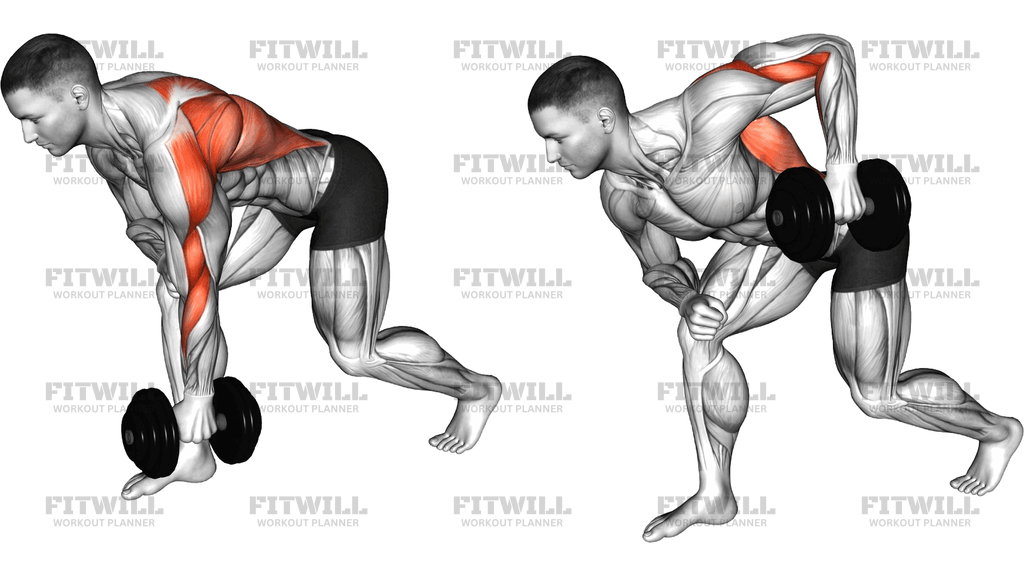
This movement trains the hamstrings and glutes of the standing leg as the prime movers, with the erector spinae working hard to keep your spine neutral under the off-center load. The calf and the small stabilizing muscles around the ankle and hip take on constant work to keep you from wobbling sideways. The highlighted areas in the muscle diagram reflect exactly that: heavy demand through the back extensors, the hamstring of the stance leg, and the stabilizers along the calf and hip.
The single dumbbell is what makes the setup matter. Held on one side of the body, it pulls you off balance, forcing the obliques, deep core, and hip stabilizers to resist rotation and lateral shift. Where you hold the weight also changes the challenge: keeping it in the hand on the same side as the working leg is slightly more stable, while the opposite hand increases the rotational demand. Choose the version that matches your balance ability before adding load.
This exercise suits lifters who already own a comfortable two-legged Romanian deadlift and want to expose and fix left-to-right differences in strength, hip hinge control, and single-leg stability. It is a regular in lower body days for runners, field sport athletes, and anyone rehabilitating or bulletproofing the posterior chain, because the slow tempo and unilateral stance build hamstring resilience without heavy spinal loading.
Execution lives or dies on the hinge, not the bend. Your hips travel backward, your chest lowers as one unit, and the raised leg extends from the hip rather than the lower back arching to fake the range. Stop at the depth where your torso stays flat and your hips stay square; a half-height rep with a neutral spine beats a floor-touching rep with a rounded back every time.
Practically, treat this as a controlled strength and stability movement, not a balance stunt. Work with a light dumbbell, keep reps in the 6 to 10 range per side, and hold onto a wall or rack only when learning the pattern. If your hamstrings cramp or you feel the work shifting into your lower back, that is your cue to reduce the weight and rebuild the hinge from the hips.
[ Workout Log & Planner ]
Put your next workout in Fitwill
Keep your plan and training log ready when you are.


Instructions
- Stand tall holding one dumbbell in one hand at your side with an overhand grip, feet hip-width apart.
- Shift your weight onto one leg and plant it firmly, knee softly bent, while your other foot hovers just behind you.
- Brace your core, pull your shoulders back, and set your hips square to the front before you move.
- Push your hips straight back and let your torso lower forward as the free leg lifts up behind you; keep both knees close together in line with the hips.
- Hinge until your torso and rear leg form one long line close to parallel with the floor, with the dumbbell hanging directly under your shoulder and your neck in line with your spine.
- Pause briefly at the bottom with your back flat and hips level, then drive through the heel of the standing leg and squeeze the glute to raise your torso.
- Lower the rear leg back under your body with control until you return to a tall single-leg stance; avoid letting the dumbbell swing or pulling yourself up with your arm.
- Exhale as you stand up, inhale as you hinge down, and keep your breathing steady through the whole rep.
- Complete all reps on one side, reset your stance, then switch the dumbbell to the other hand and work the opposite leg.
Tips & Tricks
- If you keep losing your balance to one side, the dumbbell is usually traveling forward of your midfoot; let it hang vertically under your shoulder instead of reaching with it.
- A rounded or over-arched lower back at the bottom is a sign you are hinging too deep; stop where your torso stays flat rather than forcing the dumbbell toward the floor.
- Watch for the lifted leg drifting sideways or rotating the hip open; point the toes of the free leg toward the floor and extend it straight back from the hip to keep the hips square.
- Try holding the dumbbell on the same side as your standing leg first; the opposite-hand version rotates your spine more and is better saved for when the basic pattern is solid.
- Grip the floor with your toes on the standing foot; if your ankle keeps wobbling, your weight has likely rolled to the outside edge of the foot.
- Do not rush the return. Standing up too fast usually turns the lift into a lower back extension instead of a glute-driven hinge.
- Move the free leg from the hip, not the foot; flicking the heel up with a bent knee shortens the hamstring work and turns it into a kickback.
- If hamstrings cramp, warm them up first with a lighter bodyweight single leg hinge and reduce the dumbbell load before building back up.
- Keep a fixed point on the floor a step ahead of you to steady your head position; looking around mid-rep is a common cause of losing the hinge line.
Frequently Asked Questions
Which muscles does the Dumbbell Single Leg Romanian Deadlift Leg Raise work the most?
The hamstrings and glutes of the standing leg do most of the work, while the erector spinae of the lower back stabilize your torso under the offset load. The calves and ankle stabilizers also work continuously to keep you balanced.
How is this different from a regular Single Leg Romanian Deadlift?
In this version the rear leg actively rises with your torso until both are roughly parallel to the floor, so the hip of the working leg controls both the hinge and the leg extension. A standard single leg RDL keeps the free leg mostly stationary as a counterbalance.
Can beginners do the Dumbbell Single Leg Romanian Deadlift Leg Raise?
Yes, but start with no weight or a very light dumbbell and hinge to a moderate depth until the pattern feels stable. Once you can hold a flat-back hinge on one leg for all reps, add load gradually.
Should I hold the dumbbell on the same side or the opposite side of the working leg?
Same-side loading is more forgiving for balance, while holding the dumbbell in the opposite hand increases the rotational and core demand. Most lifters should master the same-side version before switching.
Why do I feel this in my lower back instead of my hamstrings?
That usually means your back is rounding or over-arching to reach deeper, or the weight has drifted out in front of your shoulder. Cut the range until your torso stays flat and let the dumbbell hang straight down under you.
How far should my rear leg rise at the bottom?
Aim for the rear leg to reach roughly hip height so your torso and lifted leg form a straight line. Extending higher than that typically forces your lower back to arch and shifts work away from the hamstrings.
What can I use instead of a dumbbell for this exercise?
A kettlebell works well because it hangs from the hand in a similar way, and a bodyweight version with the arms free is a valid substitute while you learn the balance. Keep the load close to your body either way.
Is it safe to do this exercise if my balance is poor?
Start next to a wall, rack, or sturdy chair and touch it lightly with a fingertip only when needed to stay upright. As your ankle and hip stabilizers improve, reduce the support until you can do every rep free-standing.
How many reps and sets should I do per side?
Two to four sets of 6 to 10 controlled reps per leg works well for strength and stability. Since balance tends to fade before strength, stop the set when your form or the hinge line starts to break down.